


Savvy Commits Major Investments to Boost Gaming Industry in Saudi Arabia  

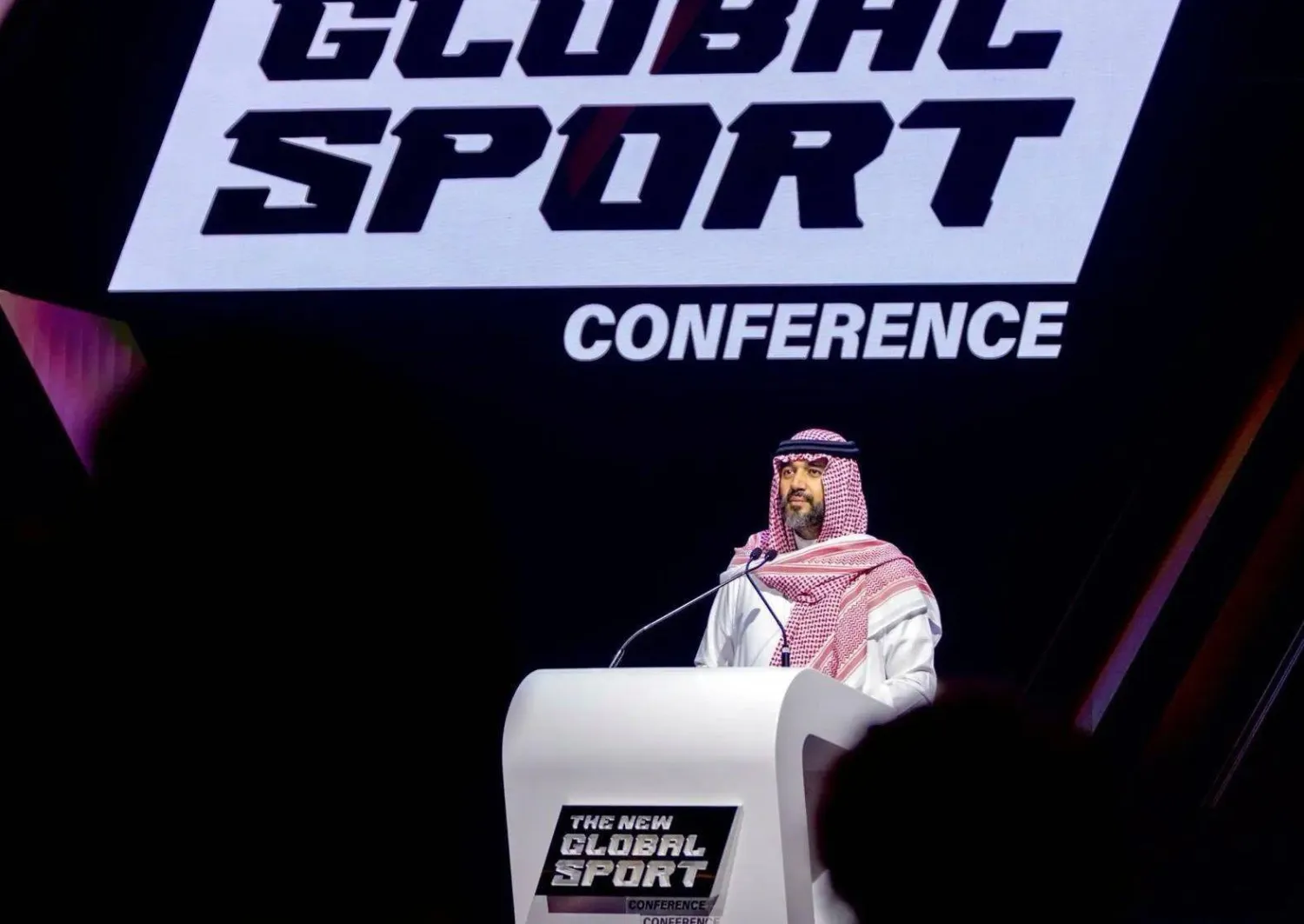
Prince Faisal bin Bandar bin Sultan, President of the Saudi Esports Federation. (SPA) 
TT

Savvy Commits Major Investments to Boost Gaming Industry in Saudi Arabia  

Prince Faisal bin Bandar bin Sultan, President of the Saudi Esports Federation. (SPA) 

Saudi Arabia is placing the gaming and esports sector at the heart of its economic transformation, allocating billions of dollars to build the Kingdom into a global hub for creativity and investment in digital entertainment. Backed by a national strategy, the Kingdom aims to position itself as a leader in game development, publishing, and competitive esports.

A clear demonstration of this ambition came with the Esports World Cup, hosted in Riyadh, which drew more than 2,000 players from 200 clubs from over 100 countries. The seven-week tournament concluded on Sunday night with Prince Mohammed bin Salman, Crown Prince and Prime Minister, awarding Saudi Arabia’s Team Falcons as champions of the 2025 edition.

Spanning 25 competitions across 24 different games, the event featured record-breaking prize pools of more than $70 million, redefining the scale of global esports contests and underscoring the Kingdom’s ability to combine innovation and creativity in a rapidly expanding industry.

Speaking at the New Global Sport Conference, Prince Faisal bin Bandar bin Sultan, President of the Saudi Esports Federation, emphasized that “games will always remain at the core of this industry - whether in development, esports, or content creation.”

He noted that gaming revenues in the Middle East and North Africa reached $6 billion in 2024, with Saudi Arabia accounting for more than a third of that figure. The region, he added, encompasses 22 countries and over 250 million gamers.
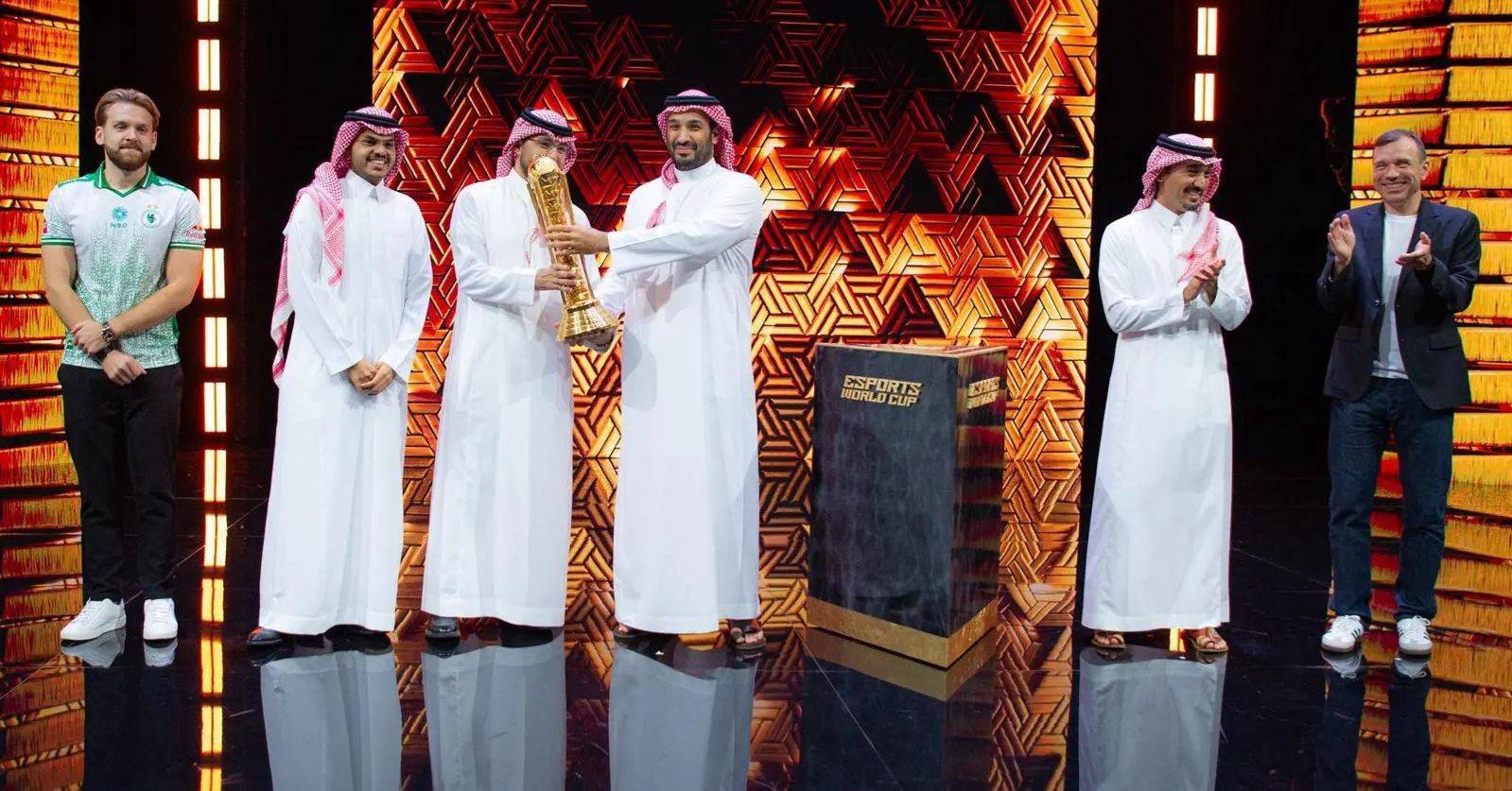
Prince Mohammed bin Salman, Crown Prince and Prime Minister, awards Saudi Arabia’s Team Falcons as champions of the 2025 edition of the Esports World Cup. (SPA)

The role of Savvy

At a press conference in Riyadh, Brian Ward, CEO of Savvy Games Group, outlined the company’s pivotal role in attracting international partners.

Global outreach tours led by Prince Faisal, he explained, are part of the national gaming and esports strategy that has no parallel elsewhere in the world.

Savvy has already invested around SAR 50 billion ($13 billion) in game development and publishing, securing high-profile deals with Scopely and Niantic, while also establishing local studios in Riyadh.

Walter Driver, CEO of Scopely, which was acquired by Saudi Arabia’s Public Investment Fund in July 2023 for $4.9 billion, shared details of the company’s recent performance. In 2024 alone, Scopely recorded over 5 billion hours of gameplay, with half of its active players logging in daily.

He revealed that its titles have been downloaded more than one billion times worldwide, generating cumulative revenues of over $10 billion in 2024.

Since 2019, the company has maintained a compound annual growth rate of 53 percent, far outpacing the global industry average. Flagship titles such as Monopoly Go, Pokémon Go, and Star Trek Fleet Command have each surpassed $5 billion in revenues individually.

Saudi Arabia’s rise in the global gaming and esports arena is part of its broader Vision 2030 to diversify the economy and foster creative industries. By 2030, the sector is expected to contribute more than 50 billion riyals to GDP and create nearly 39,000 new jobs.

The Kingdom also plans to establish 250 new local gaming companies, cementing its role as a key player in an industry now valued at more than $200 billion globally.


India Overtakes Japan as World's 4th Largest Economy

 A man walks at the seafront as scattered clouds are seen over Mumbai's skyline, India, June 10, 2015. (Reuters)
 A man walks at the seafront as scattered clouds are seen over Mumbai's skyline, India, June 10, 2015. (Reuters)
TT

India Overtakes Japan as World's 4th Largest Economy

 A man walks at the seafront as scattered clouds are seen over Mumbai's skyline, India, June 10, 2015. (Reuters)
 A man walks at the seafront as scattered clouds are seen over Mumbai's skyline, India, June 10, 2015. (Reuters)

India has overtaken Japan as the world’s fourth largest economy and officials hope to pass Germany within three years, the government’s end-of-year economic review revealed.

Official confirmation, however, depends on data due in 2026 when final annual gross domestic product figures are released, with the International Monetary Fund (IMF) suggesting India will cross over Japan next year, reported AFP.

“India is among the world’s fastest-growing major economies and is well-positioned to sustain this momentum,” read the government economic briefing note, which was released late on Monday.

“With GDP valued at $4.18 trillion, India has surpassed Japan to become the world’s fourth largest economy, and is poised to displace Germany from the third rank in the next two-and-a-half to three years, with projected GDP of $7.3 trillion by 2030.”

IMF projections for 2026 put India’s economy at $4.51 trillion, compared with Japan’s $4.46 trillion.

The upbeat assessment comes despite economic worries after Washington in August hit India with huge tariffs over its purchases of Russian oil.

New Delhi said continued growth reflects its “resilience amid persistent global trade uncertainties”. But other measurements offer a less rosy outlook.

In terms of population, India overtook neighboring China as the most populous nation in 2023.

India’s GDP per capita was $2,694 in 2024, according to the latest World Bank figures, 12 times smaller than Japan’s $32,487, and 20 times smaller than Germany’s $56,103.

Government figures show that more than a quarter of India's 1.4 billion people are aged between 10 and 26. Creating enough well-paid jobs for millions of young graduates is an upcoming hurdle, but the report offered a rosy outlook.

“As one of the world's youngest nations, India's growth story is being shaped by its ability to generate quality employment that productively absorbs its expanding workforce and delivers inclusive, sustainable growth,” a note in the review said.

India’s Prime Minister Narendra Modi this year unveiled sweeping consumption tax cuts and pushed through labor law reforms after growth slowed to a four-year low in the 12 months ending March 31.

Currency pressures have also mounted.

The rupee hit a record low against the dollar in early December, after falling about 5% in 2025.

That came amid concerns over the lack of a trade deal with Washington and the impact of higher levies on Indian goods.

India became the world's fifth largest economy in 2022, when its GDP overtook that of former colonial ruler Britain, according to IMF figures.


King Salman International Airport Kicks of Construction of 3rd Runway to Boost Operational Efficiency

 The airport will incorporate the King Khalid terminals - SPA
The airport will incorporate the King Khalid terminals - SPA
TT

King Salman International Airport Kicks of Construction of 3rd Runway to Boost Operational Efficiency

 The airport will incorporate the King Khalid terminals - SPA
The airport will incorporate the King Khalid terminals - SPA

King Salman International Airport (KSIA), a PIF company, has commenced construction works on the third runway, marking a strategic step that reflects continued progress in airfield development and enhances the airport’s operational readiness to support long-term growth in air traffic demand.

The third runway forms a key component of the KSIA Master Plan and represents a major milestone in the airport’s expansion journey.
According to a press release issued by the KSIA, the project is being delivered in collaboration with FCC Construcción SA and Al-Mabani General Contractors Company and has been designed in alignment with Riyadh’s prevailing wind patterns to ensure safe and efficient aircraft operations under all operating conditions, SPA reported.

The current operational capacity stands at 65 aircraft movements per hour. With the implementation of operational enhancements and the introduction of the third runway, capacity is expected to increase to 85 aircraft movements per hour, contributing to improved operational efficiency and supporting long-term growth.

The third runway incorporates multiple access taxiways to ensure smooth aircraft flow and will span 4,200 meters in length.

Acting CEO of KSIA Marco Mejia said: “Launching construction of the third runway marks a pivotal step in delivering the KSIA Master Plan and reflects our commitment to developing world-class infrastructure capable of supporting future growth, enhancing operational efficiency, and expanding long-haul connectivity without constraints.”

King Salman International Airport is a strategic and transformative national project that reflects the Kingdom’s ambition to position Riyadh as a global capital and a leading aviation hub. The project was announced by His Royal Highness Prince Mohammed bin Salman bin Abdulaziz, Crown Prince, Prime Minister, Chairman of the Council of Economic and Development Affairs and Chairman of the Board of Directors of King Salman International Airport, underscoring its national significance and its role in advancing the objectives of Saudi Vision 2030.

Located on the existing site of King Khalid International Airport in Riyadh, the airport will incorporate the King Khalid terminals, in addition to three new terminals, residential and leisure assets, six runways, and logistics facilities. Spanning 57 square kilometers, it is designed to accommodate 100 million passengers annually and handle over two million tons of cargo by 2030.

This phase of construction contributes to strengthening King Salman International Airport’s international flight network across multiple global destinations, reinforcing Riyadh’s position as an internationally connected aviation gateway and supporting national development objectives within the air transport sector.


Mawani, Arabian Chemical Terminals Sign Land Lease for Jubail Port Storage Tanks

Mawani, Arabian Chemical Terminals Sign Land Lease for Jubail Port Storage Tanks
TT

Mawani, Arabian Chemical Terminals Sign Land Lease for Jubail Port Storage Tanks

Mawani, Arabian Chemical Terminals Sign Land Lease for Jubail Port Storage Tanks

The Saudi Ports Authority (Mawani) signed a contract with Arabian Chemical Terminals Ltd. to establish storage tanks for chemical and petrochemical materials at Jubail Commercial Port, with an investment exceeding SAR500 million on an area of 49,000 square meters.

The project will contribute to enhancing operational efficiency and increasing handling capacity in line with the objectives of the National Transport and Logistics Strategy to consolidate the Kingdom’s position as a global logistics hub, SPA reported.

This step is part of Mawani’s efforts to strengthen the role of the private sector in supporting the gross domestic product and to reinforce the position of Jubail Commercial Port as a driver of commercial activity. The project’s storage capacity will reach 70,000 cubic tons, boosting the competitiveness of the Kingdom’s ports at both regional and international levels.

The project aims to develop and expand storage capacity and the export of chemical and petrochemical materials in accordance with the highest international standards while supporting supply chains. It includes the establishment and development of specialized facilities for storing and exporting chemical and petrochemical products, as well as the provision of storage and distribution services for local and international import and export of chemicals in line with global quality and safety standards.

The project will contribute to supporting national supply chains, boosting the Kingdom’s chemical logistics capabilities, and raising operational efficiency and capacity, thereby improving customer competitiveness. It also supports the achievement of Saudi Vision 2030 objectives by promoting the development of infrastructure to advance the energy, industry, and supply chain sectors in the Kingdom.
