
Setback in Hezbollah Arms Talks Puts Lebanon on Alert

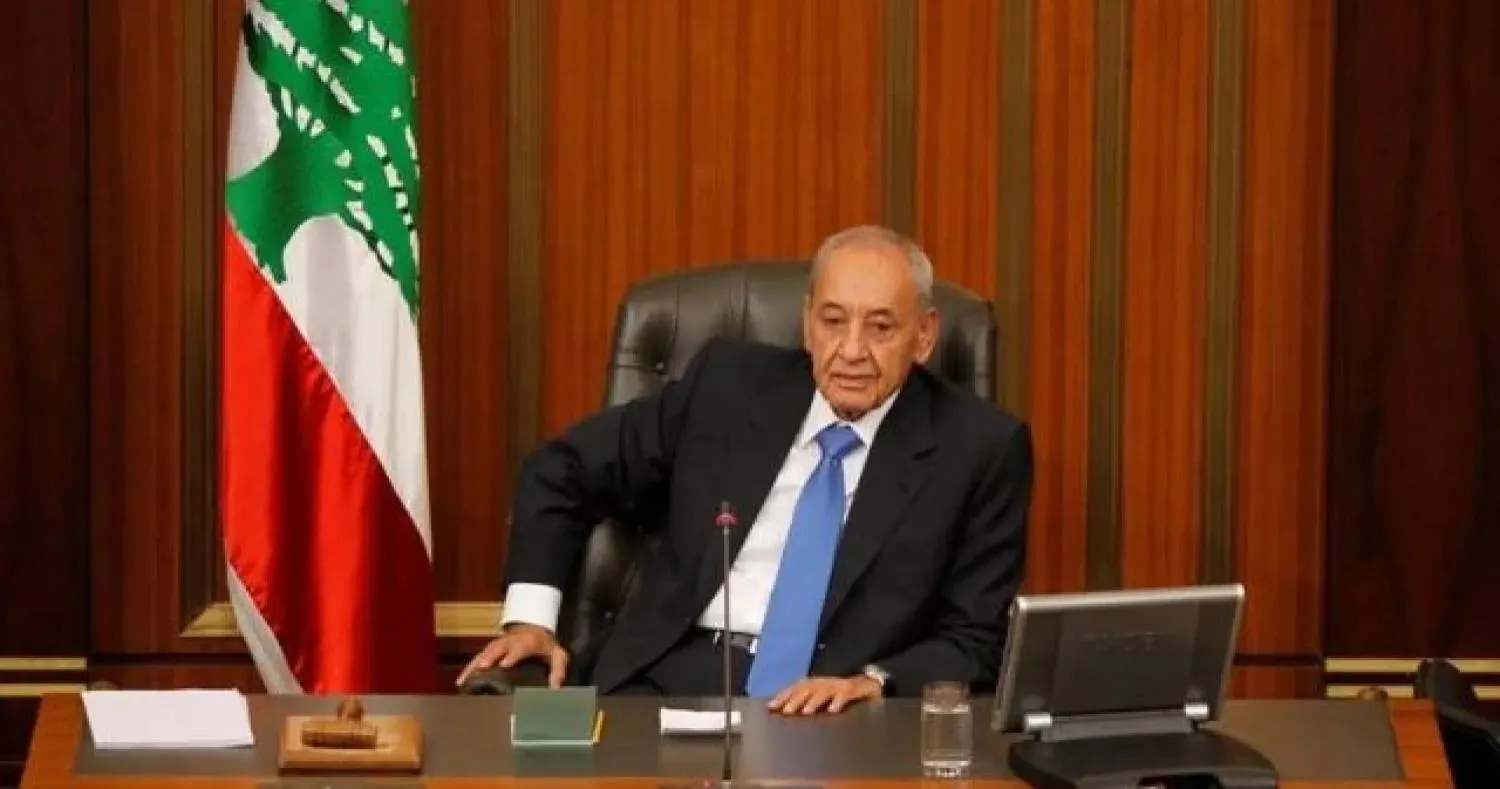
Parliament Speaker Nabih Berri (NNA)
TT

Setback in Hezbollah Arms Talks Puts Lebanon on Alert

Parliament Speaker Nabih Berri (NNA)

Lebanon has entered another waiting phase as political leaders brace for fallout from what appeared to be a setback in US mediation efforts with Israel, after American negotiators failed to secure clear commitments that could support Beirut’s plan to dismantle Hezbollah’s arsenal.

US deputy envoy for Middle East affairs Morgan Ortagus returned to Israel along with Senator Lindsey Graham for further talks, following a sharp Lebanese reaction to US demands that Hezbollah disarm before any discussion of Israeli concessions.

Parliament Speaker Nabih Berri voiced frustration over the outcome of the US delegation’s visit, telling Asharq Al-Awsat the Americans had brought “the opposite of what they promised,” referring to expectations that Washington would press Israel to respond to a step-by-step approach advocated by US envoy Tom Barrack.

Instead, he said, the delegation insisted that Hezbollah disarm before Israel takes any reciprocal action, such as withdrawing from Lebanese territory or halting cross-border attacks.

“The American delegation brought nothing from Israel, and things have become complicated again,” Berri said.

He declined to discuss next steps, stressing only that the situation was “not easy.” Asked about a Sept. 2 cabinet meeting to examine the army’s plan for Hezbollah’s disarmament, he replied: “Anything that leads to internal division is unacceptable.”

A senior Lebanese source said Tuesday’s cabinet session to review the army’s plan for disarming Hezbollah was still on schedule “for now,” but did not rule out a short delay if political tensions deepen.

The source said contacts were underway to ease the deadlock highlighted by Berri’s remarks and to revive “fruitful dialogue” with the Americans and Lebanon’s other allies in a bid to chart a roadmap out of the crisis.

Hezbollah urges government to ‘correct the mistake’

In its first reaction, Hezbollah accused Washington of seeking to dismantle Lebanon’s defenses and drag Beirut toward normalization with Israel, warning that the government had fallen into a “grave mistake” by entertaining US demands for the group’s disarmament.

Hussein al-Khalil, political aide to Hezbollah’s leader, said US pressure aimed to turn Lebanon into an “American-Israeli colony” and push it toward the Abraham Accords. He warned that involving the army in confronting Hezbollah would pit soldiers against their own people and risk “tearing down two pillars of the country, the army and the resistance.”

Khalil cautioned officials against “falling into deadly traps” that could spark civil war, recalling that Lebanon’s 1975–90 conflict was ended by the Taif Accord. He urged President Jospeh Aoun and other leaders to shield the army from internal strife and resist international proposals that “threaten Lebanon’s security, sovereignty and stability.”

US envoy cancels border tour

On Wednesday, Barrack scrapped a planned visit to Lebanon’s southern border after protesters in the area opposed his tour. He instead received a briefing from Brigadier General Nicolas Tabet, head of the South Litani sector, who described Israeli practices hindering the army’s full deployment along the frontier.

Lebanon’s state news agency said Barrack arrived by helicopter at an army base in the southern town of Marjayoun amid tight security. It later reported he canceled stops in the nearby town of Khiam, bombed by Israel during its last war with Hezbollah, and in the coastal city of Tyre.

Photos and footage showed Hezbollah supporters waving the group’s flags and carrying portraits of fighters killed in Israeli strikes as they protested Barrack’s visit, blocking roads and denouncing what they called Washington’s “biased policies.”

The Lebanese army had deployed in the area, including at the northern entrance of Khiam, to secure the envoy’s trip amid calls for demonstrations. Some protesters stomped on a painted Star of David on the road, beside graffiti reading “America the Great Satan” in Arabic and “Barrack is an animal” in English, according to AFP.

Meanwhile, Israeli violations continued in south Lebanon, where a powerful pre-dawn explosion was heard after the Israeli army detonated an object inside the border town of Kfarkila, with echoes felt across nearby villages in Marjayoun district.

An Israeli drone also dropped leaflets over several southern towns, including Adaisseh and Kfarkila, warning “village officials linked to Hezbollah” and urging residents to “stay away from them because they are a target.”



Rescue Teams Search for Survivors in Building Collapse that Killed at Least 2 in Northern Lebanon

A Lebanese flag is pictured, in the aftermath of a massive explosion, in Beirut's damaged port area, Lebanon August 17, 2020. REUTERS/Hannah McKay
TT

Rescue Teams Search for Survivors in Building Collapse that Killed at Least 2 in Northern Lebanon

A Lebanese flag is pictured, in the aftermath of a massive explosion, in Beirut's damaged port area, Lebanon August 17, 2020. REUTERS/Hannah McKay

At least two people were killed and four rescued from the rubble of a multistory apartment building that collapsed Sunday in the city of Tripoli in northern Lebanon, state media reported.

Rescue teams were continuing to dig through the rubble. It was not immediately clear how many people were in the building when it fell.

The bodies pulled out were of a child and a woman, the state-run National News Agency reported.

Dozens of people crowded around the site of the crater left by the collapsed building, with some shooting in the air.

The building was in the neighborhood of Bab Tabbaneh, one of the poorest areas in Lebanon’s second largest city, where residents have long complained of government neglect and shoddy infrastructure. Building collapses are not uncommon in Tripoli due to poor building standards, according to The AP news.

Lebanon’s Health Ministry announced that those injured in the collapse would receive treatment at the state’s expense.

The national syndicate for property owners in a statement called the collapse the result of “blatant negligence and shortcomings of the Lebanese state toward the safety of citizens and their housing security,” and said it is “not an isolated incident.”

The syndicate called for the government to launch a comprehensive national survey of buildings at risk of collapse.


Israel to Take More West Bank Powers and Relax Settler Land Buys

A view of Israeli settlement of Maale Adumim, in the West Bank, Sunday, June 18, 2023. (AP)
TT

Israel to Take More West Bank Powers and Relax Settler Land Buys

A view of Israeli settlement of Maale Adumim, in the West Bank, Sunday, June 18, 2023. (AP)

Israel's security cabinet approved a series of steps on Sunday that would make it easier for settlers in the occupied West Bank to buy land while granting Israeli authorities more enforcement powers over Palestinians, Israeli media reported.

The West Bank is among the territories that the Palestinians seek for a future independent state. Much of it is under Israeli military control, with limited Palestinian self-rule in some areas run by the Western-backed Palestinian Authority (PA).

Citing statements by Finance Minister Bezalel Smotrich and Defense Minister Israel Katz, Israeli news sites Ynet and Haaretz said the measures included scrapping decades-old regulations that prevent Jewish private citizens buying land in the West Bank, The AP news reported.

They were also reported to include allowing Israeli authorities to administer some religious sites, and expand supervision and enforcement in areas under PA administration in matters of environmental hazards, water offences and damage to archaeological sites.

Palestinian President Mahmoud Abbas said the new measures were dangerous, illegal and tantamount to de-facto annexation.

The Israeli ministers did not immediately respond to requests for comment.

The new measures come three days before Prime Minister Benjamin Netanyahu is scheduled to meet in Washington with US President Donald Trump.

Trump has ruled out Israeli annexation of the West Bank but his administration has not sought to curb Israel's accelerated settlement building, which the Palestinians say denies them a potential state by eating away at its territory.

Netanyahu, who is facing an election later this year, deems the establishment of any Palestinian state a security threat.

His ruling coalition includes many pro-settler members who want Israel to annex the West Bank, land captured in the 1967 Middle East war to which Israel cites biblical and historical ties.

The United Nations' highest court said in a non-binding advisory opinion in 2024 that Israel's occupation of Palestinian territories and settlements there is illegal and should be ended as soon as possible. Israel disputes this view.


Arab League Condemns Attack on Aid Convoys in Sudan

A general view shows the opening session of the meeting of Arab foreign ministers at the Arab League Headquarters (Reuters)
TT

Arab League Condemns Attack on Aid Convoys in Sudan

A general view shows the opening session of the meeting of Arab foreign ministers at the Arab League Headquarters (Reuters)

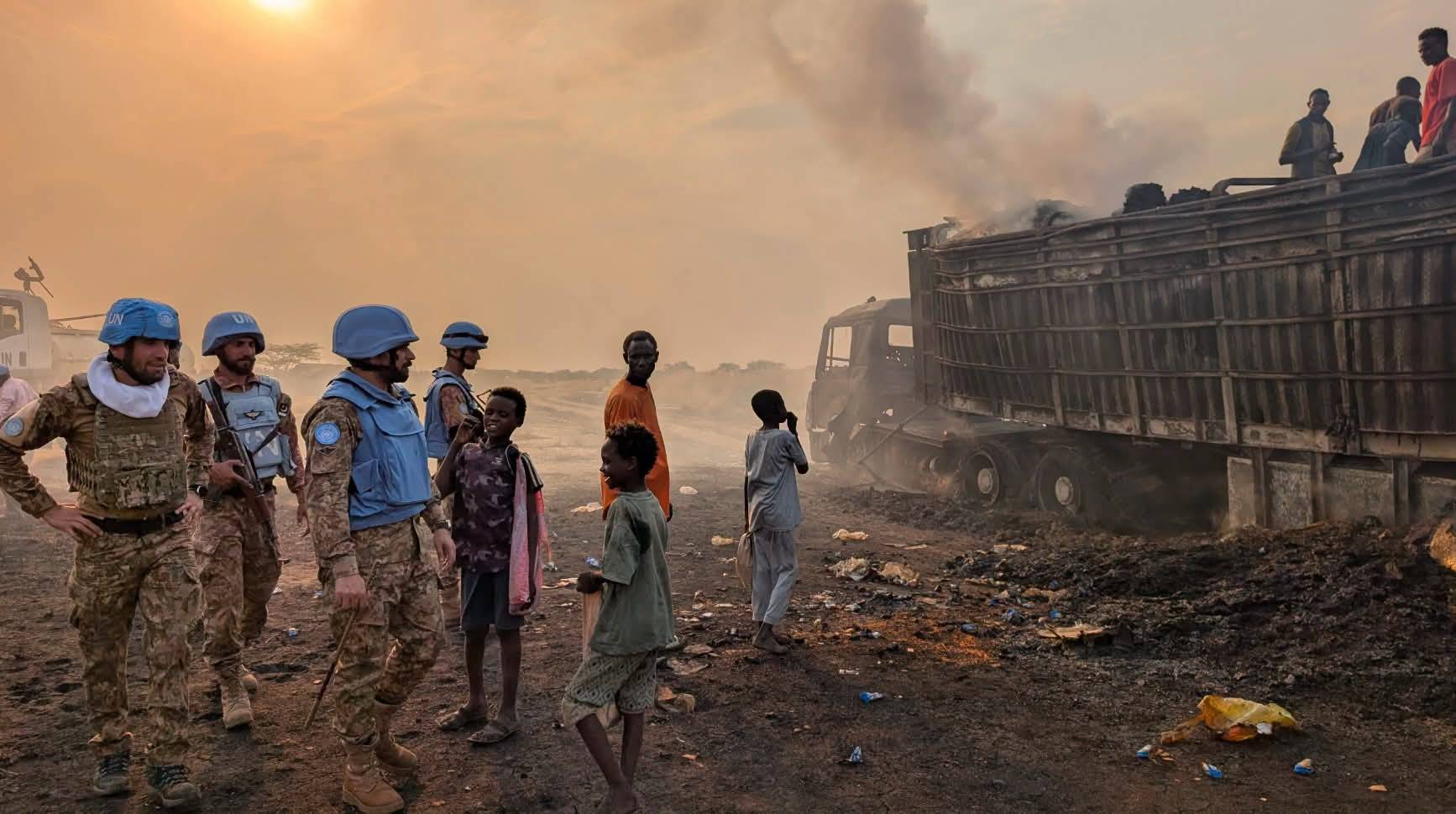
Arab League Secretary-General Ahmed Aboul Gheit strongly condemned the attack by the Rapid Support Forces on humanitarian aid convoys and relief workers in North Kordofan State, Sudan.

In a statement reported by SPA, secretary-general's spokesperson Jamal Rushdi quoted Aboul Gheit as saying the attack constitutes a war crime under international humanitarian law, which prohibits the deliberate targeting of civilians and depriving them of their means of survival.

Aboul Gheit stressed the need to hold those responsible accountable, end impunity, and ensure the full protection of civilians, humanitarian workers, and relief facilities in Sudan.