


Larijani, British Counterpart Discuss ‘Snapback’, Resumption of Nuclear Talks

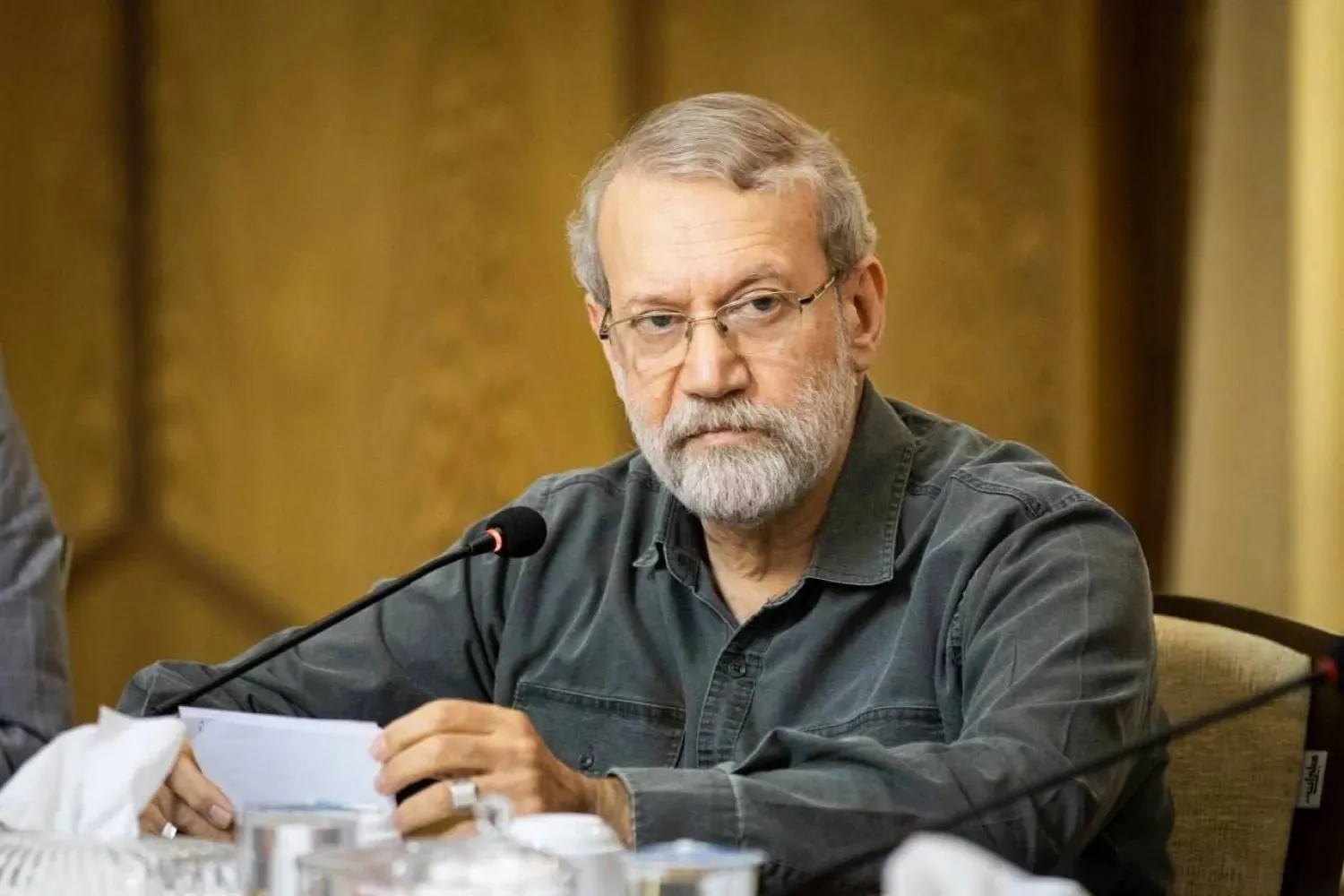
Photo released by Larijani's website from his meeting with Iranian media representatives on Tuesday 
TT

Larijani, British Counterpart Discuss ‘Snapback’, Resumption of Nuclear Talks

Photo released by Larijani's website from his meeting with Iranian media representatives on Tuesday 

Secretary of Iran’s Supreme National Security Council (SNSC) Ali Larijani said he exchanged with British counterpart, Jonathan Powell, views on the ‘snapback mechanism’ which could result in the return of UN sanctions on Iran, as well as ways to resume nuclear negotiations.

Last week, France, Germany and the UK launched a 30-day process to reimpose sanctions on Iran over its nuclear program, sending a letter stating their intent to the UN Security Council.

The European countries, known as the E3, had offered Iran a delay of the snapback during talks in July if Iran met three conditions: resuming negotiations with the United States over its nuclear program, allowing UN nuclear inspectors access to its nuclear sites, and accounting for the over 400 kilograms of highly enriched uranium the UN watchdog says it has.

Tehran, which now enriches uranium at near weapons-grade levels, has rejected that proposal.

In a short statement posted Wednesday on Telegram, Larijani’s office said the Secretary of Iran’s SNSC had a phone conversation with Powell and the two men agreed that consultations should continue with the aim of addressing nuclear matters through dialogue.

A day earlier, Larijani said the path to nuclear negotiations between Iran and the United States is not closed but US demands for curbs on Iranian missiles are obstructing prospects for talks.

A sixth round of Iran-US talks was suspended after the start of a 12-day war in June, in which Israel and the US struck Iranian nuclear facilities and Iran retaliated with waves of ballistic missiles against Israel.

“We indeed pursue rational negotiations. By raising unrealizable issues such as missile restrictions, they set a path that negates any talks,” Larijani said in a post on X.

Western countries fear Iran's uranium enrichment program could yield material for an atomic warhead and that it seeks to develop a ballistic missile to carry one.

Iran says its nuclear program is only for electricity generation and other civilian uses and that it is enriching uranium as fuel for these purposes.

It has denied seeking to create missiles capable of carrying nuclear payloads and says its defense capabilities cannot be open to negotiation in any talks over its atomic program.


Russia Expresses Concern Over the Spread of Iran War to the Caspian

Russian Foreign Minister Sergei Lavrov attends a joint press conference with Kenyan Foreign Minister Musalia Mudavadii following their talks in Moscow, Russia, 16 March 2026. (EPA/Tatyana Makeyeva / Pool)
TT

Russia Expresses Concern Over the Spread of Iran War to the Caspian

Russian Foreign Minister Sergei Lavrov attends a joint press conference with Kenyan Foreign Minister Musalia Mudavadii following their talks in Moscow, Russia, 16 March 2026. (EPA/Tatyana Makeyeva / Pool)

Russian Foreign Minister Sergei Lavrov spoke to Iranian counterpart Abbas Araghchi on Monday and expressed concern ‌over ‌the spread ‌of ⁠the Iran war to the ⁠Caspian Sea.

"Mutual concern was expressed about the dangerous ⁠spread of the ‌conflict ‌provoked by ‌Washington and ‌Tel Aviv to the Caspian Sea area," Russia's ‌foreign ministry said.

Lavrov also said that ⁠attacks ⁠on Iran's nuclear infrastructure including Bushehr posed "unacceptable risks to the safety of Russian personnel and are fraught with catastrophic environmental consequences".

Araghchi and Lavrov held their call after US President Donald Trump revealed Washington and Tehran had held "very good and productive conversations regarding a complete and total resolution of our hostilities."

Lavrov called for an "immediate cessation of hostilities and a political settlement that takes into account the legitimate interests of all parties involved, above all Iran," the Russian foreign ministry said in a readout of the call, which it said was initiated by Tehran.


Trump Postpones Military Strikes on Iranian Power Plants

Iranian Red Crescent emergency workers use a bulldozer to clear rubble from a residential building that was hit in an earlier US-Israeli strike in Tehran, Iran, Monday, March 23, 2026. (AP Photo/Vahid Salemi)
TT

Trump Postpones Military Strikes on Iranian Power Plants

Iranian Red Crescent emergency workers use a bulldozer to clear rubble from a residential building that was hit in an earlier US-Israeli strike in Tehran, Iran, Monday, March 23, 2026. (AP Photo/Vahid Salemi)

President Donald Trump said on Monday the US has ⁠had good and ⁠productive conversations with Iran ⁠and he will order the military to postpone any military strikes against ⁠Iranian power ⁠plants and energy infrastructure.

Trump's move followed a threat by Iran to attack Israel's power plants and those supplying ⁠US bases across the region if the US targets Iran's power network.

The United States and Iran "have had, over the last two days, very good and productive conversations regarding a complete and total resolution of our hostilities in the Middle East," Trump wrote, in all capitals, early Monday on his Truth Social platform.

"Based on the tenor and tone" of the talks, "witch (sic) will continue throughout the week, I have instructed the Department of War to postpone any and all military strikes against Iranian power plants and energy infrastructure for a five day period, subject to the success of the ongoing meetings," he added.


Moscow Bets on Tehran’s Resilience, Western Rift

The Russian President attends events marking “Defender of the Fatherland Day” in Moscow on February 23 (AP)
TT

Moscow Bets on Tehran’s Resilience, Western Rift

The Russian President attends events marking “Defender of the Fatherland Day” in Moscow on February 23 (AP)

The Kremlin’s expectations appeared markedly pessimistic in the fourth week of the Iran war, as confidence grew that Russia’s ability to influence the conflict was waning and that the repercussions for one of its key partners could be severe.

With limited leverage, the Kremlin’s main options now seem to be avoiding direct involvement while closely monitoring the fallout, particularly signs of widening divisions between Washington and European capitals — and what one veteran Russian diplomat described as “driving the final wedge” into transatlantic relations.

Kremlin spokesman Dmitry Peskov summed up the mood: “No reasonable person would dare predict how the situation in the Middle East will evolve, but it is clear that things are moving toward the worse.”

From the outset, Russian assessments have focused on two key assumptions: that air strikes alone cannot topple Iran’s political system, regardless of their scale, and that ending the war without a costly ground intervention would be difficult for the attacking parties.

A second assumption is that any cessation of hostilities would resemble the outcome of the brief 12-day war of 2025, with each side claiming success without achieving its ultimate objectives, particularly Israel’s stated goal of dismantling Iran’s ruling system.

Such a scenario would suit Moscow, even if Iran were to emerge weakened but still cohesive under its leadership.

Despite increasingly pessimistic forecasts about a potential geographic expansion of the conflict, Moscow believes Tehran has so far absorbed the initial blow and shifted the confrontation into a war of attrition. Russian officials are also banking on possible internal developments within Washington and Tel Aviv, as well as growing divergences with European allies.

Peskov has repeatedly stressed that military operations against Iran have led to greater cohesion among the Iranian people around their leadership, adding that attempts at regime change tend to produce the opposite effect.

He also condemned ongoing assassination campaigns targeting Iranian leaders, calling the situation “abnormal” and warning of “serious consequences.” In a pointed remark, he added that Iran is “actively defending itself against attacks on its territory.”

These statements underline Russia’s primary bet: that Iran’s internal stability will hold, while divisions deepen among its adversaries.

Putin’s mediation effort

President Vladimir Putin initially sought to use the crisis to bolster Russia’s diplomatic standing by proposing rapid mediation to halt the war.

During the first week, he held a series of calls with regional leaders, criticizing Iranian strikes on Gulf countries while emphasizing Moscow’s ability to send “direct messages” to Tehran.

Russia also revived earlier proposals discussed in Oman concerning Iran’s nuclear capabilities and missile program. Moscow offered to take control of enriched uranium and transfer it to Russian territory, while guaranteeing that Iran’s missile capabilities would not be used against Israel or neighboring states.

The proposal was also raised during Putin’s only call with US President Donald Trump in the second week of the war. However, it failed to gain traction in either Tel Aviv — which insists on a military solution — or Washington, where Trump signaled that Putin should first resolve the Ukraine conflict before seeking a role elsewhere.

Limited support for Iran

Against this backdrop, the Kremlin’s options for meaningful intervention appear extremely limited. Complicating matters are accusations that Moscow has provided valuable intelligence support to Iran.

These claims gained weight when US presidential envoy Steve Witkoff reportedly issued a strong warning to Moscow, and the issue was raised directly during the Trump-Putin call.

Nevertheless, Russian circles argue that Moscow has little choice but to continue offering indirect assistance to Tehran while avoiding provoking Washington.

According to Russian media sources, this support takes two main forms: sharing limited intelligence on Israeli movements — carefully calibrated to avoid harming US interests — and providing indirect backing through private companies specializing in cyber technologies, an area where Russia and China have made significant advances.

European repercussions

Another key aspect of Russia’s strategy is its close monitoring of how the war is affecting Ukraine and European positions, which Moscow still sees as the main obstacle to ending the conflict on its terms.

There is little concealment of Russian satisfaction at Europe’s difficulties amid the war, particularly fears over rising oil and gas prices and the prospect of easing sanctions on Moscow to offset supply shortages.

Kremlin commentary suggests that European priorities are shifting, with energy costs replacing Ukraine at the top of government agendas.

Veteran Russian diplomat Alexander Yakovenko argued that the Middle East crisis, combined with the fallout from Ukraine, is intensifying tensions within the transatlantic alliance.

He pointed to German Chancellor Friedrich Merz rejecting a US request to help secure the Strait of Hormuz as evidence of deepening strains. Trump, he noted, responded by describing NATO as a “paper tiger.”

According to Yakovenko, the coming weeks will be decisive for the Iran conflict and its broader consequences. He added that transatlantic relations are facing a severe crisis, with disagreements over Ukraine fueling European opposition to Trump, a factor that could influence the US midterm elections in November.

More broadly, he warned that a US setback in Iran would weaken Washington’s position vis-à-vis Beijing, noting that China has already used export controls on rare earth minerals to counter US trade pressure.

In this context, Yakovenko sees the emergence of three dominant global powers — the United States, China and Russia — with Europe increasingly sidelined.

Such a shift, he suggested, would echo the post-World War II Yalta-Potsdam order, albeit with China replacing Britain, marking the end of two centuries of Western containment of Russia.
