
Day and Night Get Equal Billing Monday as Fall Equinox Arrives. Here’s What to Know 

A passenger on a canoe photographs the brilliant fall foliage on South Pond, Oct. 9, 2021, in Bryant Point, Maine. (AP)
TT

Day and Night Get Equal Billing Monday as Fall Equinox Arrives. Here’s What to Know 

A passenger on a canoe photographs the brilliant fall foliage on South Pond, Oct. 9, 2021, in Bryant Point, Maine. (AP)

Day and night will get equal time for a brief moment Monday as much of the world heads into fall.

The autumnal equinox arrives Monday, marking the start of the fall season for the Northern Hemisphere and the spring in the Southern Hemisphere. On the equator, the sun will be directly overhead at noon. Equinoxes are the only times when both the north and south poles are lit by sunshine at the same time.

In the Northern Hemisphere, sunlight will gradually diminish each day until the winter solstice on Dec. 21.

Equinoxes have been marked and celebrated worldwide for centuries. The fall equinox is often connected with harvest festivals in the Northern Hemisphere. For example, Dozynki, the harvest festival celebrated in Poland and other Eastern European countries, was thought to have been originally tied to the equinox. At the Mayan site Chichen Itza in Mexico, people gather during the equinox to watch the sun create a shadow pattern that resembles a serpent descending a building called El Castillo.

This year, there’s a bonus for some: Antarctica, New Zealand and a sliver of Australia may be able to see a partial lunar eclipse during their Monday.

But what is happening in the heavens? Here’s what to know about how we split up the year using the Earth’s orbit.

What is the equinox? As the Earth travels around the sun, it does so at an angle.

For most of the year, the Earth’s axis is tilted either toward or away from the sun. That means the sun’s warmth and light fall unequally on the northern and southern halves of the planet.

During the equinox, the Earth’s axis and its orbit align so that both hemispheres get an equal amount of sunlight.

The word equinox comes from two Latin words, meaning equal and night. That’s because on the equinox, day and night last almost the same amount of time — though one may get a few extra minutes, depending on where you are on the planet.

The Northern Hemisphere’s fall — or autumnal — equinox can land between Sept. 21 and 24, depending on the year. Its spring — or vernal — equinox can land between March 19 and 21.

What is the solstice? The solstices mark the times during the year when the Earth is at its most extreme tilt toward or away from the sun. This means the hemispheres are getting very different amounts of sunlight — and days and nights are at their most unequal.

During the Northern Hemisphere’s summer solstice, the upper half of the Earth is tilted in toward the sun, creating the longest day and shortest night of the year. This solstice falls between June 20 and 22.

Meanwhile, at the winter solstice, the Northern Hemisphere is leaning away from the sun, leading to the shortest day and longest night of the year. The winter solstice falls between Dec. 20 and 23.

What’s the difference between meteorological and astronomical seasons? These are just two different ways to carve up the year.

While astronomical seasons depend on how the Earth moves around the sun, meteorological seasons are defined by the weather. Meteorologists break down the year into three-month seasons based on annual temperature cycles. By that calendar, spring starts on March 1, summer on June 1, fall on Sept. 1 and winter on Dec. 1.


Sharks Are Famous for Fearsome Teeth, but Ocean Acidification Could Make them Weaker

In this undated handout photo provided by Heinrich Heine University Duesseldorf in January 2026, a blacktip reef shark swims at Sealife Oberhausen in Oberhausen, Germany. (Maximilian Baum/Heinrich Heine University Duesseldorf via AP)
TT

Sharks Are Famous for Fearsome Teeth, but Ocean Acidification Could Make them Weaker

In this undated handout photo provided by Heinrich Heine University Duesseldorf in January 2026, a blacktip reef shark swims at Sealife Oberhausen in Oberhausen, Germany. (Maximilian Baum/Heinrich Heine University Duesseldorf via AP)

Sharks are the most feared predators in the sea, and their survival hinges on fearsome teeth that regrow throughout their lives. But changes in the ocean's chemistry could put those weapons at risk.

That is the takeaway from a study performed by a group of German scientists who tested the effects of a more acidic ocean on sharks' teeth. Scientists have linked human activities including the burning of coal, oil and gas to the ongoing acidification of the ocean, The Associated Press reported.

As oceans become increasingly acidic, sharks' teeth could become structurally weaker and more likely to break, the scientists found. That could change the big fishes' status at the top of the ocean's food chain, they wrote.

The ocean will not become populated with toothless sharks overnight, said the study's lead author, Maximilian Baum, a marine biologist at Heinrich Heine University Düsseldorf. But the possibility of weaker teeth is a new hazard to sharks that already face pollution, overfishing, climate change and other threats, Baum said.

“We found there is a corrosion effect on sharks' teeth,” Baum said. “Their whole ecological success in the ocean as the rulers of other populations could be in danger.”

The researchers, who published their work in the journal Frontiers in Marine Science, performed their study as ocean acidification has become an increasing focus of conservation scientists.

Acidification occurs when oceans absorb more carbon dioxide from the air, the National Oceanic and Atmospheric Administration has said. The ocean is expected to become almost 10 times more acidic than it currently is by the year 2300, the German scientists wrote.

The scientists performed their study by collecting more than 600 discarded teeth from an aquarium that houses blacktip reef sharks, a species of shark that lives in the Pacific and Indian oceans and typically grows to about 5.5 feet (1.7 meters) long. They then exposed the teeth to water with the acidity of today and the projected acidity of 2300.

The teeth exposed to the more acidic water became much more damaged, with cracks and holes, root corrosion and degradation to the structure of the tooth itself, the scientists wrote.

The results “show that ocean acidification will have significant effects on the morphological properties of teeth,” the scientists wrote.

Still the ocean's top predator Shark teeth are “highly developed weapons built for cutting flesh, not resisting ocean acid,” Baum said. Sharks will go through thousands of teeth in a lifetime, and the teeth are critical for allowing sharks to regulate populations of fish and marine mammals in the oceans.

Many sharks are also facing extinction jeopardy, as more than a third of shark species are currently threatened with extinction according to the International Union for Conservation of Nature. Thankfully, sharks have a number of factors that can help them stave off the negative effects of ocean acidification, said Nick Whitney, senior scientist at the Anderson Cabot Center for Ocean Life at the New England Aquarium.

Whitney, who was not involved in the study, said the scientists' work on the shark teeth was sound. However, because shark teeth develop inside the mouth tissue of sharks, they will be shielded from changes in ocean chemistry for a time, he said.

And history has taught us that sharks are survivors, Whitney said.

“They've been around for 400 million years and have evolved and adapted to all kinds of changing conditions,” he said.

Ocean acidification could be a concern, but overfishing remains the biggest threat to sharks, said Gavin Naylor, director of the Florida Program for Shark Research at the Florida Museum of Natural History.

Acidification will bring many changes Naylor and others cautioned that ocean acidification is indeed going to pose many threats to the ocean beyond just sharks. Ocean acidification is expected to be especially harmful to shellfish such as oysters and clams because it will make it more difficult for them to build shells, NOAA has said.

It could also make fish scales weaker and more brittle. It's tough to say now whether that could ultimately benefit the sharks that feed on them, Naylor said.

For now, ocean acidification can't be disregarded as a threat facing sharks, Baum said. Some shark species could come close to extinction in the coming years and ocean acidification could be one of the factors causing that to happen, he said.

“The evolutionary success of sharks is dependent on their perfectly developed teeth,” Baum said.


Mummified Cheetahs Found in Saudi Caves Shed Light on Lost Populations

This undated image provided by Communications Earth and Environment shows the mummified remains of a cheetah. (Ahmed Boug/Communications Earth and Environment via AP)
TT

Mummified Cheetahs Found in Saudi Caves Shed Light on Lost Populations

This undated image provided by Communications Earth and Environment shows the mummified remains of a cheetah. (Ahmed Boug/Communications Earth and Environment via AP)

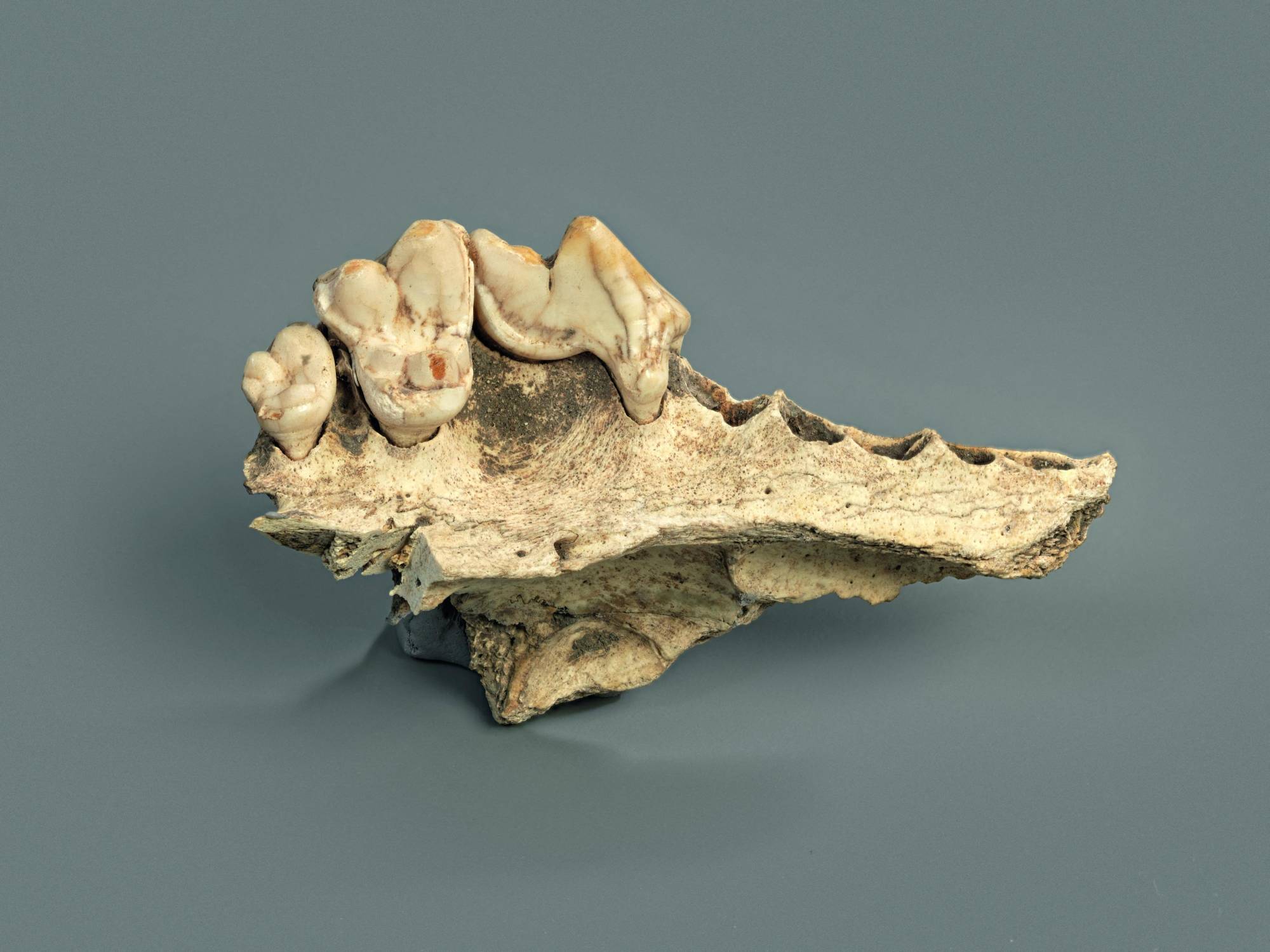
Scientists have uncovered the mummified remains of cheetahs from caves in northern Saudi Arabia.

The remains range from 130 years old to over 1,800 years old. Researchers excavated seven mummies along with the bones of 54 other cheetahs from a site near the city of Arar.

Mummification prevents decay by preserving dead bodies. Egypt's mummies are the most well-known, but the process can also happen naturally in places like glacier ice, desert sands and bog sludge.

The new large cat mummies have cloudy eyes and shriveled limbs, resembling dried-out husks.

“It’s something that I’ve never seen before,” said Joan Madurell-Malapeira with the University of Florence in Italy, who was not involved with the discovery.

Researchers aren’t sure how exactly these new cats got mummified, but the caves’ dry conditions and stable temperature could have played a role, according to the new study published Thursday in the journal Communications Earth and Environment.

They also don't know why so many cheetahs were in the caves. It could have been a denning site where mothers birthed and raised their young.

Scientists have uncovered the rare mummified remains of other large cats, including a saber-toothed cat cub in Russia.

It's uncommon for large mammals to be preserved to this degree. Besides being in the right environment, the carcasses also have to avoid becoming a snack for hungry scavengers like birds and hyenas.

Cheetahs once roamed across most of Africa and parts of Asia, but now live in just 9% of their previous range and haven't been spotted across the Arabian Peninsula for decades. That’s likely due to habitat loss, unregulated hunting and lack of prey, among other factors.

In a first for naturally mummified large cats, scientists were also able to peek at the cheetahs' genes and found that the remains were most similar to modern-day cheetahs from Asia and northwest Africa. That information could help with future efforts to reintroduce the cats to places they no longer live.


Vonn Launches Social Media Search Mission After Ski Pole Goes Missing

 US' Lindsey Vonn crosses the finish line to win the Women's Downhill event of the FIS Alpine Ski World Cup in Altenmarkt Zauchensee, Austria, on January 10, 2026. (AFP)
US' Lindsey Vonn crosses the finish line to win the Women's Downhill event of the FIS Alpine Ski World Cup in Altenmarkt Zauchensee, Austria, on January 10, 2026. (AFP)
TT

Vonn Launches Social Media Search Mission After Ski Pole Goes Missing

 US' Lindsey Vonn crosses the finish line to win the Women's Downhill event of the FIS Alpine Ski World Cup in Altenmarkt Zauchensee, Austria, on January 10, 2026. (AFP)
US' Lindsey Vonn crosses the finish line to win the Women's Downhill event of the FIS Alpine Ski World Cup in Altenmarkt Zauchensee, Austria, on January 10, 2026. (AFP)

Lindsey Vonn may be dominating World Cup downhills at 41, but even the US speed queen is not immune to missing equipment.

Vonn took to social media on Thursday with an unusual plea after losing a ski pole in Tarvisio, Italy, ahead of this weekend's World Cup event.

"Someone took ‌my pole ‌in the parking ‌lot ⁠today in ‌Tarvisio. If you have seen it, please respond to this. Thank you," Vonn wrote on X, posting a photo of the matching pole complete with her initials on the ⁠hand strap.

Vonn, a favorite for the speed events ‌at next month's Milano-Cortina ‍Olympics, retired ‍from the sport in 2019 and ‍had a partial knee replacement in April 2024 but returned to competition later that year and has been enjoying a fairy-tale comeback that has defied age and expectation.

Already the oldest ⁠World Cup winner of all time, Vonn continued her astonishing, age-defying form with a downhill victory in Zauchensee, Austria last week.

That triumph marked Vonn's fourth podium from four downhills this season, cementing her lead in the World Cup standings and her status as the woman to ‌beat at next month's Olympics.