Saudi Industry Minister Strengthens Strategic Partnership with Senior Chinese Officials https://english.aawsat.com/business/5189772-saudi-industry-minister-strengthens-strategic-partnership-senior-chinese-officials
Saudi Industry Minister Strengthens Strategic Partnership with Senior Chinese Officials
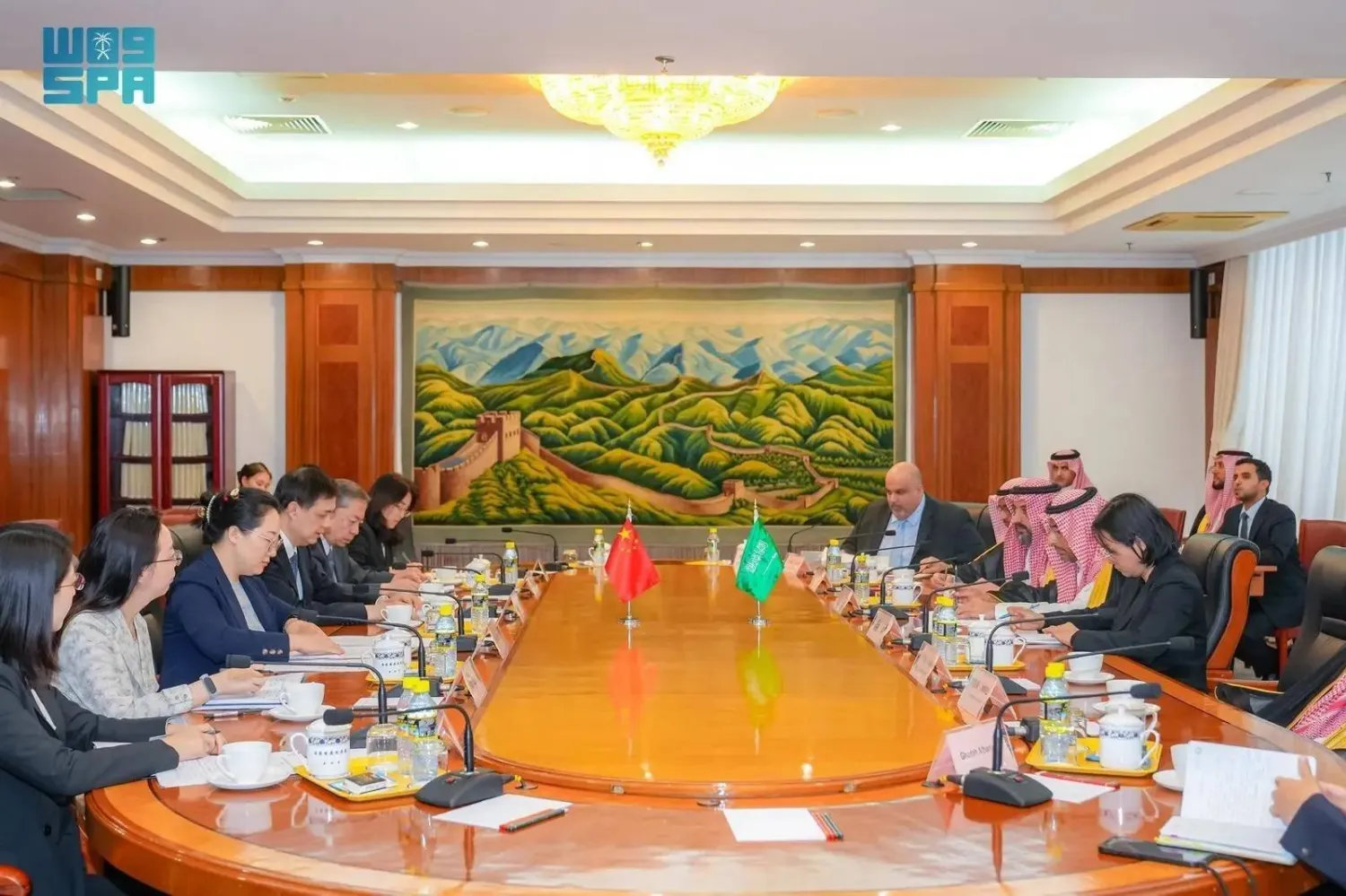
The Saudi and Chinese delegations meet. (SPA)
TT
TT
Saudi Industry Minister Strengthens Strategic Partnership with Senior Chinese Officials
The Saudi and Chinese delegations meet. (SPA)
Saudi Minister of Industry and Mineral Resources Bandar bin Ibrahim Alkhorayef held separate meetings in China with Minister of Natural Resources Guan Zhi’ou and Vice Chairman of the National Development and Reform Commission Zhou Haibing on expanding the strategic partnership between their countries in the industrial and mining sectors, reported the Saudi Press Agency on Tuesday.
The first meeting addressed developing cooperation in mining, mineral industries, and geological surveying, in addition to opportunities for exchanging expertise and knowledge and developing specialized human capacities in the mining sector.
Talks also covered expansion plans for Chinese investments in Saudi Arabia’s mining sector.
Alkhorayef invited Minister Guan to participate in the fifth annual Future Minerals Forum scheduled to be held in Riyadh in January.
Discussions between Alkhorayef and Vice Chairman Zhou focused on boosting cooperation in the industrial and mining sectors, investment opportunities in the automotive industry, and the transfer of advanced technologies and innovative solutions to the Kingdom, in line with the objectives of Saudi Vision 2030.
The meetings were attended by National Industrial Development Center Chief Executive Eng. Saleh Al-Solami, Saudi Ambassador to China Abdulrahman Al-Harbi, ACWA Power board chairman Mohammed Abunayyan, and leaders from the Kingdom’s industry and mining ecosystem.
Alkhorayef also held a series of meetings with leaders of major Chinese companies, including Tsinghua Unigroup, BOE Technology Group, and Kyland Technology, during his official visit to China.
The meetings focused on industrial cooperation and the localization of advanced manufacturing technologies in the Kingdom.
Discussions covered opportunities in developing the industrial digital infrastructure, intelligent industrial control technologies, and the semiconductor industry, in addition to highlighting the Kingdom’s enablers that attract quality industrial investments and facilitate the investor journey.
The officials reviewed the Kingdom’s strategic advantages, including its geographic position connecting three continents, abundant natural resources, competitive energy pricing, advanced infrastructure and industrial cities, and streamlined government procedures.
On the sidelines of the meetings, Alkhorayef witnessed the signing of three memoranda of understanding between the National Industrial Development Center and the Chinese companies: the first with BOE Technology Group in advanced display technologies, the second with Kyland Technology in intelligent industrial control technologies, and the third with Tsinghua Unigroup in the semiconductor industry, with the aim of localizing these advanced industrial technologies in the Kingdom.
Canada Unveils Counter Tariffs of 15% to 50% on US Goods
Canadian flag is pictured across the Detroit River in Windsor, Ontario, Canada, 25 August 2026. EPA/ARI SAPERSTEIN
Canada on Tuesday announced counter-tariffs on US goods ranging between 15 percent and 50 percent, intensifying the trade war between the historically close allies.
Ottawa's retaliation takes effect September 8, a timeframe earlier outlined by Prime Minister Mark Carney after US President Donald Trump's 50-percent duties on Canadian products came into place Saturday.
In detailing Ottawa's response, officials said Tuesday that its duties will match US levels. These impact industries like steel, dairy and electronics.
Canada's government also announced a $5.4 billion (CA$7.5 billion) aid package for impacted firms and workers.
"This is an unprecedented challenge imposed on Canada. But Canada will meet the moment," AFP quoted Canada's Finance Minister Francois-Philippe Champagne as saying.
"I think what Canadians can see this morning is that we stand united. We stand united in our response," he added.
The steep US tariffs hit about $20 billion in Canadian goods -- about 5.5 percent of its exports to the United States -- after trade negotiations collapsed at the eleventh hour.
Under Canada's planned response, US steel and aluminum products previously subject to a 25-percent duty will soon face 50-percent tariffs.
Goods facing 25-percent tariffs will include appliances, dairy products like cheese, as well as certain steel and aluminum derivative products.
A small category will see a 15-percent duty, including electric equipment and tools.
Overall, these form about 7.3 percent of Canada's imports from the United states.
But analysts warn of tit-for-tat escalation.
Already, Trump additionally pledged Monday to double tariffs on Canadian autos starting next year, up to 50 percent from the current 25 percent for non-US content.
Ontario Premier Doug Ford criticized Trump's threat on autos, saying he could "kiss my ass" and threatening an electricity export surcharge.
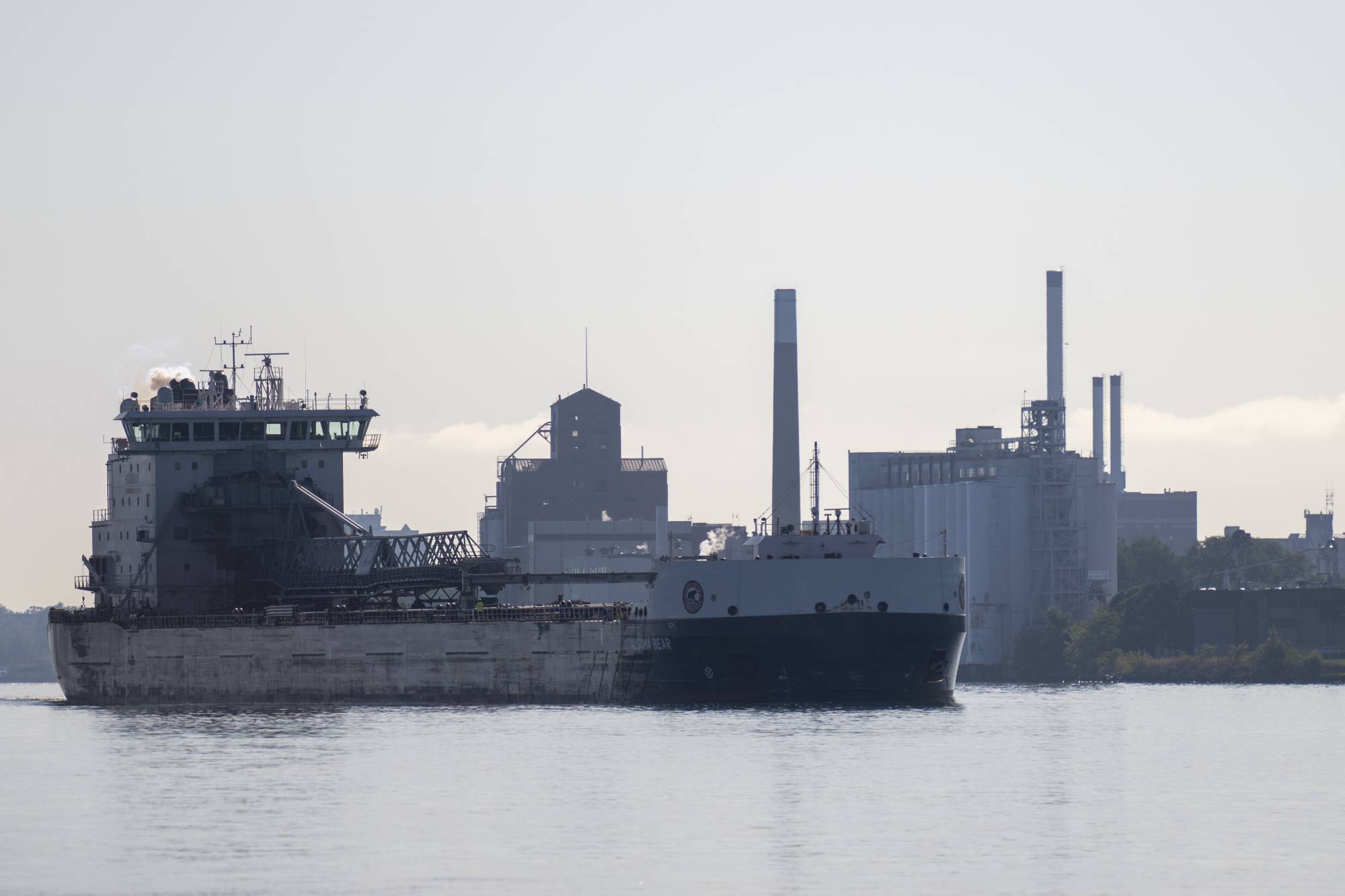
A freighter travels along the Detroit River in Detroit, Michigan, USA, 25 August 2026. EPA/ARI SAPERSTEIN
In an earlier phase of the dispute, Ontario imposed a temporary 25-percent surcharge on electricity exports to three US states.
Trump lashed out at Ford, warning of "far worse" consequences. He also referred to Carney as a "governor," re-upping his inflammatory push for Canada to become the 51st US state.
Highlighting the animosity, Trump said Tuesday he was considering renaming Lake Ontario as "Lake America," as he did last year with the Gulf of Mexico, which he said should now be called the "Gulf of America."
Trump's latest tariffs do not exempt products covered by the US-Mexico-Canada free trade agreement (USMCA). They raise the US effective tariff rate on Canadian exports to 6.9 percent from 5.1 percent, Oxford Economics estimates.
Tariffs on plastics, electrical machinery, and wood and paper products contribute most to the increase.
"Manufacturers in Quebec, New Brunswick, and Ontario will be affected the most," Oxford Economics said.
Over the weekend, Carney said US negotiators sought restrictions on Canadian trade deals with other countries at the last minute.
US officials made unacceptable "threats" to the French language and "Quebec culture" too, he added, referring to eastern Canada's French-speaking province.
But Trump pushed back Tuesday, saying on Truth Social that he would "never interfere with Canadians speaking French!"
"This lie was made up by a weak and ineffective Prime Minister in an attempt to gain political support," Trump charged.
The United States is Canada's biggest trading partner, with Canadian exports to its neighbor representing 70 percent of its overall total.
Canada is the second biggest US trading partner in goods this year, behind Mexico.
Polling released Sunday by the Angus Reid Institute showed Canadian broadly support Carney's move to walk away from talks, but some fear economic repercussions.
The White House had alleged "discriminatory treatment" by Canada against US alcohol, automobile and dairy products in rolling out new tariffs.
Trump delayed their implementation, but both sides failed to reach an agreement after hours of talks.
Beyond tariffs, Washington and Ottawa also have to agree on revisions to the USMCA, which Trump declined to renew in its current form.
French Entrepreneur: Saudi Arabia is a Launchpad for Technology into Global Marketshttps://english.aawsat.com/business/5310994-french-entrepreneur-saudi-arabia-launchpad-technology-global-markets
French Entrepreneur: Saudi Arabia is a Launchpad for Technology into Global Markets
The Biban Forum in Riyadh, specializing in startups (SPA)
French entrepreneur and investor Julie Barbier does not see Saudi Arabia merely as a promising market for technology companies, but as a global launchpad that enables the testing, development, and scaling of breakthrough technologies.
The founder and CEO of Merit believes that the Kingdom's combination of digital infrastructure, capital availability, execution speed, and broad customer base makes it an attractive environment for building technology products that can subsequently expand into regional and international markets.
In an interview with Asharq Al-Awsat, Barbier said that the economic transformation driven by Vision 2030 has created a highly ambitious business environment that is quick to embrace new ideas, alongside the restructuring of major sectors including finance, tourism, transportation, trade, logistics, and government services.
She cited the experience of Merit, a global company specializing in engagement and incentive technologies, whose Saudi team achieves innovation efficiency levels 59 percent higher than the company's internal innovation benchmark and generates about eight innovation initiatives each week.
Barbier said Saudi Arabia has become one of the world's most attractive environments for launching, validating, and scaling new technologies, benefiting from high rates of digital adoption, a willingness among major institutions to collaborate with innovative solutions, abundant capital, and the simultaneous transformation of entire economic sectors.
She explained that these conditions provide entrepreneurs with access to real-world use cases and serious customers, allowing them to launch and test new products at scale before rapidly refining and adapting them for expansion into other markets.
In her view, the Kingdom's pace of transformation also encourages a greater willingness to challenge traditional methods, a critical factor when developing new solutions.
For Merit, which selected Riyadh as its regional headquarters, Barbier said the company's presence in Saudi Arabia gives it direct access to customers and partners while enabling it to develop and test products before introducing them internationally.
"That is why I see Saudi Arabia not simply as a technology market, but as a launchpad for companies with regional and global ambitions," she said.
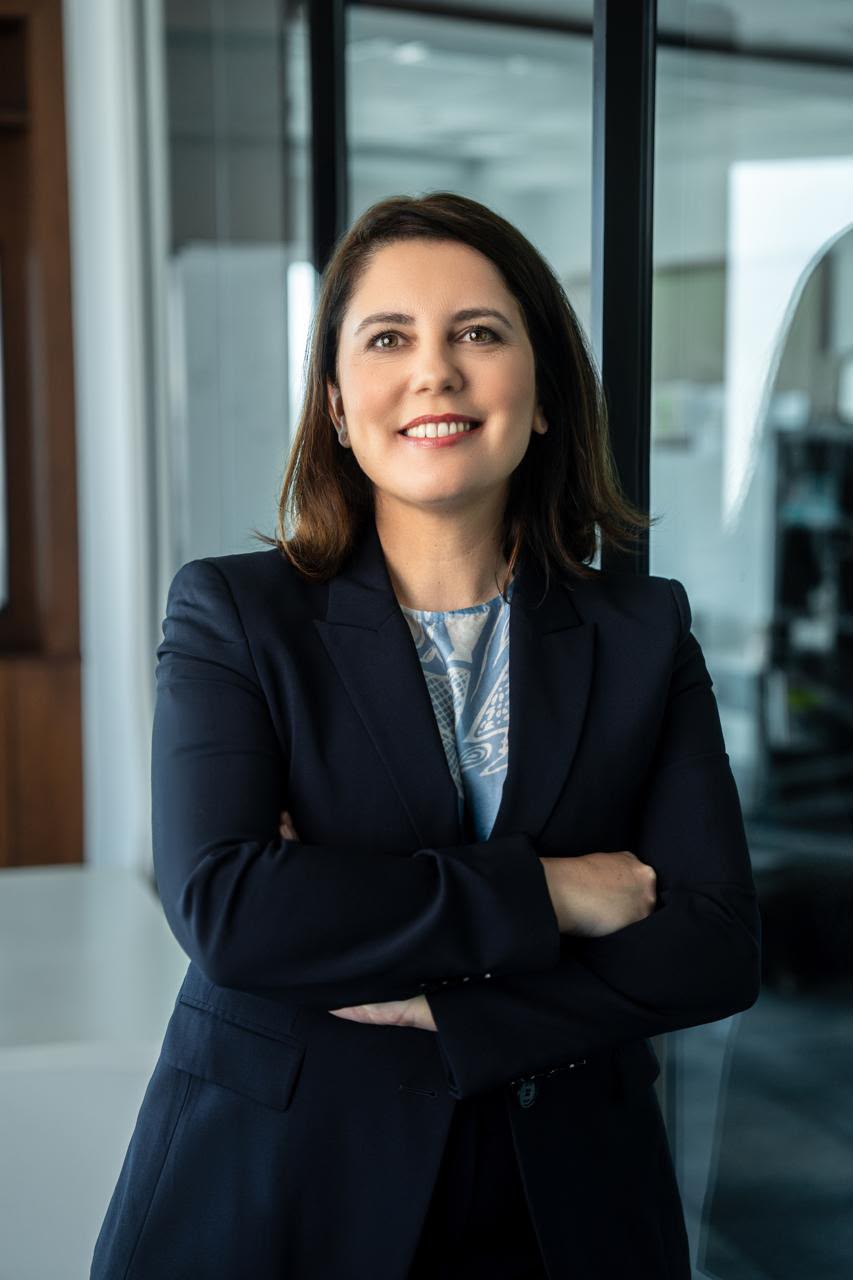
French entrepreneur and investor Julie Barbier (Asharq Al-Awsat)
Vision 2030: From Ambition to Rapid Execution
Barbier said one of Vision 2030's most significant contributions has been providing the Kingdom with a clear direction and a high level of ambition shared by government institutions, businesses, investors, and entrepreneurs.
"In a transformation of this scale, it is natural for some goals to progress faster than others, but the direction is clear and the momentum is strong," she said.
She believes that the clarity of ambition across the business ecosystem directly influences how new ideas are received. Decisions are made more quickly, experimentation is encouraged, and companies become more willing to adopt new ways of working.
Barbier likened Vision 2030 to a wave pushing the entrepreneurial ecosystem forward. Entrepreneurs and companies operating in the Kingdom are not merely benefiting from this momentum, she said; they are also helping to create it and moving in the same direction.
Merit's experience reflects that transformation. Although the company operates through approximately eight offices and employs staff from 24 nationalities, its Saudi team performs 59 percent better on the company's internal innovation index and launches around eight innovation initiatives each week.
According to Barbier, these figures are a practical demonstration of Vision 2030's impact.
"It is not simply a government strategy," she said. "It creates an environment that encourages people to work harder, experiment more, move faster, and think on a larger scale."
She added that this momentum has become part of Merit's strategic advantage: "We benefit from it and contribute to strengthening it."
A Digital Environment that Shortens the Path from Idea to Execution
Discussing her experience as a French entrepreneur and investor leading a global technology company from Riyadh, Barbier said what distinguishes Saudi Arabia's business environment is the speed with which decisions move from ambition to implementation, something entrepreneurs notice in their daily operations.
She noted that a wide range of services have become digital, from government services, digital identity, and payments to banking and business management. Many procedures that once required paperwork, appointments, or multiple intermediaries can now be completed digitally with increasing ease.
Barbier believes this digital transformation is not simply changing service delivery but is also reshaping the business mindset itself by raising expectations regarding execution speed and customer experience, while a broad technology infrastructure continues to be built across the Kingdom.
In this context, she highlighted the role of Saudi companies in strengthening the ecosystem. She noted that HUMAIN is developing capabilities in data centers, cloud infrastructure, models, and applications, while the government-owned company Elm serves as an example of how deeply technology has become integrated into sectors such as government services, finance, logistics, and business services.
Regarding Merit's decision to establish its regional headquarters in Riyadh, Barbier said the Kingdom's importance to the company extends beyond market size to include the environment it offers for product development, testing, and expansion.
"That is why we chose Riyadh as our regional headquarters," she said, "while continuing to develop products and technologies from Saudi Arabia that target global markets."
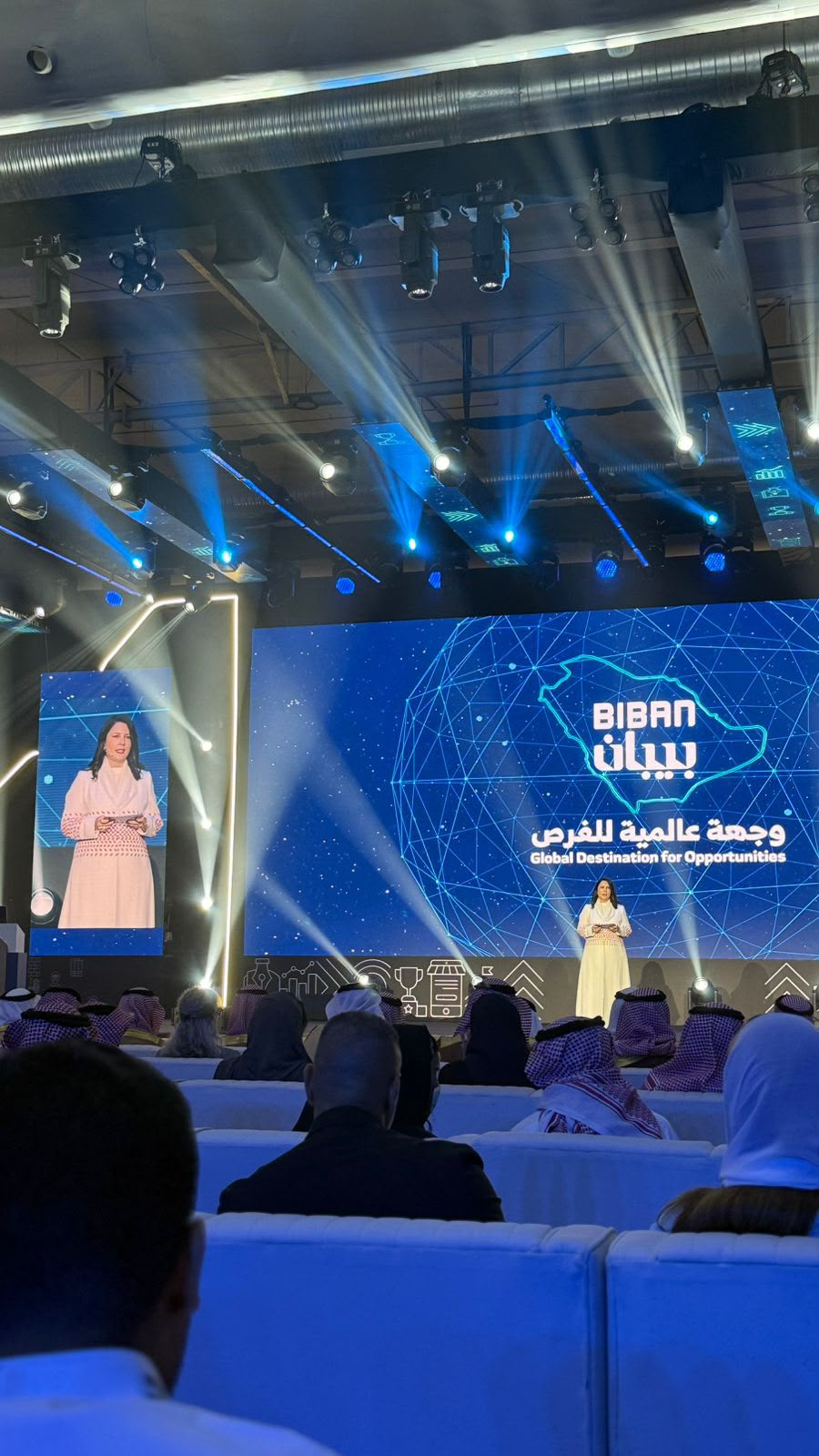
French entrepreneur and investor Julie Barbier at the Biban Forum in Riyadh (Asharq Al-Awsat)
The Future of Female Entrepreneurship in Saudi Arabia
Asked about the future of female entrepreneurship in the Kingdom, Barbier said: "I witnessed tremendous passion for entrepreneurship during my recent participation in the Saudi Unicorns Forum in Abha, where I met several female founders. What stood out was not only their ability to build companies, but also their level of ambition, commitment, and desire to expand and grow."
She noted that Saudi women are already active as founders, chief executives, investors, and decision-makers. What further strengthens their role, she said, is the growing entrepreneurial support ecosystem, which includes business leaders, investors, and experienced mentors who open doors, share expertise, and support the next generation of female entrepreneurs.
"I would also like to mention Princess Reema bint Bandar, the Custodian of the Two Holy Mosques' Ambassador to the United States, whose leadership and support have helped create more opportunities and support for the next generation of Saudi female entrepreneurs," she said.
Barbier added that Merit has witnessed similar progress internally across areas including product management, design, and marketing, where women directly influence the products the company develops, the decisions it makes, and the way it grows.
"Therefore, I do not believe the question today is whether Saudi women participate in entrepreneurship," she added. "They are already present and playing an active role. The next step is enabling more founders to scale by expanding access to capital, mentorship, and international networks, helping them build companies capable of growing regionally and globally."
HUMAIN, Mistral Collaborate to Advance Sovereign AI in Saudi Arabia and Regionallyhttps://english.aawsat.com/business/5310876-humain-mistral-collaborate-advance-sovereign-ai-saudi-arabia-and-regionally
HUMAIN, Mistral Collaborate to Advance Sovereign AI in Saudi Arabia and Regionally
Guests at the booth of Saudi AI company HUMAIN during the Future Investment Initiative conference in Riyadh (Company photo)
Saudi Arabia’s HUMAIN and French Artificial Intelligence company Mistral have announced a strategic collaboration spanning AI infrastructure, advanced model development, and the deployment of AI solutions in Saudi Arabia and across the region.
“Together, the companies will pursue the development and localization of advanced AI models, with initial areas of focus including cybersecurity and voice,” HUMAIN said in a statement on Monday.
“The companies also plan to develop frontier models that perform strongly in Arabic language to help support the broader region. This represents a collaboration in the hundreds of millions of Euros.”
“As part of the collaboration, Mistral will explore using HUMAIN's data center infrastructure to support growing local compute needs,” said the statement.
It added that the two companies also plan to develop a joint go-to-market strategy in the Kingdom focused on bringing advanced AI solutions to regulated industries.
CEO of HUMAIN Tareq Amin said on X that “the collaboration spans AI infrastructure, advanced model development and AI solutions, including plans to develop and localize frontier models with strong Arabic-language capabilities.”
According to the HUMAIN statement, “the collaboration is designed to meet growing demand for sovereign AI: AI that keeps data, intelligence, compute, and operations under the customer's control.”
“That means data can remain within customer-defined boundaries, models can be adapted and owned on open weights, training and inference can run on infrastructure and in jurisdictions the customer chooses, and AI systems can be deployed, governed, observed, and improved over time without ceding control of the learning loop to an external platform.”
The statement stressed its importance in financial services, manufacturing, telecommunications, cybersecurity, and the public sector.
لم تشترك بعد
انشئ حساباً خاصاً بك لتحصل على أخبار مخصصة لك ولتتمتع بخاصية حفظ المقالات وتتلقى نشراتنا البريدية المتنوعة