


Iran Brags About Missile Superiority, Rules Out New Conflict

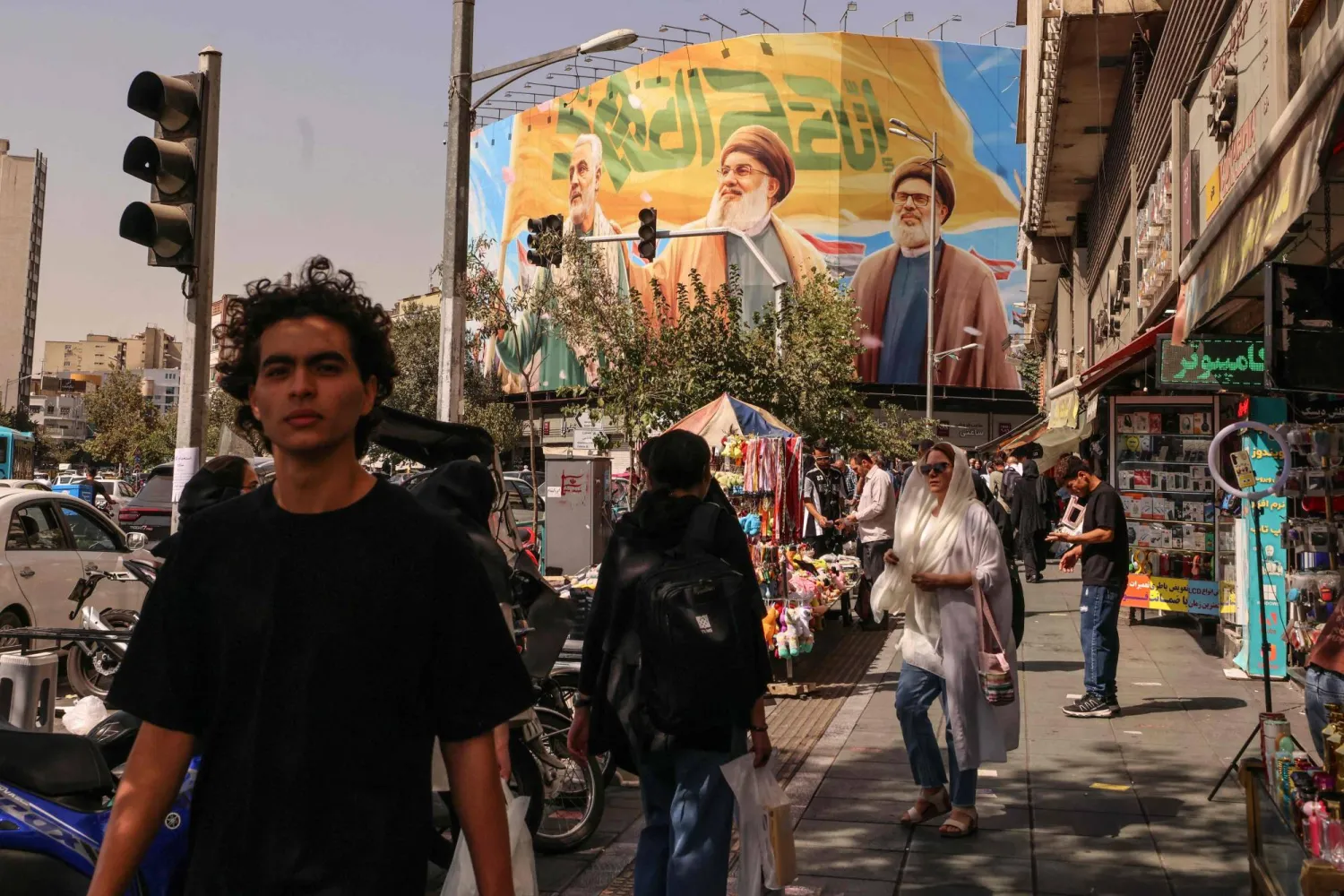
People walk in front of a billboard depicting slain Lebanese Hezbollah leaders Hassan Nasrallah (C) and his successor Hashem Safieddine (R) as well as the late Iranian General Qasem Soleimani, in Tehran on September 28, 2025. (Photo by ATTA KENARE / AFP)
TT

Iran Brags About Missile Superiority, Rules Out New Conflict

People walk in front of a billboard depicting slain Lebanese Hezbollah leaders Hassan Nasrallah (C) and his successor Hashem Safieddine (R) as well as the late Iranian General Qasem Soleimani, in Tehran on September 28, 2025. (Photo by ATTA KENARE / AFP)

Iranian Intelligence Minister Esmail Khatib said on Thursday that the capabilities of the armed forces and Iran’s missile superiority provided a major victory for Iran and defeated plans to overthrow the regime and divide the country.

“The enemies have sought to impose their narrative on Iranian public opinion and perception through disinformation and propaganda,” he said.

“In this hybrid war, the enemies sought to carry out assassinations, sabotage, and acts of terror. Their efforts failed,” Khatib noted, according to ISNA news agency.

The minister said Iran’s losses were quickly contained through prompt appointments and prudent measures, combined with the zeal, strength, and power of its armed forces.

“The missile superiority of our forces brought a great victory for our country,” he said.

Khatib added that “the failure of the enemies’ plots once again proved the strength and unity of the Iranian people and institutions.”

Khatib’s comments came after several Iranian officials and military commanders have recently stressed Tehran's rejection of any negotiations with Washington that would affect its uranium enrichment program and limit its ballistic missile program.

“The Islamic Republic has developed and will continue to develop its missile program to any extent it deems necessary,” said Ahmad Bakhshayesh Ardestani, a member of parliament’s national security committee.

While Supreme Leader Ali Khamenei had previously capped missile range at 2,200 kilometers, he has now “removed any such limitation,” the deputy affirmed.

Ardestani noted that Tehran refuses to put “limits on its missile range,” which he described as its “most important element of military power.”

His comments came shortly after Iranian Foreign Minister Abbas Araghchi met this week with members of Parliament’s National Security and Foreign Policy Committee and briefed the lawmakers on his recent visit to New York where he attended the 80th session of the United Nations General Assembly.

The Iranian deputy said US President Donald Trump is eager to achieve a peace deal with Hamas. “Similar to (Israeli Prime Minister Benjamin) Netanyahu, the US President is exhausted from the continued wars in the region.”

Ardestani also said “any peace agreement between Israel and Hamas could automatically lead to an undeclared calm between Israel, Hezbollah, Yemen, and even Iran.”

He added that “Western countries are betting on the return of UN sanctions to increase economic pressure on Tehran, thinking that this will make life more difficult and deepen the gap between the people and the regime, which could lead to internal protests.”

The deputy affirmed that if in six months those expectations are not fulfilled, “the West will withdraw its conditions imposed on Iran and will seek to negotiate with us.”

Meanwhile, former Iranian Foreign Minister Mohammad Javad Zarif said that “missiles are important, but people are more important. It’s the people who have kept Iran alive through the centuries.”

The former top diplomat told foreign-policy experts and reporters at a Tehran seminar on Wednesday that Israel and the United States share interests, but their strategic goals differ.

“America’s policy is not to bring about Iran’s collapse, but Israel —even during the Pahlavi era—believed that Iran was too big and must be broken apart,” he said.



NATO: Ukraine Still Receiving Arms Despite Mideast War

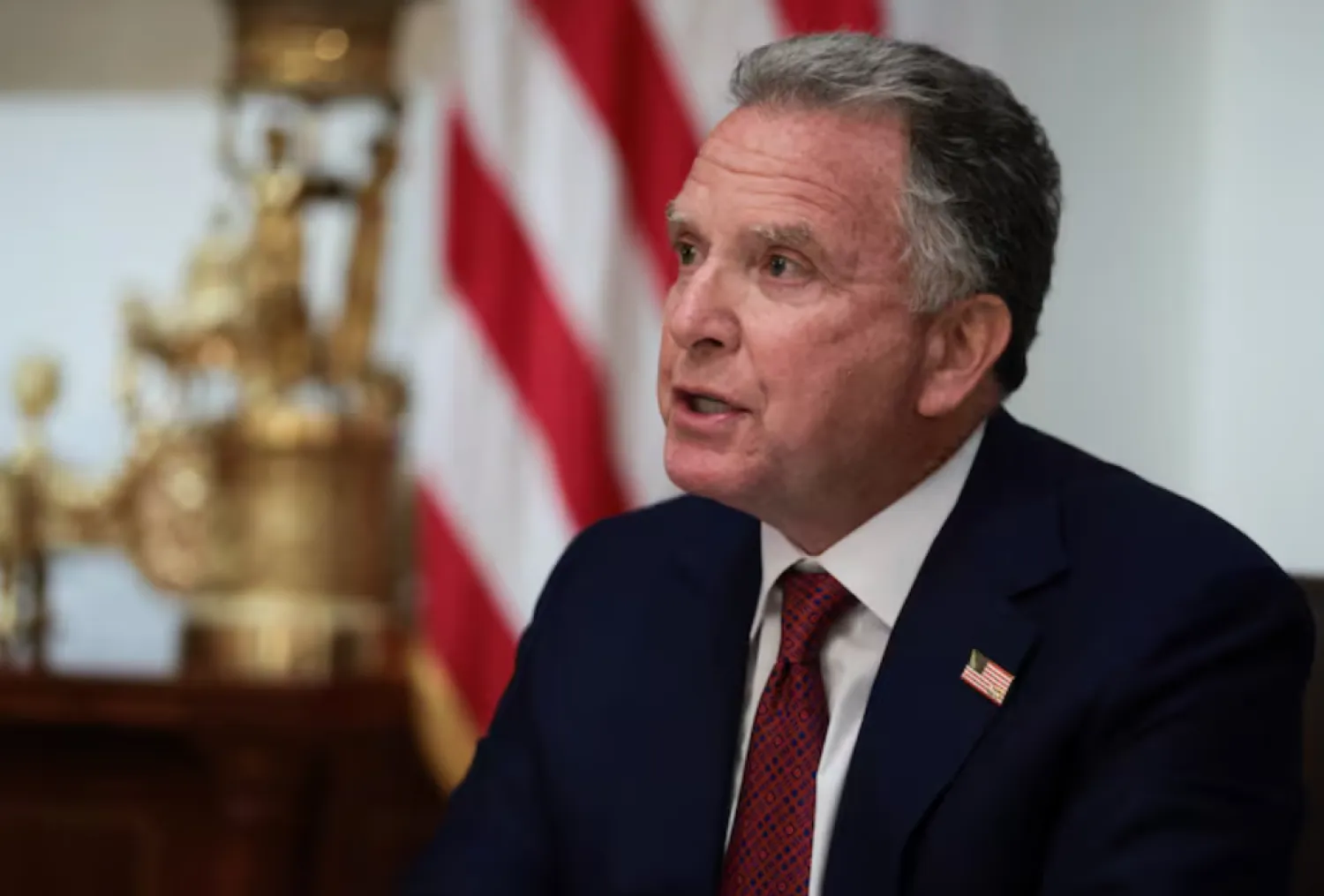
NATO Secretary General Mark Rutte via Reuters/File
TT

NATO: Ukraine Still Receiving Arms Despite Mideast War

NATO Secretary General Mark Rutte via Reuters/File

Ukraine is still getting essential defense equipment despite the war in the Middle East, which is depleting stockpiles in Europe and the United States, NATO Secretary General Mark Rutte said Thursday.

"The good news is that essential equipment into Ukraine continues to flow," he told reporters. That included American-made Patriot missile interceptors, which Ukraine desperately needs, he added, AFP reported.

The PURL program, launched last year, allows Ukraine to receive US equipment financed by European countries.

Some 75 percent of the missiles used by Patriot batteries in Ukraine have been supplied through the program, and 90 percent of the munitions used by other air-defense systems, Rutte added.

Rutte called on European countries to increase their own production capacity.

"They need to produce more extra production lines, extra shifts, opening new factories. The money is there," he said.


Germany FM Says 'Encouraging' if US Speaking Directly to Iran

German Foreign Minister Johann Wadephul. (Reuters: File Photo)
TT

Germany FM Says 'Encouraging' if US Speaking Directly to Iran

German Foreign Minister Johann Wadephul. (Reuters: File Photo)

Germany's foreign minister Thursday said it was encouraging if the United States was talking directly to Iran to end the war in the Middle East, but Washington should make its intentions clear.

"I hear that there are signs that the US is speaking directly to Iran. I think that this is encouraging and this is welcome," Johann Wadephul told reporters before heading into the meeting of G7 foreign ministers outside Paris, AFP reported.

With US Secretary of State Marco Rubio set to join the discussions from Friday, he added: "For the German government it is of great importance to know precisely what our American partners are intending."


US Envoy Witkoff Says Iran is Seeking an Off-ramp

US Special Envoy Steve Witkoff speaks during a cabinet meeting at the White House in Washington, DC, US, March 26, 2026. REUTERS/Evelyn Hockstein
TT

US Envoy Witkoff Says Iran is Seeking an Off-ramp

US Special Envoy Steve Witkoff speaks during a cabinet meeting at the White House in Washington, DC, US, March 26, 2026. REUTERS/Evelyn Hockstein

The United States has sent Iran a "15-point action list" as a basis for negotiations to end the current conflict, US Special Envoy Steve Witkoff said on Thursday, adding that there are signs that Tehran was interested in making a deal.


Witkoff, speaking during a cabinet meeting at the White House, said that the nascent talks could be successful if the Iranians realize there were no good alternatives - a realization Tehran might be coming to, he argued, Reuters reported.


"We will see where things lead, and if we can convince Iran that this is the inflection point with no good alternatives for them other than more death and destruction," Witkoff told reporters.


"We have strong signs that this is a possibility."


Witkoff said Pakistan had been acting as a mediator, confirming statements from Pakistani officials.