


Intense Government Measures Reset Saudi Real Estate Market

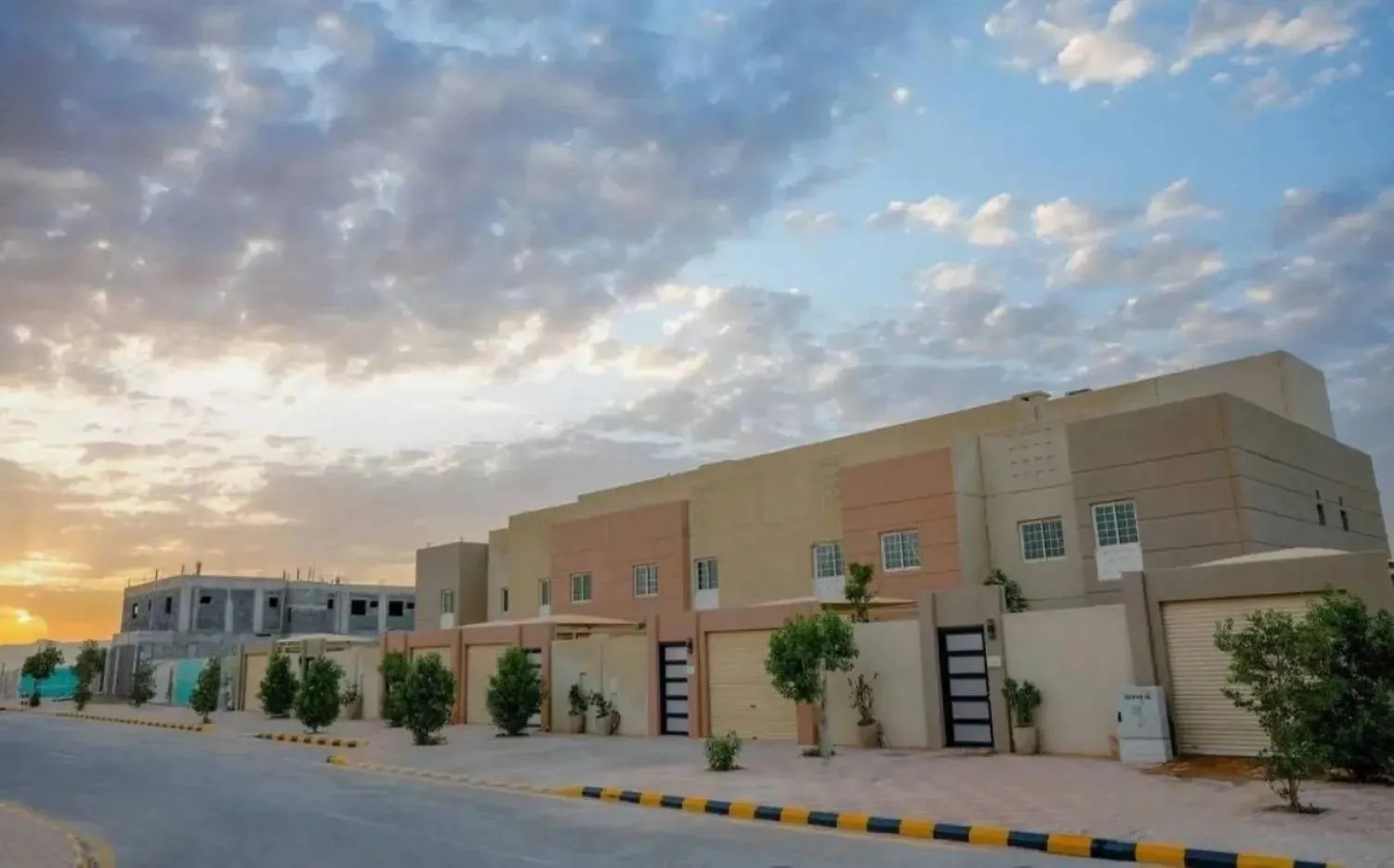
Properties in Riyadh, Saudi Arabia. (SPA)
TT

Intense Government Measures Reset Saudi Real Estate Market

Properties in Riyadh, Saudi Arabia. (SPA)

Saudi Arabia’s real estate sector, particularly in Riyadh, is undergoing a new phase of regulation and reform designed to bring long-term stability, enhance transparency, and protect the rights of all stakeholders. The measures reflect the government’s continued commitment to building a sustainable and diversified economy under Vision 2030, expanding homeownership, and attracting both domestic and foreign investment.

Officials expect the market to experience a clear rebalancing over the next five years, with the focus shifting from quantity to quality. This new phase focuses on affordable homeownership programs, institutional leasing, and the growing role of digital platforms in improving market regulation and transparency.

In March, Prince Mohammed bin Salman, Crown Prince and Prime Minister, directed the implementation of additional measures to restore balance in Riyadh’s real estate sector, addressing surging land and rental prices and ensuring market stability. The directive included initiatives to safeguard tenant and investor rights, strengthen transparency, and improve residential and commercial environments, advancing Vision 2030’s sustainable development goals.

In August, Minister of Municipal, Rural Affairs and Housing Majed Al-Hogail launched the geographical expansion of the White Land Fees Program in Riyadh, following the Crown Prince’s directives. The program aims to curb speculative land hoarding within urban zones, increase the supply of developed plots, and stimulate buying and selling activity.

The amended law and its new executive bylaws are expected to help rebalance the market and encourage development inside city limits.

On September 25, the government also introduced new rental-market regulations, freezing rent increases on existing and new contracts for five years. The measures mandate automatic lease renewals as the nationwide default, restrict non-renewal cases by landlords in Riyadh, and require all rental contracts to be documented through the Ejar platform to strengthen transparency and legal enforcement.

A detailed Housing Support Regulation has also come into force, defining eligibility for state housing assistance. The framework establishes a comprehensive points-based system for assessing applications, prioritizing families according to residency, financial capacity, and absence of homeownership.

Meanwhile, the Royal Commission for Riyadh City recently lifted a development freeze on 33.24 square kilometers of land west of the capital, allowing landowners to sell, develop, and obtain building permits under the updated Wadi Hanifah urban code.

Khaled Al-Mobid, CEO of Menassat Real Estate, told Asharq Al-Awsat that recent housing policies mark “a qualitative transformation,” evolving from traditional mortgage support to a comprehensive system that caps monthly payments at 33 percent of income.

These reforms are gradually narrowing the homeownership gap, but still require an expanded supply of affordable units to achieve lasting market balance, he added.

Al-Mobid noted that real estate has become a direct driver of sustainable development in its economic, social, and environmental dimensions, aligning with smart-city initiatives and Vision 2030 objectives.

Dr. Hussein Al-Attas, a financial and economic consultant, added that current housing-support policies have raised ownership rates to record levels. The next challenge, he said, is stabilizing rents and diversifying housing products to suit middle-income families.

Al-Attas said real estate now forms a core pillar of sustainable urban development, improving quality of life, resource efficiency, and infrastructure. He predicted a maturing and stabilizing housing market as new cities, suburban projects, and modern construction technologies reduce costs and boost efficiency.

He remarked that while local investors remain the main growth engine, opening the market to foreign investors will introduce advanced technologies and innovative financing tools, boosting competitiveness.

The rise of real-estate investment funds and institutional capital, he added, will elevate project quality, diversify opportunities, and advance Saudi Arabia’s long-term urban development goals.


ECB's Rehn Sees Downside Risks to Inflation, Urges Action on Ukraine Funding

FILE PHOTO: Olli Rehn in Helsinki, Finland, January 28, 2024. Lehtikuva/Heikki Saukkomaa via REUTERS
TT

ECB's Rehn Sees Downside Risks to Inflation, Urges Action on Ukraine Funding

FILE PHOTO: Olli Rehn in Helsinki, Finland, January 28, 2024. Lehtikuva/Heikki Saukkomaa via REUTERS

Inflation in the euro zone faces downside risks in the medium term, even as price growth has returned to the ECB's 2% target, European Central Bank policymaker Olli Rehn said, according to a report in a magazine on Saturday.

The sharp drop from the October 2022 peak of 10.6% to around 2% currently was achieved without triggering mass unemployment or a severe slowdown, he told Italian financial magazine Milano Finanza.

"The good news is that inflation has stabilized around the ECB's symmetric 2% target, supporting real incomes in Europe," Reuters quoted him as saying. "Our latest forecast suggests inflation will remain slightly below 2% over the horizon."

Rehn also urged EU leaders to resolve a stalled plan for a Ukraine "repair loan" funded by Russia's frozen assets, calling it "essential, even existential."

He dismissed speculation about ECB involvement, saying such a move would breach the EU Treaty's ban on monetary financing.

Instead, he backed a European Commission proposal under Article 122, often called the 'EU's emergency clause,' that gives the EU Council the power to adopt measures proposed by the European Commission in exceptional circumstances, bypassing the ordinary legislative process and the European Parliament.

"Every European should support using frozen Russian assets to help Ukraine," he said.

The Finnish policymaker, who has served in senior EU roles for decades, confirmed he would be a strong candidate for ECB vice president when the post opens next year.

"I have received encouragement from various parts of Europe," Rehn added.


World Bank to Partner with Global Vaccine Group Gavi on $2 Billion in Funding

The Vaccine Alliance (GAVI) logo and US flag are seen in this illustration taken April 23, 2025. REUTERS/Dado Ruvic/Illustration/File Photo
TT

World Bank to Partner with Global Vaccine Group Gavi on $2 Billion in Funding

The Vaccine Alliance (GAVI) logo and US flag are seen in this illustration taken April 23, 2025. REUTERS/Dado Ruvic/Illustration/File Photo

The World Bank Group said on Saturday it is working with global vaccine alliance Gavi to strengthen financing for immunization and primary healthcare systems, planning to mobilize at least $2 billion over the next five years in joint financing.

The two organizations will also work together to advance vaccine manufacturing in Africa as part of a World Bank goal to help countries reach 1.5 billion people with quality, affordable health services by 2030, Reuters quoted the World Bank as saying.

Gavi is a public-private partnership that helps vaccinate more than half the world’s poorest children against diseases.

"Our expanded collaboration with the World Bank Group reflects a long-standing joint effort to support countries as they build robust and resilient health systems," said Sania Nishtar, Gavi's chief executive.

US Health Secretary Robert F. Kennedy Jr. said in June the United States would no longer contribute funding to Gavi, alleging that the group ignores safety and calling on it to "justify the $8 billion that America has provided in funding since 2001."

The Trump administration had also indicated in March it planned to cut annual funding of around $300 million for Gavi as part of a wider pullback from international aid.

In June, Gavi had more than $9 billion, less than a target of $11.9 billion, for its work over the next five years helping to immunize children.

Other donors, including Germany, Norway and the Gates Foundation, have pledged money this year for Gavi's future work.


Defying Trump, EU Hits X with $140 Million

(FILES) This illustration photograph shows the logo of social network X (formerly Twitter) and a photograph of CEO of social network X, Elon Musk displayed on a smartphone in Brussels on September 27, 2024. (Photo by Nicolas TUCAT / AFP)
TT

Defying Trump, EU Hits X with $140 Million

(FILES) This illustration photograph shows the logo of social network X (formerly Twitter) and a photograph of CEO of social network X, Elon Musk displayed on a smartphone in Brussels on September 27, 2024. (Photo by Nicolas TUCAT / AFP)

Elon Musk's social media company X was fined 120 million euros ($140 million) by EU tech regulators on Friday for breaching online content rules, the first sanction under landmark legislation that once again drew criticism from the US government.

X's rival TikTok staved off a penalty with concessions, according to Reuters.

Europe's crackdown on Big Tech to ensure smaller rivals can compete and consumers have more choice has been criticized by the administration of US President Donald Trump, which says it singles out American companies and censors Americans.

The European Commission, the EU's executive, said its laws do not target any nationality and that it is merely defending its digital and democratic standards, which usually serve as the benchmark for the rest of the world.

The EU sanction against X followed a two-year-long investigation under the bloc's Digital Services Act (DSA), which requires online platforms to do more to tackle illegal and harmful content.

The EU's investigation of ByteDance's social media app TikTok led to charges in May that the company had breached a DSA requirement to publish an advertisement repository allowing researchers and users to detect scam advertisements.

The European Commission's tech chief Henna Virkkunen said X's modest fine was proportionate and calculated based on the nature of the infringements, their gravity in terms of affected EU users and their duration.

“We are not here to impose the highest fines. We are here to make sure that our digital legislation is enforced and if you comply with our rules, you don't get the fine. And it's as simple as that,” she told reporters.

“I think it's very important to underline that DSA is having nothing to do with censorship,” Virkkunen said.

She said forthcoming decisions on companies which have been charged with DSA violations are expected to take a shorter time than the two years for the X case.

“I'm really expecting that we will do the final decisions now faster,” she said.

Ahead of the EU decision, US Vice President JD Vance said on X: “Rumors swirling that the EU commission will fine X hundreds of millions of dollars for not engaging in censorship. The EU should be supporting free speech not attacking American companies over garbage.”

TikTok, which pledged changes to its ad library to be more transparent, urged regulators to apply the law equally and consistently across all platforms.

EU regulators said X's DSA violations included the deceptive design of its blue checkmark for verified accounts, the lack of transparency of its advertising repository and its failure to provide researchers access to public data.

The Commission said the investigation into the dissemination of illegal content on X and measures taken to combat information manipulation and a separate probe into TikTok's design, algorithmic systems and obligation to protect children continue.

DSA fines can be as high as 6% of a company's annual global revenue.
