



From Waste to Runway: Kenyan Designers Transform Used Clothes into Art

Models show off outfits created by local fashion designers specialising in upcycling discarded fabrics and garments from second-hand clothes markets. Tony KARUMBA / AFP
TT

From Waste to Runway: Kenyan Designers Transform Used Clothes into Art

Models show off outfits created by local fashion designers specialising in upcycling discarded fabrics and garments from second-hand clothes markets. Tony KARUMBA / AFP

In a dusty alley in the heart of Kenya's largest open-air market, fashion models strut down a makeshift runway in bold, upcycled outfits made from waste collected at dumpsites and market cast-offs -- proof that even trash can dazzle.

Every year, thousands of tons of used clothes from Europe, the United States, and beyond make their way to Kenya, said AFP.

In 2023, Kenya overtook Nigeria to become Africa's largest importer of second-hand clothing according to a study from the US-based Massachusetts Institute of Technology (MIT).

Thousands of these bales land in Gikomba market near central Nairobi where tin-roofed stalls stretch across a five-acre labyrinth, one of the city's major economic hubs.

On a sunny afternoon last week, a huge crowd gathered to watch models sashay and pivot, showcasing pieces from bales once discarded as unwearable or unsellable.

"What? They've upgraded our clothes," one of the traders said with delight as he watched the show.

Gikomba Runway Edition brought together young, underground Kenyan designers and stylists for the first time, including 25-year-old "upcycling" specialist Morgan Azedy.

"I always see the environment around me dirty... I wanted to control pollution," he told AFP as he prepared his avant-garde outfits in his single-room home before the show.

His "Kenyan Raw" collection featured streetwear denim and a gothic flair crafted entirely from recycled leather sourced from dumpsites and fashion rejects.

'Just garbage'

Kenya imported about 197,000 tons of second-hand clothes worth $298 million in 2023, according to the MIT study.

The Environment for Development, a global research network, estimates that around a third are unusable items that end up in landfills -- mostly made from plastic-based materials like nylon and polyester that does not biodegrade.

Olwande Akoth, a designer showcasing her upcycled kimonos at the fashion show, once traded in second-hand bales but often felt disheartened by their poor quality.

"It's just garbage... the clothes you can't even wear, you wouldn't even give to a beggar," Akoth said.

The influx of second-hand clothes has employed hundreds of thousands of people across East Africa, from port handlers to traders, and provided a lot of affordable clothing.

But it has also made it hard for domestic textile firms to get off the ground.

The East African Community of eight regional countries tried to impose a ban in 2016 in the hope of boosting local textile production.

But it was opposed by recycling lobbyists in the United States, and Washington threatened to kick the East African nations out of a lucrative trade deal called the African Growth and Opportunity Act (AGOA) that allowed them to sell products duty-free into the US.

Kenya, Tanzania, Uganda and others backed down. Only Rwanda held firm and was punished with a suspension from selling clothes under AGOA's preferential rates.

President Donald Trump's administration allowed AGOA to expire last month for the whole continent, although talks are under way to revive it.

'Uniqueness'

For Azedy, the downside of the trade deals -- mountains of discarded clothes piling up in dumpsites -- is a treasure trove for his creative eye.

Buying new fabric, he said, is simply "too expensive".

On the runway, what was once an oversized pair of denim trousers has been transformed into a tiered, layered jacket paired with flared trousers and platform shoes.

His drive for "uniqueness" in repurposed pieces earned him a place at Berlin Fashion Week last year.

Having styled several regional musicians with his collection, Azedy now dreams of taking what others consider trash to the grand stages of New York and Paris.


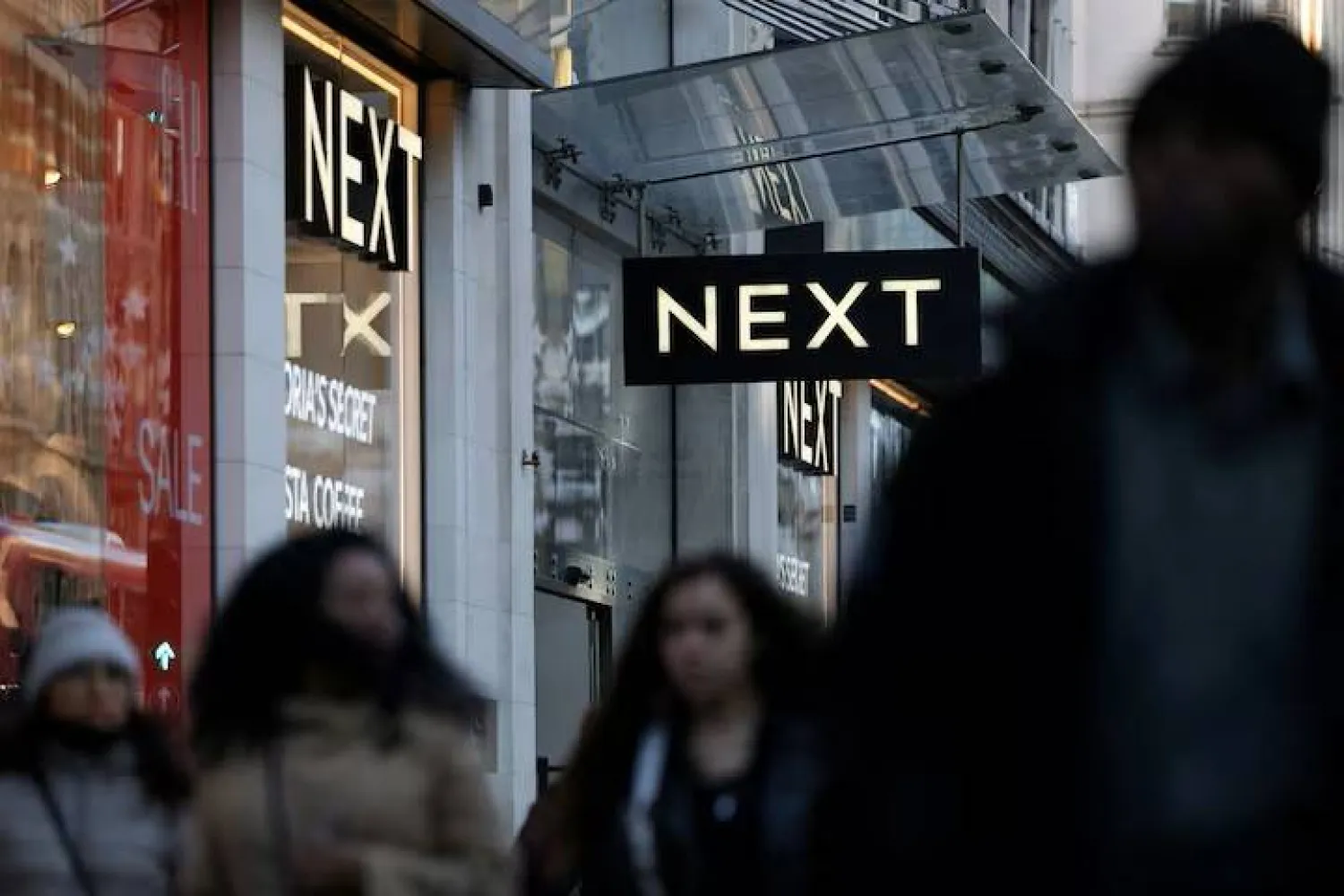

UK's Next Edges Up Profit Outlook after Christmas Sales Beat Expectations

FILE PHOTO: Shoppers walk past a NEXT retail store on Oxford Street in London, Britain, December 28, 2025. REUTERS/Isabel Infante/File Photo
TT

UK's Next Edges Up Profit Outlook after Christmas Sales Beat Expectations

FILE PHOTO: Shoppers walk past a NEXT retail store on Oxford Street in London, Britain, December 28, 2025. REUTERS/Isabel Infante/File Photo

British fashion retailer Next on Tuesday reported a better-than-expected 10.6% increase in full-price sales for the nine weeks to December 27 and edged up its annual profit guidance for the fifth time over the last year.

Subdued UK ⁠consumer confidence ahead of Christmas coupled with unseasonably mild weather had left analysts cautious about clothing retailers' festive trading prospects.

However, Next reported a 5.9% increase in UK ⁠sales year-on-year, with international sales up 38.3%.

According to Reuters, the group said it now expected to report a pretax profit of 1.15 billion pounds ($1.56 billion) for its year to January 2026, up from previous guidance of 1.135 billion pounds and the 1.011 billion pounds it made in ⁠2024/25 when it breached the 1 billion pounds mark for the first time.

Next forecast a further 4.5% increase in profit to 1.202 billion pounds for its 2026/27 year, on full-price sales up 4.5%.

Shares in Next have risen 43% over the last year.


Saudi Fashion Commission Issues Research Paper on 'Fashion Week Economics'

The Saudi Fashion Commission logo
TT

Saudi Fashion Commission Issues Research Paper on 'Fashion Week Economics'

The Saudi Fashion Commission logo

The Saudi Fashion Commission has issued its research paper for the fourth quarter of 2025, titled Fashion Week Economics, as part of its continued commitment to providing leading sector insights through the Fashion Futures platform.

The paper presents an in-depth analysis of Riyadh Fashion Week's contribution to local economic growth and explores the role of global fashion weeks in the global economy.

It highlights how Riyadh Fashion Week reflects the Kingdom's cultural and creative development, marking the beginning of a new era for Saudi creative industries, one driven by cultural confidence and economic ambition, through a dynamic integration of creativity, commerce, and culture aligned with the vision of a thriving creative economy.

The research also examines themes including the economic and cultural value of fashion weeks worldwide, the role of fashion-week events as global economic drivers, and case studies of various brands showcased at Riyadh Fashion Week 2025.

Through publishing this paper, the Fashion Commission continues to provide essential economic data and sector insights into the rapidly evolving fashion industry.

Riyadh Fashion Week targets designers, brands, creative talent, buyers, retailers, sponsors, and partners, serving as a central platform for opportunities across the market. Its rapid expansion across three editions, featuring more than 100 participating brands and attracting approximately 27,000 visitors, has delivered significant value in terms of media presence, relationship building, and business growth for participants.

The participation of major global fashion houses such as Vivienne Westwood and Stella McCartney in the third edition further reflects Riyadh’s growing influence in international luxury circles and its increasing global standing.


Fashion Commission Launches 1st Executive Master’s Program in Riyadh

Fashion Commission Launches 1st Executive Master’s Program in Riyadh
TT

Fashion Commission Launches 1st Executive Master’s Program in Riyadh

Fashion Commission Launches 1st Executive Master’s Program in Riyadh

The Fashion Commission announced the launch of the first Executive Master’s program to be delivered in Riyadh, developed in collaboration with the world-renowned Institut Français de la Mode (IFM).

The new program marks a significant leap in advancing fashion education and executive training within the Kingdom, according to SPA.

The Executive Master’s in Strategic Management of Fashion & Luxury represents a new milestone in fashion education, taking place in Riyadh for the first time. It is a 15-month hybrid executive master’s degree track designed for high-potential professionals seeking advanced executive training while continuing their careers. Delivered through a blend of in-person modules in Riyadh and Paris, alongside supervised online learning, the program equips participants with strategic, managerial, and analytical expertise tailored to the rapidly evolving fashion and luxury sector.

Designed with market needs in mind, the executive master’s curriculum covers creation and design, brand strategies, sustainability, new consumer behaviors, retail innovation, fashion media, collection management, and future industry perspectives. Participants will also complete a thesis that contributes new knowledge to the regional and global fashion landscape.

The program is taught by IFM’s internationally recognized faculty, experts in fashion history, sustainability, consumer behavior, design, and luxury management, alongside industry leaders from major global houses, fashion federations, media groups, and innovation-driven organizations.

This landmark program builds on the Fashion Commission’s ongoing partnership with IFM since June 2022. Within the first year, the collaboration introduced high-level educational initiatives, including the Advanced Management Program for Luxury Fashion and the Executive Master’s in Luxury Fashion, designed to elevate local talent and strengthen the Kingdom’s creative workforce.

These programs have contributed to developing the skills and knowledge required to support a world-class fashion ecosystem.

The launch of the Executive Master’s marks a pivotal step in establishing Riyadh as an education hub for the fashion and luxury sectors. By bringing a master’s qualification of this caliber directly to the Kingdom, the Fashion Commission reinforces its commitment to enabling professional growth, supporting innovation, and creating globally competitive talent pipelines.