


Extraordinary Outcomes Expected from Summit between Saudi Crown Prince, Trump in Washington

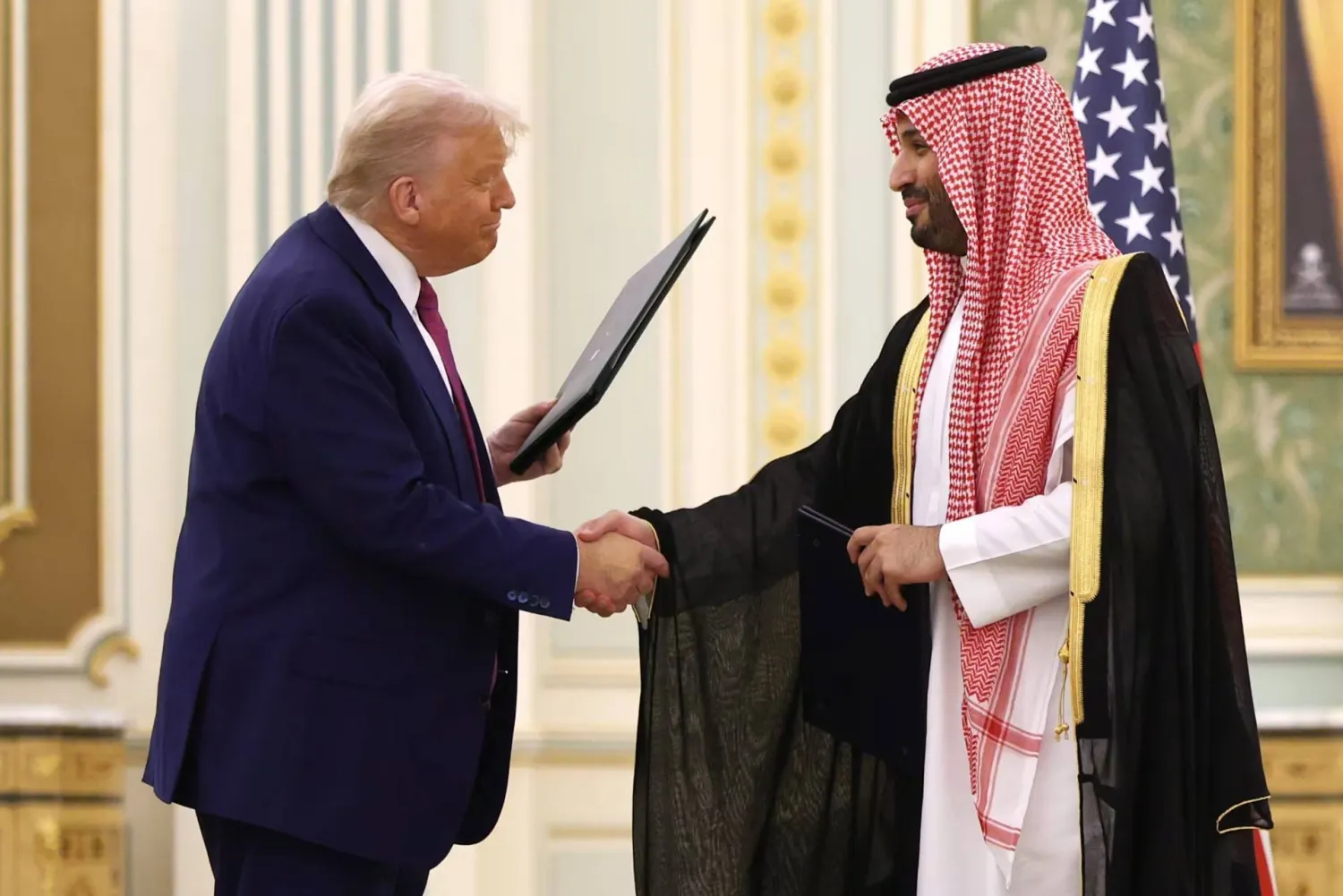
Crown Prince Mohammed bin Salman, Saudi Crown Prince and Prime Minister, and US President Donald Trump in Riyadh in May. Getty Images)
TT

Extraordinary Outcomes Expected from Summit between Saudi Crown Prince, Trump in Washington

Crown Prince Mohammed bin Salman, Saudi Crown Prince and Prime Minister, and US President Donald Trump in Riyadh in May. Getty Images)

Crown Prince Mohammed bin Salman, Saudi Crown Prince and Prime Minister, is set to meet with US President Donald Trump in Washington on Tuesday amid the rapid changes in the region and with Saudi analysts noting that it is taking place at a unique moment in the relations between Riyadh and Washington.

The leaders are expected to elevate bilateral ties between their countries to broader horizons and tackle regional crises they are keen on resolving through peaceful means.

Trump had visited Saudi Arabia in May on his first official visit since being reelected.

In recent weeks, top senior Saudi officials paid visits to Washington where they held talks aimed at shaping Saudi-American ties.

The officials included Saudi Defense Minister Prince Khalid bin Salman, Minister of State, Member of the Cabinet, and National Security Adviser, Dr. Musaed bin Mohammed Al-Aiban, Minister of Economy and Planning Faisal Alibrahim, Minister of Communications and Information Technology Eng. Abdullah bin Amer Al-Swaha and Governor of the Public Investment Fund (PIF) Yasir Al-Rumayyan.

Discussions between the Saudi and American officials focused on the strategic partnership between their countries, regional and international developments of interest, bolstering strategic partnerships in artificial intelligence and advanced technologies, expanding joint investments and boosting economic growth between them.

Saudi political analyst Moneef Ammash Al-Harbi told Asharq Al-Awsat that he expected political issues to top the Crown Prince’s Washington agenda.

Talks will focus on several issues in the Middle East, including the Palestinian-Israeli conflict, the ceasefire in Gaza, supporting stability in Syria and the situations in Lebanon, Yemen and Sudan, he added.

Crown Prince Mohammed and Trump will also tackle deepening the strategic partnership between Riyadh and Washington, he went on to say.

They will also address the war between Russia and Ukraine, he said, noting that Saudi Arabia had played a major role as mediator whereby it hosted talks between the Moscow and Washington, and Kyiv and Washington earlier this year.

Saudi Arabia has succeeded in deepening its regional and international relations and adopting a policy of positive neutrality, remarked al-Harbi.

The policy has allowed the Kingdom to play a significant role in not just resolving regional issues, but international ones by acting as a trusted mediator, he stressed.

Saudi political analyst and expert on US relations Ahmed al-Ibrahim told Asharq Al-Awsat that Saudi Arabia is keen on acquiring the most advanced American weapons for its armed forces, as well as defense systems.

Riyadh and Washington are also keen on boosting economic ties and expanding direct Saudi investments in the US and American investments in the Kingdom, especially in AI, he stated. They are also eager to increase the trade exchange between them.

On political issues, Saudi Arabia will try to persuade the US to agree to the establishment of a Palestinian state and to backing the two-state solution to resolve the Palestinian-Israeli conflict – a view shared with several Arab and Islamic countries and others, he said.

The Saudi Crown Prince’s visit to the US could be the starting point for a possible US shift in this file, he predicted.

Moreover, al-Ibrahim expected the summit between Crown Prince Mohammed and Trump to yield extraordinary outcomes and major security, investment and technology agreements that will positively impact the region for years to come.

He noted that major circles in Washington believe that this visit in specific will not be just another in the series of mutual visits between Saudi and American leaders, but rather a total reboot that underscores Saudi Arabia’s weight and influence on the global arena.

Crown Prince Mohammed will visit Washington as the man of the future of the Middle East, he stressed.



Alliances, Energy Security and Balanced Partnerships: Pillars of Saudi Stability

Speakers are seen at the panel discussion at the Security and History Dialogue 2026 Conference in Riyadh on Monday. (Asharq Al-Awsat)
TT

Alliances, Energy Security and Balanced Partnerships: Pillars of Saudi Stability

Speakers are seen at the panel discussion at the Security and History Dialogue 2026 Conference in Riyadh on Monday. (Asharq Al-Awsat)

Political and economic experts linked security, stable energy supplies and independent decision-making as key pillars of Saudi stability, stressing that alliances can deter wars, while domestic security protects the energy industry and balanced partnerships allow the Kingdom to maintain international ties without compromising its sovereignty.

The remarks were made during a panel Monday at the Security and History Dialogue 2026 Conference in Riyadh.

Alliances to prevent wars

Saudi journalist and Asharq Al-Awsat columnist Abdulrahman Al-Rashed noted that Iran had attacked nine countries in the region and that major alliances were needed to prevent war.

He pointed to the establishment of the Gulf Cooperation Council as a bloc formed to confront Iranian threats, while other coalitions followed, including the alliance that liberated Kuwait, in which the GCC played a role.

Saudi Arabia has faced attacks from three fronts — directly from Iran, as well as from Iraq and Yemen — prompting countries to seek common ground, Al-Rashed added.

He described the Saudi-Pakistani-Turkish alliance as bringing together regional countries bordering Iran, but stressed that its purpose goes beyond Tehran and is aimed more broadly at protecting states from attacks.

Al-Rashed highlighted longstanding military ties between Saudi Arabia and Pakistan, dating to the 1970s and 1990s, as well as growing military cooperation between Saudi Arabia and Türkiye over the past three or four years.

He also cited the strength of Türkiye’s defense industry, saying that such cooperation sends a clear message that attacking any of the three countries would carry a high cost.

Security and energy supplies

Energy adviser Ibrahim Al-Muhanna described domestic and international energy security and stability as essential to economic growth, internal stability and citizens’ well-being, alongside the availability of petroleum products and other energy sources worldwide.

Saudi Arabia is the world’s second-largest oil producer, and has at times been first, as well as its second-largest exporter, he noted. The Kingdom is also virtually alone in maintaining spare production capacity that enables it to compensate for supply shortages elsewhere.

Al-Muhanna stressed that domestic security and stability underpin the Kingdom’s continued role in the oil industry and its ability to supply global markets. Protecting oil facilities has been a priority since the reign of King Abdulaziz, beginning around the time the Kingdom signed an agreement with an American company, he added.

Recalling the 1980s tanker war during the Iran-Iraq War, Al-Muhanna explained that Saudi Arabia began considering ways to export oil from the Gulf to the Red Sea and planning the East-West pipeline. The pipeline now carries about 7 million barrels and supplies refineries on the Red Sea, while providing an alternative route when Gulf exports face disruptions.

Balancing partnerships and independence

Abdulaziz Sager, chairman of the Gulf Research Center, highlighted Saudi Arabia’s ability to maintain its international relationships while balancing ties with competing global powers.

He pointed to Riyadh’s position on the Russia-Ukraine war as an example of that balance: the Kingdom voted against Russia and provided humanitarian aid to Ukraine while maintaining relations with Moscow.

Saudi Arabia also supported the establishment of the GCC, was a founding member of the Arab League, hosts the Organization of Islamic Cooperation and belongs to international organizations and the G20.

For the Kingdom, partnership does not mean relinquishing independence or sovereignty but instead reinforces the principles of neutrality and balance, Sager added.

Forward-looking policy

International relations researcher Joseph Kechichian described Saudi foreign policy as consistent over time and, in most cases, forward-looking.

While Saudi society is traditional, past and present developments have allowed it to evolve, contrary to some outside perceptions of authority in the Kingdom, he observed.

That consistency has evolved from reliance on basic security guarantees into a pragmatic strategy. Saudi Arabia’s strategic alignment at times extends beyond longstanding security partnerships with the US, UK and others to include relations with China, Russia and countries of the Global South, he said.

He stressed that the approach is aimed at promoting regional stability and supporting economic transformation.


Saudi FM Discusses Middle East Issues with German-Arab Parliamentary Group Chair

The Saudi and German delegations meet in Berlin. (SPA)
TT

Saudi FM Discusses Middle East Issues with German-Arab Parliamentary Group Chair

The Saudi and German delegations meet in Berlin. (SPA)

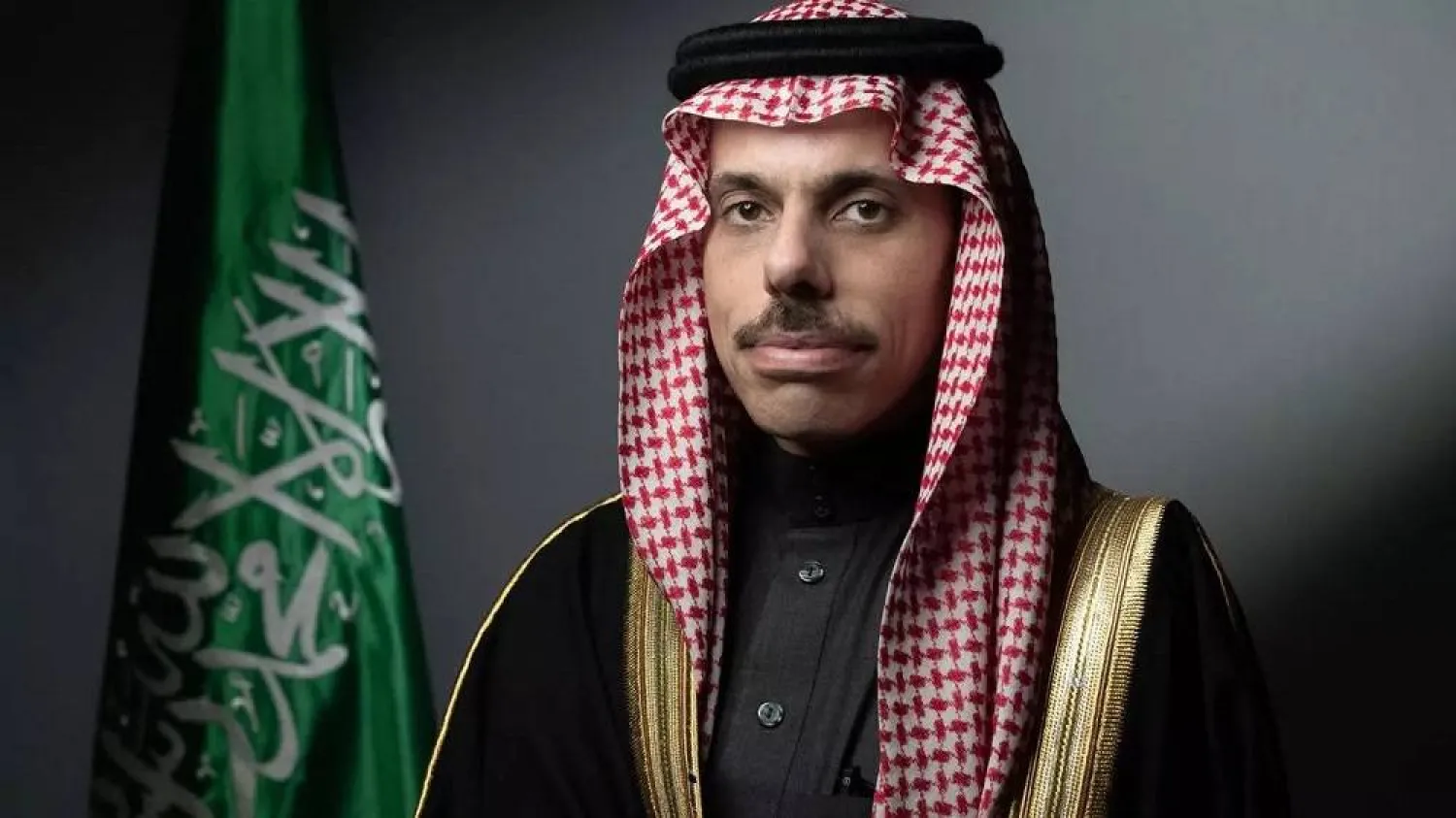
Saudi Minister of Foreign Affairs Prince Faisal bin Farhan bin Abdullah held talks in Berlin with Chair of the German-Arab Parliamentary Relations Group in the German Bundestag Dr. Alexander Radwan, along with a number of members of parliament, during his official visit to Germany, reported the Saudi Press Agency on Tuesday. 

They reviewed Saudi-German relations and exchanged views on the most significant issues and challenges in the Middle East. 

They also tackled efforts by Saudi Arabia and partner countries to reach comprehensive, just, and peaceful solutions to the crises in the region. 

Prince Faisal also met with German Minister of Economic Affairs and Energy Katherina Reiche. 

They reviewed bilateral economic relations and discussed opportunities to expand the scope of partnership, increase trade and investment exchange, and leverage the capabilities available to both countries in line with the goals of Saudi Vision 2030. These efforts support growing economic ties, open new horizons for partnership, and advance common interests. 

They underlined the importance of developing relations in the energy sector and strengthening related partnerships, including energy security and sustainability and improving supply chain resilience.  

They stressed the importance of ensuring the security and safety of waterways and the freedom of commercial navigation, contributing to limiting the repercussions of current crises and supporting the stability of energy markets and the global economy. 


Coalition Says Houthi Attacks on Saudi Arabia Are a ‘Dangerous Escalation’, Vows ‘Firm’ Response

Official Spokesman for the Coalition to Support Legitimacy in Yemen Major General Turki Al-Malki. (Asharq Al-Awsat)
TT

Coalition Says Houthi Attacks on Saudi Arabia Are a ‘Dangerous Escalation’, Vows ‘Firm’ Response

Official Spokesman for the Coalition to Support Legitimacy in Yemen Major General Turki Al-Malki. (Asharq Al-Awsat)

Official Spokesman for the Coalition to Support Legitimacy in Yemen Major General Turki Al-Malki condemned on Tuesday the Iran-backed Houthi militia for attacking the Saudi cities of Abha, Khamis Mushait, Jazan, and Najran that left 73 civilians injured, including women and children.

In a statement, he said: “The escalation by the terrorist Houthi militia and its attempts to target Saudi Arabia, its national assets, its citizens, and residents on its territory is a dangerous escalation that confirms the hostile and irresponsible approach of this terrorist militia.”

He said the Houthis’ “senseless attacks”, the latest of which targeted civilian and economic sites in Saudi Arabia, are a “blatant violation of the Kingdom's sovereignty and a direct threat to the security and safety of its citizens and residents.”

“These sinful and unjustified attacks committed by the terrorist Houthi militia deliberately harm the Kingdom's national resources, facilities, and civilian sites, and confirm its extremist criminal behavior that rejects achieving peace and stability in Yemen and its Arab and Islamic neighbors,” he went on to say.

Al-Malki affirmed that the Joint Forces Command of the Coalition “will take all necessary operational measures to deter this militia and resolutely confront its hostile approach, in defense of the Kingdom's sovereignty, the preservation of its national assets, and the safety of its citizens and residents.”

“The command will also take all necessary measures and actions to respond to the sources of the threat and neutralize its danger,” he vowed.