
Egypt Signals Steady Economic Growth, but Consumer Prices Stay High

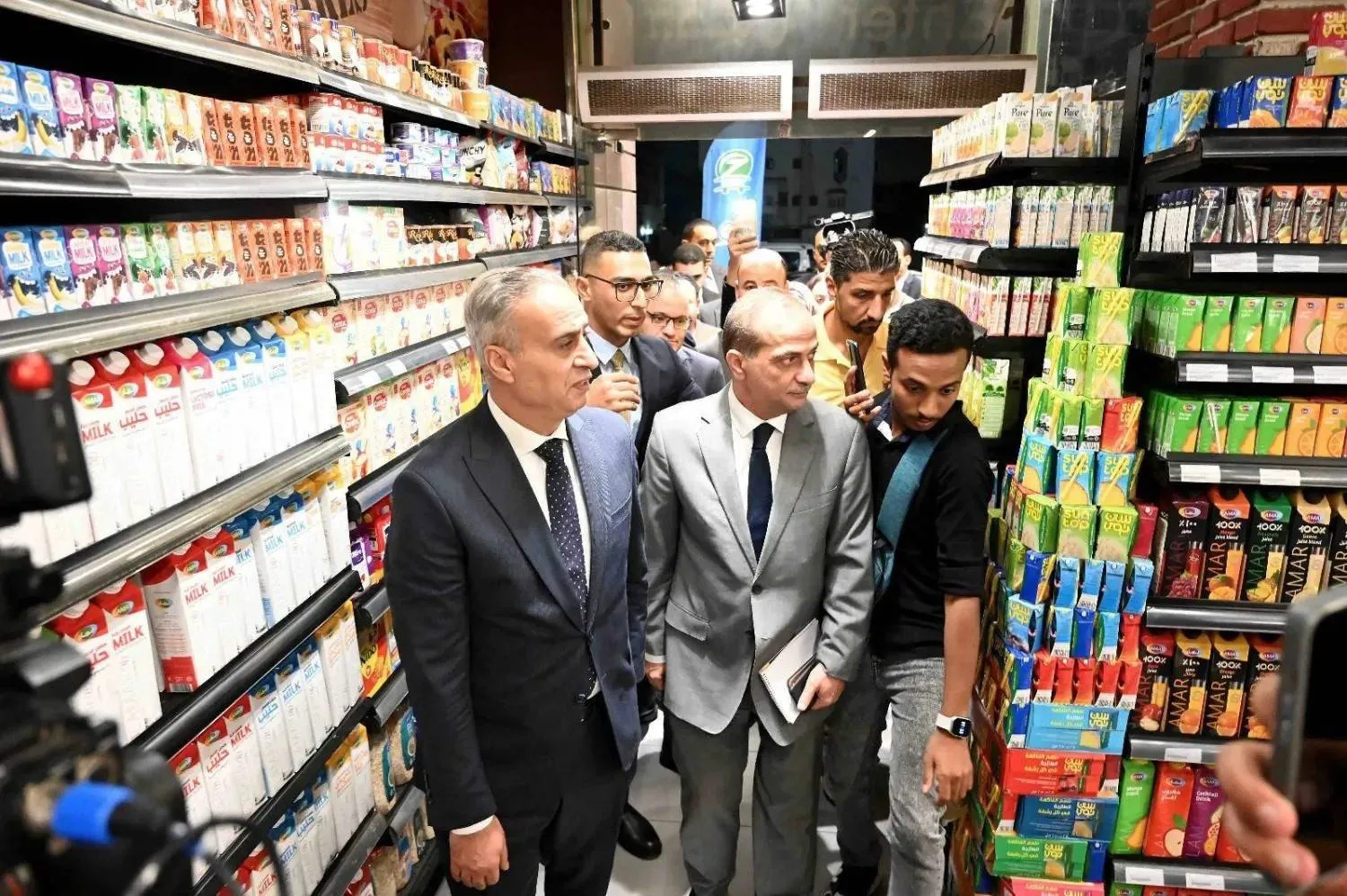
Egyptian officials inspect a retail outlet (Egyptian Consumer Protection Agency)
TT

Egypt Signals Steady Economic Growth, but Consumer Prices Stay High

Egyptian officials inspect a retail outlet (Egyptian Consumer Protection Agency)

In a bid to soften the social impact of Egypt’s economic reform program, Prime Minister Mostafa Madbouly pledged that his government would “focus on improving citizens’ living conditions so they can feel the gains of development and reform beginning next year.”

Madbouly’s comments, made at a news conference late on Thursday, came as the Ministry of Planning and Economic Development reported that Egypt’s quarterly growth rate had risen to its highest level in three years, reaching 5.3 % in the first quarter of the current fiscal year, 2025 to 2026.

But the ministry’s emphasis on what it described as “continued improvement” in Egypt’s economic indicators has raised questions about why this progress has not translated into lower consumer prices, especially after annual inflation resumed its upward trend last month.

Economists say growth figures do not necessarily reflect changes in living standards, adding that the numbers point to gains in the macroeconomy rather than improvements felt by individuals.

The government’s decision to raise fuel prices last month pushed annual inflation higher in October, ending four months of declines. The rate reached 12.5 % compared with 11.7 % in September, according to figures released by Egypt’s Central Agency for Public Mobilization and Statistics.

Prices of packed fava beans, rice, oil, sugar, Romano cheese, meat, and industrial ghee all rose in Thursday’s trading, according to data published by the Information and Decision Support Center.

Madbouly said Egyptians “will begin to reap the benefits of reform and development starting next year.”

He added that his government would concentrate on ensuring that citizens feel the impact of economic reforms through better wages, stable prices, improved living conditions, and enhanced health and education services.

During the same news conference, Minister of Planning and Economic Development and International Cooperation Rania al-Mashat said the economy continued to post positive indicators that reflect the impact of structural reforms.

She said gross domestic product growth rose to 5.3 % in the first quarter of the current fiscal year, up from 3.5 % in the same period last year, describing it as the highest rate in three years.

Improvement in growth figures does not automatically mean better living standards, said Waleed Gaballah, a member of the Egyptian Association for Political Economy, Statistics and Legislation.

He said changes in prices of goods and services depend on other factors, including wage levels, interest rates, and banking policies. He added that macroeconomic gains may reach certain segments of society but not all.

Gaballah said improvements in living standards should be linked to unemployment levels and wages. He told Asharq Al-Awsat that people will start feeling the benefits when wage increases outpace inflation.

“If the government can bring inflation below 10 % next fiscal year while raising wages above that level, Egyptians will feel the gains of reform,” he said.

Unemployment in Egypt fell to 6.1 % of the labor force in the second quarter of this year, according to figures released by the statistics agency in August. The government raised the minimum wage to 7,000 Egyptian pounds, with one dollar equal to 47.5 pounds, in July.

Gaballah said that price stability in the current period is in itself an improvement given the economic challenges.

He noted that Egypt’s banking sector faces a major test at the end of this year when banks begin paying out returns on high yielding saving certificates launched in early 2024 at an interest rate of 27 %. He said the payouts could trigger significant shifts in saving, spending, and investment patterns.

He estimated that the total value of high interest certificates and deposits in Egyptian banks stood at around one trillion pounds, meaning the payout schedule will influence liquidity levels in the market.

Mahmoud al-Asqalani, head of Citizens Against High Prices Association, a civil society group, said Egyptian markets are experiencing stagnation due to declining liquidity. He said traders were selling at minimum profit margins because of weak demand.

He told Asharq Al-Awsat that price declines will likely be slow, as they are linked to inflation, the expansion of domestic production, and the growth of exports.

He said improvements in macroeconomic indicators do not necessarily reflect better conditions for individuals.

He added that expectations hinge on government measures to reduce prices early next year, ahead of higher consumption during the month of Ramadan.

Egyptian exports rose 19 % in the first ten months of this year compared with the same period in 2024, while the trade deficit fell 16 % over the same period, according to data released by the prime minister on Thursday. He said the figures show the country is “moving in the right economic direction.”



Israel Says It ‘Will Enforce’ Ban on 37 NGOs in Gaza

The sun sets behind the ruins of destroyed buildings in the Nuseirat refugee camp in the central Gaza Strip on December 31, 2025. (AFP)
TT

Israel Says It ‘Will Enforce’ Ban on 37 NGOs in Gaza

The sun sets behind the ruins of destroyed buildings in the Nuseirat refugee camp in the central Gaza Strip on December 31, 2025. (AFP)

Israel said on Thursday that 37 international NGOs operating in Gaza had not complied with a deadline to meet "security and transparency standards," in particular disclosing information on their Palestinian staff, and that it "will enforce" a ban on their activities.

"Organizations that have failed to meet required security and transparency standards will have their licenses suspended," said spokesman for the Ministry of Diaspora Affairs and Combating Antisemitism, Gilad Zwick.

In March, Israel gave a ten-month deadline to NGOs to comply with the new rules, which expired on Wednesday night.

The UN has warned that the ban will exacerbate the humanitarian situation in Gaza.


Syria’s Interior Minister Warns Remnants of Former Regime

FILE PHOTO: Members of the Syrian Security forces stand guard near military vehicles on the day people protest in Latakia, Syria, December 28, 2025. REUTERS/Karam al-Masri/File Photo
TT

Syria’s Interior Minister Warns Remnants of Former Regime

FILE PHOTO: Members of the Syrian Security forces stand guard near military vehicles on the day people protest in Latakia, Syria, December 28, 2025. REUTERS/Karam al-Masri/File Photo

Syrian Interior Minister Anas Khattab has warned the remnants of the former regime against efforts to lead chaos, killing, and destruction as his ministry announced the arrest of several people in Latakia and Tartus for involvement in war crimes and instigations that threaten civil peace.

Khattab stressed on Wednesday that the state is the sole guarantor for all citizens, ensuring their security, preserving their dignity, and safeguarding their rights.

The minister said in a statement on X that since the early days following Syria’s liberation, the ministry has positioned itself as a central force in restoring order and safety across the country.

This effort has been carried out in coordination with other government agencies and local communities to confront a wide range of security challenges.

Khattab stressed that the ministry’s new approach to policing prioritizes public safety over intimidation. “Our goal is to protect citizens, not to frighten them,” he said, adding that a formal code of conduct has been introduced to ensure law enforcement operates within clear legal and ethical boundaries.

Despite these reforms, remnants of the deposed regime who have aligned themselves with wanted criminals have misinterpreted the ministry’s ethical approach as weakness. “We will protect the oppressed and hold accountable anyone who threatens our country’s security,” he said.

The minister warned the remnants of the defunct regime and their criminal gangs, who insist on continuing the path of chaos, killing, and destruction to “await their inevitable fate.”

“Let this message serve as a final warning to them to cease their actions,” he added.

Meanwhile, the ministry said on its Telegram channel that several people were arrested in operations in Latakia and Tartus after external calls by instigators have led to sectarian chaos and left many people dead and injured.

“The operation came in response to external inciting calls of a sectarian nature, which led to a state of chaos, the death of a number of people, the injury of others, and assaults on public and private property,” it said, noting that “operations are ongoing against these corrupt individuals.”

The ministry said in its statement that it has played an active role in restoring the social fabric and strengthening civil peace. However, “some parties have sought to exploit this stage to spread chaos, undermine security, and threaten stability.”


This Is Our Story, Mohammed

The late Mohammed al-Shafei in his office. (Asharq Al-Awsat)
TT

This Is Our Story, Mohammed

The late Mohammed al-Shafei in his office. (Asharq Al-Awsat)

This is our story, Mohammed. We fell in the trap early. We were lured by the beautiful, but deceitful, ink. We chose a thorny profession. We chose a long tunnel. No breaks and no truces. It is the hot pursuit of the news that takes up most of our lives. The reader is insatiable. The journalist pursues stories for so long, until they become the story. A story in their own newspaper. A story about a death. A story about farewell.

We were preparing to say farewell to the year, not say farewell to you. You took part in our meeting on Tuesday. You always made it to our daily meetings. You always brought your experience with you, your kind way of speaking. It was as if you were trying to tell us a message. The old warrior never retires. He would rather fall in the ring. Hours after the meeting, we received the painful news. Your heart betrayed you, as it is likely to do.

The nature of our profession had it so this calm man would occupy himself with thorny files and tough men. Afghanistan took up his interests. He used to travel there when it was teeming with al-Mujahideen. He would return from those arduous journeys with news, investigations and interviews. Even as old age took its toll, Mohammed al-Shafei never abandoned his passion. News intrigued him.

He joined Asharq Al-Awsat nearly four decades ago. He loved the Asharq Al-Awsat family and it loved him back. As in all love stories, he never hesitated, never backed down and was never withholding. I say Asharq Al-Awsat family, while it is a garden of news and headlines, investigations and articles. The family is composed of various nationalities and experiences. They are united under one roof and one passion. He was proud of being part of a trusted newspaper that has preserved its spirit over the years.

How difficult it is to face death. For it to take away a dear son and a valued teacher. How difficult the loss will be. We were used to arguing with you, asking you questions and learning from you. How difficult it will be to pass by your empty office. How difficult it will be to not see you at our meetings.

This is our story, Mohammed. We live between the lines and die between the lines. We will finally rest in the archives of the newspaper. The warmth of our colleagues. Asharq Al-Awsat, with its diversity and generations, embraces everyone who was a part of the family and enriched the experience of its readers. Your heart betrayed you, as it is likely to do, but friendships know no betrayals.