Renewed Gulf Support for Yemen’s Reforms Amid Tough Economic Challengeshttps://english.aawsat.com/gulf/5214050-renewed-gulf-support-yemen%E2%80%99s-reforms-amid-tough-economic-challenges
Renewed Gulf Support for Yemen’s Reforms Amid Tough Economic Challenges
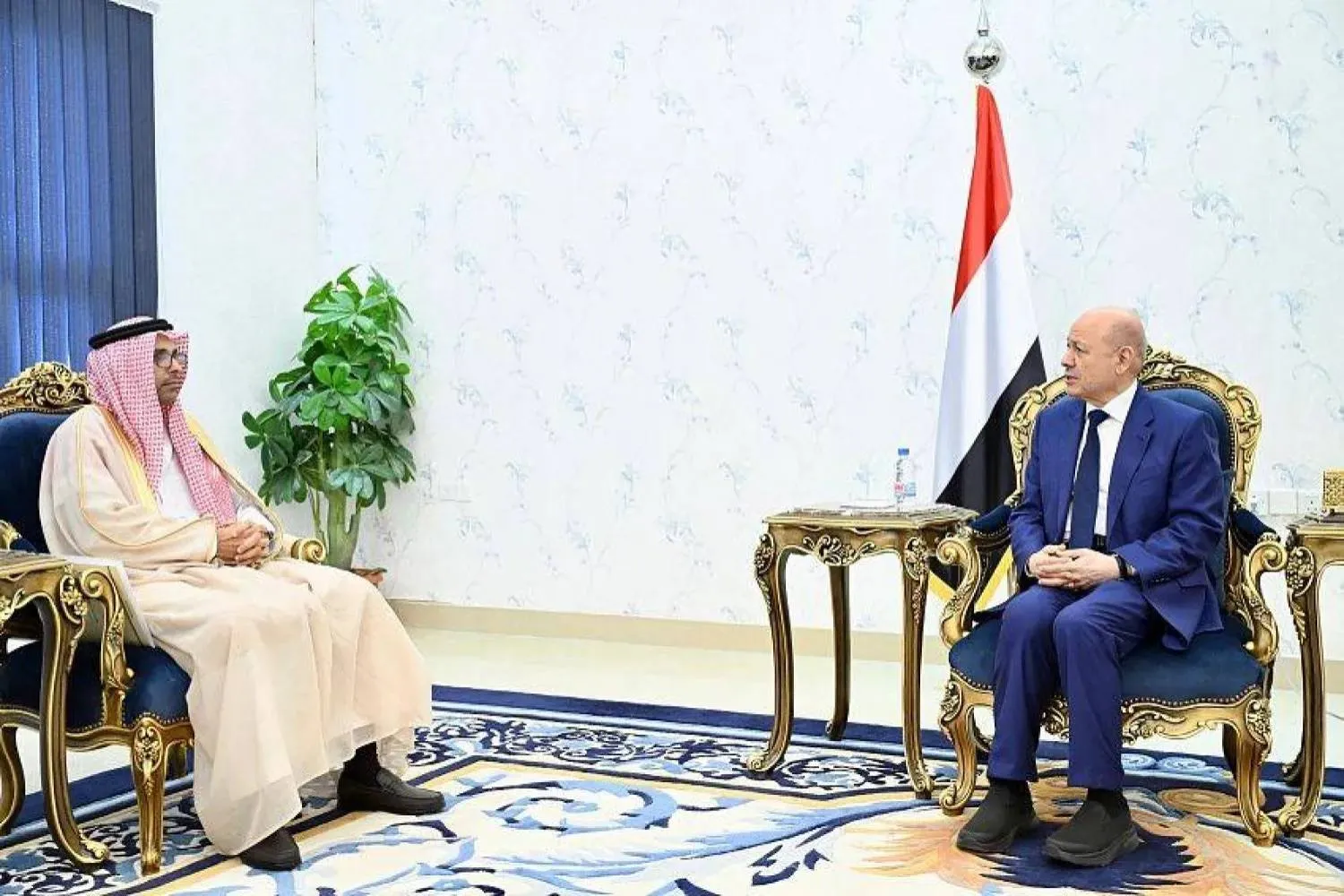
Al-Alimi meets with Ambassador al-Minaikher at the Maashiq Palace in Aden. (Government media)
Yemen’s Presidential Leadership Council chairman Dr. Rashad al-Alimi and Prime Minister Salem bin Braik reaffirmed the central role of Gulf Cooperation Council (GCC) states in stabilizing Yemen’s economy, advancing reforms, and helping the country recover from the damage caused by the Iran-backed Houthi movement.
Speaking in the interim capital, Aden, the officials met separately with the GCC ambassador to Yemen, Sarhan al-Minaikher, focusing on comprehensive reforms, economic recovery, and strengthening state institutions.
According to Yemen’s state media, al-Alimi and the ambassador reviewed political and economic developments, including progress on government reforms and their recent impact on the Yemeni riyal.
Al-Alimi stressed that fiscal and monetary improvements require continued Gulf and international support to consolidate gains and move toward sustained recovery.
He expressed deep appreciation for the GCC’s longstanding backing of Yemen’s constitutional legitimacy, describing Gulf assistance as the country’s first line of defense against threats to its identity and national economy.
Bin Braik likewise emphasized the GCC’s crucial role in supporting Yemen’s “courageous” economic and institutional reforms, pursued despite the war and the Houthis’ obstructionist policies.
Al-Minaikher, for his part, conveyed the greetings of GCC Secretary-General Jasem al-Budaiwi and reiterated the Council’s full support for Yemen’s economic reform agenda.
The two also discussed future partnership initiatives, including follow-up to Aden’s First National Energy Conference, which outlined a national vision to address Yemen’s chronic electricity crisis.
Bin Braik said Yemen is counting on GCC partners to help develop sustainable energy projects, upgrade power infrastructure, and introduce technologies that reduce production costs and improve grid efficiency, limiting the Houthis’ ability to use electricity as a political tool.
Al-Minaikher stressed the GCC’s commitment to supporting the reforms, noting that early indicators are “promising and worth building upon.”
Riyadh and Paris Reach Understanding on Regional Issues, Agree to Strengthen Strategic Partnershiphttps://english.aawsat.com/gulf/5310804-riyadh-and-paris-reach-understanding-regional-issues-agree-strengthen-strategic
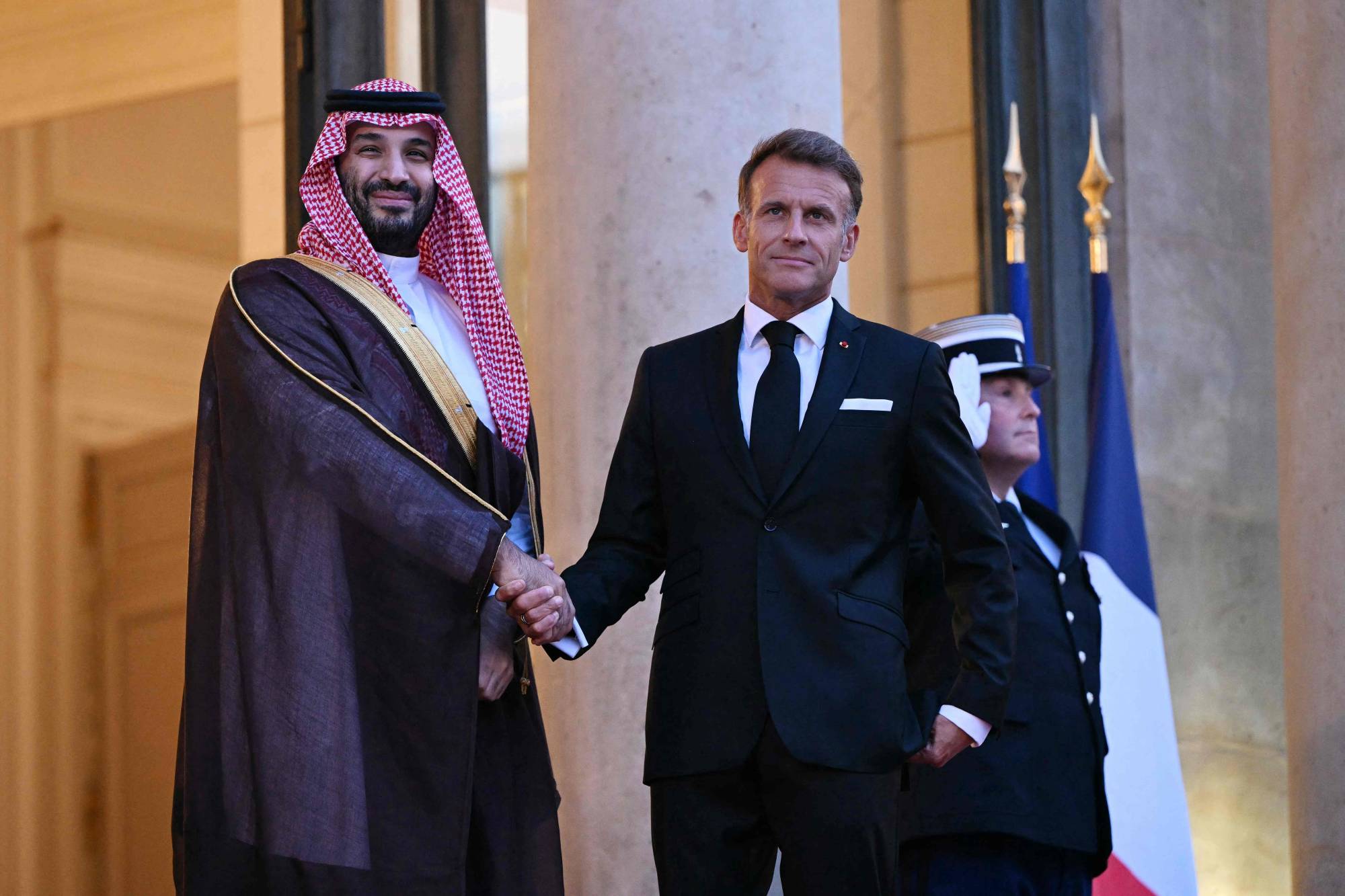
Prince Mohammed bin Salman bin Abdulaziz Al Saud, Saudi Crown Prince and Prime Minister, and French President Emmanuel Macron are seen at the Elysee Palace in Paris on Monday. SPA
Riyadh and Paris Reach Understanding on Regional Issues, Agree to Strengthen Strategic Partnership
Prince Mohammed bin Salman bin Abdulaziz Al Saud, Saudi Crown Prince and Prime Minister, and French President Emmanuel Macron are seen at the Elysee Palace in Paris on Monday. SPA
The reception that French President Emmanuel Macron prepared for Prince Mohammed bin Salman bin Abdulaziz Al Saud, Saudi Crown Prince and Prime Minister, on Monday strongly reflects the warmth of the relationship between the two countries.
That relationship began in 2017 with the French president's first official visit to Saudi Arabia. Since then, meetings between the two sides have been held regularly.
On Monday, Macron welcomed the Crown Prince at the Elysee Palace in Paris, as part of the Saudi leader's state visit to France.
Earlier, the Crown Prince visited Les Invalides where he was received by French Prime Minister Sebastien Lecornu in an official welcoming ceremony.
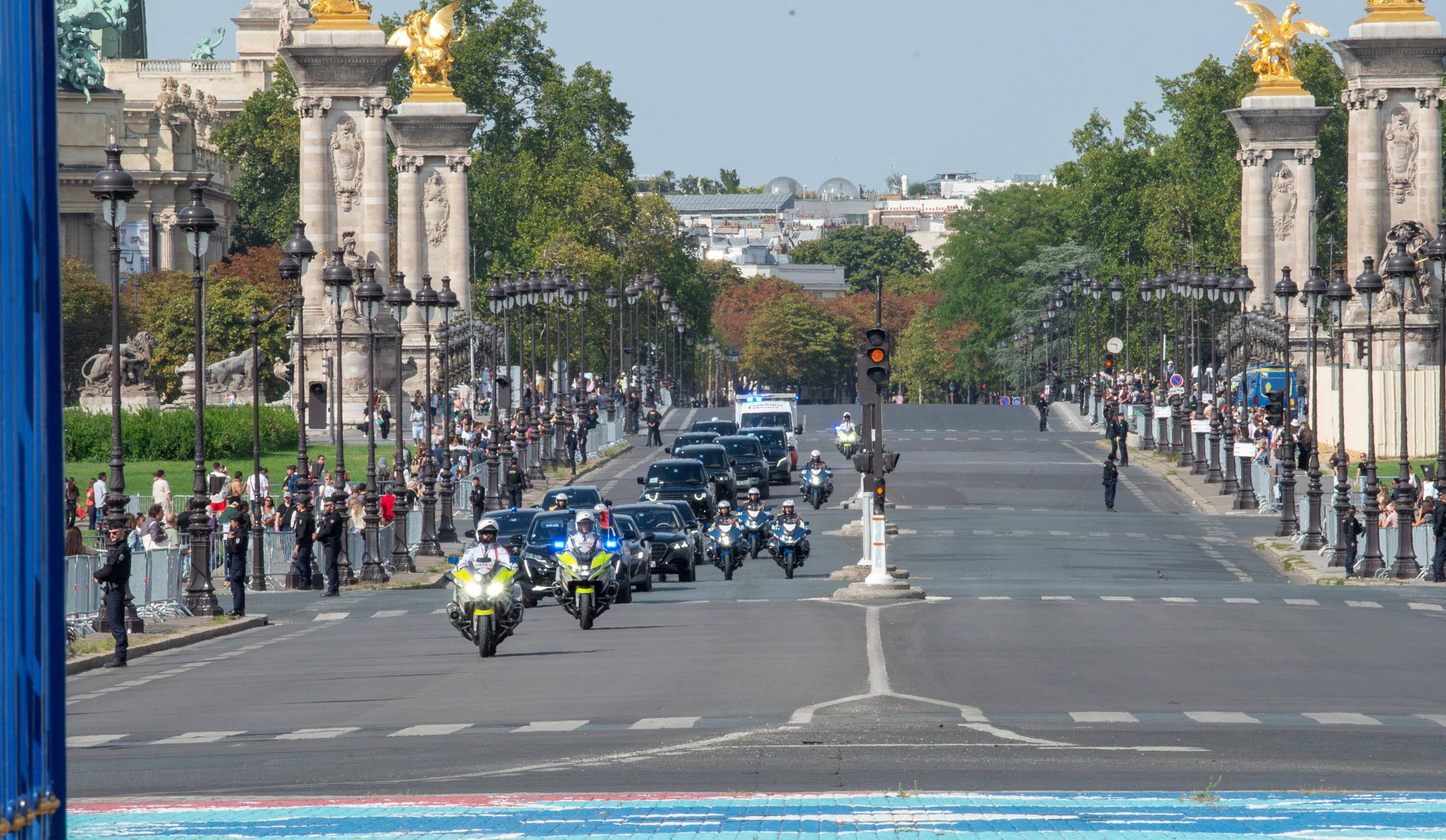
Escorted by cavalry from the French Republican Guard and a motorcycle motorcade, the Crown Prince was greeted with the playing of the Saudi Royal Anthem and the French National Anthem, before inspecting the guard of honor as the unit commander presented the participating military formations.
Saudi Arabia's Crown Prince Mohammed bin Salman's motorcade during his two-day official visit to France, at the Hotel des Invalides in Paris, France, August 24, 2026. Bandar Algaloud/Courtesy of Saudi Royal Court/Handout via REUTERS
Agreement on Regional Issues
The visit comes at a highly volatile moment for the region, whether regarding Iran, about which sources at the French presidency say that “no one has any clear vision of how to find a way out of it,” or the situations in Gaza, the West Bank, Lebanon, Syria, the Red Sea, and Yemen.
All of these crises carry significant risks not only for the region but also for the world as a whole, particularly given the severe disruption to shipping through the Strait of Hormuz and the threats affecting the Bab el-Mandeb Strait and the Red Sea.
A joint statement was issued at the conclusion of the Crown Prince’s visit to Paris. The two leaders affirmed “their mutual aspiration to strengthen the existing strategic partnership between the two countries.”
They also stressed “the historic depth of the relationship between France and Saudi Arabia on the occasion of the centenary of the establishment of political relations between the two countries.”
“They reaffirmed their shared ambition that the strategic partnership between Saudi Arabia and France ... gave a new momentum to the friendship, trust, and mutual respect between the two countries, and respond to their common interests and to the challenges facing the world and the Middle East region.”
The two leaders presided over the first meeting of the French-Saudi Strategic Partnership Council, launching new initiatives.
Regional crises
The Crown Prince and Macron “expressed their shared vision for stability in the Middle East, based on the sovereignty of states, respect for international law, and the pursuit of political and diplomatic solutions to conflicts and security threats.”
On Iran, “they emphasized the necessity of a negotiated solution to avoid further escalation and ensure regional security. They reaffirmed their long-standing commitment to a diplomatic solution ensuring the peaceful nature of Iran’s nuclear program.”
According to the statement, they also urged Iran to resume full cooperation with the International Atomic Energy Agency.
“The two sides condemned the attacks on ships in the Strait of Hormuz and threats to the security of waterways, and they stressed the importance of restoring navigation in the Strait of Hormuz to its normal state as it was before February 28, 2026, in terms of freedom of navigation, regular shipping traffic, and the absence of any direct or indirect tolls, restrictions on passage, in accordance with international law.”
France's President Emmanuel Macron (R) welcomes Saudi Arabia's Crown Prince Mohammed bin Salman as he arrives for a State dinner in his honor at the Elysee Palace in Paris on August 24, 2026. (Photo by LOU BENOIST / AFP)
On Palestinian affairs, the Saudi Crown Prince and Macron welcomed the announcement of an agreement on the disarmament of Hamas in the Gaza Strip and called on its implementation.
They stressed “the importance of preserving the unity of the Palestinian territories and rejected any attempt to undermine the Palestinian people's right to establish their independent state within the 1967 borders. Saudi Arabia and France called for an end to the Israeli settlement policy and settlers’ violence that threaten the two-state solution and reiterated their commitments to the full implementation of the New York Declaration.”
On the war in Lebanon, Prince Mohammed and Macron “agreed to intensify their efforts towards a final resolution of the conflict in Lebanon, which must involve strengthening the Lebanese state and its institutions, as well as preserving Lebanon's sovereignty and territorial integrity.”
They also lauded measures taken by Lebanese President Joseph Aoun, and the government, headed by Prime Minister Nawaf Salam, in rebuilding state institutions and extending the authority of the state.
“They also reaffirmed their commitment to supporting the Lebanese Armed Forces and security forces, with a view to enabling them to fully fulfil their national responsibilities. They stressed the importance of the full implementation of UN Security Council Resolution 1701 and the need for the disarmament of all non-state armed groups to be successfully completed. They also stressed the need for Israel to withdraw from all Lebanese territory,” the joint statement said.
On Sudan, both sides emphasized the importance of halting foreign interference in the country, and stressed their commitment to the unity, stability, and economic recovery of Syria.
They specifically welcomed the establishment of a Saudi-Syrian-French business council.
Consolidating defense cooperation
As expected, Riyadh and Paris adopted a declaration strengthening their defense cooperation, including in the field of armaments and training.
In the energy sector, “both sides emphasized the importance of stability in global energy markets, security of supply, and the protection of maritime routes, while commending the Kingdom's role and efforts in enhancing the resilience of supply chains and the sustainability of energy sources.”
“They also stressed the need to strengthen strategic cooperation in oil and petrochemicals, sustainable electricity generation (including energy efficiency, renewable energy, energy storage, peaceful nuclear energy, clean hydrogen, and emission reduction and removal technologies), and capacity building in these areas.”
As France has become a leading investor in Saudi Arabia, particularly in sectors such as energy, water management, transportation, and logistics, the two countries have agreed to strengthen their economic ties and cross-investments.
They welcomed Qiddiya Investment Company’s ambition to develop a major mixed-use, multi-park destination in Cergy-Pontoise, in the Île-de-France region, bringing together entertainment, leisure, hospitality, culture and sport within an integrated new destination.
“Current ambitions include up to three major entertainment anchors, hotels and complementary leisure experiences, for a total amount of around €6 billion over the development lifecycle,” said the statement.
“As a symbol of the strength of this partnership, Saudi Arabia and France reaffirmed the importance of their exceptional cooperation on AlUla, within the framework of Saudi Vision 2030, in particular in the fields of archaeology, heritage, and culture,” it said.
“In this regard, they decided to extend the Saudi-French partnership on AlUla until 2035 and work on an evolved framework that reflects the maturity of cooperation between the two countries and builds on the opportunities AlUla offers as a major cultural and heritage destination of the 21st century,” the joint statement added.
Saudi Arabia Nominates Dr. Hanan Hassan Balkhy for Position of WHO Director-Generalhttps://english.aawsat.com/gulf/5310797-saudi-arabia-nominates-dr-hanan-hassan-balkhy-position-who-director-general
Saudi Arabia Nominates Dr. Hanan Hassan Balkhy for Position of WHO Director-General
Dr. Hanan Hassan Balkhy. (WHO)
Saudi Arabia announced the nomination of Dr. Hanan Hassan Balkhy for the position of Director-General of the World Health Organization for the 2027–2032 term, reported the Saudi Press Agency on Monday.
The nomination reflects the Kingdom’s belief in the pivotal role of the WHO in strengthening global health security and supporting countries in building more efficient, sustainable, and resilient health systems capable of addressing current and future health challenges.
It reflects Saudi Arabia’s firm commitment to supporting multilateral health cooperation and continuing its active contribution to international efforts aimed at strengthening prevention, preparedness, and response to health emergencies, advancing universal health coverage, and ensuring access to health services for communities most in need, in support of the Sustainable Development Goals.
Balkhy has extensive scientific and leadership experience in public health, infectious diseases, infection prevention and control, health security, health systems and international health. She has substantial leadership experience within the WHO at all three levels, country, regional and global.
She has been elected as Regional Director of the WHO for the Eastern Mediterranean and was the first Assistant Director-General for Antimicrobial Resistance.
Throughout her career, she has contributed to the development and implementation of numerous health initiatives and policies aimed at protecting communities and strengthening health system capacities.
Saudi Arabia’s nomination of Balkhy reflects its aspiration to contribute to the continued development of the WHO, strengthen its ability to respond to the needs of Member States, uphold the principles of equity, transparency, and efficiency, and build effective international partnerships that advance health and well-being worldwide.
Saudi Crown Prince Receives Written Message from UK PM on Bilateral Tieshttps://english.aawsat.com/gulf/5310794-saudi-crown-prince-receives-written-message-uk-pm-bilateral-ties
Saudi Crown Prince Receives Written Message from UK PM on Bilateral Ties
Crown Prince Mohammed bin Salman bin Abdulaziz Al Saud. SPA
Prince Mohammed bin Salman bin Abdulaziz Al Saud, Saudi Crown Prince and Prime Minister, received a written message from British Prime Minister Andy Burnham concerning bilateral relations and ways to strengthen them.
Vice Minister of Foreign Affairs Waleed Elkhereiji received the message on behalf of the Crown Prince at the Ministry of Foreign Affairs headquarters in Riyadh on Monday.
He received it while meeting with British Ambassador to Saudi Arabia Stephen Charles Hitchen.
The meeting discussed bilateral relations and ways to develop them across various fields, as well as matters of mutual interest.
لم تشترك بعد
انشئ حساباً خاصاً بك لتحصل على أخبار مخصصة لك ولتتمتع بخاصية حفظ المقالات وتتلقى نشراتنا البريدية المتنوعة