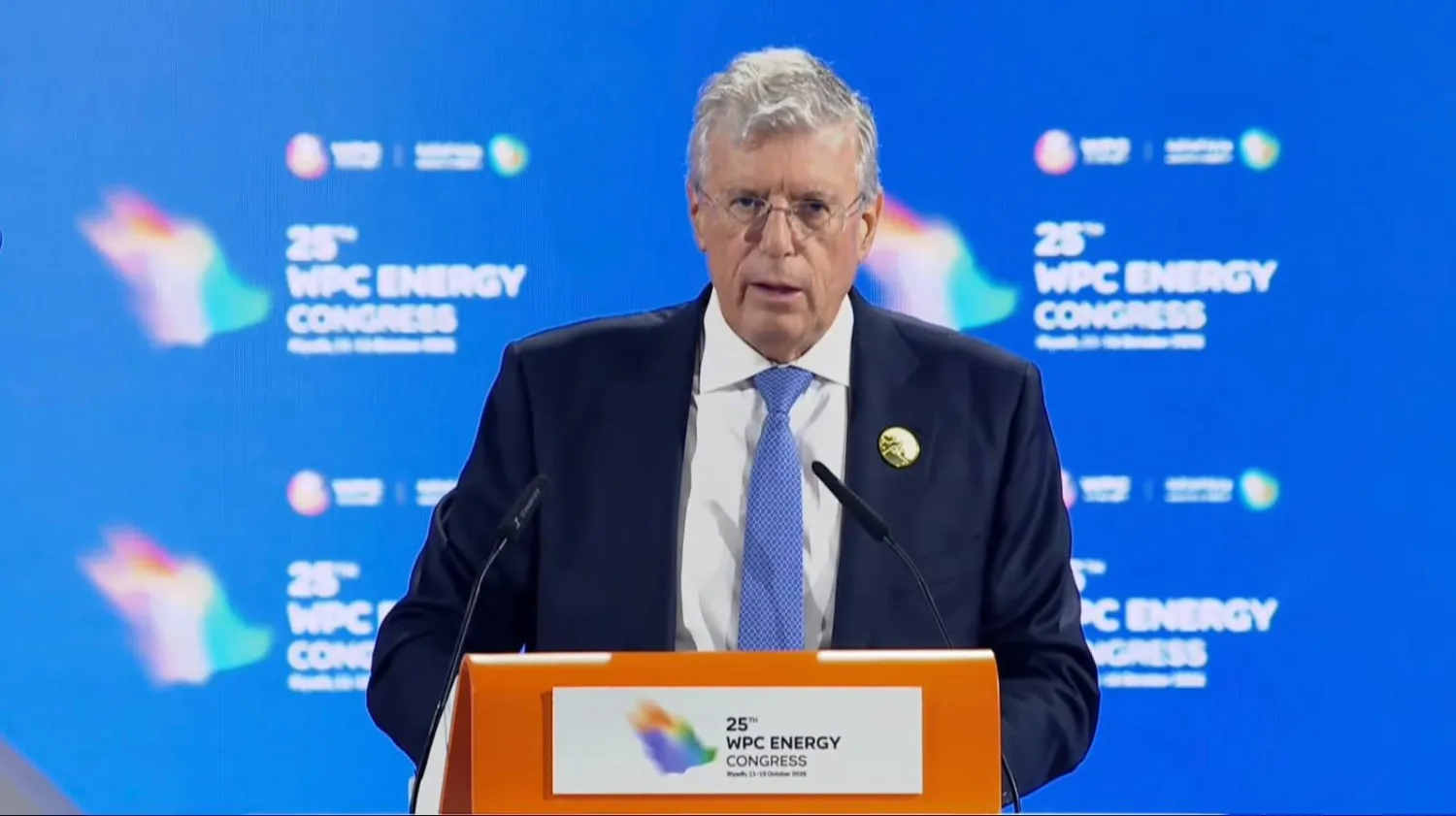
Pedro Miras, President of WPC Energy, affirmed that the world needs more energy from multiple sources to keep pace with population and economic growth, emphasizing the necessity of balancing supply security, affordability, sustainability, and economic development, without sacrificing any of these priorities.
In his speech at the opening of the 25th WPC in Riyadh, Miras stated that Riyadh is the most suitable place to host the conference, noting the pivotal role Saudi Arabia plays in the global energy system, and its continued leadership in investments, innovation, and technological advancement in the sector.
He added that the conference, which gathers government and industry leaders, academics, technology experts, financiers, and international institutions over four days, serves as a platform to discuss ways to meet the world's increasing energy needs, while supporting prosperity, sustainability, and security for future generations.
He pointed out that the world is undergoing a period of profound transformations, significant challenges, and exceptional opportunities, with the global population expected to approach 10 billion by mid-century, accompanied by increased energy demand resulting from population growth, urbanization, and improved living standards.
He explained that energy consumption and human development have gone hand-in-hand throughout modern history, as the availability of energy has contributed to improving health, education, and living standards, emphasizing that continued human progress requires more energy.
He noted that oil and gas still provide a significant share of the world's energy needs, despite decades of innovation and growth in new technologies, considering this an affirmation of the scale of the upcoming challenge and the need to utilize multiple energy sources.
Four Pillars for the Future of Energy
Miras stressed that the challenge is no longer about choosing between energy security, affordability, and sustainability, but rather about achieving progress in these areas in parallel with economic development.
He stated that billions of people around the world aspire to improve their living conditions, access better health and education services, and broader economic opportunities, all of which require reliable energy availability and continued investment in its system.
He added that countries differ in their circumstances, resources, priorities, and developmental stages, which necessitates adopting diverse paths to achieve the future of energy and utilizing a wide range of technologies and solutions, noting that this diversity represents a source of strength.
He affirmed that technological neutrality remains one of the fundamental principles of the WPC, allowing various energy sources and technologies to contribute to building a secure, affordable, and sustainable system.
Innovation Alone Is Not Enough Without Investment and Partnerships
Regarding technological developments, Miras said that artificial intelligence, digitalization, advanced materials, new fuels, hydrogen, and carbon capture, utilization, and storage technologies, along with other technologies, are reshaping the global energy landscape.
However, he stressed that technology alone is not enough to achieve the desired transformation, as it requires effective policies, stable and predictable regulatory frameworks, long-term investments, and enhanced international cooperation.
He explained that energy security remains essential for economic growth, social stability, and human well-being, and that a successful energy sector transformation cannot be achieved without ensuring supply security. Furthermore, the long-term sustainability of this security requires sufficient investments across various components of the energy system.
He added that no single country, company, or technology can address global energy challenges alone, emphasizing the importance of partnerships among governments, industry, academia, and international institutions.
Riyadh: A Platform for Global Dialogue
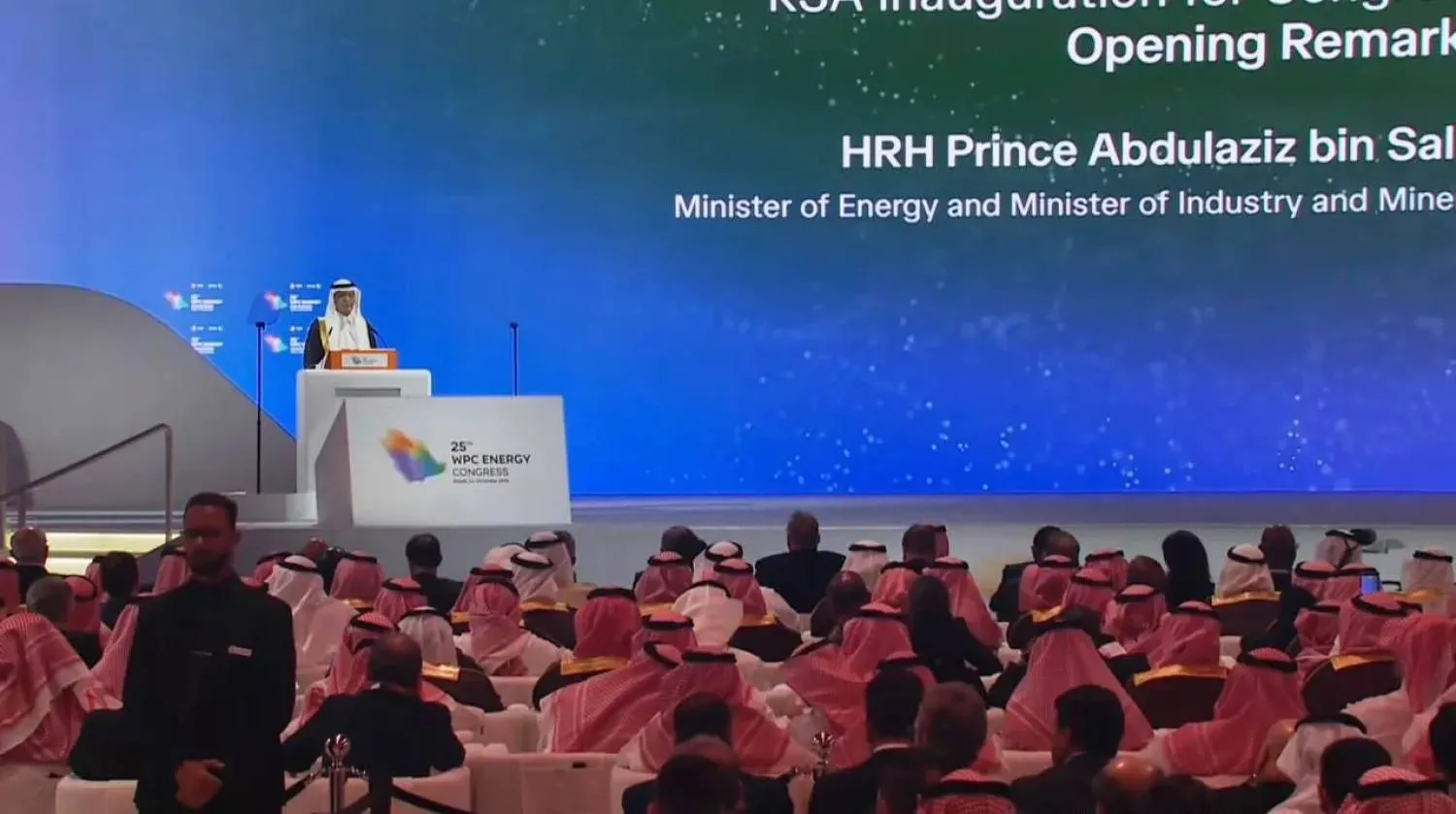
Miras expressed his appreciation to the Kingdom, the Minister of Energy, and the Saudi Minister of Industry and Mineral Resources, Prince Abdulaziz bin Salman, for their efforts in organizing and hosting the conference in Riyadh.
He stated that for over 90 years, the WPC has provided a platform bringing together governments, industry, academia, and international institutions to exchange ideas, deepen understanding, and explore practical solutions for sector challenges.
He noted that the importance of dialogue and cooperation is increasing amid the uncertainty and fragmentation the world is experiencing, expressing his hope that the conference discussions will contribute to developing partnerships and exploring innovations that will shape the future of energy.
He concluded by affirming that the goal is to build an energy future that leaves no one behind, achieving progress in supply security, affordability, sustainability, and economic development, based on innovation, cooperation, and mutual respect.