


First Rain of Autumn Falls in Iran’s Capital, but the Drought-Ravaged Nation Needs Far More 

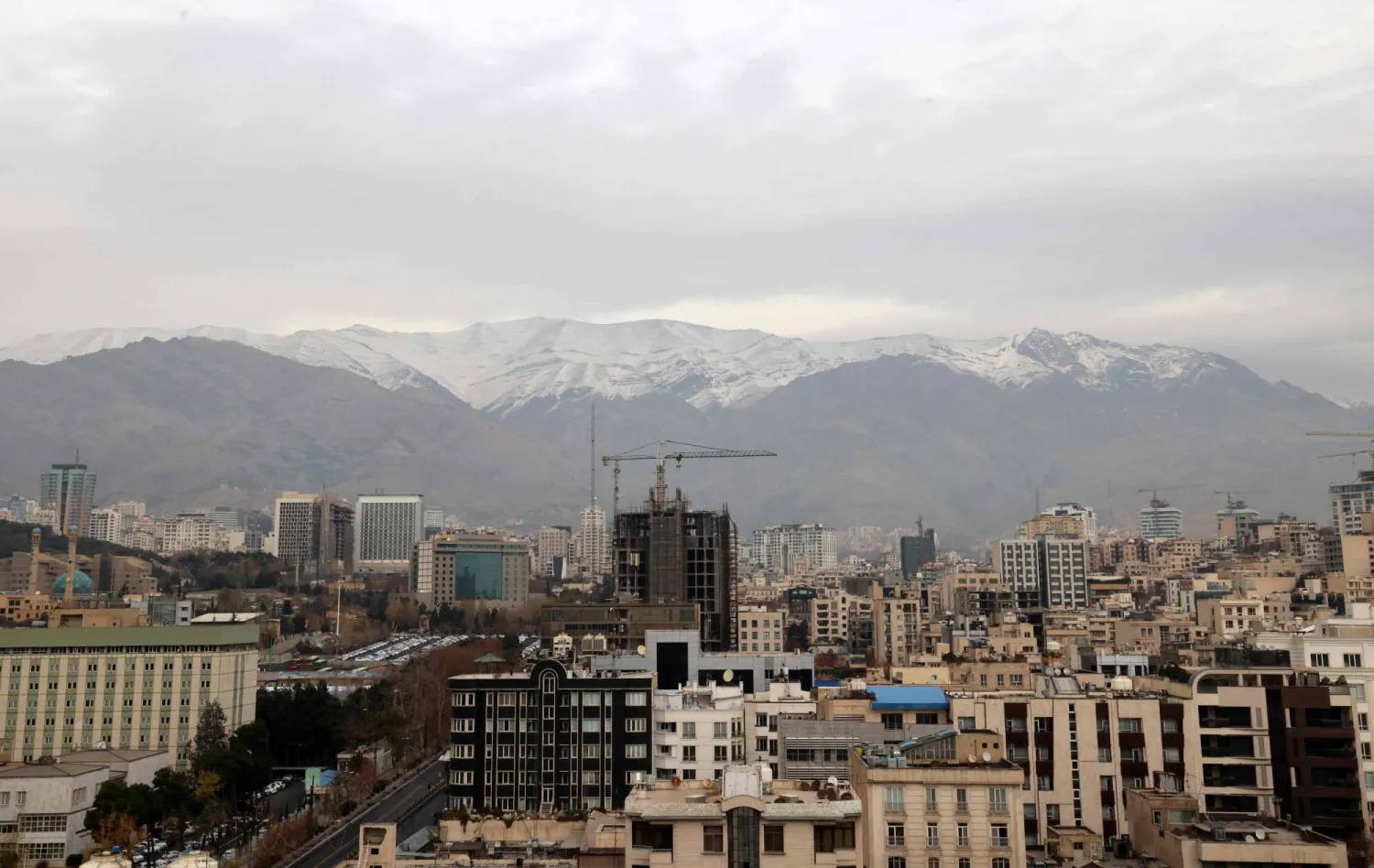
A general view shows the Iranian capital Tehran with the snow-covered Alborz mountain range in the background on December 9, 2025, after a year of drought and water shortage in Iran. (AFP)
TT

First Rain of Autumn Falls in Iran’s Capital, but the Drought-Ravaged Nation Needs Far More 

A general view shows the Iranian capital Tehran with the snow-covered Alborz mountain range in the background on December 9, 2025, after a year of drought and water shortage in Iran. (AFP)

Rain fell for the first time in months in Iran's capital Wednesday, providing a brief respite for the parched country as it suffers through the driest autumn in over a half century.

The drought gripping Iran has seen its president warn the country it may need to move its government out of Tehran by the end of December if there's not significant rainfall to recharge dams around the capital.

Meteorologists have described this fall as the driest in over 50 years across the country — from even before its 1979 revolution — further straining a system that expends vast amounts of water inefficiently on agriculture.

The water crisis has even become a political issue in the country, particularly as Israeli Prime Minister Benjamin Netanyahu has repeatedly offered his country's help to Iran, a nation he launched a 12-day war against in June. Water shortages also have sparked localized protests in the past, something Iran has been trying to avoid as its economy struggles under the weight of international sanctions over its nuclear program.

"The water crisis in Iran has, in recent years, escalated from a recurring drought issue into a profound political and security problem that has the regime leadership concerned," the New York-based Soufan Center said.

Drying reservoirs, light snowpack

The drought has been a long subject of conversation across Tehran and wider Iran, from government officials openly discussing it with visiting journalists to people purchasing water tanks for their homes. In the capital, government-sponsored billboards call on the public not to use garden hoses outside to avoid waste. Water service reportedly goes out for hours in some neighborhoods of Tehran, home to 10 million people.

Snowpack on the surrounding Alborz Mountains remains low as well, particularly after a summer that saw temperatures rise near 50 degrees Celsius (122 degrees Fahrenheit) in some areas of the country, forcing government buildings to shut down.

Ahad Vazifeh, an official in the government's Iran Meteorological Organization office, called the drought "unprecedented" in an interview with the Fararu news outlet last week. Precipitation now stands at about 5% of what's considered a normal autumn, he added.

"Even if rain in the winter and spring will be normal, we will have 20% shortage," Vazifeh warned.

Social media videos show people standing in some reservoirs, the water lines clearly visible. Satellite pictures analyzed by The Associated Press also show reservoirs noticeably depleted. That includes the Latyan Dam — one of five key reservoirs — which is now under 10% full as Tehran has entered its sixth consecutive year of drought.

The state-owned Tehran Times newspaper, often following the theocracy's line, was blunt about the scale of the challenge.

"Iran is facing an unprecedented water crisis that threatens not only its agricultural sector but also regional stability and global food markets," the newspaper said in a story this past weekend. The faithful have also offered prayers for rain at the country's mosques.

Climate change challenge

Iran, straddling the Middle East and Asia, long has been arid due to its geography. Its Alborz and Zagros mountain ranges cause a so-called "rain shadow" across much of the nation, blocking moisture coming from the Caspian Sea and the Arabian Gulf.

But the drain on the country's water supplies has been self-inflicted. Agriculture uses an estimated 90% of the country's water supplies. That hasn't been stopped even through these recent drought years. That's in part due to policies stemming from Iran's 1979 revolution and then-Supreme Leader Khomeini, who pledged water would be free for all.

The intervening years of the Iran-Iraq war saw the country push for self-sufficiency above all else, irrigating arid lands to grow water-intensive crops like wheat and rice, and over-drilling wells.

Experts have described Iran as facing "water bankruptcy" over its decisions. In the past, Iranian officials have blamed their neighbors in part for their water shortage, with hard-line former President Mahmoud Ahmadinejad at one point falsely suggesting that "the enemy destroys the clouds that are headed towards our country and this is a war Iran will win."

But that's changed with the severity of the crisis leading to current President Masoud Pezeshkian warning the capital may need to be moved. However, such a decision would cost billions of dollars the country likely doesn't have as it struggles through a major economic crisis.

Meanwhile, climate change likely has accelerated the droughts plaguing Iraq, which has seen the driest year on record since 1933, as well as Syria and Iran, said World Weather Attribution, a group of international scientists who study global warming’s role in extreme weather.

With the climate warmed by 1.3 degrees Celsius (2.3 degrees Fahrenheit) due to fossil fuel burning, the severity of drought seen in Iran over the last year can be expected to return every 10 years, the group said. If the temperature hadn't risen by that much, it could be expected between every 50 to 100 years, it added.

"The current acute crisis is part of a longer term water crisis in Iran and the wider region that results from a range of issues including, frequent droughts with increasing evaporation rates, water-intensive agriculture and unsustainable groundwater extraction," World Weather Attribution said in a recent report.

"These combined pressures contribute to chronic water stress in major urban centers including Tehran, reportedly at risk of severe water shortages and emergency rationing, while also straining agricultural productivity and heightening competition over scarce resources."



'Large-scale' Avalanche Kills Two Skiers in French Alps

Members of the CRS Alpes Grenoble mountain rescue team prepare to board a Securite Civile helicopter (emergency management) after after an avalanche emergency response rescue mission in an off-piste area of the Ecrins massif, French Alps on January 29, 2026. (Photo by JEFF PACHOUD / AFP)
TT

'Large-scale' Avalanche Kills Two Skiers in French Alps

Members of the CRS Alpes Grenoble mountain rescue team prepare to board a Securite Civile helicopter (emergency management) after after an avalanche emergency response rescue mission in an off-piste area of the Ecrins massif, French Alps on January 29, 2026. (Photo by JEFF PACHOUD / AFP)

An avalanche has killed two off-piste ski tourers in the French Alps, a local prosecutor said on Sunday.

According to local rescue services, the two men died when an avalanche was triggered on Saturday afternoon near the village of Saint-Veran, known as the highest village in the French Alps.

The two victims-- one born in 1997 and the other in 1991 -- were part of a group of four unguided skiers when a "large-scale" avalanche swept down the north side of the Tete de Longet mountain peak, Gap prosecutor Marion Lozac'hmeur told AFP.

The other two skiers were unharmed, Lozac'hmeur added.

An autopsy has been ordered as part of an investigation into the cause of death, according to the prosecutor.

Avalanches have already claimed the lives of more than 20 skiers across the French, Swiss and Austrian Alps so far this season.


Olympic Tourists in Cortina Can Explore the Dolomites with the New ‘Uber Snowmobile’ Service

 The peaks of the Dolomites are seen from the Cortina Sliding Centre during the Milano Cortina 2026 Winter Olympic Games in Cortina d'Ampezzo on February 5, 2026. (AFP)
The peaks of the Dolomites are seen from the Cortina Sliding Centre during the Milano Cortina 2026 Winter Olympic Games in Cortina d'Ampezzo on February 5, 2026. (AFP)
TT

Olympic Tourists in Cortina Can Explore the Dolomites with the New ‘Uber Snowmobile’ Service

 The peaks of the Dolomites are seen from the Cortina Sliding Centre during the Milano Cortina 2026 Winter Olympic Games in Cortina d'Ampezzo on February 5, 2026. (AFP)
The peaks of the Dolomites are seen from the Cortina Sliding Centre during the Milano Cortina 2026 Winter Olympic Games in Cortina d'Ampezzo on February 5, 2026. (AFP)

The peaks of the Dolomites are seen from the Cortina Sliding Centre during the Milano Cortina 2026 Winter Olympic Games in Cortina d'Ampezzo on February 5, 2026. (AFP)

For one month starting on Saturday, Olympic spectators keen for a side trip to a UNESCO World Heritage Site can use Uber to reserve a ride on a snowmobile along the snow-covered road to the base of the Three Peaks of Lavaredo.

The dramatic, jagged limestone pinnacles stand just 23 kilometers (14.3 miles) from the Cortina venues where athletes are competing in the 2026 Winter Olympics and Paralympics.

One of the Olympic torchbearers, Giulia Baffetti, runs snowmobiling tours through Cortina-based winter activities outfit Snowdreamers. The company partnered with Uber, the official ride-hailing sponsor for the Games, to offer free tours on the weekends in February to people in town.

"Uber Snowmobile" tours, which can only be booked through Uber, include a ride in an Uber transfer bus for up to eight people from Cortina to the spot where riders mount their snowmobiles for departure. Tourgoers then follow the instructor, who leads the line of snowmobiles.

The first slots offered went fast, but Uber spokesperson Caspar Nixon said Friday that it planned to add more.

The three peaks are a magical place, Baffetti said, and this is a way for more people to experience it. Hikers and climbers flock there in the warmer months. In the winter, it’s a prime spot for cross-country skiing, snowshoeing and sledding. Snowmobiling is allowed in a limited area in order to protect the environment.

"We want to give an experience to the tourists, so they can feel the mountains in a different way," she said.

The Associated Press took the one-hour tour on Thursday, ahead of the Saturday launch, along with one other person. Helmets are essential, while heated handgrips are a most welcome feature. And that red button? Passengers can push it to stop the snowmobile if it veers off course or they feel unsafe.

The adrenaline-filled ride reaches speeds up to 40 kph (25 mph) when zooming past snow-covered trees, and drivers are instructed to slow when coming upon cross-country skiers and sledders. Deer and wolves are sometimes seen along the 7-kilometer (4.3-mile) route up to the base of the peaks.

Also visible on Thursday was the southernmost of the three Lavaredo peaks, rising sharply out of the fog. While the Dolomites are breathtaking from Cortina — and on Friday, the sun shone and the view was clear from town — they are even more impressive up close.

The route back includes a short loop around Lake Antorno. Before traversing all the ups and downs, the snowmobile instructor leading the tour offers a reminder about that red button.

Saher Deeb, an Israeli tourist, was along for the ride Thursday, one day after his 29th birthday. It was his first time on a snowmobile, and he was all smiles as he climbed off at the end.

"It was perfect," he said.


French Duo Finish Walking from France to Shanghai After 1.5 Years

 Performers throw molten iron to create sparks during a performance on the Bund promenade along the Huangpu river, ahead of the upcoming Lunar New Year of the Horse in Shanghai on February 2, 2026. (AFP)
Performers throw molten iron to create sparks during a performance on the Bund promenade along the Huangpu river, ahead of the upcoming Lunar New Year of the Horse in Shanghai on February 2, 2026. (AFP)
TT

French Duo Finish Walking from France to Shanghai After 1.5 Years

 Performers throw molten iron to create sparks during a performance on the Bund promenade along the Huangpu river, ahead of the upcoming Lunar New Year of the Horse in Shanghai on February 2, 2026. (AFP)
Performers throw molten iron to create sparks during a performance on the Bund promenade along the Huangpu river, ahead of the upcoming Lunar New Year of the Horse in Shanghai on February 2, 2026. (AFP)

Two French adventurers reached the end of an epic walk from France to Shanghai on Saturday, after nearly a year and a half crossing 16 countries almost entirely on foot.

Loic Voisot and Benjamin Humblot embraced as they stood by the river on the Bund promenade, the financial hub's distinctive skyline glittering in the background.

Voisot and Humblot set off from Annecy in September 2024.

"We were thinking about this moment almost every day for more than a year now, so it's a really strong feeling," Humblot said of reaching their destination.

Hanging out after work one day, the two friends realized they both yearned for a "great adventure".

They wanted to visit China -- but without flying, which they believe is too harmful to the environment.

A plan to set out on foot was hatched, and except for a stretch in Russia which was done by bus for safety reasons, 518 days and around 12,850 kilometers (7,980 miles) later they took the last steps to completing it.

Around 50 people gathered at the start point for the last 10km stretch of their odyssey, many local people who have been following them on social media.

Along the way their numbers swelled, as media, French residents of Shanghai and others joined.

"If your dreams are crazy, just take it step by step and sometimes you will not succeed, but sometimes you will," said Voisot.

Asked what he would do first now the walk was over, he joked: "Sleep a lot!"