



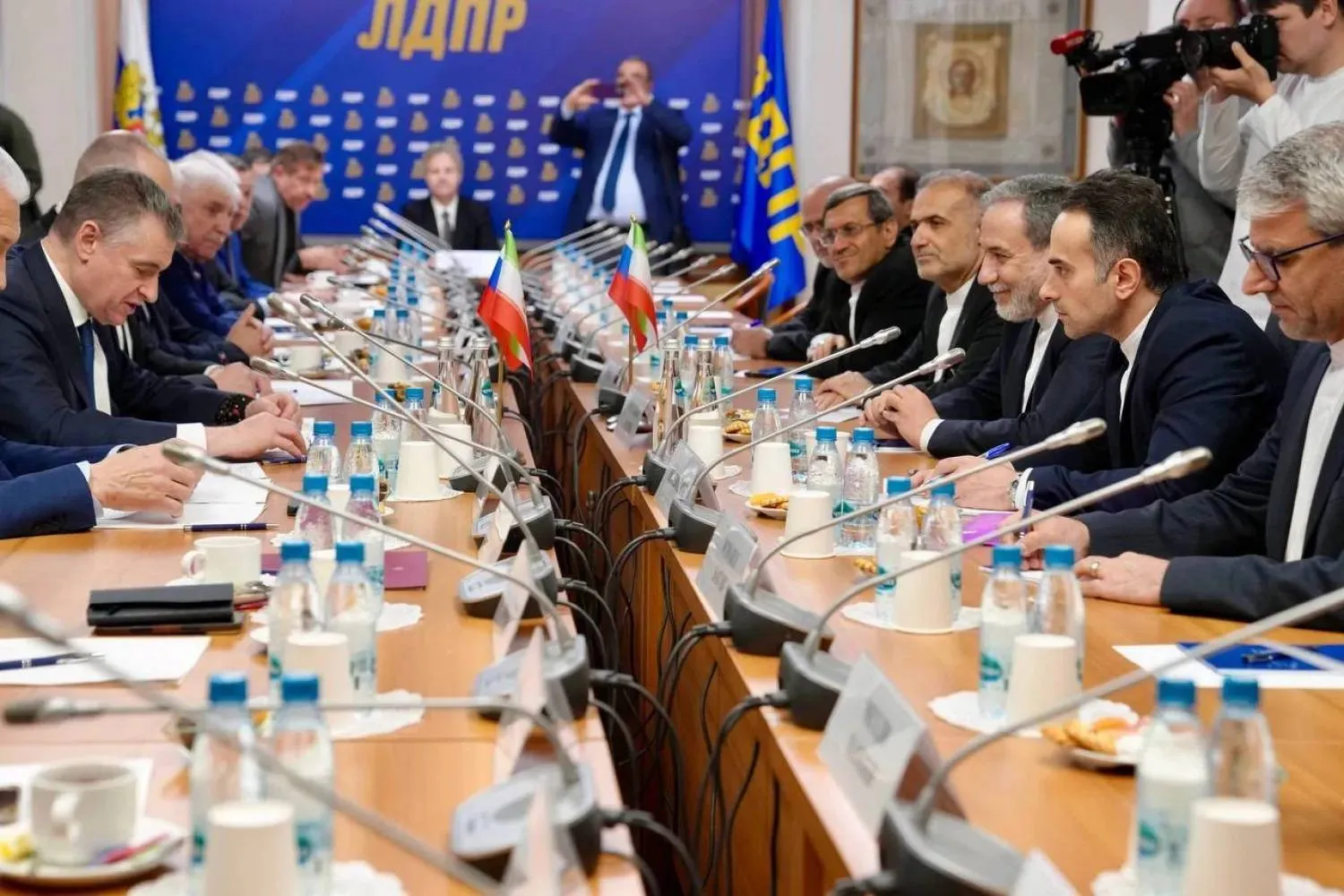

Iranian Foreign Minister Abbas Araghchi arrived in Moscow on Tuesday amid a crisis in his country’s relations with the International Atomic Energy Agency (IAEA) and ongoing disagreements with the West over a nuclear deal.
Ahead of Araghchi’s arrival, Russian Foreign Minister Sergei Lavrov told Iranian state media that the IAEA needed to be neutral in dealing with Iran.
“The IAEA did not condemn the (US and Israeli) strikes on Iran (in June) even though the agency had a mandate to monitor the bombed sites – these were the sites in question. This omission was a blatant violation of all the rules and norms,” Lavrov said.
“This is why IAEA’s actions did not exactly please anyone in Iran, to say the least, which is more than understandable,” he noted.
Iran passed a law in July to suspend its cooperation with the IAEA, denying UN inspectors access into the country. The suspension came after US and Israeli airstrikes targeted Iran’s nuclear facilities on June 22.
The FM said Russia supported Iran at various stages of the negotiations with the IAEA.
President Vladimir Putin “discussed the current situation with our Iranian friends at various levels. We shared with our Iranian friends our opinion on how to deal with this situation, how to restore relations with the IAEA and with Western countries and on what terms, if they are interested in this. But the final decision remains, of course, with the leadership of Iran,” Lavrov added.
IAEA chief Rafael Grossi had been calling on Iran to allow inspectors access to three key nuclear facilities that enrich uranium and were hit by the US and Israeli airstrikes in June.
But head of the Atomic Energy Organization of Iran (AEOI) Mohammad Eslami said the IAEA has no right to demand inspections of the targeted sites.
In a related development, Egyptian Foreign Minister Badr Abdelatty held telephone talks with Grossi on Monday over the Iranian nuclear file.
Abdelatty underscored the importance of continuing efforts aimed at building confidence and paving the way for sustained cooperation between Iran and the IAEA.
In an interview with Radio France International (RFI) on Monday, Grossi said: “Contact with Iran remains in place. We haven’t yet been able to restore cooperation to the required level, but I believe it is critically important.”
He said dialogue with Iran continues through behind-the-scenes negotiations and confidential contacts.
Last month, Kamal Kharrazi, a top foreign affairs advisor to Supreme Leader Ali Khamanei, said Tehran was ready to consider a Russian and Chinese plan to resume cooperation with IAEA.
In Russia, Araghchi met with Leonid Slutsky, chairman of the international committee of the lower house of parliament, and leader of the Liberal Democratic Party of Russia (LDPR).
He said Russian-Iranian ties are developing across all areas of cooperation.
Araghchi and Lavrov are set to meet on Wednesday.


