
Damascus Foils New Weapons Smuggling Attempt into Lebanon

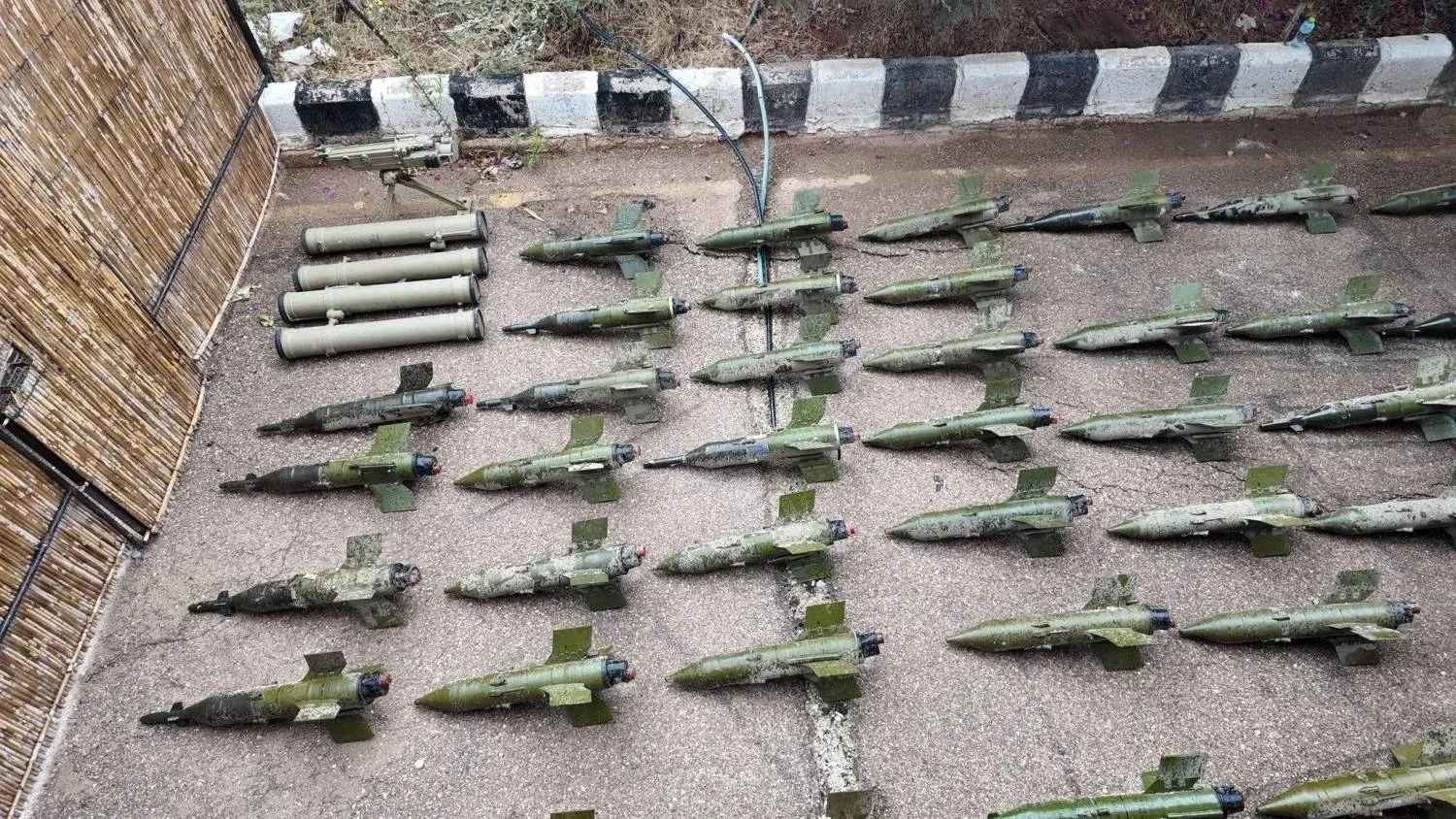
Missiles intended for smuggling found by Syrian forces (Syrian Interior Ministry X Account)
TT

Damascus Foils New Weapons Smuggling Attempt into Lebanon

Missiles intended for smuggling found by Syrian forces (Syrian Interior Ministry X Account)

The new Syrian government is stepping up an aggressive campaign to seal its border with Lebanon, seeking to dismantle smuggling routes that under Bashar al-Assad’s rule served as a critical lifeline for Hezbollah, channeling weapons and money from Iran.

In this context, the Interior Ministry announced on Wednesday that the Internal Security Directorate in the Zabadani area of the Damascus countryside had thwarted an attempt to smuggle a shipment of weapons bound for Lebanon.

The ministry said in a statement published on its Telegram channel that, following close security surveillance of those involved, security forces carried out a tightly planned ambush in the border town of Serghaya, which falls under the Zabadani area, leading to the seizure of the shipment.

It said the cache included large quantities of RPG shells that had been carefully concealed in preparation for smuggling across the border.

The statement said the seized weapons were confiscated in accordance with legal procedures and transferred to the relevant authorities to take the necessary legal action. It added that the operation was part of ongoing efforts by the Interior Ministry to combat smuggling, secure the borders, and protect national security and stability.

Since the overthrow of the Assad regime on Dec. 8 last year, and the near complete end of Iran’s military presence and that of Hezbollah fighters on Syrian territory, the new authorities have sought to tighten control over borders with neighboring countries.

These efforts include pursuing drug smuggling networks, remnants of the Assad regime, and preventing weapons smuggling.

Over the past year since Syria’s liberation, the new authorities have announced the foiling of numerous attempts to smuggle weapons into Lebanon.

Informed sources in the western Qalamoun region along the Lebanese border near the Bekaa said the new Syrian authorities were making sustained efforts to control the border and prevent smuggling in all its forms.

The sources told Asharq Al-Awsat that Syrian authorities currently control most of the border with Lebanon, but said this did not mean all smuggling routes had been sealed.

They noted that Hezbollah, even before the outbreak of the Syrian uprising in 2011 and during years of fighting alongside the Assad regime, built weapons depots and supply tunnels in border areas with the Bekaa, including western Qalamoun, which includes the Zabadani area.

The sources said the new authorities had seized a large number of those depots during their operations, confiscated the weapons inside them, and destroyed supply tunnels.

However, they said most of the depots built by Hezbollah inside Syrian territory were not visible, suggesting that a number of them may not yet have been discovered.

Observers say that following the end of Hezbollah’s presence, and that of Iran, in Syria, the group is attempting through sleeper cells inside Syrian territory to smuggle what remains of its weapons stockpiles from undiscovered depots.

They said this comes amid a decline in Hezbollah’s military capabilities after the war waged against it by Israel last year, and amid reports raising the possibility of a new Israeli war against the group.

In September last year, the head of internal security in the Damascus countryside, Brigadier General Ahmed al-Dalati, said specialized units, in cooperation with the General Intelligence Service, had arrested a Hezbollah cell operating in the towns of Saasaa and Kanaker in western Damascus countryside after close surveillance and intensive fieldwork.

Al-Dalati said initial investigations showed that members of the cell had received training in camps inside Lebanese territory and were planning to carry out operations inside Syria that would threaten the security and stability of citizens.

He said the operation led to the seizure of rocket launch platforms, 19 Grad rockets, anti armor missiles, individual weapons, and large quantities of assorted ammunition.

The case was referred to the competent authorities to pursue legal procedures, while security agencies continued interrogations to uncover all links and objectives, al-Dalati said.

In a separate incident, the Internal Security Directorate in the Qusayr area of the Homs countryside seized a shipment of Kornet missiles on Oct. 11 that was being prepared for smuggling out of the country.

The missiles were being transported on two motorcycles, in the second such operation within two weeks.

The Interior Ministry said at the time that the seizure followed precise intelligence gathering and continuous monitoring of illegal weapons sources, resulting in the full confiscation of the shipment.

It said investigations were ongoing to identify all those involved, determine the sources of the weapons, and take deterrent legal action.

On Nov. 10, Internal Security Command in Homs province arrested a suspect identified as A.S. on charges of trafficking weapons and ammunition, following close field surveillance.

An official statement said the arrest came after precise information was received indicating his involvement in the trade of anti armor missiles and assorted ammunition.

Security sources said units recently discovered a warehouse in the Homs countryside containing light and medium weapons and assorted ammunition. The cache was being used as a supply source for outlawed groups seeking to destabilize the area, according to Sham News Network.

Additional quantities of weapons were also found distributed among villages and towns in western Homs countryside. The weapons were confiscated in accordance with legal regulations after it was determined they had been carefully concealed.

The directorate said the operations fall within the Interior Ministry’s strategy to secure borders and combat smuggling, in a way that supports national security and enhances stability along the border areas with Lebanon.
Israel Launches Intense Airstrikes in Lebanon as Deadline Looms to Disarm Hezbollah

TOPSHOT - Smoke rises from the site of a series of Israeli airstrikes that targeted the outskirts of the southern Lebanese village of al-Katrani on December 18, 2025.  (Photo by Rabih DAHER / AFP)
TOPSHOT - Smoke rises from the site of a series of Israeli airstrikes that targeted the outskirts of the southern Lebanese village of al-Katrani on December 18, 2025. (Photo by Rabih DAHER / AFP)
TT

Israel Launches Intense Airstrikes in Lebanon as Deadline Looms to Disarm Hezbollah

TOPSHOT - Smoke rises from the site of a series of Israeli airstrikes that targeted the outskirts of the southern Lebanese village of al-Katrani on December 18, 2025.  (Photo by Rabih DAHER / AFP)
TOPSHOT - Smoke rises from the site of a series of Israeli airstrikes that targeted the outskirts of the southern Lebanese village of al-Katrani on December 18, 2025. (Photo by Rabih DAHER / AFP)

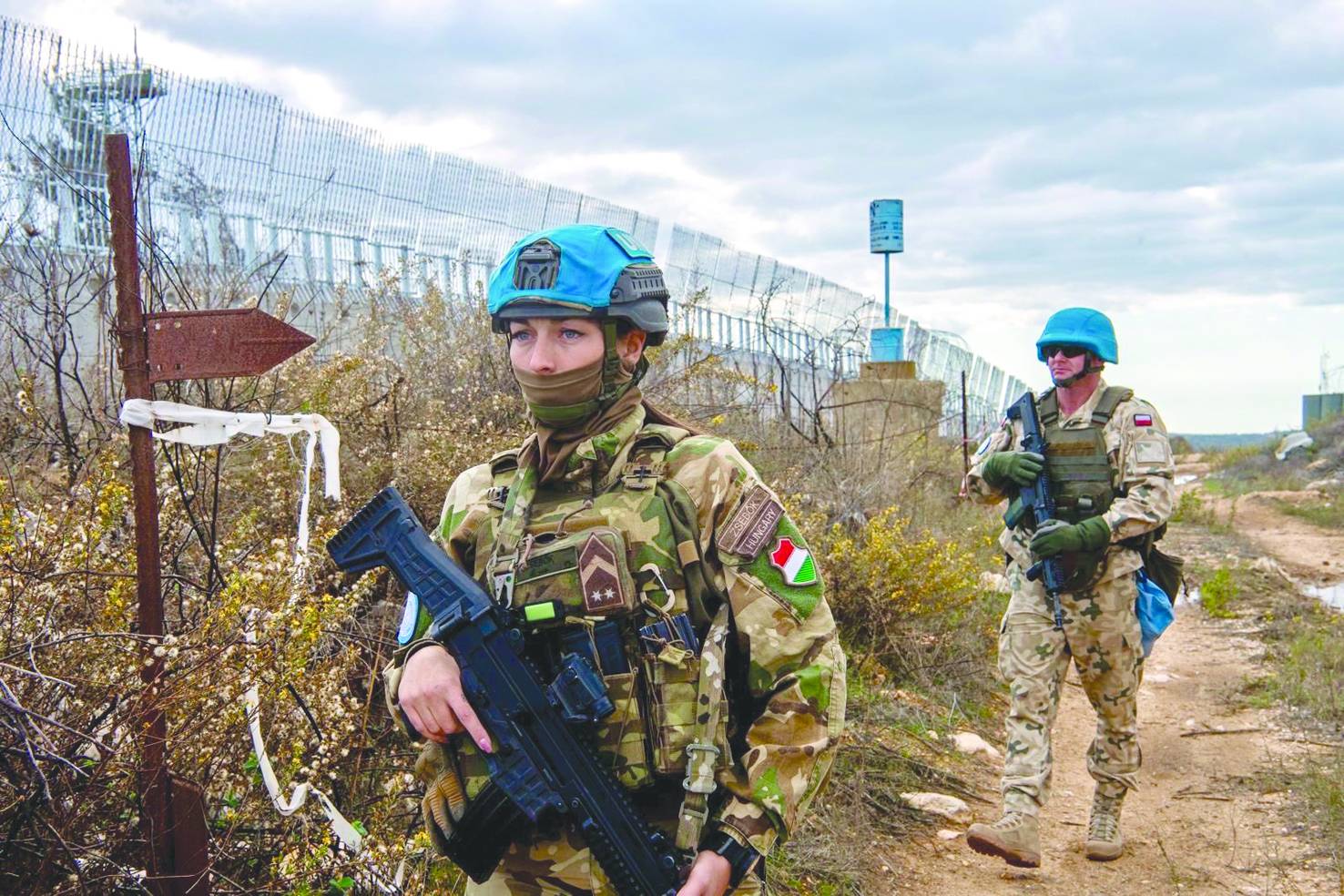
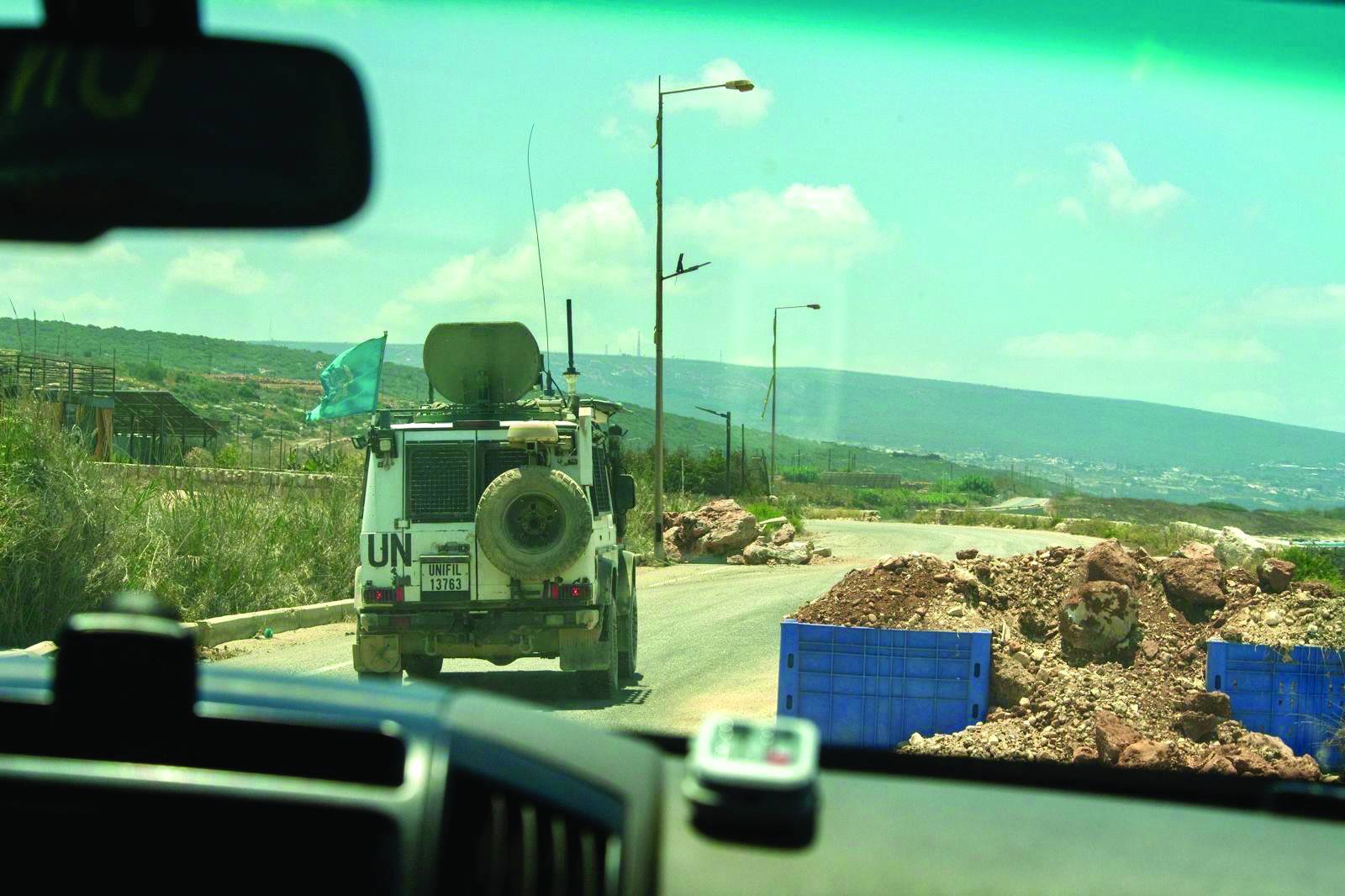
Israel carried out a series of airstrikes on southern and northeastern Lebanon on Thursday as a deadline looms to disarm the militant Hezbollah group along the tense frontier.

The strikes came a day before a meeting of the committee monitoring the enforcement of a US-brokered ceasefire that halted the latest war between Israel and Hezbollah a year ago.

It will be the second meeting of the mechanism after Israel and Lebanon appointed civilian members to a previously military-only committee. The group also includes the US, France and the UN peacekeeping force deployed along the border.

In Paris, Lebanon’s army commander Gen. Rodolphe Haykal is scheduled to meet on Thursday with US, French and Saudi officials to discuss ways of assisting the army in its mission to boost its presence in the border area.

The Lebanese government has said that the army should have cleared all the border area south of the Litani river from Hezbollah’s armed presence by the end of the year.

The Israeli military said the strikes hit Hezbollah infrastructure sites and launching sites in a military compound used by the group to conduct training and courses for its fighters. The Israeli military added that it struck several Hezbollah military structures in which weapons were stored, and from which Hezbollah members operated recently.

Lebanon’s state-run National News Agency said the intense airstrikes stretched from areas in Mount Rihan in the south to the northeastern Hermel region that borders Syria.

Shortly afterward, a drone strike on a car near the southern town of Taybeh inflicted casualties, NNA said.

“This is an Israeli message to the Paris meeting aiming to support the Lebanese army,” Parliament Speaker Nabih Berri said about the strikes.

“The fire belt of Israeli airstrikes is to honor the mechanism’s meeting tomorrow,” Berri added during a parliament meeting in Beirut.

The latest Israel-Hezbollah war began Oct. 8, 2023, a day after Hamas attacked southern Israel, after Hezbollah fired rockets into Israel in solidarity with Hamas. Israel launched a widespread bombardment of Lebanon in September last year that severely weakened Hezbollah, followed by a ground invasion.

Israel has carried out almost daily airstrikes since then, mainly targeting Hezbollah members but also killing 127 civilians, according to the office of the UN High Commissioner for Human Rights.

Over the past weeks, the US has increased pressure on Lebanon to work harder on disarming Hezbollah.


UN: Over 1,000 Civilians Killed in Sudan's Darfur when Paramilitary Group Seized Camp

The Sudanese flag flutters in Omdurman, part of greater Khartoum on December 13, 2025. (AFP)
TT

UN: Over 1,000 Civilians Killed in Sudan's Darfur when Paramilitary Group Seized Camp

The Sudanese flag flutters in Omdurman, part of greater Khartoum on December 13, 2025. (AFP)

Over 1,000 civilians were killed when a Sudanese paramilitary group took over a displacement camp in Sudan's Darfur region in April, including about a third who were summarily executed, according to a report by the UN Human Rights Office on Thursday.

"Such deliberate killing of civilians or persons hors de combat may constitute the war crime of murder,” said the UN High Commissioner for Human Rights Volker Turk in a statement accompanying the 18-page report.

The Zamzam camp in Sudan's western region of Darfur housed around half a million people displaced by the civil war and was taken over by Rapid Support Forces between April 11-13.


Guterres Says Operating Environment 'Untenable’ in Areas Held by Houthis

UN Secretary General Antonio Guterres speaks during a press conference at the Nasrec Expo Center in Johannesburg on November 21, 2025, ahead of the G20 Leaders' Summit. (Photo by GIANLUIGI GUERCIA / AFP)
TT

Guterres Says Operating Environment 'Untenable’ in Areas Held by Houthis

UN Secretary General Antonio Guterres speaks during a press conference at the Nasrec Expo Center in Johannesburg on November 21, 2025, ahead of the G20 Leaders' Summit. (Photo by GIANLUIGI GUERCIA / AFP)

United Nations Secretary-General Antonio Guterres on Wednesday urged all parties in Yemen to exercise maximum restraint after an advance by southern separatists that risks rekindling a 10-year-old civil war after a long lull.

He also said the operating environment had become untenable in the areas held by the Iran-aligned Houthi movement - Yemen's capital Sanaa and the heavily populated northwest.

"I urge all parties to exercise maximum restraint, de-escalate tensions, and resolve differences through dialogue," Guterres said. "This includes regional stakeholders, whose constructive engagement and coordination in support of UN mediation efforts are essential for ensuring collective security interests."

Guterres also condemned the Houthis' continued arbitrary detention of 59 UN staff, calling for their immediate and unconditional release.

"In recent days, Houthi de facto authorities referred three of our colleagues to a special criminal court. This referral must be rescinded. They have been charged in relation to their performance of United Nations official duties. These charges must be dropped," he said.

The United Nations has repeatedly rejected Houthi accusations that UN staff or UN operations in Yemen were involved in spying.

"We must be allowed to perform our work without interference," Guterres said. "Despite these challenges, we remain committed to providing life-saving support to millions of people across Yemen."

He said 19.5 million people in Yemen - nearly two-thirds of the population - need humanitarian assistance.