


Baghdad Pushes for Deeper Partnership with Washington against ISIS

Iraqi security says it carried out raid in Syria, arrested ISIS leaders (Government Media)
TT

Baghdad Pushes for Deeper Partnership with Washington against ISIS

Iraqi security says it carried out raid in Syria, arrested ISIS leaders (Government Media)

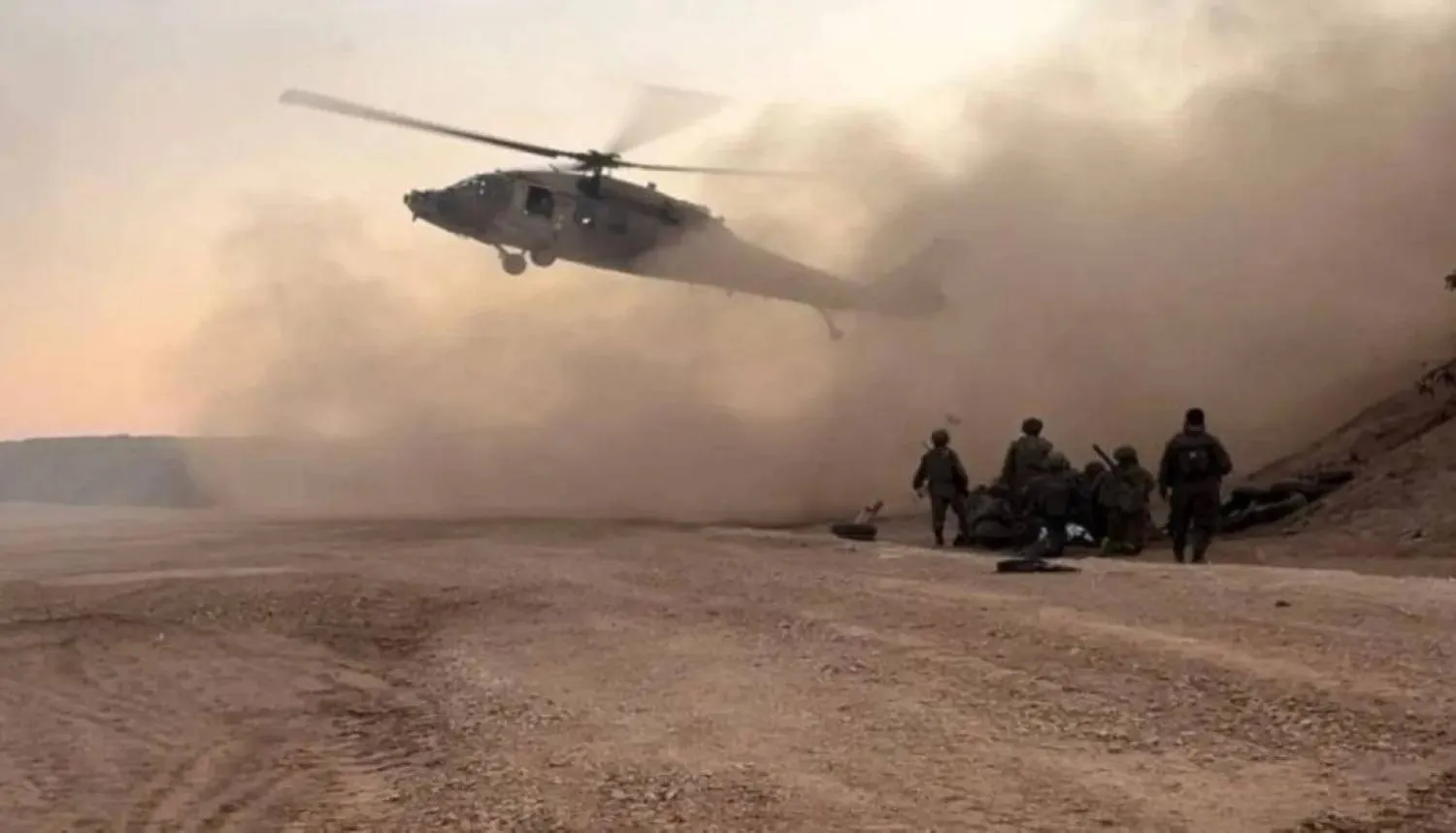
An Iraqi official said security cooperation with the United States is intensifying in the fight against terrorism, following a rare joint helicopter raid by Iraqi special forces inside Syrian territory.

An Iraqi intelligence unit, coordinating with Syrian security forces and the US-led international coalition, arrested two high value targets wanted by the Iraqi judiciary in a helicopter raid in northeastern Syria, according to a statement from the Security Media Cell.

A new phase

Hussein Allawi, adviser to the Iraqi prime minister, told Asharq Al-Awsat that Iraq is entering a new phase of strategic commitment to the Strategic Framework Agreement with the United States, which is moving toward broader political, economic, security and military dimensions, as well as technology transfer and infrastructure development.

He said recent operations in Syria and elsewhere reflect efforts to build a stronger partnership.

Allawi added that developing the relationship includes cooperation on building the capacities of the armed forces, sustaining counterterrorism efforts, enhancing cooperation to track and dry up financial assets, combating online propaganda by terrorist organizations including al-Qaeda and ISIS, and addressing the issue of al Hol camp.

He said both sides are serious about raising the level of security and intelligence cooperation in counterterrorism, in light of the completion of the first phase of ending the international coalition’s presence in Iraq under an agreement reached in September 2024, as well as targeting terrorist cells in Syria through cooperation between Iraq, the coalition and its member states.

The military operation came a day after the US Congress voted to repeal the authorization for the use of military force against Iraq. Iraq’s foreign ministry described the decision as historic and said it reinforces respect for sovereignty, while a government adviser said relations between the two countries have shifted from conflict to partnership.

State monopoly on arms

Politically, Ammar al-Hakim, leader of the National Wisdom Movement (Hikma) Movement, stressed that weapons should be held exclusively by the state, calling for an expedited formation of the Iraqi government.

In a speech on Friday, al-Hakim said weapons must be in the hands of the state in line with the constitution and the calls of the religious authority, so that the law stands above all by the will of Iraqis and their national political forces, not through external dictates.

In this context, Fahd al-Jabouri, a senior figure in the Hikma Movement, said the United States had raised concerns related to armed factions and individuals subject to sanctions or terrorism lists, and had conveyed these concerns clearly.

He said the Coordination Framework understood these messages and balanced them against the domestic reality, agreeing that some sovereign ministries would be assigned to figures not affiliated with any armed groups.

Al-Jabouri said dialogue is the best option and that the framework is always seeking to balance its external relations with internal requirements, correct misinformation reaching abroad, and strengthen the role of the state as the most powerful authority.

Kataib al-Imam Ali, a Shiite armed faction that recently won several seats in the new parliament, called for confining weapons to the state and strengthening the Popular Mobilization Forces.

In a statement, its secretary general Shibl al-Zaydi said ratifying the election results and the strong showing by factions aligned with the PMF placed these forces before an important national test.

He said the test lies in improving economic, security and service conditions, consolidating the authority and sovereignty of the state, and strictly confining weapons to the state in line with the constitution and the law, while reinforcing the Popular Mobilization Forces.

Diplomats and political observers say US pressure, particularly calls to limit weapons to the state, could complicate efforts to reach a settlement within the Coordination Framework over the next government lineup, as some forces remain committed to a political role for armed factions and their influence over the choice of prime minister.



Syrian Army on Alert after SDF Armed Groups Detected East of Aleppo

People walk down a street as a car drives by following a ceasefire which ended days of fighting between Syrian security forces and Kurdish fighters in the Kurdish-majority Sheikh Maqsoud neighborhood, of the northern city of Aleppo on January 11, 2026. (AFP)
TT

Syrian Army on Alert after SDF Armed Groups Detected East of Aleppo

People walk down a street as a car drives by following a ceasefire which ended days of fighting between Syrian security forces and Kurdish fighters in the Kurdish-majority Sheikh Maqsoud neighborhood, of the northern city of Aleppo on January 11, 2026. (AFP)

The Syrian army went on alert on Sunday after detecting armed groups aligned with the Syrian Democratic Forces (SDF) east of Aleppo city.

In statements to the SANA state news agency, the Operations Command said that the nature and objectives of these military reinforcements and troop concentrations brought by the SDF to eastern Aleppo have not yet been identified.

The Command added that Syrian army forces have been placed on full alert, deployment lines east of Aleppo have been reinforced, and all necessary measures have been taken to be ready for all possible scenarios.

First responders on Sunday entered a contested neighborhood in the northern city of Aleppo after days of deadly clashes between government forces and Kurdish-led forces. Syrian state media said the military was deployed in large numbers.

The clashes broke out Tuesday in the predominantly Kurdish neighborhoods of Sheikh Maqsoud, Achrafieh and Bani Zaid after the government and the SDF, the main Kurdish-led force in the country, failed to make progress on how to merge the SDF into the national army. Security forces captured Achrafieh and Bani Zaid.

The fighting between the two sides was the most intense since the fall of then-President Bashar Assad to opposition groups in December 2024. At least 23 people were killed in five days of clashes and more than 140,000 were displaced amid shelling and drone strikes.

The Kurdish fighters have now evacuated from the Sheikh Maqsoud neighborhood to northeastern Syria, which is under the control of the SDF.

However, they said in a statement they will continue to fight now that the wounded and civilians have been evacuated, in what they called a “partial ceasefire.”


Hadhramaut Governor to Asharq Al-Awsat: Saudi Stance Was Decisive, Situation Is Calm

Governor of Yemen's Hadhramaut governorate Salem al-Khanbashi. (Asharq Al-Awsat)
TT

Hadhramaut Governor to Asharq Al-Awsat: Saudi Stance Was Decisive, Situation Is Calm

Governor of Yemen's Hadhramaut governorate Salem al-Khanbashi. (Asharq Al-Awsat)

Governor of Yemen's Hadhramaut Salem al-Khanbashi stressed that the situation in the governorate was returning to normal in wake of the recent developments and withdrawal of the Southern Transitional Council (STC) forces.

In remarks to Asharq Al-Awsat from his office in Mukalla, he said: "The general situation is calm and stable. Work is underway to resume operations at various public administrations."

"Security measures have also been intensified, especially over the possession of weapons," he added.

He revealed that several suspects involved in looting and the possession of heavy weapons have been arrested.

"Life is gradually returning back to normal and the situation will improve," he stressed.

On Saudi Arabia's role, Khanbashi credited the Kingdom with helping move forward the issue of the STC withdrawal from Hadhramaut in record time.

Coordination with the Kingdom continues, he added.

He also noted that a meeting was held with senior Hadhramaut officials with leaders of the "Hadhramaut elite brigades" to discuss returning the forces to their former military positions.

Coordination with Saudi Arabia is at a "very high level", he revealed. Hadhramaut has received pledges from senior Saudi officials that major projects will be implemented in the governorate to develop infrastructure.

On restructuring the local authority, Khanbashi stressed: "Measures have been taken against officials who had openly expressed their support to the STC or who had taken contentious political positions."

Commenting on the conference Riyadh will be hosting on the southern issue, he said the Hadhramaut leadership has met with several members of the Hadhramaut National Council to discuss the issue.

The details of the talks and mechanism to choose representatives have not taken shape yet, he told Asharq Al-Awsat.

Expanded meetings with various political and social figures will be held in the governorate in the coming days with the aim of coming up with a unified vision that represents Hadhramaut at the conference, he added.

He noted the historic differences that exist between Hadhramaut and other southern governorates that should be taken into consideration and discussed.

On the issue of the Hadhramaut airports, he said the Riyan Airport is ready and expected to resume operations in the next two days.


Yemen's Al-Alimi Urges Limiting Possession of Weapons to State to Focus on Confronting Houthis

Chairman of Yemen's Presidential Leadership Council (PLC) Dr. Rashad al-Alimi. (Saba)
TT

Yemen's Al-Alimi Urges Limiting Possession of Weapons to State to Focus on Confronting Houthis

Chairman of Yemen's Presidential Leadership Council (PLC) Dr. Rashad al-Alimi. (Saba)

Chairman of Yemen's Presidential Leadership Council (PLC) Dr. Rashad al-Alimi said on Sunday that his country has entered a new decisive phase in restoring state institutions and ending armed coups.

The process of handing over military camps in Hadhramaut and al-Mahra governorates to legitimate authorities is a step towards imposing state monopoly over weapons, he added.

He made his remarks during a meeting in Riyadh with British Ambassador to Yemen is Abda Sharif.

The formation of a supreme military council will help unify all armed forces and military and security formations under the defense and interior ministries, al-Alimi went on to say.

The formation of the committee sends a message that the state has not veered off its national priorities and that the process to hand over military camps was the right call in protecting the internal front, he stressed.

The move aims to protect the internal front and focus state efforts in confronting the Iran-backed Houthi coup either through peaceful means or war, he added.

He discussed with Sharif the latest local developments and efforts to restore order in the liberated governorates.

He hailed the positive role the UK has played in supporting Yemen's unity and legitimate authorities, as well as peace and humanitarian efforts.

Moreover, al-Alimi described as "brave" the Southern Transitional Council's decision to dissolve itself.

It marked a "pivotal moment that reflects a realization of the sensitivity of the current phase and the danger of sliding into internal conflicts that would weaken the internal front against the confrontation against the real threat," he said.

The next phase demands that all national, civilian and military forces align with the state and legitimate authorities and the rule of law, he demanded.

Al-Alimi also highlighted Saudi Arabia's central role in easing the escalation and sponsoring intra-southern Yemen dialogue. This is an extension of its economic and humanitarian support to Yemen.