


UN Makes First Visit to Sudan’s El-Fasher Since Its Fall, Finding Dire Conditions

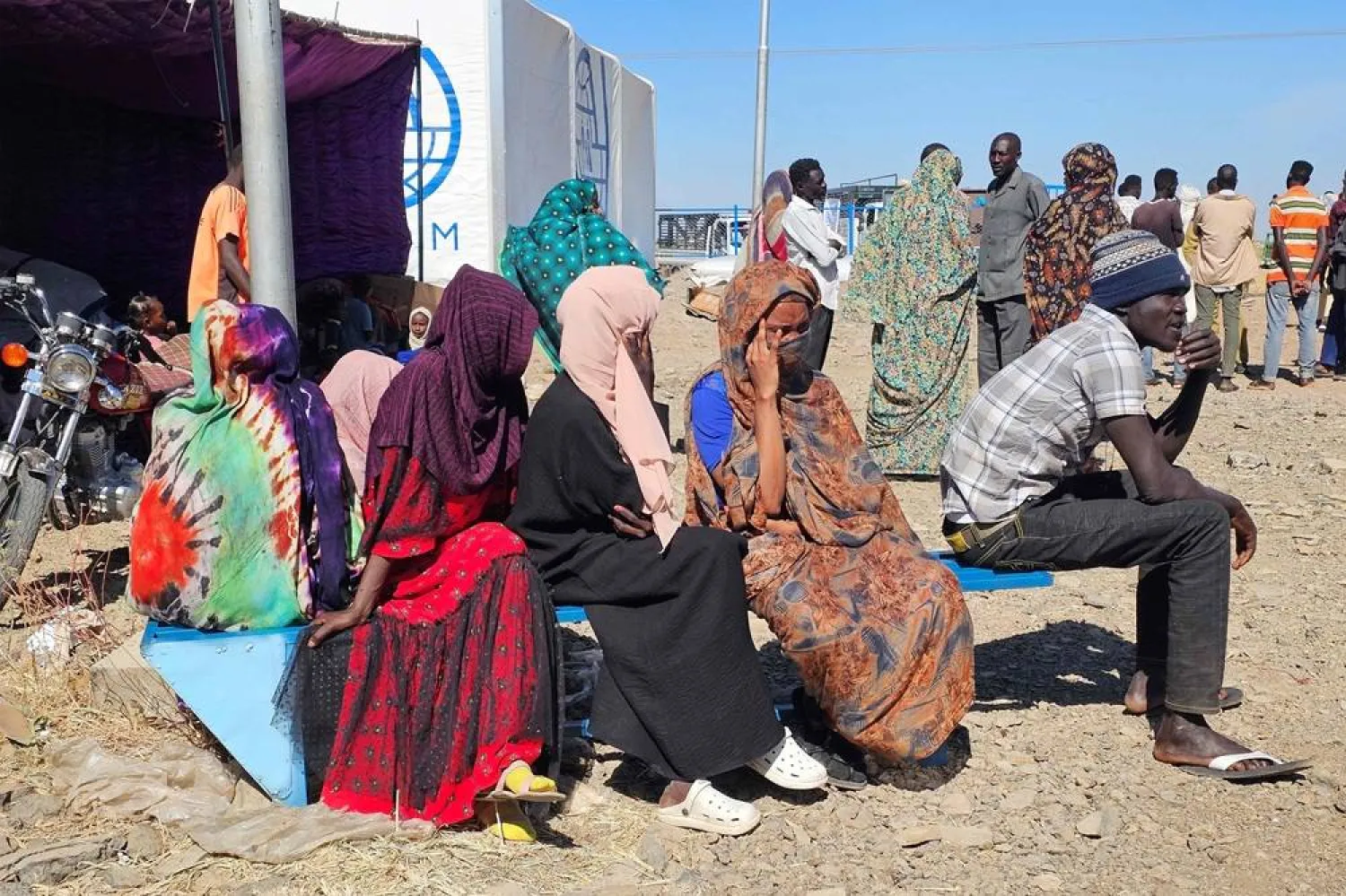
Sudanese displaced from the Heglig area in western Sudan wait to receive humanitarian aid at the Abu al-Naga displacement Camp in the in Gedaref State, some 420km east of the capital Khartoum on December 30, 2025.(AFP)
TT

UN Makes First Visit to Sudan’s El-Fasher Since Its Fall, Finding Dire Conditions

Sudanese displaced from the Heglig area in western Sudan wait to receive humanitarian aid at the Abu al-Naga displacement Camp in the in Gedaref State, some 420km east of the capital Khartoum on December 30, 2025.(AFP)

A UN humanitarian team visited el-Fasher in Sudan’s Darfur region for the first time since a paramilitary force overran the city in October, carrying out a rampage that is believed to have killed hundreds of people and sent most of the population fleeing.

The hours-long visit gave the UN its first glimpse into the city, which remains under control of the Rapid Support Forces. The team found hundreds of people still living there, lacking adequate access to food, medical supplies and proper shelter, the UN said Wednesday.

“It was a tense mission because we’re going into what we don’t know ... into a massive crime scene,” Denise Brown, the UN humanitarian coordinator for Sudan, said of Friday’s visit.

For the past two months, el-Fasher has been nearly entirely cut off from the outside world, leaving aid groups unsure over how many people remained there and their situation. The death toll from the RSF takeover, which came after a more than a year-long siege, remains unknown.

Survivors among the more than 100,000 people who fled el-Fasher reported RSF fighters gunning down civilians in homes and in the streets, leaving the city littered with bodies. Satellite photos have since appeared to show RSF disposing of bodies in mass graves or by burning them.

Brown said “a lot of cleaning up" appeared to have taken place in the city over the past two months. The UN team visited the Saudi Hospital, where RSF fighters reportedly killed 460 patients and their companions during the takeover.

“The building is there, it’s clearly been cleaned up,” Brown said of the hospital. “But that doesn’t mean by any stretch of the imagination that this story has been wiped clean because the people who fled, fled with that story.”

El-Fasher lacks shelters and supplies

El-Fasher, the capital of North Darfur state, had been the last stronghold of the Sudanese military in the Darfur region until the RSF seized it. The RSF and the military have been at war since 2023 in a conflict that has seen multiple atrocities and pushed Sudan into one of the world’s worst humanitarian crises.

The UN team visiting el-Fasher focused on identifying safe routes for humanitarian workers and conducted only an initial assessment on the situation on the ground, with more teams expected to enter, Brown said.

“Villages around el-Fasher appeared to be completely abandoned. We still believe that people are being detained and that there are people who are injured who need to be medically evacuated,” said Brown, citing the initial U.N. findings.

The exact number of people still living in the city is hard to determine, but Brown said they’re in the hundreds and they lack supplies, social services, some medications, education and enough food.

They are living in deserted buildings and in shelters they erected using plastic sheets, blankets and other items grabbed from their destroyed homes. Those places lack visible toilets and access to clean drinking water.

The first charity kitchen to operate since the city’s fall opened Tuesday in a school-turned- shelter, according to the Nyala branch of the local aid initiative Emergency Response Rooms (ERR). The charity kitchen will be operated by ERR Nyala, serving daily meals, food baskets, and shelter supplies. More community kitchens are expected to open across 16 displacement centers, sheltering at least 100 people.

The UN team found a small open market operating while they were in the city, selling limited local produce such as tomatoes and onions. Other food items were either unavailable or expensive, with the price of one kilogram (2.2 pounds) of rice reaching as high as $100, Brown said.

‘Paralyzed’ health care system

Mohamed Elsheikh, spokesperson for the Sudan Doctors Network, told The Associated Press Wednesday that medical facilities and hospitals in el-Fasher are not operating in full capacity.

“El-Fasher has no sign of life, the healthcare system there is completely paralyzed. Hospitals barely have access to any medical aid or supplies,” he added.

Brown described the situation in el-Fasher as part of a “pattern of atrocities” in this war that is likely to continue in different areas.

The United States has accused the RSF of committing genocide in Darfur during the war, and rights groups said the paramilitaries committed war crimes during the siege and takeover of el-Fasher, as well as in the capture of other cities in Darfur. The military has also been accused of rights violations.



Pro-Palestinian Flotilla’s New Gaza Mission to Start in Spain on April 12

The Global Sumud Flotilla's first weeks-long journey across the Mediterranean Sea to Gaza, blockaded by Israel during the war against Hamas, drew worldwide attention. (Reuters)
TT

Pro-Palestinian Flotilla’s New Gaza Mission to Start in Spain on April 12

The Global Sumud Flotilla's first weeks-long journey across the Mediterranean Sea to Gaza, blockaded by Israel during the war against Hamas, drew worldwide attention. (Reuters)

A flotilla of pro-Palestinian activists who attempted to reach Gaza last year said on Thursday they would launch a new mission to the devastated territory from Barcelona on April 12.

The Global Sumud Flotilla's first weeks-long journey across the Mediterranean Sea to Gaza, blockaded by Israel during the war against Palestinian group Hamas, drew worldwide attention.

Israel's interception of their boats and arrests of the activists as they approached Gaza, which suffered severe shortages of food, water, medicine and fuel, sparked international condemnation.

The group, which described its first attempt as a humanitarian mission, said the latest trip starting in Spain's second city would gather more than 80 boats and 1,000 international participants.

"The cost of inaction is too high to bear," it said in a statement, adding that a land-based movement would join the maritime action to create pressure in multiple countries.

"As Gaza endures intensifying blockade, violence, and deprivation, the mission is a principled, nonviolent intervention: a defense of human dignity, a call for humanitarian access, and a demand for international accountability," the group said.

Gaza is under a fragile ceasefire agreed last October, which followed two years of devastating conflict sparked by the October 7, 2023 Hamas attack on Israel.

The attack resulted in the deaths of 1,221 people Israel, mostly civilians, according to official Israeli figures tallied by AFP. Palestinian fighters also abducted 251 hostages.

The retaliatory Israeli military campaign killed more than 70,000 people in Gaza, also mostly civilians, according to the Hamas-run territory's health ministry whose figures the United Nations considers reliable.

Both sides have repeatedly accused each other of violating the ceasefire.

Gaza's health ministry says Israeli strikes have killed more than 700 Palestinians since the truce. Israel says five of its soldiers have been killed in the same period.


Israel Says It Has Struck Over 3,500 Targets in Lebanon in Past Month

This picture taken from the southern Lebanese area of Tyre shows smoke rising from the site of an Israeli airstrike that targeted the area of Naqoura on March 31, 2026. (AFP)
TT

Israel Says It Has Struck Over 3,500 Targets in Lebanon in Past Month

This picture taken from the southern Lebanese area of Tyre shows smoke rising from the site of an Israeli airstrike that targeted the area of Naqoura on March 31, 2026. (AFP)

The Israeli military said Friday it had struck more than 3,500 targets across Lebanon in the month since fighting with the Hezbollah group began.

Lebanon was drawn into the Middle East war on March 2 after Iran-backed Hezbollah launched rockets at Israel to avenge the US-Israeli attack that killed Iran's supreme leader Ali Khamenei.

Israel has responded with massive strikes across Lebanon and a ground offensive.

The Israeli military said Friday it had killed approximately 1,000 militants in Lebanon over the past month, with strikes targeting what it described as "terrorist infrastructure, weapons storage facilities, launch positions, and command and control headquarters" belonging to Hezbollah.

Lebanon's health ministry said on Thursday that 1,345 people had been killed and 4,040 wounded since the start of the war, including 1,129 men, 91 women and 125 children.

The ministry said the toll also included 53 healthcare workers.

Hezbollah has so far not announced its losses.

On Thursday, Israeli Defense Minister Israel Katz warned that Hezbollah chief Naim Qassem would pay an "extraordinarily heavy price" for escalating attacks during the ongoing Jewish holidays.

"The Hezbollah terrorist organization you now lead, and its supporters in Lebanon, will bear the full and severe consequences," Katz said.

His warning followed claims by Hezbollah that it had carried out a series of rocket attacks on northern Israel late Wednesday and early Thursday, as Israeli Jews began marking Passover.

Katz also reiterated that Israeli forces "will clear Hezbollah and its supporters from southern Lebanon, maintain Israeli security control throughout the Litani area, and dismantle Hezbollah's military capabilities across Lebanon".

Eighteen European countries on Thursday urged Israel and Hezbollah to stop fighting as their latest conflict reached one month and with fears over Israeli plans to occupy part of southern Lebanon post-war.

"Israeli military operations in Lebanon and Hezbollah's attacks must cease," the foreign ministers of the countries including Italy, Spain, Belgium, Poland and Ireland said in a joint statement.

"We urge Israel to fully respect Lebanon's sovereignty and territorial integrity, and call on all parties, both Hezbollah and Israel, to halt military action," the statement said.

The countries include Spain, Austria, Belgium, Croatia, Cyprus, Estonia, Finland, Iceland, Italy, Ireland, Latvia, Luxembourg, Moldova, Norway, Poland, San Marino, Slovenia and Sweden.


US Warning on Iraq's Militias Deepens Tensions with Baghdad

Iraqis inspect smoke rising from an oil storage facility on the outskirts of Erbil, the capital of Iraq’s Kurdistan region, following a suspected drone strike on April 1, 2026. (AFP) 
TT

US Warning on Iraq's Militias Deepens Tensions with Baghdad

Iraqis inspect smoke rising from an oil storage facility on the outskirts of Erbil, the capital of Iraq’s Kurdistan region, following a suspected drone strike on April 1, 2026. (AFP) 

Relations between Baghdad and Washington have entered a more tense phase after the US embassy issued sharp security warnings and questioned Iraq’s ability to prevent attacks on American interests.

The US embassy in Baghdad said Thursday that Iran-aligned Iraqi militias could carry out attacks in central Baghdad within 24 to 48 hours, urging US citizens to leave Iraq immediately.

It said potential attacks could target Americans and US-linked interests, including companies, universities, diplomatic facilities, energy infrastructure, hotels, and airports.

The warning came a day after the State Department announced a reward of up to $3 million for information leading to the identification of those responsible for attacks on US diplomatic facilities in Iraq.

In a separate statement issued hours earlier, the embassy said the Iraqi government “has not been able to prevent terrorist attacks” taking place inside Iraq or launched from its territory, referring to repeated incidents targeting the US embassy in Baghdad, the consulate general in Erbil, and a diplomatic support center in the capital.

It further noted that certain members of armed groups may possess identification documents indicating employment with the Iraqi government, suggesting potential institutional affiliations or official cover, though no additional details were provided.

The escalation comes less than a week after Iraq’s Joint Operations Command and US officials reaffirmed their commitment to keeping Iraq out of the ongoing regional conflict. They stressed that Iraqi territory, airspace, and territorial waters should not be used to threaten Iraq or neighboring countries.

At the same time, airstrikes targeted sites belonging to armed factions in Anbar and Nineveh provinces.

Local sources in Anbar said a US strike hit the headquarters of the Tribal Popular Mobilization Forces’ 57th Brigade in Haditha, west of the province. No immediate official toll on damage or casualties was released.

In Nineveh, the Popular Mobilization Forces (PMF) said a site belonging to the 38th Regiment of the 58th Brigade under Nineveh Operations Command was struck in Qayyarah, south of Mosul, with no casualties reported.

The PMF said the strike occurred at 11:30 a.m., adding it came less than 24 hours after another site in the same province was targeted. Earlier Thursday, it reported a double airstrike targeting the 4th Regiment of the 14th Brigade, also without casualties.

The repeated targeting of these sites in a short period point to a widening military escalation, coinciding with US warnings of possible attacks in Baghdad and underscoring growing security risks.

Politically, the State Administration Coalition — which includes Shiite, Sunni, and Kurdish parties in government — rejected “any violation of the country’s sovereignty under any pretext” and reiterated its refusal to allow Iraqi territory to be used to launch attacks on other states, particularly neighbors.

It also condemned attacks on state institutions, diplomatic missions, and vital facilities, voicing support for government and judicial efforts to enforce the law and restore stability.

Analysts say the combination of airstrikes and US warnings could increase pressure on Baghdad to take a clearer stance on armed factions and attacks originating from Iraqi territory.

A former Iraqi government adviser, speaking on condition of anonymity, said the embassy warning “signals declining confidence in Baghdad’s ability to take decisive action against armed groups.”

He said US policy had shifted “from giving the government room to maneuver to exerting direct pressure” to adopt a clearer position, warning that continued ambiguity could lead to further political and security pressure on Iraq.