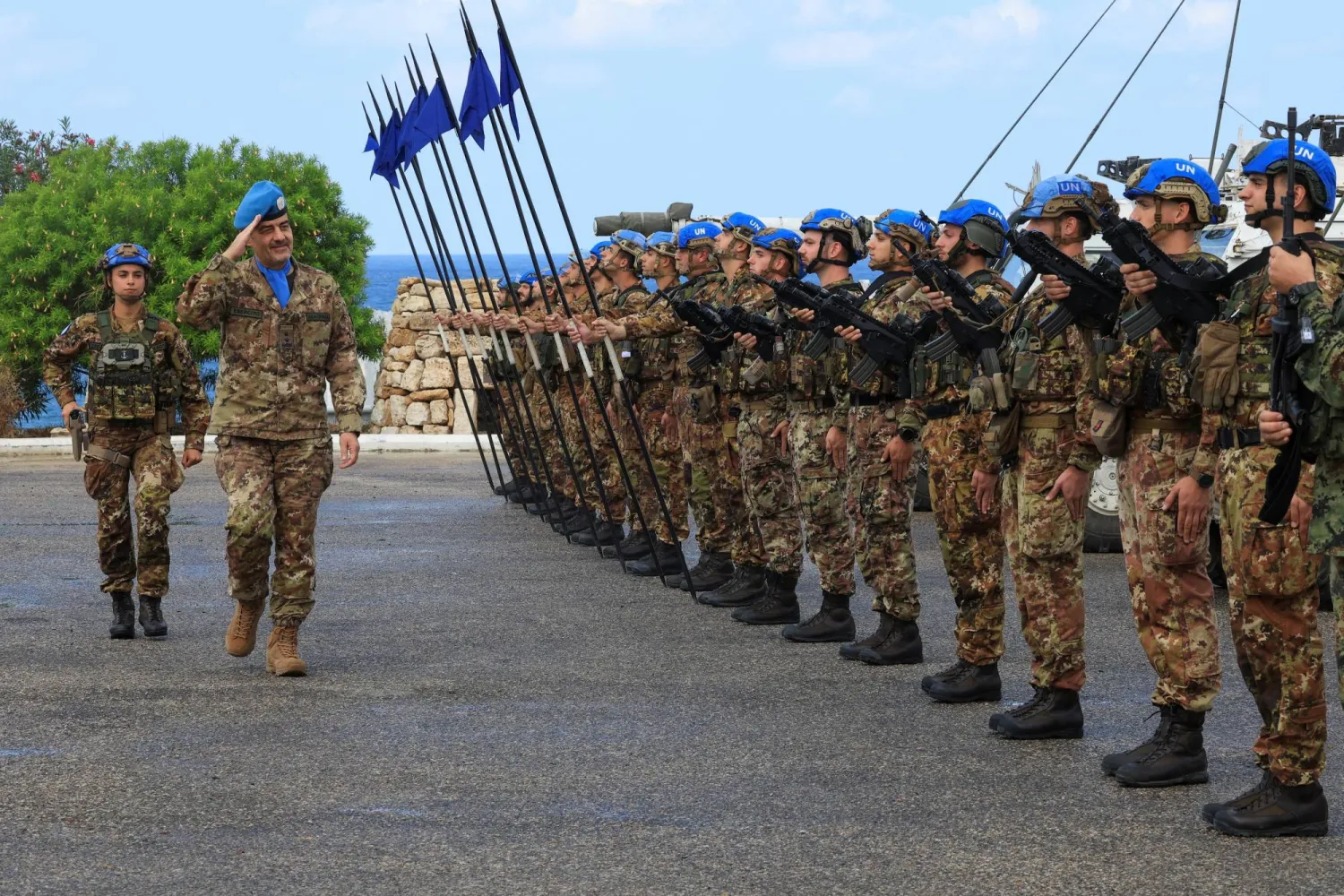
As UNIFIL’s mandate in Lebanon draws to a close, the implications of its withdrawal extend beyond military and security operations to the labor market in southern Lebanon, where the mission’s decades-long presence has sustained hundreds of jobs and supported local businesses that depend on its demand for goods and services.
As job cuts begin ahead of the withdrawal process, which is set to gather pace at the end of this year, concerns are mounting over the economic and social impact on employees and their families, as well as on small and medium-sized businesses that depend on spending generated by the international force’s presence.
400 Local Employees Work for UNIFIL
According to UNIFIL spokesperson Candice Ardell, the mission currently employs around 400 local staff, most of whom are based in southern Lebanon, while some positions are based in Beirut.
In comments to Asharq Al-Awsat, Ardell said local employees perform a wide range of duties, from the technical work required to support the mission to security, translation, media, political and civil affairs, among other functions.
Most of these positions are based in the south. Many employees live in the area, while others commute to work from elsewhere, she added.
Ardell denied that job cuts had begun as part of UNIFIL’s force reduction and withdrawal process, explaining that the process was expected to start after Dec. 31, 2026.
Families Depend on UNIFIL Salaries
In the border town of Rmeish, 85 families still have members employed directly by UNIFIL on a permanent basis, earning monthly salaries on which they and their families depend for their livelihoods.
Milad Alam, a former Rmeish mayor, told Asharq Al-Awsat in an earlier interview that around 250 other families also have members working for companies contracted by UNIFIL, adding that they, too, stand to lose their monthly sources of income.
Researcher Mohammad Shamseddine said the number of people employed by or contracted to UNIFIL had fallen significantly, noting that the current workforce was well below the roughly 1,200 employees it had previously numbered.
Annual Losses Estimated at $45 Million to $55 Million
Economist Jassem Ajaka warned that UNIFIL’s withdrawal from southern Lebanon would have economic and financial repercussions extending well beyond the south, affecting the Lebanese economy as a whole. The fallout would include reduced foreign currency inflows, job losses and weaker trade and investment, while placing additional pressure on the state treasury.
In comments to Asharq Al-Awsat, Ajaka said UNIFIL’s annual budget stood at about $553 million, estimating that the withdrawal would result in a direct loss of $45 million to $55 million a year in foreign currency inflows, as international forces cease spending locally on contracts with domestic suppliers, restaurants, shops and supply chains.
Ajaka estimated that UNIFIL’s withdrawal would eliminate $15 million to $22 million in annual wages for Lebanese staff, whose average net annual compensation ranges from $15,000 to $25,000.
He estimated that UNIFIL’s withdrawal would add $25 million to $40 million in annual costs for the Lebanese treasury, as the Lebanese army takes over expenses previously covered through cooperation with the international force, putting further pressure on public finances and potentially widening the primary budget deficit.
The economist concluded saying that the real estate sector would be among the hardest hit, particularly in Naqoura, Tyre, Marjayoun and Bint Jbeil. The termination of hundreds of rental contracts held by UNIFIL’s civilian and military personnel could result in annual losses of $10 million to $18 million. He also warned that commercial and residential property values in affected areas could fall by 25% to 45%.