Saudi Cultural Development Fund Debuts at Davos to Showcase Culture as Economic Engine

Saudi Cultural Development Fund Debuts at Davos to Showcase Culture as Economic Engine
TT

Saudi Cultural Development Fund Debuts at Davos to Showcase Culture as Economic Engine

Saudi Cultural Development Fund Debuts at Davos to Showcase Culture as Economic Engine

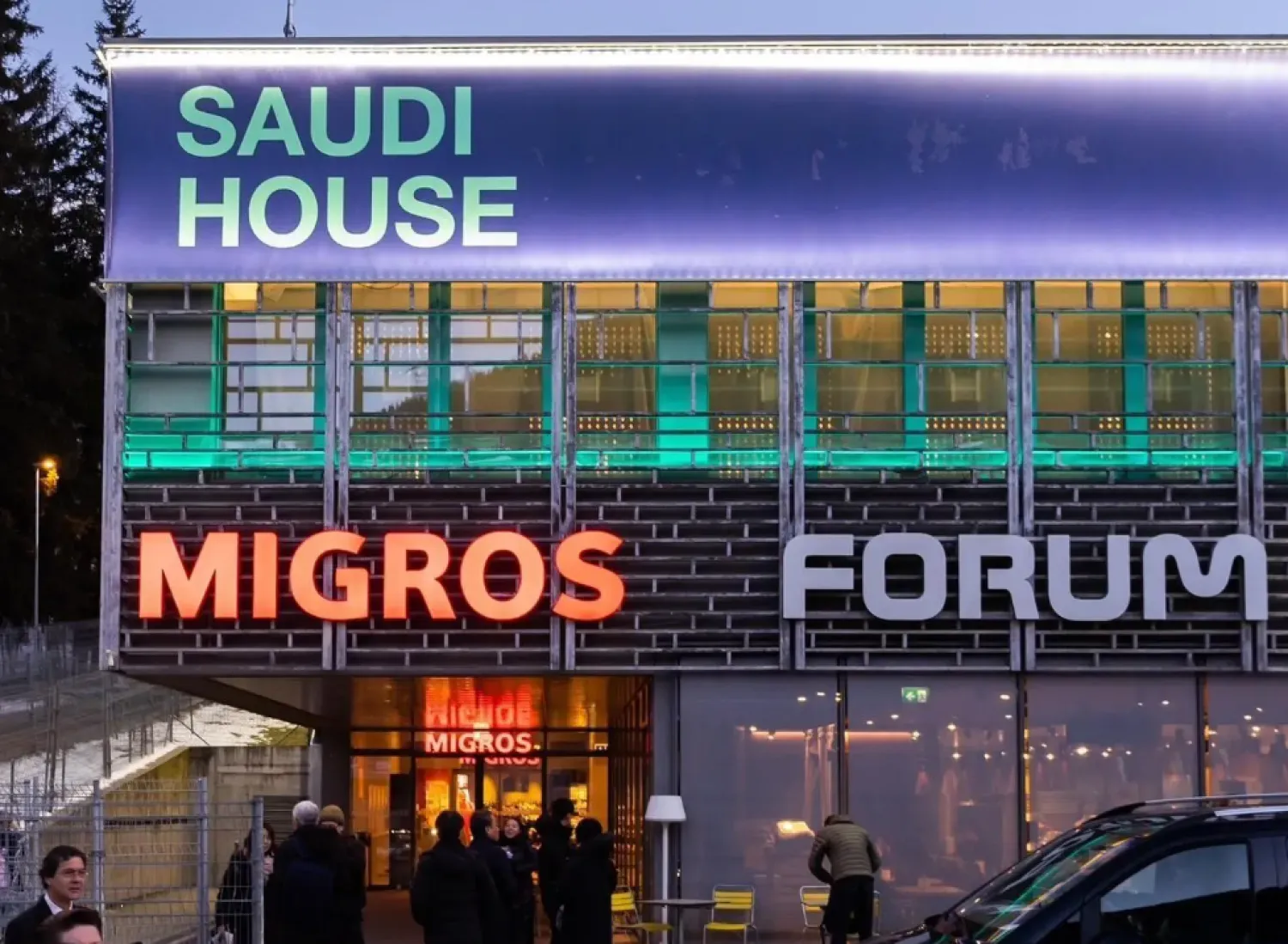
The Cultural Development Fund (CDF) successfully concluded its participation at the 2026 Annual Meeting of the World Economic Forum, held from January 19 to 23 in Davos, Switzerland, marking a historic and groundbreaking presence for Saudi culture at the world’s premier economic event.

Hosted at the Saudi House, the CDF engaged over 200 international experts, including leading economists and investors, through a series of dynamic activities such as a networking breakfast, panel discussion, and beneficiary talks on the NextOn platform. The CDF emphasized culture not only as a form of artistic and creative expression, but also as a vital economic driver and a strategic pillar for national development, SPA reported.

Reinforcing this vision, CDF CEO Majed Al-Hugail highlighted in a Davos panel Saudi Arabia's belief in culture as a pivotal force for economic diversification and quality of life. By 2030, he stated, the cultural sector is set to contribute $48 billion to GDP, create more than 346,000 jobs, and attract 22 million visitors.

The CDF also underscored the critical role of financing in empowering entrepreneurship and amplifying the economic potential of the cultural sector. Notable participants in the NextOn talk series included Co-Founder of AlMashtal Creative Incubator Princess Noura bint Saud bin Naif, who addressed “Culture as Economic Infrastructure: Unlocking Human Capital Through the Creative Industries.” Additionally, CEO of the Arabian Housing & Building (AHB) Company Eng. Khalid Alhenaidy contributed insights during a session titled “The Value in Cultural Assets.”

Looking ahead, the CDF organized six strategic side meetings aimed at exploring new opportunities and fostering collaborations to accelerate the development of the Saudi cultural sector and attract global investment. It also distributed 150 copies of the comprehensive investment report, Saudi Cultural Market Outlook 2025: Vision, Impact, and Opportunities, developed in partnership with the Ministry of Culture, the Ministry of Investment, and the Invest Saudi initiative.

Furthermore, the CDF showcased Saudi creativity by exporting 60 cultural products from Samuda, a fashion-sector beneficiary brand, highlighting the growing economic significance of the Saudi fashion market.

This milestone reflects the CDF’s commitment to serving as a center of excellence and financial enabler for the Kingdom’s cultural sector. It underscores ongoing efforts to elevate Saudi culture on the global stage, maximizing its economic and social impact in alignment with the ambitious objectives of Saudi Vision 2030.


Paris’ Louvre and Other Top Museums to Close on Saturday Over Concern about Protest Violence

Visitors wait outside as protesters block the entrance to the Louvre Museum to express their support for the high school students' movement in Paris, France, 19 October 2026, two days after demonstrations and riots took place alongside nationwide cost-of-living protests. (EPA)
TT

Paris’ Louvre and Other Top Museums to Close on Saturday Over Concern about Protest Violence

Visitors wait outside as protesters block the entrance to the Louvre Museum to express their support for the high school students' movement in Paris, France, 19 October 2026, two days after demonstrations and riots took place alongside nationwide cost-of-living protests. (EPA)

The Louvre and several other major Paris museums will be closed on Saturday over concerns about potential violence during planned protests, France’s culture ministry said.

In a statement to The Associated Press, the ministry said the Orsay and Picasso museums were also among those that will close.

Protests last Saturday devolved into mayhem, with rioters setting fires, smashing shop windows, looting and clashing with police. The ministry called on all institutions under its authority to adopt any necessary measures to ensure “visitor safety, staff protection and the preservation of artworks,” according to the statement.

Others are taking the same tack. After two days when admission was invite-only, Art Basel Paris opened to the public on Friday — but only for the day, with the threat of unrest prompting organizers on Thursday to cancel the weekend program.

Paris’ Grand Palais is hosting 211 international galleries and their exhibitions for Art Basel, considered one of the world’s most prestigious contemporary art fairs.

“It’s kind of like the art Olympics,” New York-based artist Drake Carr, who is showing his work with Mariposa Gallery, said in an interview.

However, timing proved unfortunate, with the French capital gripped by social tension. The clashes and widespread looting over the weekend marked France’s most violent unrest in years.

A protest on Thursday afternoon in Paris was peaceful, and Art Basel's organizers announced the decision to close for the weekend around the same time. The protest planned for Saturday is expected to be much larger.

"This decision has not been taken lightly, and the safety of everyone involved in the fair remains our utmost priority," organizers said in a statement. Its website posted a similar announcement and said weekend ticketholders would be contacted.

Saloni Doshi, an art collector who travelled to Paris from India for the fair, grew worried last Saturday as she saw the fires and panicked people, and she received phone calls from friends asking whether Paris was safe. She agreed with the organizers' rationale to close.

“It's hard that something like this has to happen, but state activities and people's freedom have to continue,” she told the AP. “I cannot imagine that a bunch of elite, privileged people getting inconvenienced because of this should have a voice.”

Antoine Donzeaud and Elisa Rigoulet, the owners of the gallery exo exo, felt the same.

“We understand this decision, which we consider reasonable and consistent with the urgency of the social demands currently unfolding in France,” they said in a text message.


Twice a Year, a Golden Sunbeam Illuminates a 3,000-Year-Old Pharaonic Temple

 Tourists crowd to film the sun as it sends a beam of light into the Great Temple of Ramses II's dark inner chamber in Abu Simbel, 870 kilometers (540 miles) south of Cairo, Egypt, Thursday, Oct. 22, 2026, a rare 3,200-year-old astronomical ceremony that happens twice a year. (AP)
Tourists crowd to film the sun as it sends a beam of light into the Great Temple of Ramses II's dark inner chamber in Abu Simbel, 870 kilometers (540 miles) south of Cairo, Egypt, Thursday, Oct. 22, 2026, a rare 3,200-year-old astronomical ceremony that happens twice a year. (AP)
TT

Twice a Year, a Golden Sunbeam Illuminates a 3,000-Year-Old Pharaonic Temple

 Tourists crowd to film the sun as it sends a beam of light into the Great Temple of Ramses II's dark inner chamber in Abu Simbel, 870 kilometers (540 miles) south of Cairo, Egypt, Thursday, Oct. 22, 2026, a rare 3,200-year-old astronomical ceremony that happens twice a year. (AP)
Tourists crowd to film the sun as it sends a beam of light into the Great Temple of Ramses II's dark inner chamber in Abu Simbel, 870 kilometers (540 miles) south of Cairo, Egypt, Thursday, Oct. 22, 2026, a rare 3,200-year-old astronomical ceremony that happens twice a year. (AP)

Hundreds of tourists from around the world and locals gathered at dawn Thursday at a temple in southern Egypt, with some sleeping outside it overnight to witness a solar phenomenon that has taken place here for millennia.

Twice a year, on Oct. 22 and Feb. 22 — dates believed to mark the ascension of Ramesses II to the throne and his birthday — the sun sends a beam of light into the Great Temple of Ramses II’s dark inner chamber to illuminate the statues of the pharaoh and two gods beside him.

The illumination, a result of the temple's alignment with the sun, lasts about 20 minutes.

“Today is a very special day, as you can see. It’s a celebration and a historic holiday," Hisham Khela, a local tour guide for Italian tourists, told The Associated Press.

Egyptology enthusiasts and other visitors stood in a messy single-file line with phone cameras in hand, some with selfie sticks and most with bags under their eyes from waking up so early. Although huge crowds turned up, they looked tiny beside the giant statues lining the temple, which overlooks the Nile.

To mark the phenomenon, colorfully dressed performers scattered in front of the temple smiled and danced in unison to meditative chimes, the percussion of the tabla and the distinct sound of mizmars, an ancient Egyptian trumpet.

Inside the temple, visitors huddled tightly in near-total darkness in front of the statues of Ramesses II and the gods Amun-Ra and Ra-Horakhty, lit by a beam of sunlight that traveled about 60 meters (200 feet) into the temple, according to the National Research Institute of Astronomy and Geophysics.

For first-timers, ancient history created modern memories.

Janice Souudi, who traveled from Atlanta, Georgia, said it was her first time in Egypt, and she said it won’t be her last.

“I came here today for the huge temple statues and how well preserved they are. But I was most impressed with the colors of the carvings and hieroglyphics and imagery," she said. "Beautiful, stunning, worth it!”

In the 1960s, archaeologists carried out a massive project to dismantle and relocate the temple, moving it out of the path of rising waters created by the Aswan High Dam.

Engineers took care to preserve the temple’s alignment with the sun, so that more than 3,000 years after it was built, the light still finds its way inside.


AlUla's Dadan Excavations Explore Ancient Civilizations in 2026–2027 Archaeology Season

The work aims to study historical sites and uncover evidence that sheds light on the development of ancient civilizations in northwestern Arabia. (SPA)
TT

AlUla's Dadan Excavations Explore Ancient Civilizations in 2026–2027 Archaeology Season

The work aims to study historical sites and uncover evidence that sheds light on the development of ancient civilizations in northwestern Arabia. (SPA)

Archaeological excavations and research are continuing at Dadan in AlUla as part of the 2026–2027 archaeology season, launched by the Royal Commission for AlUla in AlUla and Khaybar.

The work aims to study historical sites and uncover evidence that sheds light on the development of ancient civilizations in northwestern Arabia.

Photographs taken by the Saudi Press Agency (SPA) have documented ongoing excavations at Dadan, focusing on funerary and residential areas as part of the second phase of the archaeological project. Building on five years of research, the work aims to trace the development of the ancient city and provide further insights into patterns of human settlement and daily life.

This season's work includes specialized archaeological studies and digital documentation of historical sites and findings.

Saudi specialists and university students are also participating in fieldwork and research, gaining practical experience and developing their skills in excavation, documentation, and archaeological analysis.

In Khaybar, research projects are exploring the relationship between people and the ancient oasis across different historical periods.

The projects involve studying ancient environments, sediment records, and natural resources, while other studies trace human activity in Khaybar from the Neolithic period through the Islamic eras.

The work is part of the Royal Commission for AlUla's efforts to support scientific research, preserve cultural heritage, and develop national expertise in archaeology and documentation. Together, these efforts aim to expand knowledge of the region's history and successive civilizations.