




The Yemeni government welcomed a European Union decision to designate Iran’s Revolutionary Guards as a terrorist organization, saying the move marked a long-awaited shift toward confronting a central driver of instability and security threats across the region and beyond.
In an official statement, the government said the decision reflected growing European awareness of the destructive role the Guards had played over many years.
It said the group had fueled armed conflicts, systematically supported groups and militias operating outside national state institutions, repeatedly threatened international maritime routes, and persistently undermined the foundations of global stability and security.
The statement said classifying the Guards as a terrorist organization marked a qualitative shift in the international community’s approach to Iran’s behavior and brought to an end a long period of political leniency toward activities that have become a direct threat to collective security, both in the Middle East and beyond.
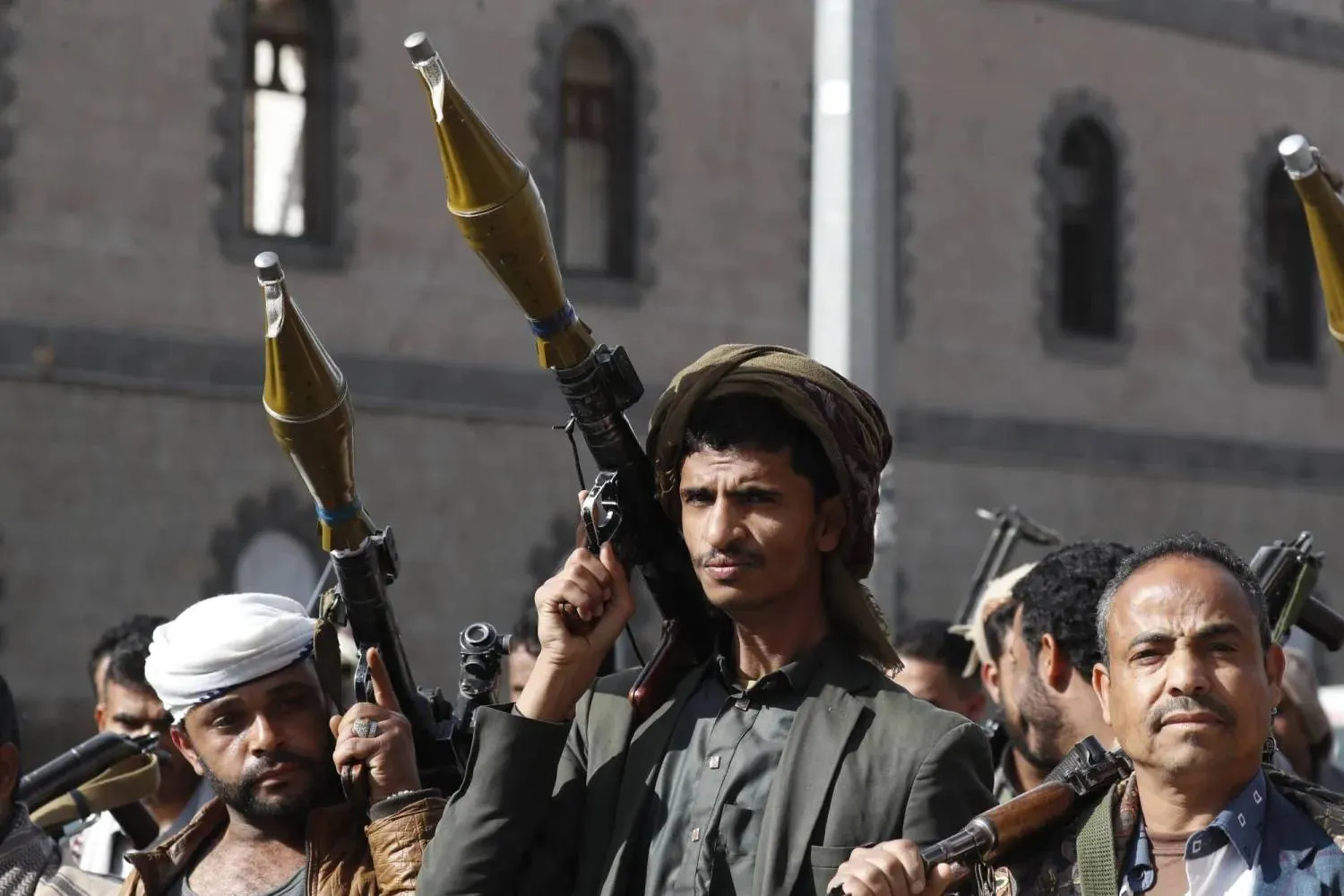
It added that Yemen’s Houthi group was nothing more than one of the Guards’ direct military arms, and that its project, based on violence, coups, and the imposition of faits accomplis by force, represented a straightforward extension of the destabilizing role led by the Iranian military body outside Iran’s borders.
The government said the Houthis’ record of targeting civilians, shelling civilian infrastructure, launching cross-border attacks, and threatening commercial shipping and maritime navigation in the Red Sea and the Gulf of Aden clearly demonstrated the group’s organic and operational links to the Guards, in terms of ideology, funding, armament, and military planning.
It said the obstruction of regional and international peace efforts in Yemen, the disruption of political tracks, and the use of organized violence as a negotiating tool were practices consistent with the model adopted by the Guards in managing their proxies in the region and turning them into tools of pressure and blackmail against the international community.
The Yemeni government called on the European Union to complete this step by taking a similar and decisive decision to designate the Houthis as a terrorist organization, in line with European laws and legislation and relevant UN Security Council resolutions, to help dry up the militias’ sources of funding, deter their aggressive behavior, and enhance prospects for a just and lasting peace in Yemen and the region.
Practical measures
In the same context, Information, Culture and Tourism Minister Muammar al-Eryani said the EU’s decision to classify the Guards as a terrorist organization was “a step in the right direction and a clear message that the international community has begun to deal seriously with one of the most dangerous sources of instability in the region, after years of overlooking its cross-border military and security roles.”
He said in an official statement that the importance of the decision lay not only in its political symbolism but also in the practical executive measures that must follow, including drying up funding sources, freezing assets, pursuing networks and fronts linked to the Guards, and cutting off channels of support, smuggling, and armament they manage across multiple countries and regions.
Eryani said the Guards had played a direct and organized role in Yemen by managing the Houthi coup project, noting that their involvement went beyond supplying weapons, experts, technology, and funding to include operational supervision and the management of military and security networks in areas under Houthi control.
He said this was proven by field evidence and by the roles played by Guards operatives, including Hasan Irlu and Abdul Reza Shahlai, whom he described as operational field managers of Iran’s project.
He said what happened in Yemen was not an exceptional case but part of a fixed regional pattern based on building armed militias parallel to the state, fueling conflicts, spreading chaos and terrorism, and using proxies to impose realities by force and blackmail the international community.
Historic decision
The Yemeni position follows what it described as a historic decision taken by EU foreign ministers on Jan. 29, 2026, to add Iran’s Revolutionary Guards to the bloc’s terrorist list, in a shift described as ending a phase of diplomatic caution and ushering in a new era of economic and legal confrontation with what it called the backbone of Iran’s ruling system.
The decision came in direct response to the violent crackdown by Iranian authorities on widespread protests in late 2025 and early 2026, which rights groups estimate resulted in the deaths of thousands of civilians, as well as the Guards’ expanding regional role, including supplying Russia with drones and threatening global energy security and international shipping.
The designation entails a package of strict legal and political consequences, including asset freezes, travel bans, and the criminalization of any form of cooperation or support, alongside tighter diplomatic isolation, limiting the Guards’ ability to operate under political or economic cover inside Europe.
The Yemeni government said the path to regional security and stability begins with ending the policy of impunity for actors that sponsor and manage cross-border armed militias, supporting national states and their legitimate institutions, and respecting countries’ unity, sovereignty, and territorial integrity.
It reiterated its full commitment to working closely with the international community, foremost the European Union, to achieve peace, combat terrorism, protect international navigation, and build a safe and stable future for the peoples of the region.


