Hezbollah Accepts Resignation of Senior Security Official Wafiq Safa amid Restructuring

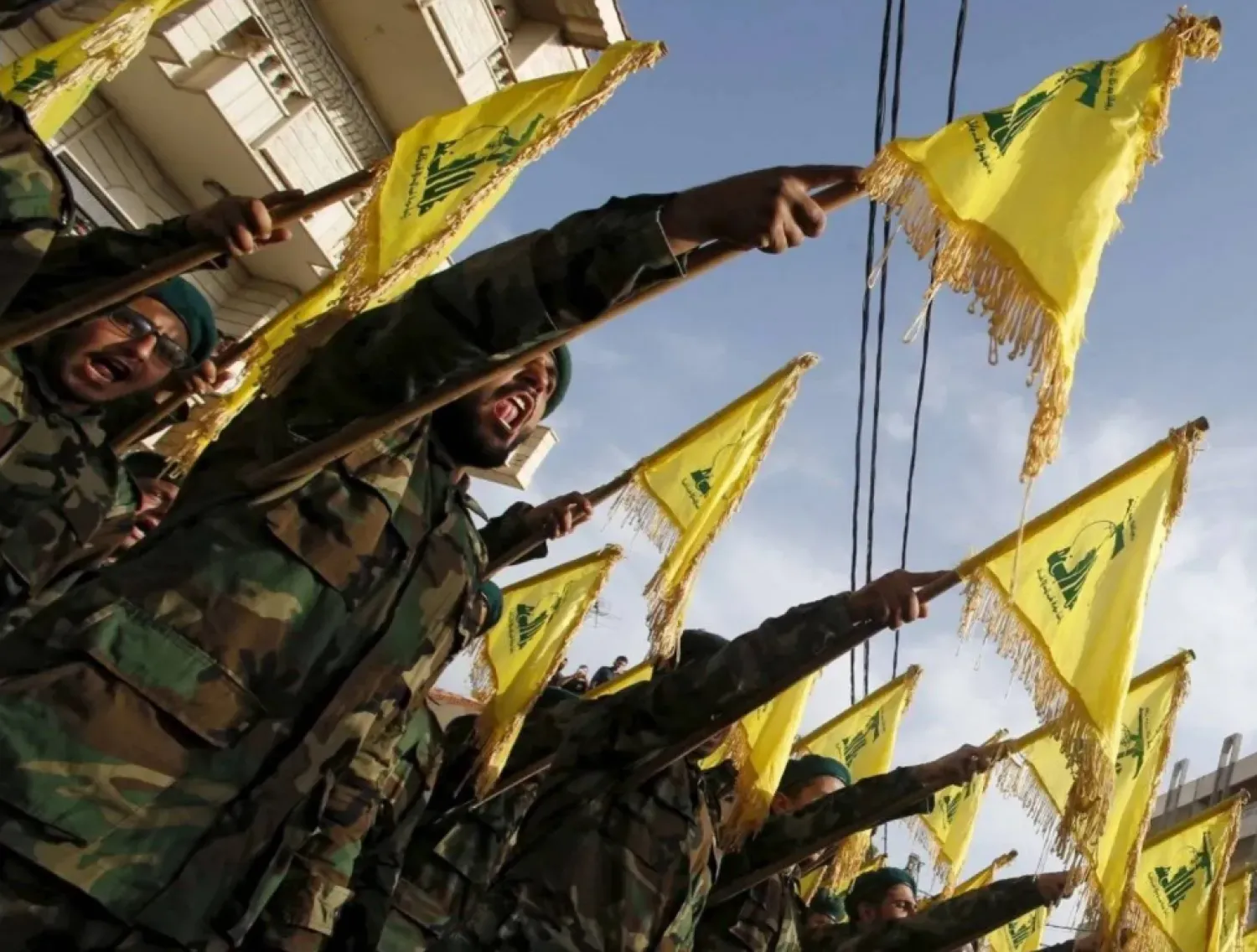
Lebanon’s Hezbollah members carry Hezbollah flags during the funeral of a fellow fighter, in al-Ghaziyeh village, southern Lebanon May 26, 2015. REUTERS/Ali Hashisho
TT

Hezbollah Accepts Resignation of Senior Security Official Wafiq Safa amid Restructuring

Lebanon’s Hezbollah members carry Hezbollah flags during the funeral of a fellow fighter, in al-Ghaziyeh village, southern Lebanon May 26, 2015. REUTERS/Ali Hashisho

Lebanon's Hezbollah accepted the resignation of senior security official Wafiq Safa on Friday, the first time an official of his rank has stepped down, sources familiar with the group's thinking told Reuters. 

Safa, who heads Hezbollah's liaison and coordination unit responsible for working with Lebanese security agencies, survived an Israeli assassination attempt in October 2024. 

A source said "the resignation and ‌its acceptance were ‌part of an internal restructuring ‌move" ⁠following losses ‌Hezbollah sustained in last year's war with Israel, adding that southern commander Hussein Abdullah was appointed to replace Safa. 

Israel and Lebanon agreed to a US-brokered ceasefire in 2024 to end more than a year of cross-border fire between Israel and Hezbollah, ⁠which had culminated in Israeli strikes that severely weakened the ‌Iran-backed group. Since then, the ‍sides have traded ‍accusations of ceasefire violations. 

Lebanon has faced growing ‍pressure from the US and Israel to disarm Hezbollah, and its leaders fear that Israel could dramatically escalate strikes across the battered country to push Lebanon's leaders to confiscate Hezbollah's arsenal more quickly. 

Hezbollah has fought numerous conflicts with Israel since ⁠it was founded by Iran's Revolutionary Guards in 1982. It kept its arms after the end of Lebanon's 1975-1990 civil war, using them against Israeli troops who occupied the South until 2000. 

Safa, whom Middle East media reports said was born in 1960, oversaw negotiations that led to a 2008 deal in which Hezbollah exchanged the bodies of Israeli soldiers captured in 2006 for Lebanese ‌prisoners in Israel. The 2006 incident triggered a 34-day war with Israel.  


Egypt Steps Up Efforts to Support Gaza Administration Committee After Entry Stalled

Displaced Palestinians inspect the damage after Israeli aircraft targeted a five floor house last night, in Khan Younis southern Gaza Strip on February 6, 2026. (AFP)
TT

Egypt Steps Up Efforts to Support Gaza Administration Committee After Entry Stalled

Displaced Palestinians inspect the damage after Israeli aircraft targeted a five floor house last night, in Khan Younis southern Gaza Strip on February 6, 2026. (AFP)

Egypt is intensifying efforts to back the National Committee for the Administration of Gaza, hoping it can begin operating inside the enclave to implement commitments under the second phase of the ceasefire agreement, which started about two weeks ago but has yet to take shape on the ground.

Experts told Asharq Al-Awsat that those Egyptian efforts, through phone calls and meetings with international partners, are focused on two main objectives: pushing for the deployment of police forces and an international stabilization force on the one hand, and securing a gradual Israeli withdrawal on the other, increasing pressure on Israel to move the agreement forward.

A member of the administration committee said in a brief phone statement to Asharq Al-Awsat, speaking on condition of anonymity, that there is still no specific date for entering the enclave.

In the Slovenian capital, Ljubljana, Egyptian Foreign Minister Badr Abdelatty stressed Cairo’s full support for the work of the committee headed by Dr. Ali Shaath.

He made the remarks during a dialogue session of the Arab-Islamic committee on Gaza with Slovenian Foreign Minister Tanja Fajon.

The foreign ministers of Saudi Arabia, Jordan, and Bahrain attended the meeting. Abdelatty stressed the importance of the committee’s role in managing the daily affairs of Gaza’s residents and meeting their basic needs during the transitional phase.

He underscored the need to ensure the continued flow of humanitarian and relief aid into the enclave, as well as the formation and deployment of an international stabilization force to monitor the ceasefire.

Abdelatty reiterated his stance during a phone call on Friday with British Foreign Secretary Yvette Cooper.

The Gaza committee, established under the ceasefire agreement, operates under the supervision of the Board of Peace, chaired by US President Donald Trump. The committee has been holding meetings in Cairo since it was announced last month and has yet to enter Gaza.

Ahmed Fouad Anwar, a member of the Egyptian Council for Foreign Affairs and an academic specializing in Israeli affairs, said Egypt is making significant efforts to facilitate the committee’s mission as quickly as possible and enable it to operate.

He said this would limit Israeli obstacles, increase pressure on Israel, and place it under the obligations set out in the plan, particularly withdrawal from Gaza. This would counter intense pressure from Tel Aviv to accelerate the disarmament of Hamas without implementing its Gaza agreement commitments.

Palestinian political analyst Abdel Mahdi Motawea said Israel objected not only to the committee’s work but even to its emblem.

He noted, however, that Israel is not the only party hindering the committee. Hamas and other factions want to impose conditions on the committee’s work.

He warned of serious concerns that the committee could be marginalized, stressing that Egypt’s extensive efforts to support it are crucial at this critical stage of the Gaza agreement.

Hamas announced days ago that it was ready to hand over management of the enclave to the committee, while Israel continues to obstruct it.

Anwar expects the committee to begin operating in the enclave soon if Egypt’s efforts and those of international partners succeed and Washington responds positively.

He warned that the committee's failure would threaten the ceasefire agreement.


Gaza Deal Mediators Have Few Options on Hamas Disarmament

Hamas fighters in Gaza City. (AFP)
TT

Gaza Deal Mediators Have Few Options on Hamas Disarmament

Hamas fighters in Gaza City. (AFP)

Israel’s demand for the disarmament of Hamas has become the top priority since the second phase of the Gaza agreement began 10 days ago.

It exposed deep uncertainty over how such a step could be enforced amid firm resistance from the movement, which says it will not relinquish its weapons unless progress is made toward establishing a Palestinian state.

Analysts speaking to Asharq Al-Awsat said the issue has left mediators with minimal options, ranging from complete disarmament to freezing weapons, either by persuading Hamas or applying pressure.

The demand has become a political pressure tool that Israeli Prime Minister Benjamin Netanyahu and others in Israel are likely to use increasingly in the run-up to elections, they added.

Israeli opposition figure Benny Gantz, who is preparing for elections, called on Thursday in a post on X for the “disarmament of Hamas.”

Israeli Defense Minister Israel Katz said on Wednesday that Israel will dismantle Hamas if it does not agree to lay down its arms.

Netanyahu, following a meeting on Tuesday with US envoy Steve Witkoff, said he was insisting on the non-negotiable demand to disarm Hamas before any step toward rebuilding Gaza.

Military and strategic analyst Brig. Gen. Samir Ragheb said mediators have few options other than reaching understandings or exerting pressure, noting that the demand to disarm Hamas has been echoed by Israel, Washington, the EU, and donors, and has become an obstacle to ending the war and launching reconstruction.

He said Netanyahu and others would use the issue electorally and as a pretext to collapse the agreement at any time, adding that the second phase is filled with “landmines,” particularly those related to the Israeli withdrawal, which Netanyahu does not want to address.

Strategic and military expert Maj. Gen. Samir Farag said available options are now limited, suggesting that freezing weapons may be more likely than complete disarmament, mainly since Hamas’ arsenal does not consist of missiles or drones and could be handed over.

He said there is US and Israeli insistence on implementing the weapons clause, but that it must coincide with an Israeli withdrawal and guarantees to prevent a new war.

By contrast, sources in Hamas told Reuters on Wednesday that the group had agreed to discuss disarmament with other Palestinian factions, but that neither Washington nor regional mediators had presented it with any detailed or concrete proposal on disarmament.

Israel’s Channel 13 reported in late January that the US was preparing a document granting Hamas several weeks to hand over its weapons to multinational forces within a set timeframe. Failure to comply would give Israel the green light to “act as it sees fit,” the channel said.

Farag stressed that Hamas’ room for maneuver is extremely limited and that it must quickly reach understandings with mediators, particularly Egypt, Qatar, and Türkiye, to resolve what he described as the most significant obstacle currently being created by Israel.

Ragheb said Hamas has no option but to implement US President Donald Trump’s Gaza plan and the disarmament clause, warning against delaying or circumventing it, as “every day lost poses a threat to the ceasefire agreement.”

He added that police forces in the enclave would be deployed within days or weeks, along with a possible stabilization force, leaving little space for further maneuvering.


French FM Says Iran Must Stop Being ‘Destabilizing Power’

 French Minister for Europe and Foreign Affairs Jean-Noel Barrot holds a press conference at the Pine Residence, the official residence of the French ambassador to Lebanon, in Beirut, Lebanon February 6, 2026. (Reuters)
French Minister for Europe and Foreign Affairs Jean-Noel Barrot holds a press conference at the Pine Residence, the official residence of the French ambassador to Lebanon, in Beirut, Lebanon February 6, 2026. (Reuters)
TT

French FM Says Iran Must Stop Being ‘Destabilizing Power’

 French Minister for Europe and Foreign Affairs Jean-Noel Barrot holds a press conference at the Pine Residence, the official residence of the French ambassador to Lebanon, in Beirut, Lebanon February 6, 2026. (Reuters)
French Minister for Europe and Foreign Affairs Jean-Noel Barrot holds a press conference at the Pine Residence, the official residence of the French ambassador to Lebanon, in Beirut, Lebanon February 6, 2026. (Reuters)

French Foreign Minister Jean-Noel Barrot said during a visit to Lebanon that Iran should stop being a "destabilizing power", citing its nuclear program and support for "terrorist" groups that threaten regional and European countries.

During a press conference in Beirut, where the government has committed to disarming the Iran-backed Hezbollah group, Barrot also called on "groups supported by Iran" to exert "the utmost restraint" in the event of any military escalation involving the country.

In Lebanon, he met with President Joseph Aoun, Prime Minister Nawaf Salam, parliament Speaker Nabih Berri and FM Youssef Raggi.

Barrot had flown to Lebanon after stops in Iraq and Syria.