
Egypt Rallies Support on Gaza Before ‘Board of Peace’ Meeting

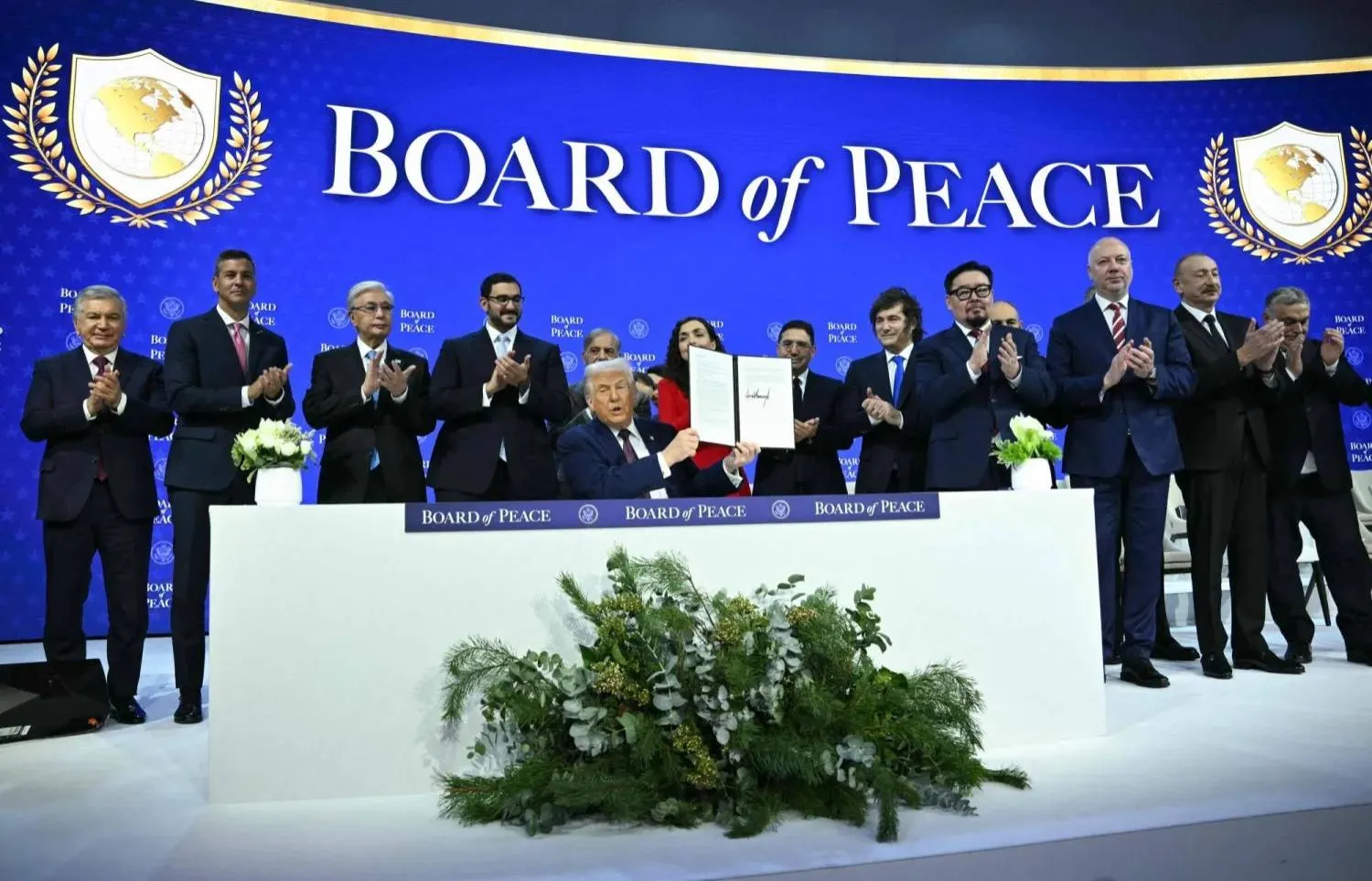
Trump and leaders and representatives of participating states sign the founding charter of the Board of Peace in Davos on Jan. 22, 2026. (AFP)
TT

Egypt Rallies Support on Gaza Before ‘Board of Peace’ Meeting

Trump and leaders and representatives of participating states sign the founding charter of the Board of Peace in Davos on Jan. 22, 2026. (AFP)

Egypt intensified contacts with Arab and Islamic countries to align positions on Gaza ahead of a planned Board of Peace meeting, pressing for the “full and non-selective implementation” of US President Donald Trump’s plan.

In a phone call on Friday, Egyptian Foreign Minister Badr Abdelatty and Jordan’s Deputy Prime Minister and Minister of Foreign Affairs and Expatriates Ayman Safadi reviewed developments in Gaza and coordinated positions before the Washington gathering.

The two ministers stressed the need to move ahead with the second phase of Trump’s plan, ensure the uninterrupted flow of humanitarian aid, launch early recovery efforts, and prepare the ground for reconstruction.

They underscored support for the National Committee for the Administration of Gaza as a transitional body, paving the way for the Palestinian Authority to resume full responsibility in the enclave. They also backed efforts to deploy an International Stabilization Force to monitor the ceasefire.

Egypt’s Foreign Ministry said Abdelatty and Safadi discussed preparations for the Board of Peace meeting and ongoing Arab and Islamic coordination, with particular focus on implementing all elements of Trump’s plan without omission.

Delegations from at least 20 countries, including several heads of state, are expected to attend the February 19 meeting in Washington, which Trump will chair, Reuters reported on Thursday.

Under the US initiative to end the Gaza war, the National Committee for the Administration of Gaza would temporarily manage the territory under the supervision of the Board of Peace.

De-escalation

In their call, Abdelatty and Safadi reiterated support for Trump’s rejection of annexing the West Bank. They stressed the need to preserve the territorial unity of the Palestinian land between Gaza and the West Bank.

They called for a clear political horizon leading to an independent and sovereign Palestinian state along the June 4, 1967 lines, with East Jerusalem as its capital, based on the two-state solution and relevant international resolutions.

The ministers warned that what they described as illegal Israeli measures in the occupied West Bank risk igniting tensions and derailing de-escalation efforts.

They emphasized the need to contain regional tensions and prioritize political and diplomatic solutions to prevent a wider conflict and bolster regional stability.

They also highlighted the importance of sustained Arab coordination to confront mounting challenges and push for durable political settlements that safeguard Arab interests and regional security.

Ahmed Fouad Anwar, a member of the Egyptian Council for Foreign Affairs and a specialist in Israeli affairs, said Egypt brings cumulative experience to the file and is capable of engaging Israel in ways that secure Palestinian rights or, at a minimum, “reduce losses.”

Speaking to Asharq Al-Awsat, Anwar said Cairo also leverages collective action through regional, Arab, and Islamic coordination, while mobilizing Western public opinion by facilitating visits to the Rafah land crossing to counter Israeli claims of closures and access restrictions.

He cautioned that the proposed international force faces complex questions over its mandate and authority, pointing to what he described as Israeli maneuvering and daily violations aimed at obstructing the agreement.

Stakes

Saeed Okasha, an expert on Israeli affairs at Al-Ahram Center for Political and Strategic Studies, said Egypt’s diplomatic outreach is necessary “even if the odds of tangible results are not high.”

“There must always be movement to unify positions on Gaza, especially since Egypt and Jordan would bear the brunt if the crisis reignites,” he told Asharq Al-Awsat.

He warned that talk of a “displacement scenario” could resurface if fighting resumes in Gaza, posing serious risks to both countries, making Egyptian-Jordanian coordination both logical and urgent.

Okasha said Trump is keen for the Board of Peace meeting to succeed and that it is expected to tackle sensitive issues such as Hamas disarmament and reconstruction.

“These files require unified positions to exert pressure,” he said. “Even if the US stance differs, it will have to take into account coordinated objections.”

Anwar suggested that even the threat of withdrawing from the Board of Peace could serve as leverage if a majority favors a path focused on early recovery and reconstruction, a direction he said Israel resists.

“Balance is required,” he said.

Ambiguity

Gaza was also the focus of a Friday call between Abdelatty and Pakistan’s Deputy Prime Minister and Foreign Minister Mohammad Ishaq Dar.

Okasha said ambiguity in some provisions of the plan complicates implementation. Disarmament of Hamas, for example, is referenced but without clear timelines or mechanisms.

“This ambiguity fuels disputes and gives Israel room to delay,” he said.

On the West Bank, Anwar described the situation as “extremely dangerous,” warning that annexation rhetoric threatens the foundation of a future Palestinian state and undermines the two-state solution.

Okasha called developments there a “major crisis,” noting that the Gaza agreement addressed the West Bank only briefly, a gap he said Israel has used to argue that its policies there are separate from events in Gaza.


Lebanon Limits Security Delegation’s Role to ‘Technical’ Talks with Israel

Lebanese Army troops deployed in central Beirut last week. (EPA)
TT

Lebanon Limits Security Delegation’s Role to ‘Technical’ Talks with Israel

Lebanese Army troops deployed in central Beirut last week. (EPA)

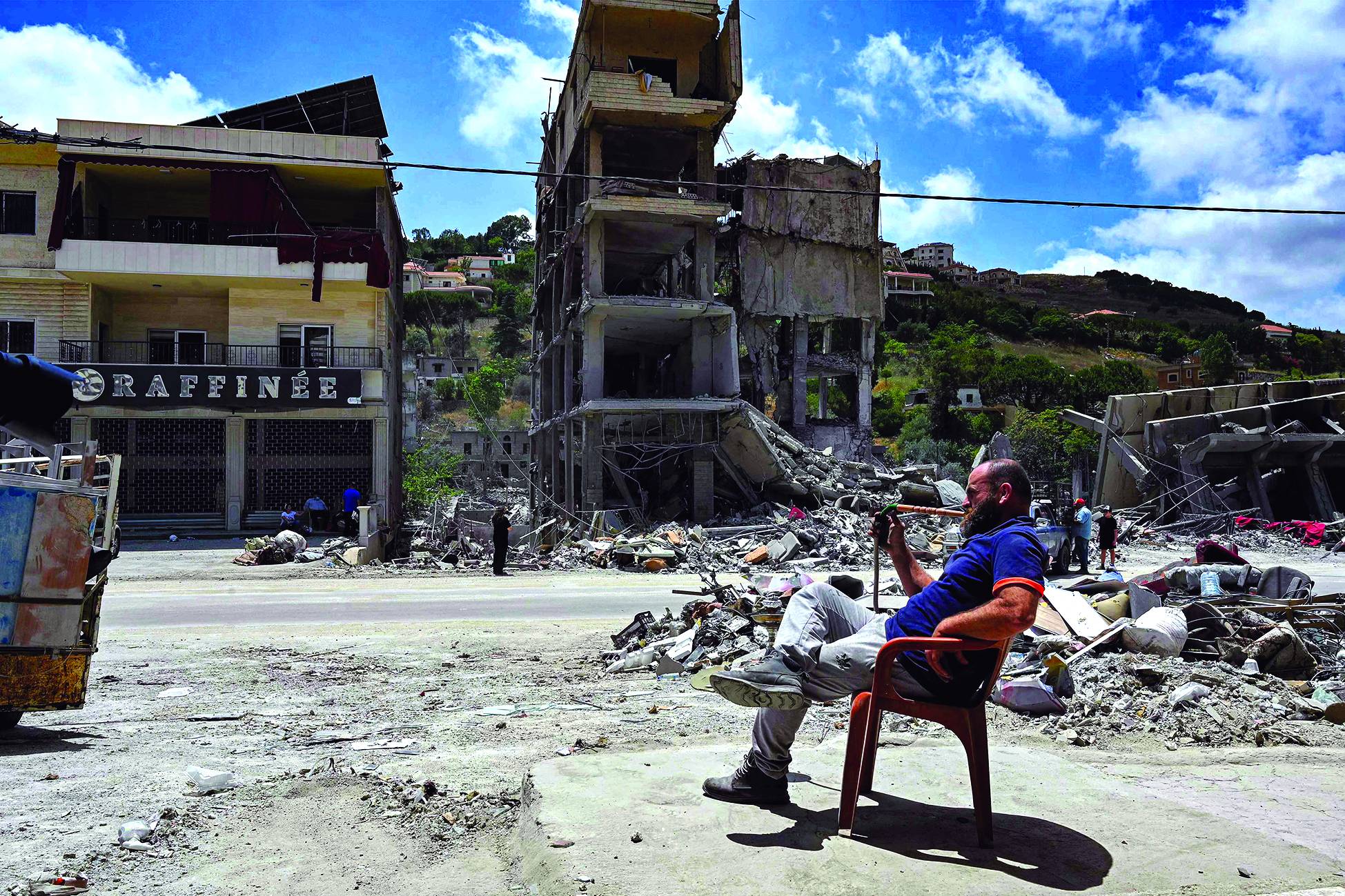
Hezbollah threatened on Tuesday to attack any armed force that coordinates with Israel if such a force were ever created. The warning came ahead of a planned security meeting between Lebanese and Israeli military representatives in Washington on May 29, even though Lebanese officials insist that no proposal to establish such a force exists.

According to official Lebanese sources speaking to Asharq Al-Awsat, the upcoming meeting will focus strictly on technical and logistical matters between representatives of the Lebanese and Israeli armies under US sponsorship and mediation.

Still, MP Hassan Fadlallah, a member of the party’s parliamentary bloc, issued a sharp warning against what he described as “American-Israeli talk” of creating a proxy armed force similar to the “Free Lebanon Army” established in 1978 and the “South Lebanon Army” formed in 1984, both of which collaborated with Israel.

Fadlallah said Hezbollah would confront any such force “as we confront the enemy.” At the same time, he praised the relationship between Hezbollah and the Lebanese Army, describing it as “excellent.”

Lebanese sources dismissed the MP’s remarks as reactions to “speculative media reports about the upcoming talks”.

Speaking to Asharq Al-Awsat, the sources said the idea of creating a pro-Israel Lebanese force “has never been discussed” in negotiations in Washington and has not been raised by any international envoy visiting Lebanon.

They added that the Lebanese Army categorically rejects any proposal to establish an independent force, an idea that had also circulated in local media reports.

Trilateral committee and expanded UN monitoring

The May 29 meeting is expected to focus on two proposals. The first involves establishing a trilateral committee made up of representatives from the Lebanese Army, the Israeli military, and the US Army. It would monitor ceasefire violations, oversee the Israeli withdrawal from Lebanese territory, and coordinate the deployment of the Lebanese Army in those areas.

The talks are also expected to address expanding the role of the United Nations Truce Supervision Organization (UNTSO), the UN’s first-ever peacekeeping mission, founded in May 1948 to monitor ceasefire agreements between Israel and neighboring states, including Lebanon. UNTSO observers are limited to monitoring and reporting duties rather than combat operations.

The sources said one proposal under discussion is to strengthen the observer mission by increasing the number of personnel and expanding its operations.

Unlike the UN Interim Force in Lebanon (UNIFIL), which is expected to fully withdraw from Lebanon later this year, the UNTSO maintains only a small presence in Lebanon. Its observers, numbering only in the dozens, operate within the “Observer Group Lebanon” along the Blue Line to monitor the truce agreement between Lebanon and Israel.

Strictly military and technical files

The sources emphasized that the May 29 meeting will remain strictly technical and military in nature. Diplomatic negotiators, including Lebanon’s chief negotiator Ambassador Simon Karam and Lebanese Ambassador to Washington Nada Hamadeh Mouawad, are not expected to participate directly in the military discussions.

The agenda is likely to center on the ceasefire, Israeli withdrawal, and mechanisms for deploying the Lebanese Army in southern Lebanon.

The sources stressed that the meeting will not address Hezbollah’s weapons or any cooperation regarding its disarmament, saying those matters fall under the authority of the diplomatic negotiating team.

Hezbollah criticizes Lebanese leadership

Despite those assurances, Hezbollah continued to criticize the political and diplomatic approach pursued by Lebanese President Joseph Aoun to resolve the crisis. Relations between the party and Aoun remain strained.

Although Hezbollah appointed MP Fadlallah to coordinate with the presidency, Lebanese sources said he has neither met nor spoken with Aoun. The party has effectively suspended dialogue with the president, even though the presidential palace remains open, said the sources.

During a press conference in parliament, Fadlallah accused the government of breaking its commitment not to enter negotiations before a ceasefire was secured.

He questioned “how anyone can sit at a table with those continuing their crimes while Israel boasts of support from its allies in pursuing a destructive project.”

Fadlallah insisted that Lebanon’s only viable option is continued “resistance combined with indirect diplomacy backed by national unity and strength,” arguing that “no political alternative could compel Israel to halt the war and withdraw from Lebanese territory.”

In contrast, the Lebanese Kataeb Party called for broad national support for the negotiations in Washington, saying the process aims to consolidate the ceasefire, secure an Israeli withdrawal, end hostilities, free detainees, and allow displaced residents to return home.

The party accused Hezbollah of trying to keep Lebanon “a card in Iran’s hands” at the expense of South Lebanon and its residents.


UN Considers Response to Israeli Move to Build a Military Compound on Site of Relief Agency

The front gate of the east Jerusalem compound of UNRWA is seen in east Jerusalem, May 10, 2024. (AP)
TT

UN Considers Response to Israeli Move to Build a Military Compound on Site of Relief Agency

The front gate of the east Jerusalem compound of UNRWA is seen in east Jerusalem, May 10, 2024. (AP)

The United Nations is considering how to respond to Israel's announcement that it will build a military complex on the former headquarters of the UN relief agency for Palestinians in east Jerusalem, an official said Tuesday.

Israel at the weekend announced the government's approval for a defense ministry complex at the United Nations Relief and Works Agency ’s compound in Sheikh Jarrah, including a museum and enlistment office.

“The matter is currently under consideration at the level of the legal council, the highest legal authority of the United Nations in New York,” UNRWA Deputy Commissioner General Natalie Boucly told The Associated Press during a visit to Syria.

“These are UN premises and, at a minimum, this is a breach of the 1946 UN Convention on privileges and immunities,” she said.

Israel bulldozed part of the UNRWA compound in January, capping off a decades-long campaign against the agency, which became acute following the Hamas-led attacks on Oct. 7, 2023.

Israel has accused the UN agency of harboring staff members affiliated with Hamas, accusing some of taking part in the attacks. UNRWA leaders have said they took swift action against the employees accused of taking part in the 2023 attacks, and have denied allegations that the agency tolerates or collaborates with Hamas.

Israel's Defense Minister Israel Katz said the plan to build a defense complex on the former UNRWA headquarters was “a decision of sovereignty, Zionism and security.”

“In a place where an organization that became part of the terror and incitement mechanism against Israel operated, institutions will be established that will strengthen Jerusalem, the (Israeli army), and the State of Israel,” Katz said in a statement on Sunday.

The decision came on Jerusalem Day, which marks Israel’s capture of east Jerusalem, including the Old City and its holy sites sacred to Jews, Christians and Muslims, in the 1967 Mideast war. Israel considers the entire city of Jerusalem its capital, while the Palestinians seek east Jerusalem as the capital of their future independent state.

The UNRWA compound was shut down in May 2025 after far-right protesters, including at least one member of parliament, overran its gate in view of the police.

UNRWA’s mandate is to provide aid and services to some 2.5 million Palestinian refugees in Gaza, the occupied West Bank and east Jerusalem, as well as 3 million refugees in Syria, Jordan and Lebanon. Its operations were curtailed last year when Israel’s Knesset passed legislation severing ties and banning it from functioning in what it defines as Israel — including east Jerusalem.

Boucly said the humanitarian situation in Gaza “remains absolutely dire.” While UNRWA international staff have been barred by Israel from entering Gaza, about 10,000 local staff continue to work in the enclave, including teachers, health workers and sanitation workers, she said.

Despite a tenuous ceasefire, “there are issues with insufficient aid coming in,” she said. “It is not coming in at scale and reconstruction is not starting fast enough for the people to see a real change on the ground.”

Boucly spoke to the AP from Syria's Yarmouk Palestinian refugee camp, where the situation is somewhat more hopeful as former residents who fled during the country's 14-year civil war have been gradually returning.

Taken over by a series of armed groups then bombarded by the military of then President Bashar al-Assad, the camp was all but abandoned after 2018. The buildings that were not destroyed by bombs were demolished by the government or stripped by thieves.

After Assad's ouster in 2024, former residents began to trickle back and repair their damaged homes. As of April, some 60,000 people had returned to the camp, of which 80% are Palestinian refugees, Boucly said.

Assistance to those returning to the camp has been limited, she acknowledged. UNRWA has received donor aid to rehabilitate schools and health centers, but has been unable to provide more than minor assistance to people needing to repair their damaged homes, she said.

Despite anxieties about shrinking funding, she said, “I think there is a situation of hope for Palestine refugees” in Syria.


Sudan's RSF Denies Reports of Abu Lulu's Release

This handout picture released by the Sudanese Rapid Support Forces (RSF) on October 30, 2025, shows RSF members reportedly detaining a fighter known as Abu Lulu (L) in al-Fashir in war-torn Sudan's western Darfur region. (RSF / AFP)
TT

Sudan's RSF Denies Reports of Abu Lulu's Release

This handout picture released by the Sudanese Rapid Support Forces (RSF) on October 30, 2025, shows RSF members reportedly detaining a fighter known as Abu Lulu (L) in al-Fashir in war-torn Sudan's western Darfur region. (RSF / AFP)

Sudan’s paramilitary Rapid Support Forces (RSF) denied on Tuesday reports about the release of RSF Brigadier General al-Fateh Abdullah Idris, known as Abu Lulu, who was arrested late last year following global outrage over videos of him executing unarmed people in al-Fashir.

In a statement, the RSF “categorically” denied the reports, slamming them as “baseless” and being part of a “campaigns of incitement.”

Two sources – a Sudanese intelligence official and a commander with the RSF – said they personally saw Abu Lulu on the battlefield in Kordofan in March, said a Reuters report on Monday.

The RSF stressed that Abu Lulu and a number of individuals, accused of violations against civilians in al-Fashir, have been detained since their arrest in October.

“They remain in prison and have never left,” it added.

RSF officers had pleaded for Abu Lulu to be returned to the field to boost the morale of forces engulfed in heavy fighting there, a Chadian military officer told Reuters.

Reuters spoke with 13 sources who said they knew of Abu Lulu’s release. They include three RSF commanders, an RSF officer, a relative of Abu Lulu, a Chadian military officer close to RSF command and seven other sources with contacts in RSF leadership or access to intelligence on RSF field operations.

The RSF-led coalition government, in response to questions from Reuters, issued a statement on Monday denying the group had released Abu Lulu.

A special court will try him and others accused of violations during the al-Fashir offensive, according to the statement from Ahmed Tugud Lisan, spokesman for the RSF-led Tasis government.

The RSF imprisoned Abu Lulu in late October 2025, a few days after its bloody takeover of al-Fashir, a large city in North Darfur.

Multiple videos had surfaced of him executing unarmed people during the offensive. His actions earned him the nickname “the butcher of al-Fashir,” a moniker noted by the UN Security Council when sanctioning him on February 24 for human rights abuses.

The three-year civil war between the Sudanese army and the RSF is a brutal power struggle to control the country and its financial resources. It has created what aid groups say is the world's largest humanitarian ‌crisis.