India Plans AI 'Data City' on Staggering Scale

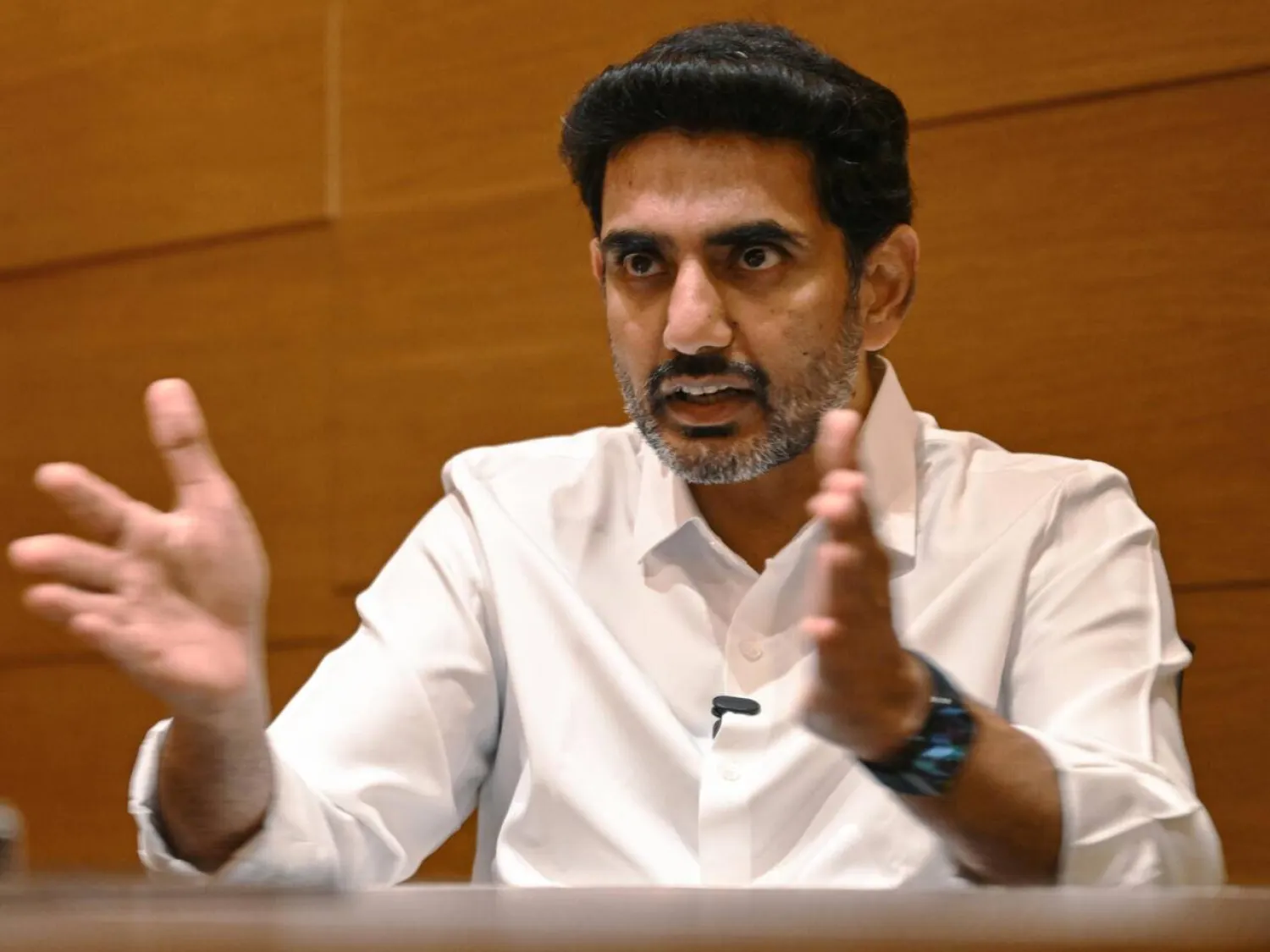
As India races to narrow the AI gap with the US and China, it is planning a vast new "data city" to power digital growth on a staggering scale. Arun SANKAR / AFP
TT

India Plans AI 'Data City' on Staggering Scale

As India races to narrow the AI gap with the US and China, it is planning a vast new "data city" to power digital growth on a staggering scale. Arun SANKAR / AFP

As India races to narrow the artificial intelligence gap with the United States and China, it is planning a vast new "data city" to power digital growth on a staggering scale, the man spearheading the project says.
"The AI revolution is here, no second thoughts about it," said Nara Lokesh, information technology minister for Andhra Pradesh state, which is positioning the city of Visakhapatnam as a cornerstone of India's AI push.
"And as a nation... we have taken a stand that we've got to embrace it," he told AFP ahead of an international AI summit next week in New Delhi.
Lokesh boasts the state has secured investment agreements of $175 billion involving 760 projects, including a $15 billion investment by Google for its largest AI infrastructure hub outside the United States.
And a joint venture between India's Reliance Industries, Canada's Brookfield and US firm Digital Realty is investing $11 billion to develop an AI data center in the same city.
Visakhapatnam -- home to around two million people and popularly known as "Vizag" -- is better known for its cricket ground that hosts international matches than cutting-edge technology.
But the southeastern port city is now being pitched as a landing point for submarine internet cables linking India to Singapore.
"The data city is going to come in one ecosystem... with a 100 kilometer (60 mile) radius," Lokesh said. For comparison, Taiwan is roughly 100 kilometers wide.
- 'Whole nine yards' -
Lokesh said the plan goes far beyond data connectivity, adding that his state had "received close to 25 percent of all foreign direct investments" to India in 2025.
"It's not just about the data centers," he explained while outlining a sweeping vision of change, with Andhra Pradesh offering land at one US cent per acre (three per hectare) for major investors.
"I'm chasing the companies that make those servers that go sit in those data centers, the companies that make the entire air conditioning, the water-cooling system -- the whole nine yards."
The 43-year-old, Stanford-educated minister is the son of Andhra Pradesh Chief Minister N. Chandrababu Naidu, who helped turn Hyderabad into a major technology hub that is dubbed "Cyberabad".
They are allies of Prime Minister Narendra Modi, who will host the AI Impact Summit from Monday.
India is now third in a global AI power ranking -- sitting above South Korea and Japan -- based on more than 40 indicators from patents to private funding calculated by Stanford University's Institute for Human-Centered AI.
With more than a billion internet users, India has seen a surge of investment as generative AI players seek inroads to the world's most populous country.
Microsoft said in December it will invest $17.5 billion to help build the country's artificial intelligence infrastructure, with CEO Satya Nadella calling it the firm's "largest investment ever in Asia".
But critics say India lags in access to high-end computing power or commercial AI deployment, and remains more a consumer than creator of the cutting-edge technology.
Some question whether data centers will create meaningful employment when up and running, but Lokesh rejects that.
"Every industrial revolution has always created more jobs than it has displaced," he said.
"But it has created those jobs in countries that have embraced the industrial revolution."
- 'Learned from China' -
Lokesh argues that the jobs and economic benefits would more than compensate for the giveaway cost of land.
He said the state government had accounted for the vast electricity and water demands for the energy-hungry industry, and would tap "surplus water" that drains into the Bay of Bengal to cool the massive data centers.
"It's a crime that so much water during monsoons goes into our oceans," he said.
He cited China as an inspiration -- admiring how India's rival had "been able to systematically bring people out of poverty" at speed.
The state's plan to create industrial clusters was something he had "learned from China".
With a target of six gigawatts of data center capacity -- three already signed and another three in the pipeline -- Andhra Pradesh is betting that speed and scale will give it an edge.
New Delhi last year agreed to "in-principle approval" for six 1.2 GW nuclear power plants at Kovvada in Andhra Pradesh.
"We are on a journey," Lokesh said. "We will execute these projects at a pace that the country has never seen".



Meta Chief Doubles Down on AI Spending

FILE PHOTO: Meta Platforms CEO Mark Zuckerberg arrives outside court to take the stand at trial in a key test case accusing Meta and Google's YouTube of harming kids' mental health through addictive platforms, in Los Angeles, California, US, February 18, 2026.  REUTERS/Mike Blake
FILE PHOTO: Meta Platforms CEO Mark Zuckerberg arrives outside court to take the stand at trial in a key test case accusing Meta and Google's YouTube of harming kids' mental health through addictive platforms, in Los Angeles, California, US, February 18, 2026. REUTERS/Mike Blake
TT

Meta Chief Doubles Down on AI Spending

FILE PHOTO: Meta Platforms CEO Mark Zuckerberg arrives outside court to take the stand at trial in a key test case accusing Meta and Google's YouTube of harming kids' mental health through addictive platforms, in Los Angeles, California, US, February 18, 2026.  REUTERS/Mike Blake
FILE PHOTO: Meta Platforms CEO Mark Zuckerberg arrives outside court to take the stand at trial in a key test case accusing Meta and Google's YouTube of harming kids' mental health through addictive platforms, in Los Angeles, California, US, February 18, 2026. REUTERS/Mike Blake

Meta chief Mark Zuckerberg on Wednesday defended massive spending on artificial intelligence that dragged down shares despite strong earnings boosted by the technology.

The social networking colossus raised its capital expenditures for this year to a range of $125 billion to $145 billion without laying out exactly how that investment would translate into profit.

"The way to think about the investment is that we're making a bet (on) the individual things that people care about, and that people are going to be more important in the future," Meta chief Mark Zuckerberg said during an earnings call, as analysts pressed him about the company's heavy spending on AI.

He gave the example of a hot trend in "agentic" AI in which digital assistants handle computer tasks independently at the behest of people.

"There are a lot of agents out there that people are building for different things, and there aren't that many that I would want to give to my mother," Zuckerberg said.

"I think getting to that quality bar is something that I care about more than hitting a specific week for launching (a new product) or something like that."

Zuckerberg spotlighted a new Muse Spark AI model built by Meta's nascent "Superintelligence Lab", saying its technology will be put to work in Meta's offerings such as smartglasses and its advertising system.

"We are trying novel things," AFP quoted Zuckerberg as saying.

The AI investment from the company that owns Instagram and Facebook is not directly tied to a revenue stream as with Amazon, Microsoft and Google, which sell their AI-powered cloud services to clients worldwide.

Meta sent tremors on Wall Street by announcing in its earnings release that expenses at the tech giant notched up to $33.4 billion as it chases "superintelligence" through major infrastructure buys, and went on a hiring spree for top AI talent.

Shares dropped more than 6 percent even though the company topped forecasts with a profit of $26.8 billion on revenue of $56.3 billion in the quarter.

- Headwinds and scrutiny -

Adding to investor unease about Meta, chief financial officer Susan Li told analysts Meta continues to monitor legal and regulatory "headwinds" in the US and Europe, including social media addiction lawsuits.

"We continue to see scrutiny on youth related issues and have additional trials scheduled for this year in the US, which may ultimately result in a material loss," Li warned.

A Los Angeles jury in March found Meta and YouTube liable for harming a young woman because of an addictive design of their social media platforms, ordering the companies to pay millions of dollars in damages.

The verdict hands plaintiffs in more than a thousand similar pending cases significant leverage -- and signals to the tech industry that juries are prepared to hold social media companies accountable for the mental health toll of their design choices.


Australia Aims to Tax Tech Giants Unless They Pay News Outlets

A photograph taken during the World Economic Forum (WEF) annual meeting in Davos on January 19, 2025, shows the logo of Meta, the US company that owns and operates Facebook, Instagram, Threads, and WhatsApp. (AFP)
TT

Australia Aims to Tax Tech Giants Unless They Pay News Outlets

A photograph taken during the World Economic Forum (WEF) annual meeting in Davos on January 19, 2025, shows the logo of Meta, the US company that owns and operates Facebook, Instagram, Threads, and WhatsApp. (AFP)

Australia unveiled draft laws on Tuesday that would tax tech giants Meta, Google and TikTok unless they voluntarily strike deals to pay local outlets for news.

Traditional media companies around the world are in a battle for survival as readers increasingly consume their news on social media.

Australia wants big tech companies to compensate local publishers for sharing articles that drive traffic on their platforms.

Prime Minister Anthony Albanese said tech giants Meta, Google and TikTok would be given a chance to strike content deals with local news publishers.

If they refused, they faced a compulsory levy that amounted to 2.25 percent of their Australian revenue, he said.

"Large digital platforms cannot avoid their obligations under the news media bargaining code," Albanese told reporters.

"At this point the three organizations are Meta, Google and TikTok."

The changes aim to close a loophole under a previous media law which allowed organizations to avoid a levy if they removed news from their platforms.

The three firms were singled out based on a combination of their Australian revenues and large numbers of domestic users.

The draft laws have been designed to stop the tech giants from simply stripping news from their platforms -- something Meta and Google have done in the past.

"What we are encouraging is for them to sit down with news organizations and get these deals done," Albanese said.

When Canberra mooted similar laws in 2024, Facebook parent Meta announced that Australian users would no longer be able to access the "news" tab.

Meta had previously announced it would not renew content deals with news publishers in the United States, Britain, France and Germany.

- 'Only fair' -

Google has similarly threatened to restrict its search engine in Australia if forced to compensate news outlets.

Journalism needed to have a "monetary value attached to it", Albanese said.

"It shouldn't be able to be taken by a large multinational corporation and used to generate profits with no compensation."

Supporters of such laws argue that social media companies attract users with news stories and hoover up online advertising dollars that would otherwise go to struggling newsrooms.

Meta said the proposed laws were "nothing more than a digital services tax".

"News organizations voluntarily post content on our platforms because they receive value from doing so," a spokeswoman said in a statement to AFP.

"The idea that we take their news content is simply wrong."

Australia's University of Canberra has found that more than half the country uses social media as a source of news.

"People are increasingly getting their news directly from Facebook, from TikTok and Google," Communications Minister Anika Wells said.

"We believe it's only fair that large digital platforms contribute to the hard work that enriches their feeds and that drives their revenue."

The draft laws were presented for public consultation on Tuesday, which will close in May.

They would then be introduced into parliament later this year.


Google Breaks Ground on Indian AI Megahub

Google's logo during the CERAWeek energy conference 2026 in Houston, Texas, US, March 24, 2026. (Reuters)
TT

Google Breaks Ground on Indian AI Megahub

Google's logo during the CERAWeek energy conference 2026 in Houston, Texas, US, March 24, 2026. (Reuters)

Tech giant Google on Tuesday marked the ceremonial start of work on its largest artificial intelligence hub outside of the United States with a groundbreaking ceremony in India.

The firm promised in October 2025 to spend $15 billion over five years to construct the vast center in Visakhapatnam, a southeastern port in Andhra Pradesh state of around two million people, popularly known as "Vizag".

"Today marks the first concrete milestone in Google's largest commitment to India's digital future," Bikash Koley, Google's Vice President for Global Infrastructure, told the ceremony.

"This project represents a $15 billion blueprint to deliver a full stack AI ecosystem," he added.

"At its core is our gigawatt scale data center campus, purpose built for the immense computational demand of the AI era, powering services like Gemini and Google Search."

Nara Lokesh, information technology minister for Andhra Pradesh state, said he was "excited as we embark on this journey to build India's most coveted AI and deep-tech hub".

Vizag is being pitched as a landing point for submarine internet cables linking India to Singapore.

"By establishing Vizag as an international subsea gateway, we will add vital diversity from the existing landings, in Mumbai and Chennai, increasing the resilience of India's digital backbone and improving economic security," Koley added.

"New strategic fiber optic routes will further connect India with the rest of the world."

Globally, data centers are an area of phenomenal growth, fueled by the need to store massive amounts of digital data, and to train and run energy-intensive AI tools.

"This is a pivotal moment for India, Vizag, and for Google," Koley added.