


Pakistan Bombs Targets in Afghan Cities, Minister Calls it 'Open War'

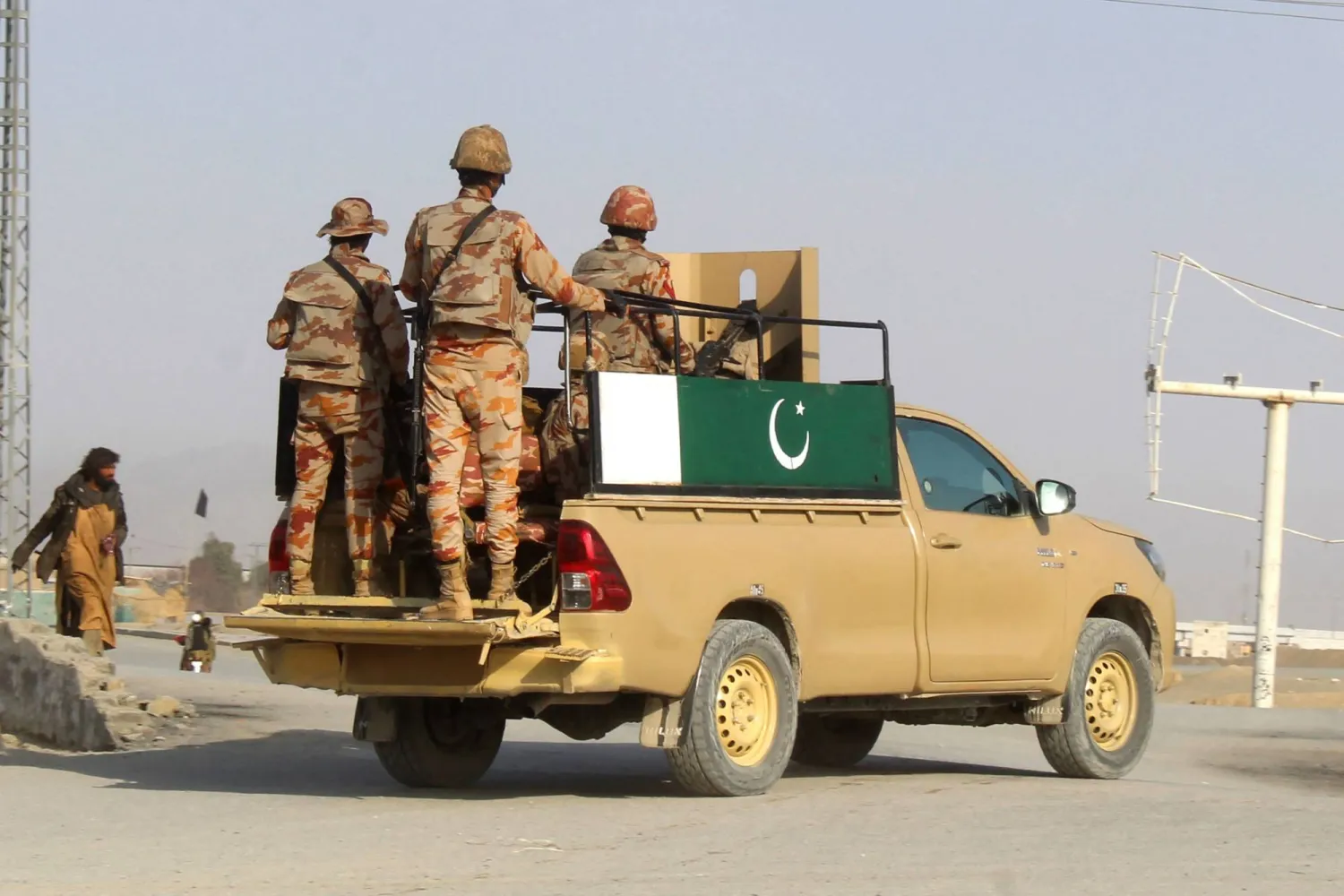
Pakistani soldiers patrol near the Pakistan-Afghanistan border crossing in Chaman on February 27, 2026. (Photo by Abdul BASIT / AFP)
TT

Pakistan Bombs Targets in Afghan Cities, Minister Calls it 'Open War'

Pakistani soldiers patrol near the Pakistan-Afghanistan border crossing in Chaman on February 27, 2026. (Photo by Abdul BASIT / AFP)

Pakistan bombed Taliban government targets in Afghanistan's major cities overnight, officials from both countries said on Friday, with Pakistan's defense minister calling the conflict "open war.”

Security sources in Pakistan said the strikes involved air-to-ground missile attacks on Taliban military offices and posts in Kabul, Kandahar and Paktia as well as ground clashes in multiple sectors along the border between the two nations.

The Taliban said it launched what it described as retaliatory attacks on Pakistani military installations.
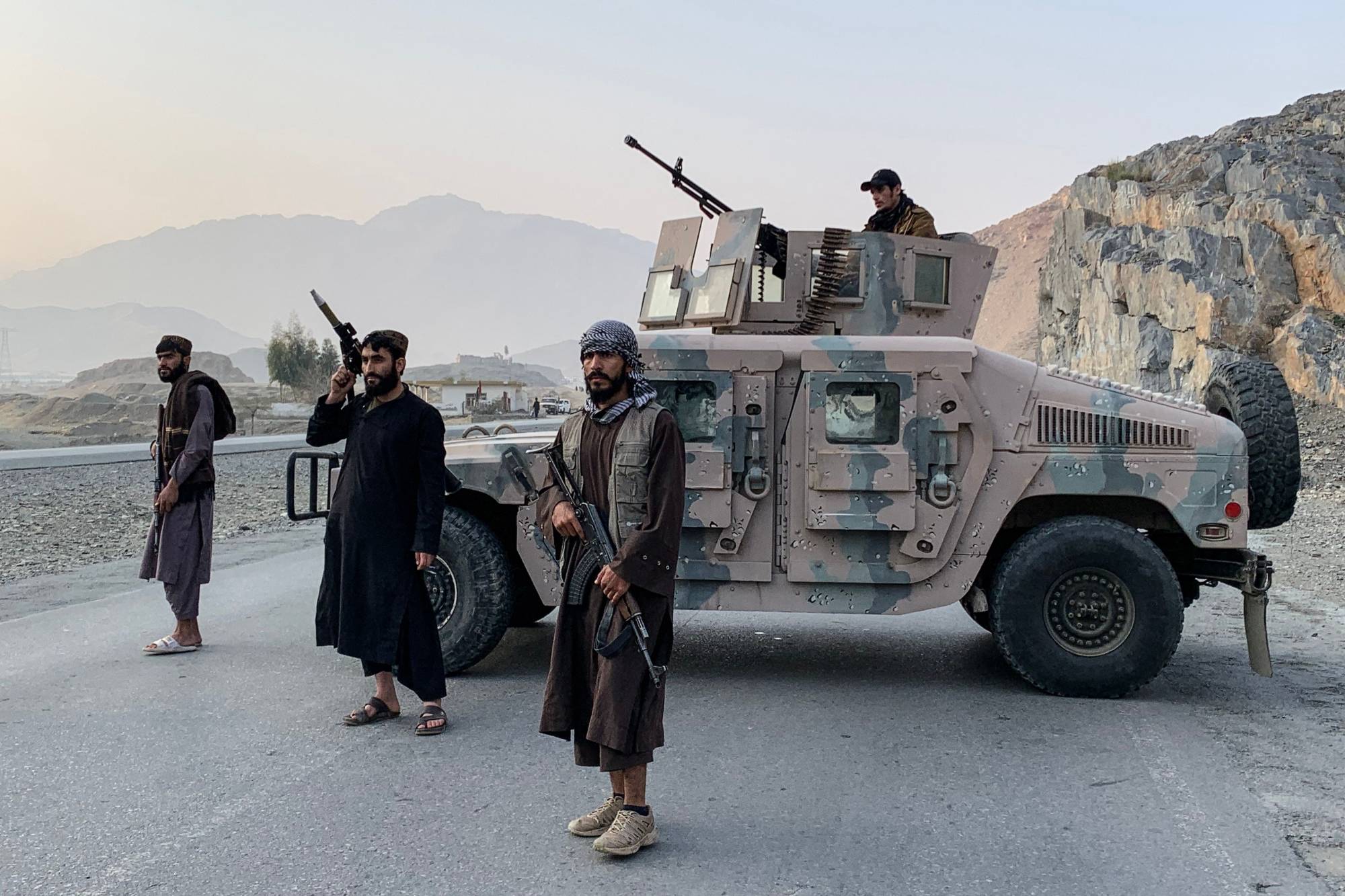
 

Taliban security personnel stand guard near the Torkham border crossing between Afghanistan and Pakistan in the Nangarhar province on February 27, 2026. (Photo by Aimal Zahir / AFP)


Both sides reported heavy losses, issuing sharply differing figures that Reuters could not independently verify.

"Our cup of patience has overflowed. Now it is open war between us and you (Afghanistan)," Pakistani Defense Minister Khawaja Muhammad Asif said on Friday.

Relations between Kabul and Islamabad have been strained by a long-running dispute over Pakistan's accusation that Afghanistan harbors militants carrying out attacks across the border. The Taliban have denied the charge and said Pakistan's security is an internal problem.
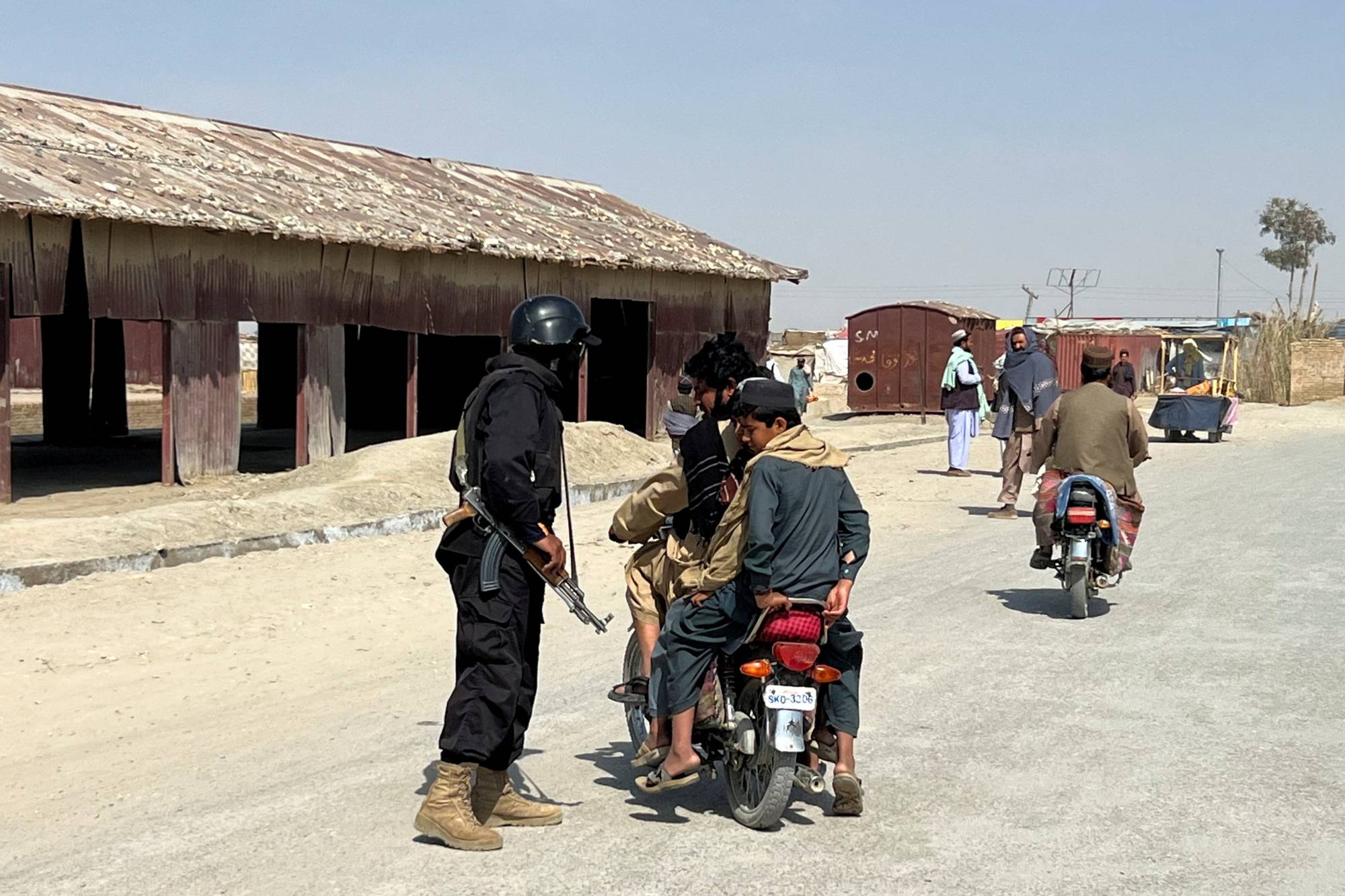
 

A police officer checks commuters on a road leading to the border crossing along the Pakistan-Afghanistan in Balochistan Province, in Chaman, Pakistan February 27, 2026. Picture taken with a mobile phone. REUTERS/Abdul Khaliq Achakzai


The strikes ‌on Taliban government ‌installations are a major escalation, and threaten a protracted conflict along the 2,600-km (1,615-mile) frontier.

Taliban spokesperson ‌Zabihullah Mujahid ⁠confirmed Pakistani forces ⁠carried out air strikes in parts of Kabul, Kandahar and Paktia but did not give details.

Kandahar is the headquarters of the Taliban and the city where supreme spiritual leader Haibatullah Akhundzada is based.

Video shared by Pakistani security officials showed flashes of light in the night from firing along the border and the sound of heavy artillery. A video of strikes on Kabul, for which Reuters was able to verify the location, showed thick plumes of black smoke rising from two sites and a massive blaze in part of the capital.

Another video showed a building on fire, which the officials said was a Taliban headquarters in Paktia province.

"Pakistani counter-strikes against targets in Afghanistan continue," ⁠a Pakistani government spokesperson, Mosharraf Zaidi, said in a post on X, describing the action ‌as a response to "unprovoked Afghan attacks."

Reuters witnesses in Kabul said many ambulance ‌sirens could be heard following loud blasts and the sound of jets.

Zaidi said 133 Afghan Taliban fighters were killed and more than 200 wounded, ‌with 27 posts destroyed and nine captured.

Mujahid, the Taliban spokesperson, said 55 Pakistani soldiers were killed and 19 posts ‌seized, while eight Taliban fighters were killed, 11 wounded and 13 civilians injured in Nangarhar province.



Police: Muslim Man Stabbed Multiple Times in Utah over his Religion

(FILES) Cedar trees, sandstone formations and mountains are shown here in the Bears Ears National Monument on May 12, 2017 outside Blanding, Utah. (Photo by GEORGE FREY / GETTY IMAGES NORTH AMERICA / AFP)
TT

Police: Muslim Man Stabbed Multiple Times in Utah over his Religion

(FILES) Cedar trees, sandstone formations and mountains are shown here in the Bears Ears National Monument on May 12, 2017 outside Blanding, Utah. (Photo by GEORGE FREY / GETTY IMAGES NORTH AMERICA / AFP)

A man was arrested in Utah for stabbing a Muslim man multiple times and stated that he targeted the victim because of the victim's religion, police said in court records on Tuesday.

Police said the suspect told them he "intends to kill Muslims" and that he constituted "a substantial danger to the public if released based on his violent actions ... ideologies and pre-planned mass casualty events."

The incident took place inside the Valley Fair Mall in Utah's West Valley City on Monday. The male victim had "multiple stab wounds ⁠all over his ⁠body and was bleeding profusely," police said in an affidavit.

According to Reuters, authorities said the suspect was pinned to the ground by bystanders before officers arrived on the scene.

The suspect, Peter Michael Larsen, 48, was booked into the Salt Lake County jail for a probe over attempted murder and prohibited dangerous weapon conduct, jail records showed on Tuesday. The victim was a male Muslim kiosk ⁠worker.

The suspect said "he had targeted the victim with intent to kill him because of his religion (Muslim)," according to the police booking affidavit.

The suspect approached the Muslim man, asked for his name, asked about his religion and indicated he wanted a bottle of water, the Salt Lake Tribune reported, citing comments from Imam Shuaib Din, who leads the Utah Islamic Center and had been in contact with the victim's family.

As the victim turned to get the water, the attacker began stabbing him, according to Din.

The victim was hospitalized and in critical condition. A friend set up a GoFundMe page for him, ⁠which said ⁠the Muslim man was stabbed 15 times and needed surgeries. The attacker was also hospitalized because of wounds sustained while he was subdued by bystanders, before being booked into the Salt Lake County jail.

Muslim rights groups, including the Council on American-Islamic Relations, condemned the incident. US rights advocates have noted rising Islamophobia over the last two-plus decades following the September 11, 2001, attacks, and more recently because of anti-immigration policies, white supremacy and the fallout of Israel's war in Gaza.

Deadly violent attacks in recent years include a 2023 stabbing of a 6-year-old Muslim child in Illinois whose killer was sentenced to 53 years in prison and died in custody, and a 2026 shooting at a San Diego mosque that left five dead, including two teenage suspects.


US Reimposes Blockade on Iran after Tehran's Attacks on Ships in Strait of Hormuz

FILE PHOTO: Vessels at the Strait of Hormuz, as seen from Musandam, Oman, June 18, 2026. REUTERS/Stringer/File Photo
TT

US Reimposes Blockade on Iran after Tehran's Attacks on Ships in Strait of Hormuz

FILE PHOTO: Vessels at the Strait of Hormuz, as seen from Musandam, Oman, June 18, 2026. REUTERS/Stringer/File Photo

The US military early Wednesday reimposed a blockade on Iranian ports over Tehran’s attacks on ships trying to pass through the Strait of Hormuz, sparking new strikes on nations hosting American forces as an interim deal to end the war further unraveled.

Days of retaliatory strikes across the Middle East by Iran — and both nations’ attempts to assert control of the waterway through which a fifth of the world’s oil and natural gas trade passes during peacetime — threaten to push the region back to all-out war.

The US first imposed the blockade in mid-April and then lifted it in mid-June, a day after signing the interim deal that set a 60-day period for negotiations over issues like Iran’s nuclear program, but talks have stalled as fighting over the strait has intensified.

Iran’s Revolutionary Guard threatened Wednesday to halt all energy exports from the Middle East over the blockade.

“The export of oil and gas from the region will be either for everyone or for no one,” it said.

When US President Donald Trump announced the return of the blockade Monday, he also said he would impose a 20% fee on ships passing through the strait. But he dropped the plan to collect fees hours before resuming the blockade.

The US carried out another wave of strikes as it reimposed the blockade, striking dozens of targets over seven hours, the US military’s Central Command said Wednesday.

Missile alert warnings went out in Bahrain and Kuwait early Wednesday morning as they faced incoming Iranian fire. Jordan also said it shot down three incoming Iranian missiles.


Strikes Hit Iran’s Island of Qeshm

This frame grab taken from AFPTV video footage on July 12, 2026 shows cargo ships anchoring near the Strait of Hormuz off the eastern coast of the United Arab Emirates at Khor Fakkan.(AFPTV/AFP)
TT

Strikes Hit Iran’s Island of Qeshm

This frame grab taken from AFPTV video footage on July 12, 2026 shows cargo ships anchoring near the Strait of Hormuz off the eastern coast of the United Arab Emirates at Khor Fakkan.(AFPTV/AFP)

Projectiles hit Iran's Gulf island of Qeshm near the Strait of Hormuz on Tuesday, Iran's state broadcaster reported, citing local officials who blamed the United States.

"At 19:00, a location on Qeshm Island was struck by projectiles from the American enemy," Hormozgan governor's office said, according to IRIB.

Fars news agency earlier reported that explosions were heard on the island, amid renewed hostilities between the US and Iran.

"Around 6:45 pm, the sound of several explosions was heard on Qeshm Island," Fars said. "In recent days, the Masan area of Qeshm has been attacked several times by the American enemy".

It comes after the US launched a fresh wave of strikes on Iran and Trump vowed to reimpose a naval blockade on Iran, prompting Tehran to respond with strikes on targets in countries around the region.

The US military earlier said it had hit targets across Iran including in the port cities of Bushehr and Bandar Abbas to "degrade Iran's ability to attack commercial shipping".

Iran hit two ships in the Strait of Hormuz, killing a crew member, according to the United Arab Emirates.

A Norwegian tanker was also hit by an explosion caused by an unidentified device off the Omani coast early Tuesday, the crisis response company MTI Network said.