


Saudi East-West Pipeline Underpins Kingdom’s Energy Security Strategy

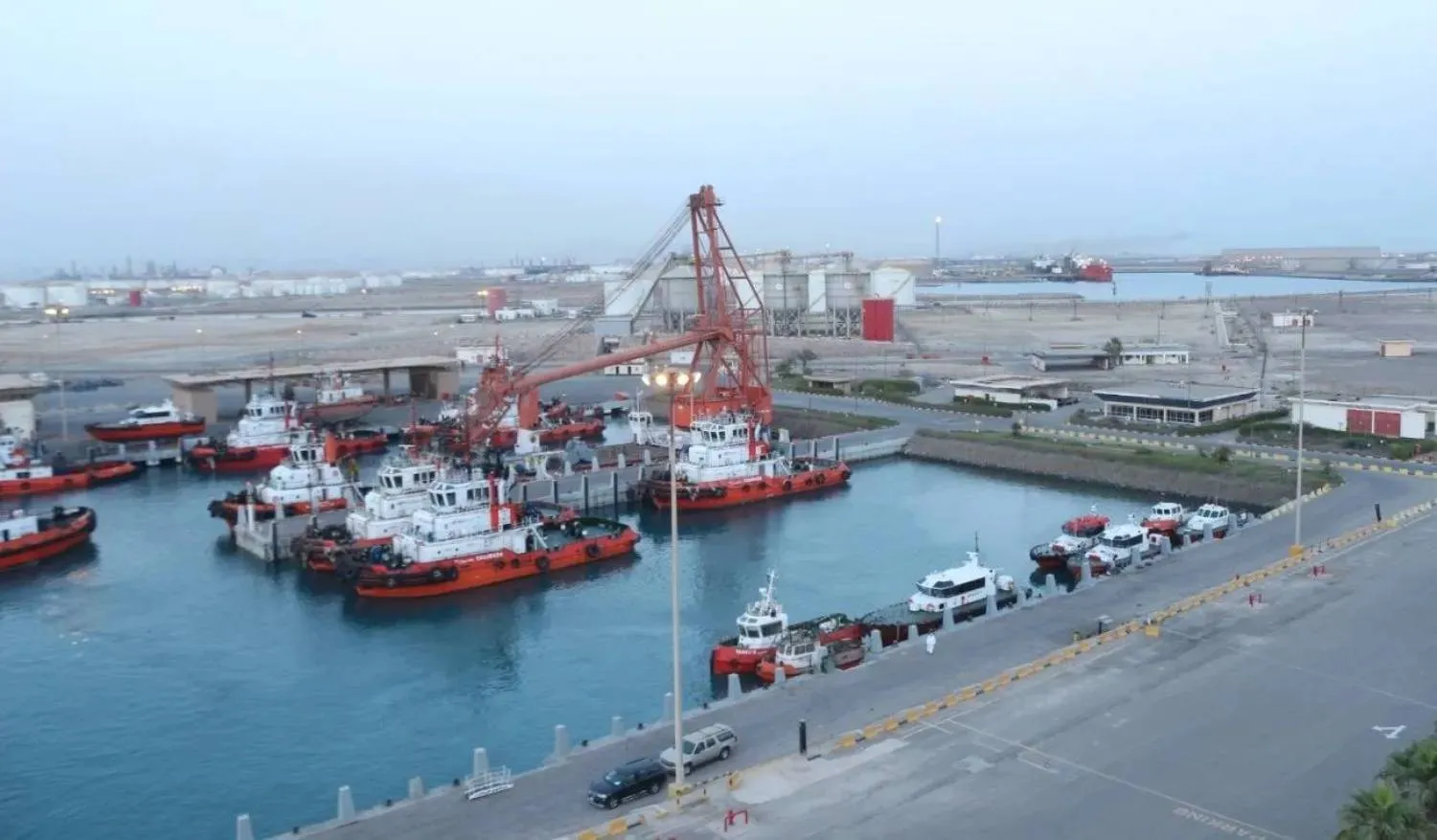
The King Fahd Industrial Port in Yanbu. (SPA)
TT

Saudi East-West Pipeline Underpins Kingdom’s Energy Security Strategy

The King Fahd Industrial Port in Yanbu. (SPA)

As regional military tensions escalate and attacks on shipping in the Strait of Hormuz recur, Saudi Arabia’s East-West oil pipeline has re-emerged as a critical safeguard in the global energy system.

With markets closely watching threats to the vital maritime corridor, the Kingdom’s sovereign infrastructure is acting as a strategic shield to keep oil flowing. The moment underscores that Saudi Arabia’s logistical resilience and delivery capacity are as vital as its production strength, reinforcing its reputation as the most reliable supplier in times of turmoil.

In a statement to Asharq Al-Awsat, Saudi Aramco said it had adjusted crude oil shipping operations to prioritize safety and service continuity, and to help ensure reliability, by temporarily redirecting allocated volumes to the Yanbu port as an option for customers unable to access the Arabian Gulf.

“We remain fully committed to supporting and serving our customers and continue to assess the situation in order to resume normal procedures,” the company said.

Reuters earlier cited sources as saying Aramco was seeking to reroute some crude exports to the Red Sea to avoid the Strait of Hormuz, after the risk of attacks brought shipping traffic to a near halt.

The company has also informed some buyers of its Arab Light crude that cargoes would need to be loaded at Yanbu.

Sovereign infrastructure

The pipeline, known as Petroline, is more than a transport project. It is sovereign infrastructure built to protect Saudi crude flows from potential maritime disruptions.

The East-West pipeline carries crude from fields in Saudi Arabia’s Eastern Province to the Red Sea coast, where it is exported through King Fahd Industrial Port in Yanbu. Stretching about 1,200 kilometers across the Kingdom, it runs through several pumping stations capable of moving millions of barrels per day efficiently.

The line began operating in the early 1980s during a period of heightened regional security concerns, when fears were growing over threats to shipping in the Strait of Hormuz, a route that carries about one-fifth of global seaborne oil trade.

The project had three clear aims: to provide an export outlet outside the Arabian Gulf, to strengthen Saudi energy security, and to reassure global markets about the continuity of supply.

Today, the pipeline has a capacity of about five million barrels per day, far above its initial capacity at launch. That scale gives Saudi Arabia significant logistical flexibility to redirect exports quickly in response to geopolitical or operational disruptions.

Operated by Saudi Aramco, the line is managed through advanced monitoring systems that efficiently regulate crude flows, alongside strict technical and security safeguards.

Why it matters now

Financial and economic adviser Dr. Hussein Al-Attas told Asharq Al-Awsat the pipeline linking the Eastern Region to Yanbu is among the most important strategic infrastructure projects in Saudi Arabia’s energy sector.

Its capacity of roughly five million barrels per day provides the kingdom with high logistical flexibility if disruptions occur in the Arabian Gulf or the Strait of Hormuz, he said.

Amid geopolitical tensions, having an export outlet far from maritime chokepoints reduces operational risks and strengthens the Kingdom’s ability to honor long-term supply contracts.

It is impossible to speak of zero disruptions in absolute terms, but the pipeline significantly reduces risks and makes the likelihood of widespread disruption to Saudi exports very low compared with many other producers, Al-Attas said.

He added that Petroline has evolved from a logistics project into a tool of economic national security.

What was once an oil transport project designed to improve export efficiency has become part of the Kingdom’s economic national security architecture, he said.

Aramco now treats it not only as an alternative route but as a strategic option that diversifies export outlets, reduces reliance on sensitive maritime passages, protects oil export revenues and strengthens reliability for customers in Asia and Europe.

Al-Attas stressed that delivery capability is as important as production capacity, noting that the pipeline’s strategic value lies in ensuring supply even under the most difficult conditions.

During wars or regional tensions, markets rapidly price in risk, he said. The presence of an effective alternative route gives Saudi Arabia a competitive edge by helping ease the risk premium on its crude compared with producers reliant on a single export route.

It also reinforces investor confidence in the stability of Aramco’s cash flows and strengthens the Kingdom’s image as a long-term reliable supplier—an important factor in futures markets.

The more Saudi Arabia proves it can maintain supplies even in the toughest circumstances, the more global markets will see it not only as the largest oil exporter but also as the most reliable and stable, Al-Attas said.

He stressed that the East-West pipeline is no longer just crude transport infrastructure. It is now a strategic pillar that protects revenues, supports financial stability and strengthens Saudi Arabia’s geopolitical weight in the global energy security equation.



Oil Rises on Concern Over Escalating Middle East Tensions

HUNTINGTON BEACH, CALIFORNIA - APRIL 23: A pumpjack stands idle in the Huntington Beach oil field on April 23, 2026 in Huntington Beach, California. Mario Tama/Getty Images/AFP
TT

Oil Rises on Concern Over Escalating Middle East Tensions

HUNTINGTON BEACH, CALIFORNIA - APRIL 23: A pumpjack stands idle in the Huntington Beach oil field on April 23, 2026 in Huntington Beach, California. Mario Tama/Getty Images/AFP

Oil rose on Friday on concerns of a renewed military escalation in the Middle East after Iran released footage of commandos boarding a cargo ship in the Strait of Hormuz, and a lack of progress in re-opening the key waterway.

Navigation through the strait, which before the war carried about a fifth of global oil output, remains effectively blocked. Iran's capture of two cargo ships highlighted Washington's difficulties in trying to control the passage.

Brent crude futures were up $1.93, ⁠or 1.8%, to $107 a ⁠barrel at 0805 GMT, while US West Texas Intermediate futures were up 76 cents, or 0.8%, at $96.61, Reuters reported.

For the week, Brent is up 18% and WTI 15%, the second-largest weekly gains since the war began.

Both contracts settled more than 3% higher on Thursday after reports that air defenses were engaging targets over Tehran and of a ⁠power struggle between Iran's hardliners and moderates.

"There is no de-escalation in sight," said Tamas Varga of oil broker PVM.

US President Donald Trump said Iran may have loaded up its weaponry "a little bit" during a two-week ceasefire, but added that the US military could eliminate it in a single day. On Wednesday, he said he would indefinitely extend the ceasefire to allow for further peace talks.

The ceasefire is increasingly looking like a preparatory phase for more war, Haitong Futures said in a report. If peace talks fail to make ⁠progress by ⁠the end of April and fighting resumes, oil prices could climb to new highs for the year, it added.

"There's set to be fresh financial pain ahead as key shipments from the region remain blocked," said Susannah Streeter, chief investment strategist at UK investment service Wealth Club. "That is set to keep costs elevated for a vast array of commodities."

As investors and governments around the world look for a lasting peace, Trump said he would not set a "timetable" for ending the conflict and that he wanted to make "a great deal."

"Don't rush me," he said when asked how long he was willing to wait for a long-term deal.


Saudi Arabia, Switzerland Sign Agreement on Reciprocal Protection of Investments

The agreement aims to strengthen and stabilize the investment environment, protect investors’ rights, and support the flow of mutual investments between the two countries. SPA
TT

Saudi Arabia, Switzerland Sign Agreement on Reciprocal Protection of Investments

The agreement aims to strengthen and stabilize the investment environment, protect investors’ rights, and support the flow of mutual investments between the two countries. SPA

Saudi Minister of Foreign Affairs Prince Faisal bin Farhan bin Abdullah and Minister of Investment Fahad Al-Saif have participated in the Saudi-Swiss Investment Roundtable Meeting in Jeddah, which was followed by the signing of an investment agreement between the two countries.

The meeting took place in the presence of Swiss President Guy Parmelin, with the participation of State Secretary for Economic Affairs Helene Budliger Artieda, along with a large number of officials and business leaders from both sides.

During the meeting, the conferees reviewed joint investment opportunities, discussed ways to strengthen economic cooperation between the two countries, and explored the development of partnerships in priority sectors in a manner that supports economic growth and enhances relations.

The meeting was held on the sidelines of the Swiss President’s official visit to the Kingdom, as the two countries mark 70 years of diplomatic relations that have, from the outset, helped lay the foundations of cooperation and build a partnership based on mutual respect and the development of shared interests between the two states.

After the meeting, an agreement was signed between the Saudi government and the Swiss Federal Council on the promotion and reciprocal protection of investments.

It was signed on the Saudi side by Al-Saif, and on the Swiss side by Parmelin.

The agreement aims to strengthen and stabilize the investment environment, protect investors’ rights, and support the flow of mutual investments between the two countries.

The meeting was attended by Saudi Ambassador to Switzerland and the Principality of Liechtenstein Abdulrahman Aldawood.


US Stocks Dip on Mixed Earnings as Markets Monitor Iran

A trader works on the floor of the New York Stock Exchange (NYSE) at the opening bell in New York on March 24, 2026.  (Photo by ANGELA WEISS / AFP)
A trader works on the floor of the New York Stock Exchange (NYSE) at the opening bell in New York on March 24, 2026. (Photo by ANGELA WEISS / AFP)
TT

US Stocks Dip on Mixed Earnings as Markets Monitor Iran

A trader works on the floor of the New York Stock Exchange (NYSE) at the opening bell in New York on March 24, 2026.  (Photo by ANGELA WEISS / AFP)
A trader works on the floor of the New York Stock Exchange (NYSE) at the opening bell in New York on March 24, 2026. (Photo by ANGELA WEISS / AFP)

Wall Street stocks retreated from records early Thursday as markets digested a trove of mixed earnings reports and monitored the latest dynamics between the United States and Iran.

Analysts cited profit-taking after both the S&P 500 and Nasdaq shrugged off a jump in oil prices to finish at records on Wednesday.

About 10 minutes into trading, the Dow Jones Industrial Average was down 0.4 percent at 49,311.39, AFP reported.

The broad-based S&P 500 dipped 0.2 percent to 7,126.19, while the tech-rich Nasdaq Composite Index declined 0.3 percent to 24,588.07.

David Morrison, senior market analyst at FCA, called Thursday's early trading action "a mild bout of profit-taking triggered by some worrying reports of hostile action between the US and Iran," according to a note.

The US Defense Department said its forces boarded a vessel in the Indian Ocean that was transporting oil from Iran, while President Donald Trump announced on social media that he ordered the Navy to "shoot and kill" boats placing mines in the Strait of Hormuz.

Iran vowed it would keep the strait closed to all but a trickle of approved vessels for as long as the United States blockaded its ports.

Among companies reporting results, Tesla fell 1.7 percent and Lockheed Martin dropped 3.7 percent, while American Airlines jumped 4.9 percent.