


Asia Has Limited Options to Diversify from Middle East Energy Reliance

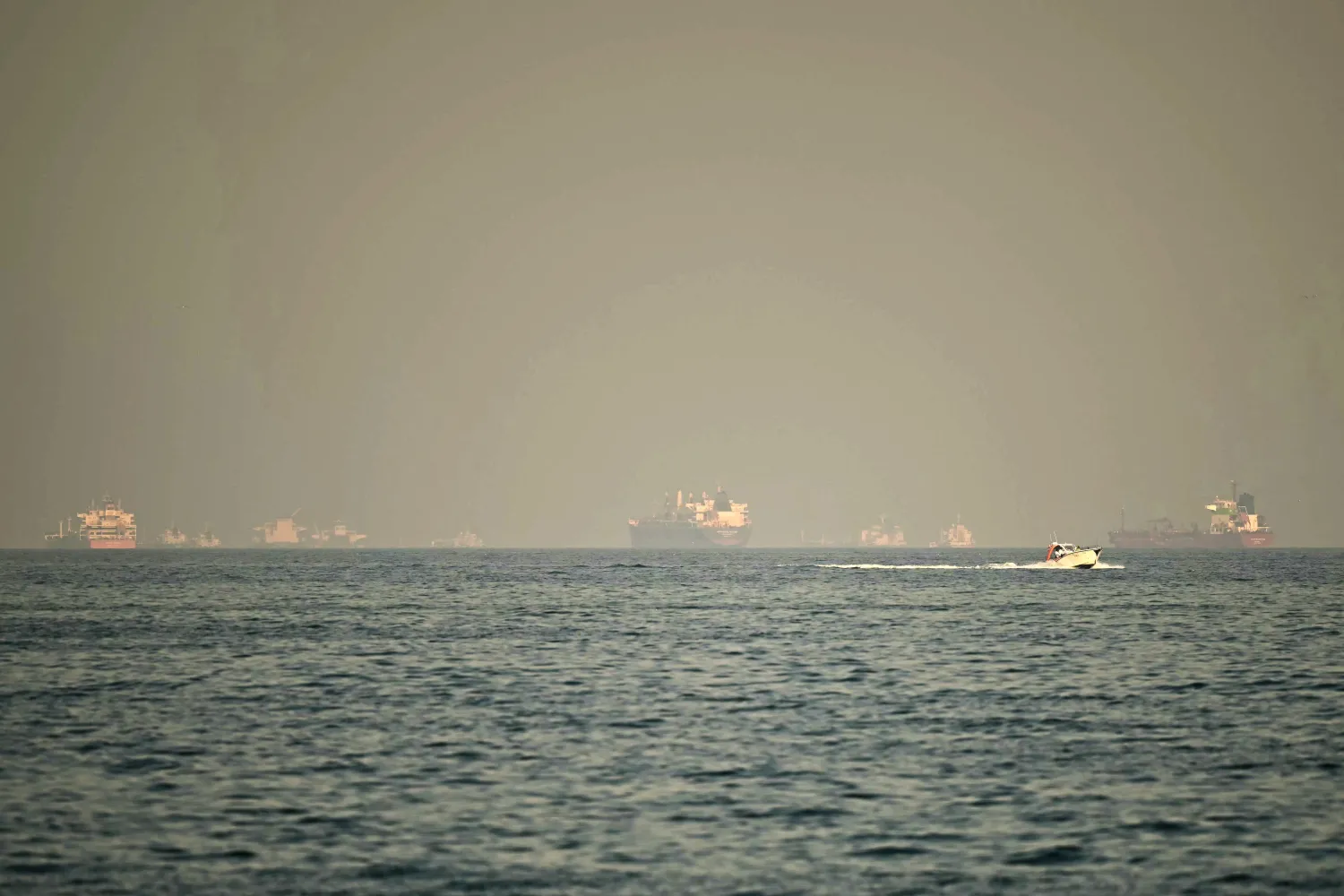
Cargo ships and tankers are seen off coast city of Fujairah, in the Strait of Hormuz in the northern Emirate on February 25, 2026. (AFP)
TT

Asia Has Limited Options to Diversify from Middle East Energy Reliance

Cargo ships and tankers are seen off coast city of Fujairah, in the Strait of Hormuz in the northern Emirate on February 25, 2026. (AFP)

Asian energy buyers are scrambling to find alternatives as the Iran war creates unprecedented supply disruption, but the region has limited longer-term options to reduce its heavy reliance on Middle Eastern oil.

The world's top crude importing region buys 60% of its oil and petrochemical feedstock from the Middle East, where the war that started with Israeli and US attacks on Iran nearly a week ago has pushed up global energy prices and threatens to drive inflation and hurt economic growth.

Unable to receive Middle Eastern crude, refiners from China to Southeast Asia are looking for expensive alternatives that will take weeks or months to arrive, while some are cutting output.

This week, China and Thailand suspended exports of oil products while Vietnam halted crude exports, which typically go to Australia.

However, alternative sources have drawbacks including distance, refinery configurations, long-term contracts and cost.

For example, oil shipped from West Africa and the Americas takes 1-1/2 to 2 months to reach China, meaning orders need to be placed three months in ‌advance.

By comparison, it ‌takes roughly 25 days for oil to reach China via the Strait of Hormuz.

Also, switching ‌crude ⁠grades changes product ⁠yields at refineries, which must adjust their operations.

"If you put a new crude into the refinery, you have to change the cutoff points (boundaries separating crude into different products). You have to change gasoline blending. There's a lot of things you need to change. It's hard work," said Adi Imsirovic, director of consultancy Surrey Clean Energy.

"This is why diversification has been so poor in a lot of countries," he said. Energy Aspects analyst Richard Jones said some governments may seek diversification at the margins, but many Asian refiners are tied to Middle East term contracts.

"Simply put, even replacing a modest share of the roughly 16 million barrels a day of Middle Eastern crude that ⁠arrives to Asia with Atlantic basin supply is not feasible," he said.

BIG ASIAN BUYERS

In Japan, ‌which has sourced 95% of its oil from the Middle East since halting ‌nearly all Russian oil imports after Moscow's invasion of Ukraine, refiners run ageing plants optimized for Middle Eastern crude.

With gasoline demand declining, refiners have ‌been wary of investing in upgrades needed to take on new sources such as Canada's heavy TMX.

Muyu Xu, senior analyst ‌at Kpler, said Japanese refiners could seek to blend lighter WTI or West African crude with heavier grades from the Americas to approximate the characteristics of Middle Eastern medium-sour.

"The caveat, however, is the logistical complexity and refinery operational risks," she said.

For the nearer term, Japan can tap a stockpile of roughly 250 days.

Top importer China has smaller reserves - roughly 78 days' worth - but a more diverse supplier profile, sourcing roughly ‌half of its oil from the Middle East including Iran, where it has been the top buyer.

China also buys from Russia despite western sanctions, as well as from mainstream producers. India, ⁠with just 25 days of ⁠reserves and reliance on the nearby Middle East for 55% of its oil, is scrambling to find alternatives, with Washington this week giving it a one-month reprieve to buy Russian oil after US President Donald Trump pressured it with punitive tariffs to curb its purchases from Moscow.

'GET SOME SOLAR PANELS'

The market for liquefied natural gas is much smaller and tighter. No.2 producer Qatar's move to halt production due to the war has had a swift impact, with India rationing gas to industrial customers.

Michal Meidan, head of China energy research at the Oxford Institute for Energy Studies, said the situation could lead to fuel switching and demand destruction.

"Long term, South Asian countries could look to limit the share of gas in their energy mix and follow China's model of reliance on coal and renewables," she said.

Tim Zhang, founder of Singapore-based Edge Research, said Asia could increase the share of non-fossil fuel such as renewables and nuclear in its energy mix or diversify its conventional fuel supply.

Surrey's Imsirovic said a prolonged disruption could prompt governments to reconsider their reliance on Middle East energy entirely.

"It's going to be like the Asian Currency Crisis or something. Definitely, people will seriously have to rethink," he said.

"In sunny Asia, get some solar panels and buy an EV. End of story."


Oil and Gas Prices Rapidly Rise as Iran War Shows No Signs of Letting Up

Petrol prices are displayed at a filling station, as the price of oil and gas has surged amid the conflict in the Middle East, in London, Britain, March 5, 2026 REUTERS/Jack Taylor
TT

Oil and Gas Prices Rapidly Rise as Iran War Shows No Signs of Letting Up

Petrol prices are displayed at a filling station, as the price of oil and gas has surged amid the conflict in the Middle East, in London, Britain, March 5, 2026 REUTERS/Jack Taylor

The price of oil surged higher and showed no signs of halting its rapid climb a week after the US and Israel launched major attacks on Iran that escalated into a war in the Middle East.

The conflict, in which nearly every country in the Middle East has sustained damage from missiles or drone strikes, has left ships that carry roughly 20 million barrels of oil a day stranded in the Arabian Gulf, unable to safely pass through the Strait of Hormuz, the narrow mouth of the Gulf that is bordered on its north side by Iran.

The disruption and damage to key oil and gas facilities in the Middle East has led to an interruption in the supply of oil and gas.

Oil prices surpassed $90 a barrel Friday, with American crude settling at $90.90, up 36% from a week ago, and Brent, the international standard, climbing 27% over the course of the week to land at $92.69.

The fallout is ratcheting up what consumers and business will pay for gasoline, diesel and jet fuel, with some drivers already feeling it at the pump.

“It’s crazy. It’s not needed, especially at a time when people are already struggling, but not unexpected from all this turmoil that’s going on,” said Mark Doran, who was pumping gas in Middlebury, Vermont Friday.

“I don’t think there’s been an end in sight to any Middle East conflict that’s been started by us, so the fact that they say that there’s going to be an end that quickly is not believable, and the Middle East is, you know, a place that the US is not going to solve.”

On Monday, President Donald Trump said that the US expected its military operations against Iran to last four to five weeks but has “the capability to go far longer.” And on Friday, Trump appeared to rule out talks with Iran absent its “unconditional surrender.”

“The more news we get, the more it seems like this is going to last a really long time,” said Al Salazar, head of macro oil and gas research at Enverus.

In the US, a gallon of regular gasoline rose to $3.32 on Friday, up 11% from a week ago, according to AAA motor club. Diesel was selling for $4.33 a gallon Friday, up 15% from a week ago.

The price shocks were felt even more heavily in Europe and Asia, markets that rely more heavily on energy supplies from the Middle East. Diesel prices doubled in Europe, and jet fuel prices rose by close to 200% in Asia, according to Claudio Galimberti, chief economist at Rystad Energy.

Energy prices climbed throughout the week as Iran launched a series of retaliatory attacks, including a drone strike on the US Embassy in Saudi Arabia, and the conflict widened. Iran also hit a major refinery in Saudi Arabia and a liquefied natural gas (LNG) facility in Qatar, halting flows of refined products and taking about 20% of the world’s LNG supply offline.

“We keep seeing news of vessels being hit or refineries or pipelines, so the list is very long,” Galimberti said. As a result, roughly 9 million barrels of oil per day are off the market because of facilities being hit or producers taking precautionary measures, he said. “Right now, with all of this shut in, we are in a situation of extreme deficit.”

The US is a net exporter of oil, but that does not mean it is immune to increases in the price of oil or gasoline, or that its producers can just make up the difference.

Oil is traded on global markets, so even the oil produced in the US has risen in price based on what's happening in the Middle East. And for many American oil producers, "if you put more wells in the ground, there’s about a six-month lag before you get that production uplift," Salazar said.

In addition, the US can't simply turn all of its crude oil into gasoline. That's because most of the oil produced in the US is light, sweet crude, and refineries on the East and West coasts are primarily designed to process heavier, sour crude. As a result, the US exports some of its crude oil and imports some refined products such as gasoline.

Jerry Dalpiaz of Covington, Louisiana, said he started filling up his cars and gas cans on “the day that they announced that the United States has started military operations against Iran" because he assumed gas prices would climb.

“I can weather the storm because I’m in good financial position, but I feel sorry for my fellow citizens who are living paycheck to paycheck because they have to drive to get to work and they have to change their oil and all those things,” Dalpiaz said.

"And they need some relief and it doesn’t seem to be coming anytime soon.”

Trump issued a plan Friday to insure losses up to approximately $20 billion in the Gulf region, aiming to restore confidence in maritime trade, help stabilize international commerce and support American and allied businesses operating in the Middle East.

But some energy experts said extra insurance won't solve the problem.

“The problem is that in the oil trading, oil shipping world, people are worried about counterterrorism,” said Amy Jaffe, director of the Energy, Climate Justice and Sustainability Lab at New York University, adding that they're worried about automated drone speedboats, weapon-carrying, flying drones and mines or other devices. "In order for the United States to create the atmosphere that undoes the current bottleneck at the Strait of Hormuz, there has to be some credible demonstration of solutions to the counter-terrorism problem.”

Salazar wondered what the “new normal” would look like if the Strait of Hormuz was effectively re-opened, and what effective security would look like.

“All it takes is one individual with a RPG (rocket-propelled grenade) to stand on the shore and take out a tanker, right?” Salazar said. “And this is forever, do you know what I mean?”


Hong Kong Firm Seeks $2 Billion Over Panama’s Takeover of 2 Key Canal Ports

The silhouettes of the container cranes in the Port of Balboa, managed by CK Hutchison Holdings based in Hong Kong, are seen during sunset at the entrance to the Panama Canal in Panama City on February 24, 2026. (AFP)
TT

Hong Kong Firm Seeks $2 Billion Over Panama’s Takeover of 2 Key Canal Ports

The silhouettes of the container cranes in the Port of Balboa, managed by CK Hutchison Holdings based in Hong Kong, are seen during sunset at the entrance to the Panama Canal in Panama City on February 24, 2026. (AFP)

A subsidiary of a Hong Kong-based company that has lost control of two critical ports on the Panama Canal said it is seeking $2 billion of compensation in damages from Panama over its “illegal” takeover of the ports.

Panama Ports Company, a unit of Hong Kong’s CK Hutchison Holdings, said in a Friday statement that it is demanding the sum under international arbitration proceedings that it had already started.

Panama’s government last week seized control of the Balboa and Cristobal ports on each end of the Panama Canal, a crucial waterway for maritime trade, after the country’s Supreme Court declared earlier that a concession allowing the Panama Ports Company to run the pair of ports was unconstitutional.

Panama Ports Company operated the two ports since 1997 and had only renewed its concession in 2021 for another 25 years. Beijing and Hong Kong’s governments had also hit back at Panama over the seizure of the two ports.

The two ports came into the spotlight after US President Donald Trump, early last year, accused China of “running” the Panama Canal.

After CK Hutchison announced a deal in March last year that it would sell the bulk of their dozens of global ports, including the two Panama ports, to a consortium that involved US investment firm BlackRock in a $23 billion deal, Beijing was quick to protest and the deal has been largely stalled over the past months.

CK Hutchison and the Panama Ports Company “will not relent and they are not coming for some token relief – they will assert all of their rights and damages they are due because of the radical breaches and anti-investor conduct of the Panamanian State,” Friday's statement said.

In the statement, Panama Ports Company also said the Panamanian state had previously misstated the compensation figure sought in press comments. Panama Economy Minister Felipe Chapman had earlier said the company was seeking $1.5 billion in compensation.

In a separate statement on Friday, CK Hutchison accused Panama of occupying the two ports and taking the property and personnel of the Panama Ports Company “without transparency.” The company also said it would continue to “pursue recourse to available national and international legal proceedings” on the matter.


Washington Counts on Insurance Guarantees to Keep Hormuz Shipping Flowing

Oil tankers off the coast of Fujairah amid Iran’s pledge to fire on vessels transiting the Strait of Hormuz (Reuters) 
TT

Washington Counts on Insurance Guarantees to Keep Hormuz Shipping Flowing

Oil tankers off the coast of Fujairah amid Iran’s pledge to fire on vessels transiting the Strait of Hormuz (Reuters) 

In a bid to break the paralysis affecting one of the world’s most critical waterways, US President Donald Trump has proposed to provide insurance risk guarantees as a strategic tool to impose stability in the Strait of Hormuz, through which roughly 20 percent of global oil flows.

Experts, however, told Asharq Al-Awsat that the initiative may not be sufficient to guarantee the uninterrupted movement of trade and shipping. Iran has warned that vessels crossing the strait could be targeted unless their passage is coordinated in advance.

Analysts say the Trump administration’s approach blends military power with financial engineering in an attempt to enforce stability while calming markets through US-backed insurance guarantees.

Trump announced the policy on his platform Truth Social, directing the US International Development Finance Corporation (DFC) to provide guarantees for vessels operating in the area.

He also signaled that the US Navy could escort oil tankers if necessary. Details remain unclear, however, on how the DFC — an agency traditionally tasked with mobilizing private capital for development projects and reducing investment risks in emerging markets — would structure such coverage.

On Wednesday, US Energy Secretary Chris Wright said in an interview with Fox News that the US Navy would begin escorting oil tankers through the Strait of Hormuz once it had the operational capacity to do so.

Treasury Secretary Scott Bessent similarly indicated that the navy stood ready to provide secure transit corridors for tankers if needed, with the goal of ensuring uninterrupted energy supplies and preventing disruptions to global trade routes.

Abdulaziz Sager, chairman of the Gulf Research Center, said the proposed guarantees would not be enough to ensure the safe passage of commercial shipping. Washington could deploy naval escorts for oil and gas tankers or even place them under the US flag, a measure used during the Iran–Iraq War, but the risk of Iranian attacks would still persist.

He noted that Iran retains several options to target vessels, including missiles, naval mines, drones, cyberattacks and underwater strike capabilities. While the US measures might help bring some degree of stability to oil prices, he added, insurance costs for shipping are likely to remain high.

Meanwhile, more than half of the world’s major marine insurance associations have announced that they will suspend war-risk coverage for vessels entering the Arabian Gulf starting Thursday.

Such insurance typically protects shipowners and charterers from liabilities and damages caused by war, terrorism, piracy, and similar threats. Its withdrawal significantly reduces the willingness of companies to load cargo from Gulf ports.

Five days into the conflict, Sager said it remains difficult to estimate the scale of economic losses affecting trade volumes, oil flows, or shipping costs. Much will depend on the duration of the conflict and the extent of potential damage to tankers and energy infrastructure across the Gulf.

Saeed Salam, director of the Vision Center for Strategic Studies, said the US strategy reflects an attempt to impose what he described as forced stability in the Strait of Hormuz. By combining military deployment with financial guarantees, Washington is seeking to contain market panic and reassure shipping companies.

Yet he argued that the guarantees remain incomplete. Naval escorts may offer psychological reassurance, but they cannot fully counter asymmetric threats such as naval mines, suicide drones or anti-ship missiles.

In some cases, the escorts themselves could turn commercial tankers into legitimate military targets, increasing the risk of direct naval confrontation and potentially expanding the conflict from a regional crisis into a broader international one.

Salam added that while US intervention may help curb soaring insurance premiums, it will not eliminate what he described as a fear-driven surcharge on maritime transport. Military convoys tend to slow shipping traffic and create logistical bottlenecks, which in turn push costs higher.

He also noted that oil flows through the Strait of Hormuz have already declined as buyers adopt defensive hedging strategies. At the same time, war-risk insurance premiums have surged by around 300 percent, reaching about 1.5 percent of the value of each shipment and adding millions of dollars in additional costs to every tanker.

In Salam’s view, the deeper challenge lies in Washington’s attempt to substitute financial guarantees for geopolitical security. Any failure to militarily protect insured vessels could undermine the entire insurance framework and expose the US Treasury to massive compensation claims, potentially shifting the crisis from maritime chokepoints to the core of the global financial system.
