
Holdouts Flee Lebanon Border Village After Israeli Warning

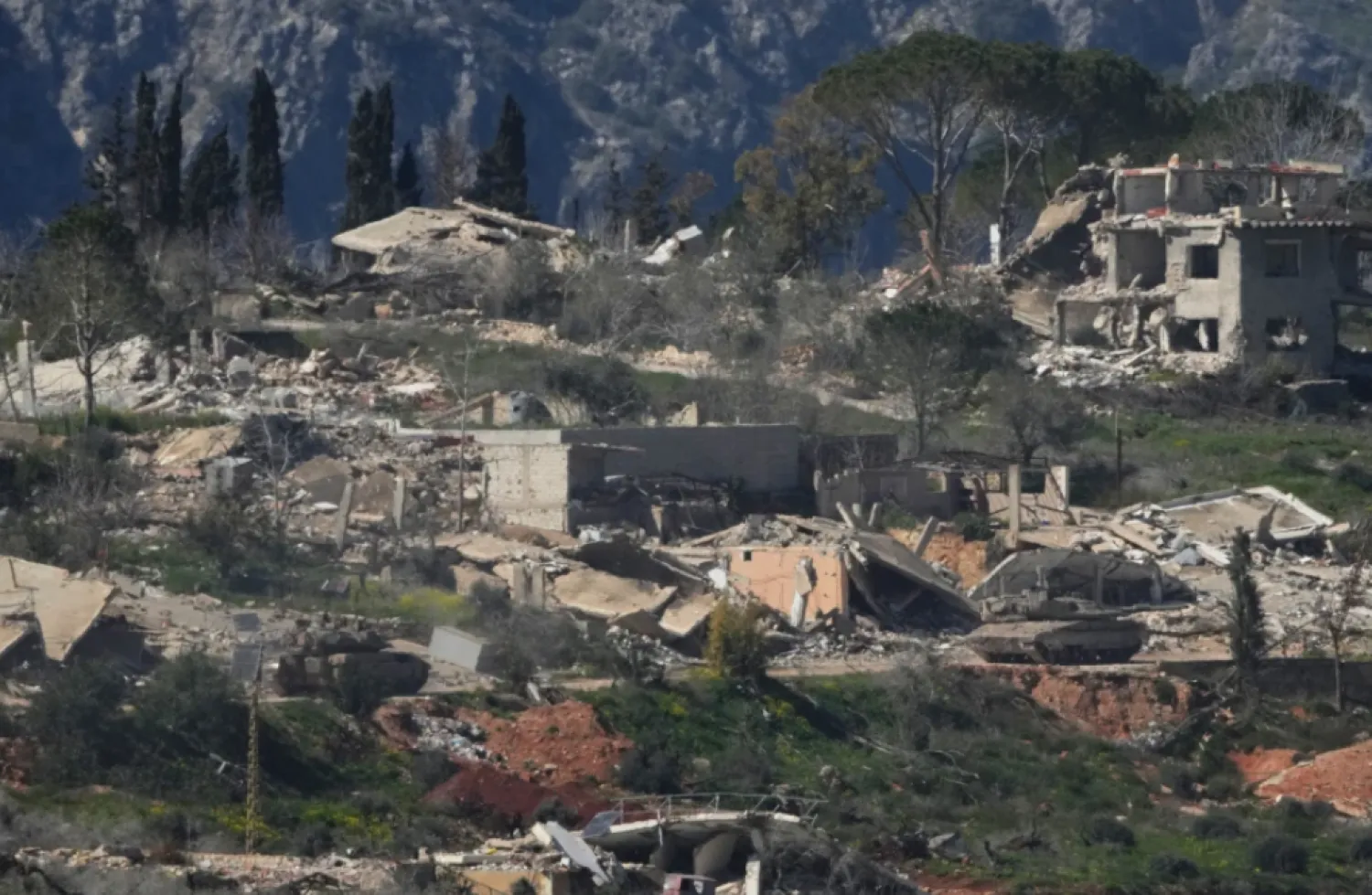
An Israeli tank maneuvers in southern Lebanon near the border with Israel, Sunday, March 8, 2026. (AP Photo/Ariel Schalit)
TT

Holdouts Flee Lebanon Border Village After Israeli Warning

An Israeli tank maneuvers in southern Lebanon near the border with Israel, Sunday, March 8, 2026. (AP Photo/Ariel Schalit)

The last residents of a Christian village on Lebanon's border with Israel fled the area on Tuesday, a UN source and an AFP correspondent said, after locals had for days defied an Israeli order to leave.

Fighting flared last week between Israel and Lebanese militant group Hezbollah as part of a wider regional war, prompting the Israeli military to warn people across swathes of southern Lebanon to flee.

But some residents in Christian towns and villages refused to join a mass exodus, with dozens in the Alma al-Shaab area staying put despite the violence.

Fears spiked however after an Israeli strike at the weekend killed one resident.

On Tuesday, an AFP correspondent in the nearby Naqura area saw a convoy of vehicles transporting people who had left Alma al-Shaab, including women, children and the elderly. Their cars were packed with belongings, some strapped to the roofs.

Vehicles from Lebanon's United Nations peacekeeping force accompanied the convoy to a Lebanese army checkpoint further north, the correspondent said.

A source from the UN Interim Force in Lebanon (UNIFIL) told AFP that more than 80 people had left and the village was now empty, saying they had been transported to areas outside the force's operations.

UNIFIL had said on Monday that "at the request of the municipality" of Alma al-Shaab, it was "ready to facilitate the safe movement of civilians who wish to leave".

Last week, local mayor Shadi Sayah had told AFP that "it is our right to preserve and remain on our land".

"We are pacifists... a danger to no one," the mayor said.

The Israeli army announced last week its intention to establish a buffer zone in southern Lebanon, saying the goal was to protect residents of northern Israel from Iran-backed militant group Hezbollah.

The Lebanese army, which had maintained a post in Alma al-Shaab, withdrew last Tuesday as Israeli forces started incursions into the country.

Many towns and villages along Lebanon's border have been damaged or destroyed since October 2023, when hostilities erupted between Israel and Hezbollah over the Gaza war, but some predominantly Christian villages have gone relatively unscathed.

Farther east in the village of Qlayaa, a parish priest died on Monday of wounds sustained from Israeli tank fire, sparking anger and fear.

Qlayaa mayor Hanna Daher has urged Lebanese authorities to prevent any armed presence in or around the town, referring to Hezbollah.



Sudan Urges US to Designate RSF a Terrorist Group

RSF commander Mohamed Hamdan Daglo speaks during a press conference at RSF headquarters in Khartoum, Sudan February 19, 2023. (Reuters)
TT

Sudan Urges US to Designate RSF a Terrorist Group

RSF commander Mohamed Hamdan Daglo speaks during a press conference at RSF headquarters in Khartoum, Sudan February 19, 2023. (Reuters)

Sudan's foreign ministry said Tuesday that the United States should designate the paramilitary Rapid Support Forces a "terrorist organization", a day after Washington slapped the same designation on the local branch of the Muslim Brotherhood.

The US designation for the Brotherhood, which will come into effect next week, accused the Islamist group of receiving support from Iran.

Noting that decision, while stopping short of criticizing it, Sudan's foreign ministry said "all groups that violate international humanitarian law and commit terrorism, crimes against humanity, and war crimes in Sudan should be designated as terrorist groups".

The US, it added, should therefore "designate the RSF militia as a terrorist group, given its proven crimes and documented violations of international humanitarian law, including war crimes, crimes against humanity, genocide, and terrorism".

Since 2023, the RSF -- under paramilitary commander Mohamed Hamdan Daglo -- has been at war with the regular army, under Sudan's de facto leader Abdel Fattah al-Burhan.

Burhan has a complex relationship with Islamists, relying on them for political support and fighters, but facing pressure from the US and his allies to distance himself from them.

He has denied having Brotherhood members in his government.

The RSF has been widely accused of mass atrocities, and last month was found by a UN inquiry to have committed "acts of genocide" in Darfur.

Last year, the US issued a similar genocide determination.

The RSF has repeatedly characterized the war as a fight against Sudan's Islamists and the remnants of the ruling system of Islamist-military president Omar al-Bashir, whom Daglo and Burhan helped oust in 2019.


Israeli Strikes Hit Near Beirut as Envoy Says Disarming Hezbollah Could End War

Smoke billows following an Israeli airstrike on Dahieh, in the southern suburbs of Beirut, Lebanon, 10 March 2026. (EPA)
TT

Israeli Strikes Hit Near Beirut as Envoy Says Disarming Hezbollah Could End War

Smoke billows following an Israeli airstrike on Dahieh, in the southern suburbs of Beirut, Lebanon, 10 March 2026. (EPA)

Israel's military pounded the Lebanese capital's southern suburbs with air strikes on Tuesday and its troops pushed deeper into the country's south, as an Israeli envoy said the key to ending the war was disarming Lebanese group Hezbollah.

Lebanon was pulled deep into the war in the Middle East last week, when Iran-backed Hezbollah opened fire on Israel to avenge the killing of Iran's supreme leader.

Israel has since launched air strikes across Lebanon's south, east and Beirut's suburbs, killing nearly 500 people including more than 80 children, according to Lebanon's health ministry.

Strikes on Beirut's southern suburbs on Tuesday afternoon sent thick columns of smoke over the ‌city. Two hours ‌before they began, an Israeli military spokesperson ordered residents to leave ‌immediately, ⁠specifying three new ⁠districts that should be evacuated.

A member of the municipal council for the area told Reuters families there were fleeing, adding to the nearly 700,000 that Lebanese authorities say have already been displaced by the war.

Lebanon's Minister of Social Affairs Haneen Sayed said on Tuesday that the state was bracing itself for higher displacement figures than in 2024, when the last war between Israel and Hezbollah pushed more than a million people out of their homes.

"So we expect that ⁠the needs, the numbers of displacement, will be higher than in ‌2024. Now on the other side in terms ‌of resources, there's far less resources this year given the global situation, the regional war that's ‌happening," she said.

DISARMING HEZBOLLAH COULD END WAR, ISRAELI ENVOY SAYS

Sayed spoke to Reuters ‌at Beirut's airport, where the European Union was delivering 45 tons of emergency supplies including medical kits and blankets.

"Our traditional partners and friends in the Gulf are of course under stress themselves. So we're appealing to the international community to be with us at this moment to help stabilize the ‌situation in terms of humanitarian needs," Sayed said.

Israeli troops made advances on Tuesday in additional towns in southeastern Lebanon, including with ⁠armored columns, Lebanese security ⁠sources told Reuters.

Lebanese President Joseph Aoun on Monday had signaled his openness to enter direct negotiations with Israel to end the war.

But Israel's ambassador to France Joshua Zarka said on Tuesday that words were not enough.

"At this stage, I’m not aware of any decision to enter negotiations to end this war," Zarka said.

"What would end it is the disarmament of Hezbollah — and that is a choice for the Lebanese government," he said.

Zarka said Lebanon's government was "making very good statements, but to these comments they need to add actions."

Lebanon's government last year vowed to establish a state monopoly on arms and confiscated part of Hezbollah's arsenal in the country's south, without objections from the group.

But Hezbollah has refused to disarm in full, and Lebanese authorities were fearful that taking its arms by force could ignite a civil conflict.


Lebanese, Syrian Presidents Agree on Tightening Border Control

This handout photograph released by the Lebanese Presidency Press Office shows Lebanon's President Joseph Aoun giving a joint-press conference with Germany's president at the Presidential Palace in Baabda, east of Beirut, on February 16, 2026. (Lebanese Presidency Press Office / AFP)
TT

Lebanese, Syrian Presidents Agree on Tightening Border Control

This handout photograph released by the Lebanese Presidency Press Office shows Lebanon's President Joseph Aoun giving a joint-press conference with Germany's president at the Presidential Palace in Baabda, east of Beirut, on February 16, 2026. (Lebanese Presidency Press Office / AFP)

The Lebanese and Syrian presidents agreed Tuesday on the need to step up control over their shared frontier following a pair of incidents involving cross-border fire.

Lebanon's Joseph Aoun and Syria's Ahmed al-Sharaa agreed during a phone call that "the current sensitive situation requires enhancing coordination and consultation... especially with regard to the necessity of controlling the border", a Lebanese presidency statement said.

Sharaa also "expressed his support for the Lebanese president's efforts to disarm Hezbollah and spare the region the repercussions of the current conflict", according to a statement from the Syrian presidency.

The phone call between the leaders came hours after Syria accused pro-Iran Hezbollah of firing artillery shells into its territory.

Syrian army officials said shells fired from Lebanon landed near the town of Serghaya, west of Damascus, the state news agency SANA reported on Tuesday.

"The Syrian Arab Army will not tolerate any aggression targeting Syria," the army said in a statement to official media.

Earlier, a Lebanese soldier was moderately wounded on Friday by "gunfire from the Syrian side targeting a Lebanese army post in the Qasr-Hermel area", Lebanon's army said.

"An investigation is underway to determine the circumstances of the incident in coordination with the relevant Syrian authorities."

Lebanon was drawn into the Middle East war last week when Hezbollah attacked Israel in response to the killing of Iranian supreme leader Ali Khamenei during US-Israeli strikes. Syria has so far remained on the sidelines.

In recent days, areas adjacent to Syria and controlled by Hezbollah in eastern Lebanon have witnessed fierce clashes between the group and Israeli commando forces.

Syria responded to the outbreak of the regional war last week by stationing additional troops on its borders with Lebanon and Iraq.

Hezbollah had been a key ally of Damascus during the rule of former president Bashar al-Assad, and it intervened militarily in support of him in 2013, remaining in Syria for years in a number of border towns and crossings.