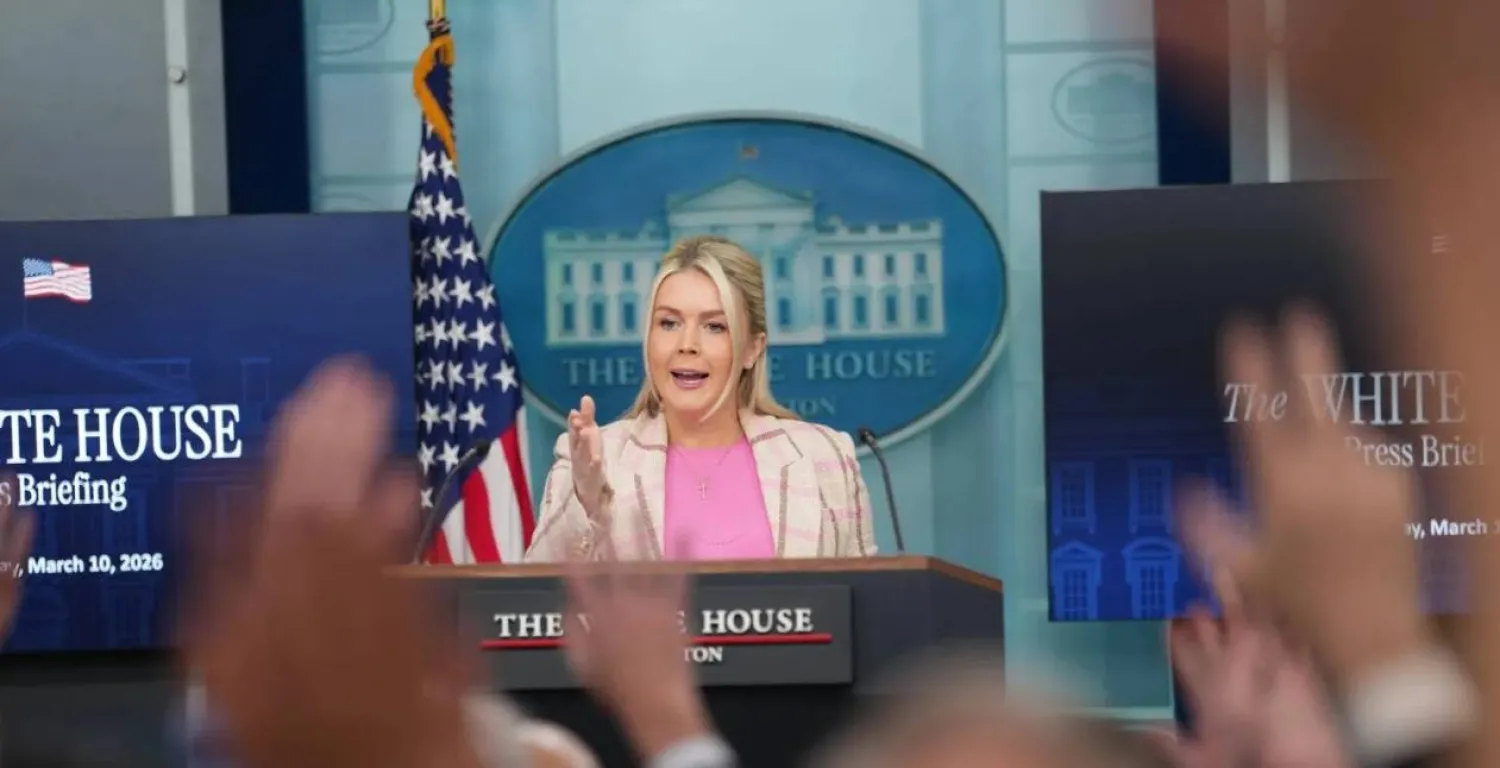

How Trump and his Advisers Miscalculated Iran’s Response to War

Karoline Leavitt, the White House press secretary, said the administration “had a strong game plan” before the war broke out. Doug Mills/The New York Times
TT

How Trump and his Advisers Miscalculated Iran’s Response to War

Karoline Leavitt, the White House press secretary, said the administration “had a strong game plan” before the war broke out. Doug Mills/The New York Times

By Mark Mazzetti, Tyler Pager, Edward Wong

On Feb. 18, as President Trump weighed whether to launch military attacks on Iran, Chris Wright, the energy secretary, told an interviewer he was not concerned that the looming war might disrupt oil supplies in the Middle East and wreak havoc in energy markets.

Even during the Israeli and US strikes against Iran last June, Wright said, there had been little disruption in the markets. “Oil prices blipped up and then went back down,” he said.

Some of Trump’s other advisers shared similar views in private, dismissing warnings that — the second time around — Iran might wage economic warfare by closing shipping lanes carrying roughly 20% of the world’s oil supply.

The extent of that miscalculation was laid bare in recent days, as Iran threatened to fire at commercial oil tankers transiting the Strait of Hormuz, the strategic choke point through which all ships must pass on their way out of the Arabian Gulf.

In response to the Iranian threats, commercial shipping has come to a standstill in the Gulf, oil prices have spiked, and the Trump administration has scrambled to find ways to tamp down an economic crisis that has triggered higher gasoline prices for Americans.

The episode is emblematic of how much Trump and his advisers misjudged how Iran would respond to a conflict that the government in Tehran sees as an existential threat.

Iran has responded far more aggressively than it did during last June’s 12-day war, firing barrages of missiles and drones at US military bases, cities in Arab nations across the Middle East, and on Israeli population centers.

US officials have had to adjust plans on the fly, from hastily ordering the evacuation of embassies to developing policy proposals to reduce gas prices.

After Trump administration officials gave a closed-door briefing to lawmakers on Tuesday, Senator Christopher S. Murphy, Democrat of Connecticut, said on social media that the administration had no plan for the Strait of Hormuz and did “not know how to get it safely back open.”

Inside the administration, some officials are growing pessimistic about the lack of a clear strategy to finish the war. But they have been careful not to express that directly to the president, who has repeatedly declared that the military operation is a complete success.

Trump has laid out maximalist goals like insisting that Iran name a leader who will submit to him, while Secretary of State Marco Rubio and Defense Secretary Pete Hegseth have described narrower and more tactical objectives that could provide an off-ramp in the near term.

Karoline Leavitt, the White House press secretary, said the administration “had a strong game plan” before the war broke out, and vowed that oil prices would drop after it ended.

“The purposeful disruption in the oil market by the Iranian regime is short term, and necessary for the long-term gain of wiping out these terrorists and the threat they pose to America and the world,” she said in a statement.

This article is based on interviews with a dozen US officials, who asked for anonymity to discuss private conversations.

‘Show Some Guts’

Hegseth acknowledged on Tuesday that Iran’s ferocious response against its neighbors caught the Pentagon somewhat off guard. But he insisted that Iran’s actions were backfiring.

“I can’t say that we anticipated necessarily that’s exactly how they would react, but we knew it was a possibility,” Hegseth said at a Pentagon news conference. “I think it was a demonstration of the desperation of the regime.”

Trump has displayed growing frustration over how the war is disrupting the oil supply, telling Fox News that oil tanker crews should “show some guts” and sail through the Strait of Hormuz.

Some military advisers did warn before the war that Iran could launch an aggressive campaign in response, and would view the US-Israeli attack as a threat to its existence. But other advisers remained confident that killing Iran’s senior leadership would lead to more pragmatic leaders taking over who might bring an end to the war.

When Trump was briefed about risks that oil prices could rise in the event of war, he acknowledged the possibility but downplayed it as a short-term concern that should not overshadow the mission to decapitate the Iranian regime. He directed Wright and Treasury Secretary Scott Bessent to work on developing options for a potential spike in prices.

But the president did not speak publicly about these options — including political risk insurance backed by the US government, and the potential of US Navy escorts — until more than 48 hours after the conflict started. The escorts have not yet taken place.

As the conflict has roiled global markets, Republicans in Washington have grown concerned about rising oil prices damaging their efforts to sell an economic agenda to voters ahead of the midterm elections.

Trump, both publicly and privately, has been arguing that Venezuelan oil could help solve any shocks coming from the Iran war. The administration announced on Tuesday a new refinery in Texas that officials said could help increase oil supply, ensuring that Iran does not cause any long-term damage to oil markets.

A Potential Off-Ramp

Trump has said both that the war could go on for more than a month and that it was “very complete, pretty much.” He also said the United States would “go forward more determined than ever.”

Rubio and Hegseth, however, appear to have coordinated their messaging for now on three discrete goals that they began laying out in public remarks on Monday and Tuesday.

“The goals of this mission are clear,” Rubio said at a State Department event on Monday before Trump held his own news conference. “It is to destroy the ability of this regime to launch missiles, both by destroying their missiles and their launchers; destroy the factories that make these missiles; and destroy their navy.”

The State Department even laid out the three goals in bullet-point fashion, and highlighted a video clip of Rubio stating them on an official social media account.

The presentation by Rubio, who is also the White House national security adviser, appeared to be setting the stage for the president to bring an end to the war sooner rather than later. In his news conference, Trump boasted of how the US military had already destroyed Iran’s ballistic missile capability and its navy. But he also warned of even more aggressive action if Iranian leaders tried to cut off the world’s energy supply.

Matthew Pottinger, who was a deputy national security adviser in the first Trump administration, said in an interview that Mr. Trump had indicated he could decide to pursue ambitions war goals that would take weeks at least.

“In his press conference, I could hear him circling back to a rationale for fighting a bit longer given that the regime is still signaling it won’t be deterred and is still trying to control the Strait of Hormuz,” said Pottinger, now the chair of the China program at the Foundation for Defense of Democracies, a group that advocates a close US partnership with Israel and confrontation with Iran.

“He doesn’t want to have to fight a ‘sequel’ war,” Pottinger added.

The search for pathways out of the war has gained urgency since the weekend, as global oil prices surge and as the United States burns through costly munitions.

Pentagon officials said in recent closed-door briefings on Capitol Hill that the military used up $5.6 billion of munitions in the first two days of the war alone, according to three congressional officials. That is a far larger amount and munitions burn rate than had been publicly disclosed. The Washington Post reported on the figure on Monday.

Iranian officials have remained defiant, saying they will use their leverage over the world’s oil supply to force the United States and Israel to blink.

“Strait of Hormuz will either be a Strait of peace and prosperity for all,” Ali Larijani, Iran’s top national security official, said in a social media post on Tuesday. “Or it will be a Strait of defeat and suffering for warmongers.”

The New York Times


Sudan’s Gum Arabic Industry Crippled as War and Displacement Take Their Toll

A farmer harvests gum arabic near the town of En Nahud in western Sudan, a major center for gum arabic production, December 18, 2012. (Reuters)
TT

Sudan’s Gum Arabic Industry Crippled as War and Displacement Take Their Toll

A farmer harvests gum arabic near the town of En Nahud in western Sudan, a major center for gum arabic production, December 18, 2012. (Reuters)

Sudan’s war has driven thousands of gum arabic producers from their land, destroyed vast hashab and talh forests, and turned one of the country’s most strategic exports into the subject of international warnings over the possible use of its revenues to finance the conflict.

While the world struggles to trace the gum arabic trade, Sudanese producers face a different crisis: the loss of their land, harvests, and livelihoods, forcing many into displacement and dependence on humanitarian aid.

Aida Hassan has produced gum arabic in the Blue Nile State for more than 15 years, following a family trade passed down through generations. The income once allowed her family to save money and expand its forests and farms. The war, however, turned her from a self-reliant producer into a displaced woman waiting for humanitarian assistance.

She recalled fleeing after the Rapid Support Forces (RSF) stormed the Bout area of Blue Nile State, looting her family’s harvest, farm equipment, and property. She and her relatives walked for 10 days to reach Damazin.

“What we are living through is like a piece of fire,” she said quietly. “All I have are my tears to cool its heat.”

Her story reflects the plight of thousands of producers forced to abandon Sudan’s gum arabic belt, which stretches across 13 states. Most production is concentrated in Kordofan and Darfur, where large areas have fallen under RSF control or become active battlefields, halting production and displacing farmers.

Harvested mainly from hashab and talh trees, gum arabic is a key ingredient in food, pharmaceutical, cosmetics, and soft drink manufacturing.

According to sector officials, Sudan supplies about 80 percent of global gum arabic production. But the war threatens that position as other countries expand output to benefit from disruptions to Sudanese supplies.

Abkar Adouma Ahmed, head of North Darfur’s gum arabic producers, told Asharq Al-Awsat that regional production has fallen below 30,000 metric tons after most producers fled deteriorating security conditions.

“The war destroyed the gum arabic trading exchange, wiped out productive forests, and severely damaged transport routes for moving crops to market,” he stated.

Awadallah Ibrahim, head of the Gum Arabic Farmers Union, estimated that about one million people work in the sector through 5,000 production associations.

Sudan produces around 20 varieties of gum arabic, with hashab and talh among the world’s finest, he said.

Before the war, Darfur produced more than 30,000 metric tons annually and Kordofan about 40,000, in addition to significant output from Blue Nile State. Some parts of Kordofan now produce only around 10,000 metric tons, while thousands of farmers have lost their livelihoods altogether.

Producers from Al-Fulah, En Nahud, Awlad Bakhit in West Kordofan; Ed Dubeibat and Al Quoz in South Kordofan; and large parts of East Darfur have fled to safer states or neighboring countries as their communities became front lines.

In South Kordofan, producers’ association member Othman Bugadi said production has stopped in Kadugli, Dilling, and Habila — three of the state’s seven gum arabic-producing localities. Many farmers have relocated to El Obeid.

Bugadi told Asharq Al-Awsat that Abu Jubeiha has become the main trading hub after markets in North Kordofan shut down, attracting companies seeking to buy the crop. However, many farmers have refused to return to areas recaptured by the army because of the lack of drinking water and the distance from displacement sites.

Production has also ceased in the area stretching west of El Obeid to En Nahud, home to more than 300 villages once known for producing premium gum arabic.

In Blue Nile, producer and trader Shaker Qandil said the RSF attacked previously peaceful areas and looted about 60 percent of the harvest.

He told Asharq Al-Awsat that the hardest-hit areas lie north of Kurmuk, south of the Bao locality, and in the Arab area of Tadamon locality.

Fatima Mohamed Ramli, director of the “Natural Gums Department at the National Forest Corporation”, stressed that the war has wiped out entire forests and that only about 40 percent of the gum arabic belt is currently in production.

The agency plans to distribute one million seedlings across Kordofan to restore damaged forests.

The conflict has also fueled looting and smuggling that threaten Sudan’s position in global markets. Sudanese officials accuse the RSF of transporting gum arabic into neighboring countries.

A UN report likewise revealed that large quantities from RSF-controlled areas were moved through neighboring transit countries before being re-exported as local products, making their true origin difficult to trace.

Ahmed Naqad, spokesman for the government affiliated with the Tasis Alliance, did not respond to Asharq Al-Awsat’s request for comment.

Industry representatives agree that ending the war, while essential, will not by itself restore the sector. Recovery will require a comprehensive reconstruction program that finances producers who lost their crops and equipment, secures production areas, restores drinking water and basic services, rehabilitates roads and markets, and protects hashab and talh forests so Sudan can retain its position as the world’s leading producer and exporter of gum arabic.


What to Know about the Challenges Andy Burnham Will Face as UK Prime Minister

 Andy Burnham is pictured before being confirmed as the Labour Party's new leader and the country's next prime minister, during "Labour's Special Conference" in central London on July 17, 2026. (AFP)
Andy Burnham is pictured before being confirmed as the Labour Party's new leader and the country's next prime minister, during "Labour's Special Conference" in central London on July 17, 2026. (AFP)
TT

What to Know about the Challenges Andy Burnham Will Face as UK Prime Minister

 Andy Burnham is pictured before being confirmed as the Labour Party's new leader and the country's next prime minister, during "Labour's Special Conference" in central London on July 17, 2026. (AFP)
Andy Burnham is pictured before being confirmed as the Labour Party's new leader and the country's next prime minister, during "Labour's Special Conference" in central London on July 17, 2026. (AFP)

Andy Burnham will enter 10 Downing Street on Monday with a wave of enthusiasm behind him and a mountain of challenges ahead.

His coronation as British prime minister may be short-lived as he faces the same struggles as his predecessor in trying to temper a cost-of-living crisis, improve overstretched public services, and step into the international spotlight during major wars in Ukraine and the Middle East.

He arrives after spending most of the past decade running Greater Manchester, in northwest England, before winning his ticket back to Parliament in a special election last month.

Leading a government delivering services for 70 million people will be a monumentally larger task with problems on a larger scale and facing issues foreign to a leader of a region with 3 million residents.

Here are the main issues confronting Burnham and some hints to how he may approach them:

Boosting the economy and decentralizing government

Burnham has been vague, but promised to provide details this week about how he would fund a domestic agenda to kick-start a sluggish economy, enhance services and raise living standards.

“This change today is the most significant change moment in our politics for 40 years," he said Friday as he became Labour Party leader. “It will take us to a country where life is more affordable, and all people and places are lifted from where they are now.”

Burnham inherits an economy that was improving until the Iran war upended forecasts and growth is now widely predicted to slow sharply over this year while inflation rises.

He has said he wants to equalize opportunities around the UK, particularly by decentralizing government, funneling money to local governments and taking back some services that were privatized four decades ago.

His brand of business-friendly socialism — known as “Manchesterism” and aiming to harness private and public money to invest in areas like transportation, housing and infrastructure — could take years to put in place.

Joshi Herrmann, founder of Manchester news site The Mill, who has covered Burnham for years, said he may be able to soften the blow for some people who are struggling.

“But if the essay question is who can get economic growth and who can remodel the economy in the post-Brexit, post-financial crash era, I’d be very surprised if the answer to that question is Andy Burnham,” Herrmann said.

With the uncertain state of public finances, Burnham won’t have much room to raise spending. He is replacing Prime Minister Keir Starmer, who was elected on a manifesto that ruled out increases in the government’s major tax rates, so he’s locked in unless he breaks those pledges.

Burnham said he would not rule out a wealth tax, telling Gary Lineker on the Goalhanger podcast last week that the government “might be having to ask for a little more."

Foreign policy and striking the right tone with Trump

Burnham has little foreign policy experience, but has promised to continue the government’s NATO commitment and support for the UK’s nuclear deterrent.

He said Britain will remain a strong booster of Ukraine and a firm United States ally.

Relations with the US could depend on how he interacts with a capricious President Donald Trump, who initially gave Starmer glowing reviews only to sour on him for not supporting his war with Iran.

Burnham has publicly criticized Trump in the past but has said he would deal with him respectfully, as he does with others, but would also be willing to disagree.

“I like to think I’ve got some personality myself and I’ll just, you know, I’ll deal with him very upfront in the same way,” he told Lineker. "Where you disagree, do it, but do it in a way that is kind of meeting him where he’s at.”

Trump has pushed NATO members to significantly boost military spending, and Burnham will be under pressure to exceed the defense spending goals set out by Starmer.

The defense plan calling for a 15-billion-pound ($20 billion) spending boost is much smaller than military leaders had sought and has been criticized for not being fully funded under the current budget.

Sensitive messaging about Israel's war with Hamas

Burnham has criticized Starmer's approach to Israel's war with Hamas and the devastation of Gaza.

Burnham condemned the Oct. 7, 2023, attacks on southern Israel by Hamas fighters, who killed around 1,200 people and took 251 others hostage, but said the British government waited too long to call for a ceasefire.

More than 73,000 Palestinians have been killed, according to the Gaza Health Ministry, which is part of the Hamas-led government. The ministry, which does not differentiate between civilians and combatants, is staffed by medical professionals who maintain detailed records viewed as generally reliable by United Nations agencies and independent experts.

Burnham said the UK would consider further sanctions against Israelis involved in Gaza violence and illegal West Bank settlements.

The issue is a sensitive one for Labour, which was found to be tainted with antisemitism before Starmer took over, and also relies on the support of a large Muslim population.

Burnham’s comments drew a backlash from Jewish groups, but he's also been criticized by pro-Palestinian groups for not declaring Israel's bombardment of Gaza a genocide.

The thorny issue of migration

During his acceptance speech as Labour’s leader on Friday, Burnham did not mention immigration, which is a top issue for many voters.

Like much of Europe and other wealthier nations, the UK has seen an influx of migrants fleeing war-torn areas, famine, climate-driven crises, political persecution and poverty.

Concerns over English Channel crossings in overcrowded inflatable boats has helped propel the anti-immigration Reform UK party to victory in recent local and regional elections that led Labour to oust Starmer as leader.

Burnham has largely said he would follow the current Labour playbook on migration, which has touted reductions in net migration from more than 900,000 in 2023 to 171,000 last year. Channel crossings are down 40% this year compared to the same time in 2025.

Burnham wants to continue reducing net migration and voted in support of a bill that aims to further cut channel crossings and direct people to safer, legal routes.


In a Lebanon Museum, 'Keys Without Homes' Evoke Destruction in South

An installation featuring keys from destroyed houses in south Lebanon forms part of an ongoing exhibition at a Beirut museum. JOSEPH EID / AFP
TT

In a Lebanon Museum, 'Keys Without Homes' Evoke Destruction in South

An installation featuring keys from destroyed houses in south Lebanon forms part of an ongoing exhibition at a Beirut museum. JOSEPH EID / AFP

Tears streamed down south Lebanon resident Fatima Hajj Ali's face as she stared at a host of keys hanging like windchimes from the ceiling of a Beirut museum -- each one symbolizing a home, like her own, destroyed by Israel.

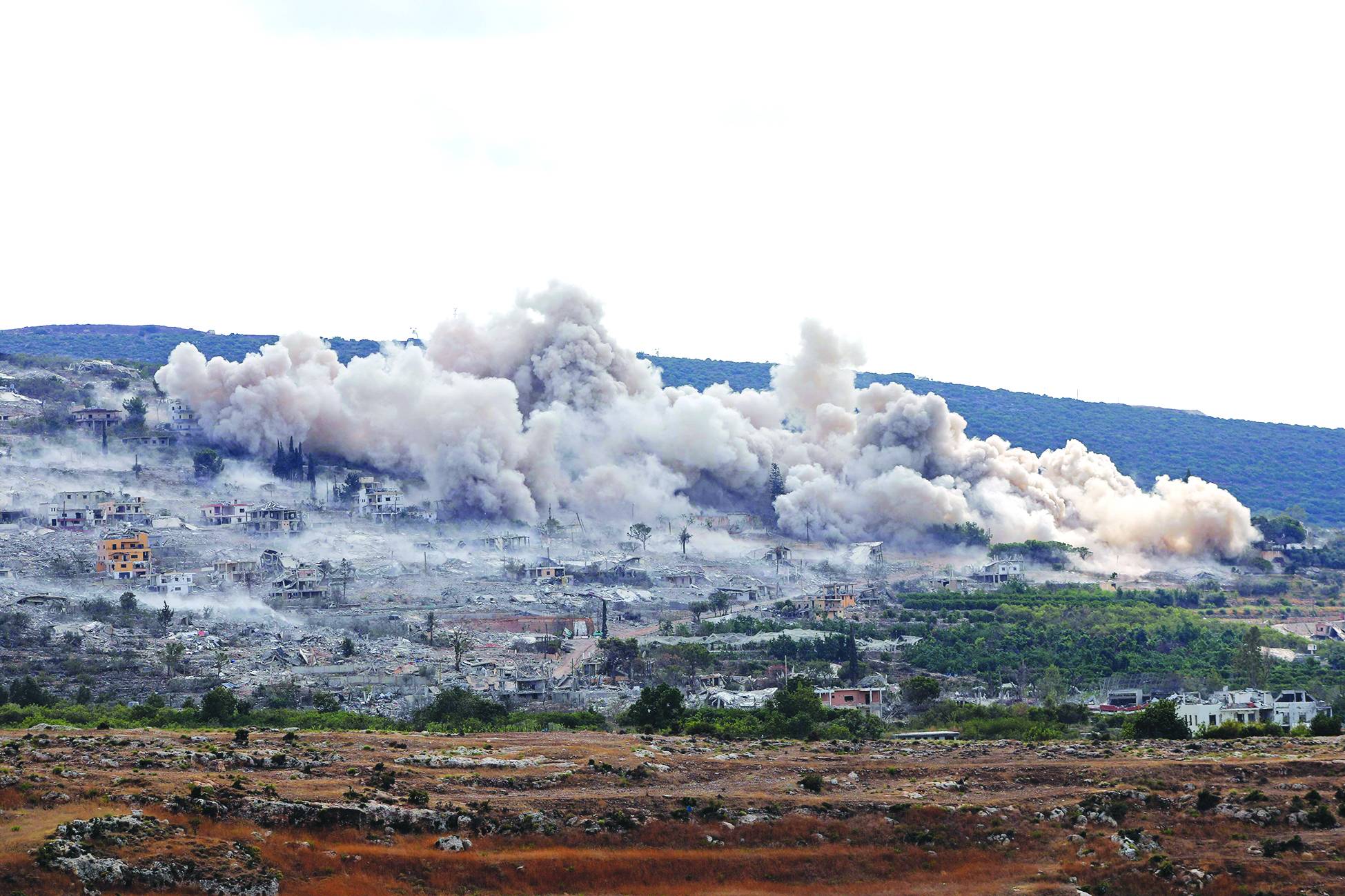
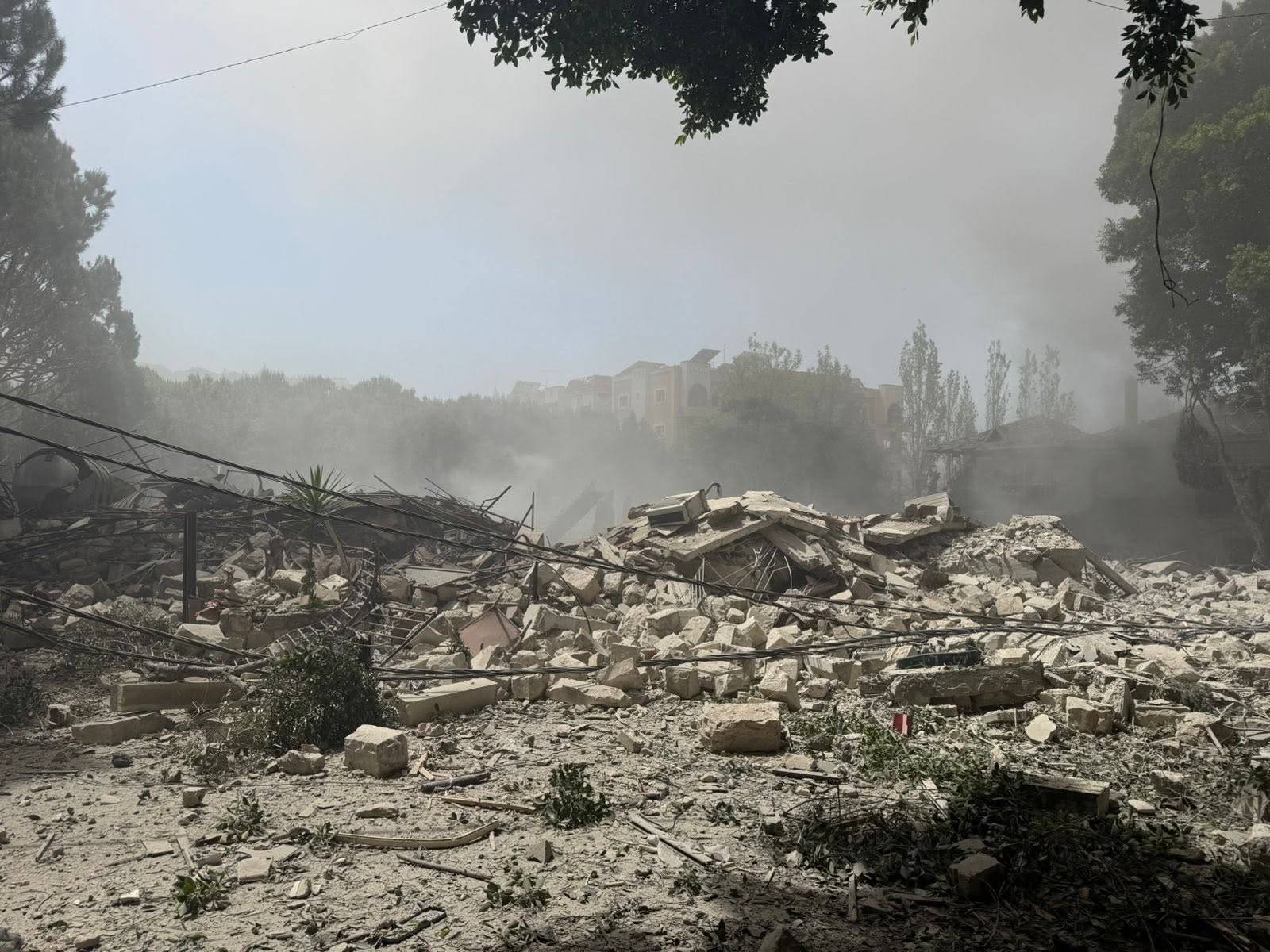
Hajj Ali is among the thousands of southerners who lost their houses in the recent conflicts between Israel and Hezbollah, the first of which broke out in 2023 when the group launched attacks in support of its ally Hamas, and the second in March when it entered the Middle East war on the side of its backer Iran, AFP said.

"We were supposed to go home and open the door with the key, but there is no door anymore," the 23-year-old said.

Despite a lull in fighting following the signing of a memorandum of understanding between the United States and Iran on June 17, intermittent Israeli strikes continue, as do widespread demolitions in and around occupied villages, making it impossible for many people to return.

The exhibition "Hkeeli ya Jnoub", or "Tell me, O South", features pictures and videos preserving the memory of southern Lebanon at the capital's Beit Beirut museum.

Walking through, Hajj Ali reminisced on her home in Nabatieh al-Fawqa, which she was only able to visit once after an April truce that ultimately failed to stop the fighting.

"Half the house collapsed and half remained," she told AFP.

"I long for sunset and to hear the call to prayer in our garden while I drink my coffee," said the psychologist, adding that Beirut had "beautiful" places, but "they are not home".

One of the projects on display is "Keys Without Homes", which comprises videos of three southerners who kept the keys to their houses, even though they no longer exist.

The artist, 36-year-old Adeeb Farhat, himself from the south, said the idea came to him during the previous war in 2024, when he feared losing his own home.

"I was constantly haunted by the question: What will happen to my house? Will it be bombed? And how will my relationship with my house key change? Will we become the new Palestinians?" he said.

There is a longstanding tradition among Palestinians of keeping the keys of homes they lost during the Nakba -- or "catastrophe" in Arabic -- which saw the flight and expulsion of an estimated 760,000 Palestinian Arabs during the creation of the State of Israel in 1948.

- 'What Remains' -

Within the exhibition halls, a bedroom, living room and kitchen -- complete with a glass jug, coffee pot, and spice containers -- recreate details of daily life in the homes of southern Lebanese residents.

The exhibition also includes an old photograph of the coastal city of Tyre, a black-and-white video of Nabatieh, and notebooks in which visitors wrote down their memories of the south.

In another work called "What Remains", Sama Beydoun, 29 and living in Paris, showed pictures of her grandfather's now-destroyed home in Bint Jbeil, near the border with Israel, which she last saw in 2025.

However, a technical glitch resulted in most of the images appearing blurry, making them look like a "dream", Beydoun said.

"I remember how many people this house brought together, how my family grew up there, how many generations it witnessed, and how life changed, while some things remained constant", like the weekly Sunday gatherings, she said.

"Life was very simple, but it was beautiful."

In a photo essay called "Manufacturing Estrangements", Rawan Mazeh, 29, tells the story of a couple detained in the notorious Khiam Prison, run by the South Lebanon Army, an Israeli proxy militia, during Israel's 22-year occupation of south Lebanon that ended in 2000.

To Mazeh, the exhibition "created a comfortable place where people could come and feel close to their land".