


Lebanon, Israel Near First Round of Negotiations

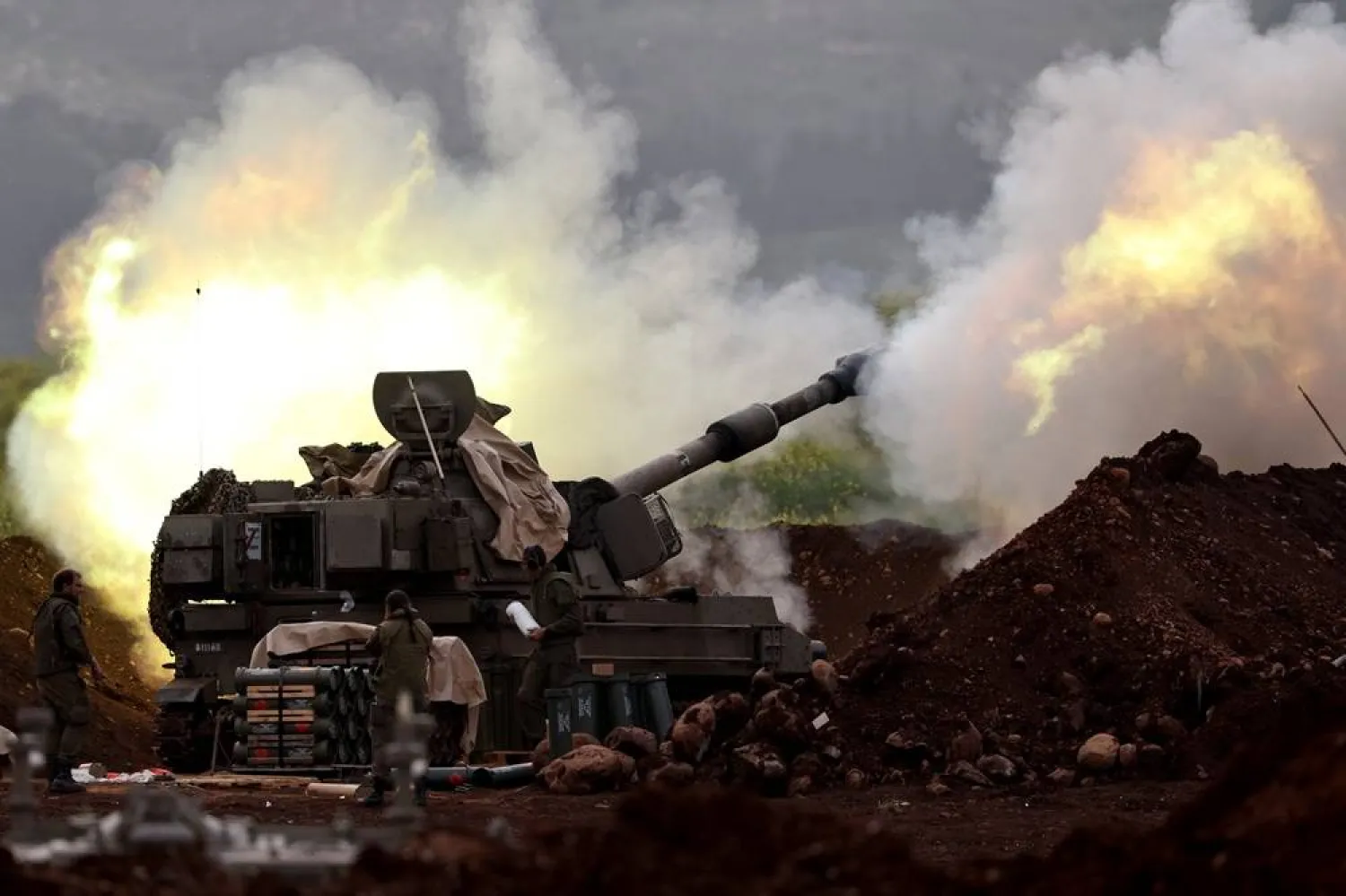
An Israeli artillery unit deployed at an undisclosed location at the Israeli border with Lebanon shells targets in Lebanon, 14 March 2026. (EPA)
TT

Lebanon, Israel Near First Round of Negotiations

An Israeli artillery unit deployed at an undisclosed location at the Israeli border with Lebanon shells targets in Lebanon, 14 March 2026. (EPA)

Lebanon and Israel have taken a step forward towards holding a first meeting to negotiate an end to the war on Lebanon.

An agreement has yet to be reached on the necessary arrangements, even as United Nations Secretary-General Antonio Guterres said from Beirut on Saturday that the “diplomatic avenues” were available to end the war.

Ministerial sources told Asharq Al-Awsat that an agreement has been reached to hold a meeting between Lebanon and Israel, but the location and date have not been set.

France and Cyprus have both offered to host the talks.

The sources revealed that parliament Speaker Nabih Berri has not yet decided whether to send a Shiite representative to the meeting or not.

The negotiations team does not yet have a Shiite representative.

In remarks to Asharq Al-Awsat, Berri tied his agreement to negotiations and President Joseph Aoun’s initiative to end the war with two conditions: the ceasefire and the return of the displaced.

He refused to go into further details “ahead of time”.

Berri refuses to take part in direct negotiations between Lebanon and Israel and has demanded a ceasefire be implemented before taking any other step to resolve the conflict.

Sources have quoted him as saying that he is still committed to the Mechanism committee and UN Security Council resolution 1701 to end the war.

‘Only diplomacy’

Guterres urged on Saturday the international community to support Lebanon.

Lebanon was dragged into the Middle East war last week when Hezbollah attacked Israel in response to the killing of Iranian supreme leader Ali Khamenei in US-Israeli strikes, and the Tehran-backed group's leader has said the fighters were ready for a long confrontation with Israel.

On Saturday, Israel kept up strikes on Lebanon as Hezbollah claimed attacks against northern Israel and Beirut said the death toll in the country since March 2 had climbed to 826, including 106 children.

US news site Axios reported on Saturday that Israel was planning a major ground invasion of Lebanon "aiming to seize the entire area south of the Litani River", citing US and Israeli officials.

The area, covering hundreds of square miles, is already subject to Israeli evacuation warnings.

Israel has already sent some ground forces into Lebanon and late on Saturday Hezbollah said it was engaged in ongoing "direct clashes" with Israeli forces in Khiam.

Guterres, however, insisted "there is no military solution, only diplomacy" and dialogue.

The UN chief arrived in Beirut on Friday for what he called a solidarity visit and launched a $325 million humanitarian appeal to support Lebanon as it responds to the displacement of hundreds of thousands of people amid sweeping Israeli army evacuation orders.

Guterres urged the international community to "step up your engagement, empower the Lebanese state" and support the army, which has committed to disarming Hezbollah.

Turkish Foreign Minister Hakan Fidan said on Saturday that Ankara feared Israel could commit "genocide" in Lebanon and called for the international community to intervene.

Turkey has been fiercely critical of Israel since the start of the Gaza war.

Paramedics

The health ministry said 31 paramedics had been killed this month, after the bodies of additional health workers were found following an overnight strike that authorities said hit a healthcare center in Burj Qalawiya in the country's south, killing doctors, paramedics and nurses.

The Hezbollah-affiliated Islamic Health Committee said the center was one of its facilities, pledging such attacks would not deter it from "performing our humanitarian duty".

The Israeli military accused Hezbollah of using ambulances militarily, and its spokesman Avichay Adraee warned that Israel would act "in accordance with international law against any military activity" by any Hezbollah use of medical facilities or ambulances.

Lebanon's health ministry accused Israel of repeatedly "targeting ambulance crews while they were performing rescue duties".

The Israeli army said that it had struck Hezbollah operatives on Friday "who were bringing rockets into a weapons depot" in Majedel, near Burj Qalawiya.

It also said it had struck "approximately 110 Hezbollah command centers" since the regional conflict broke out.

On Saturday, a strike hit an apartment building in a northern Beirut suburb that had been targeted a day earlier.

An AFP correspondent in the Nabaa-Burj Hammoud area saw rescue workers at the scene and damage including a hole in a building, outside Hezbollah's strongholds in the capital's southern suburbs.

The health ministry said the strike killed one person in Burj Hammoud, a densely populated, mixed area known for its large Armenian-Lebanese community.

'No safety'

Levon Ghazalian, 42, who lives in the building next door, said "it's the first time this happens" in the area, which was spared in the previous conflict between Israel and Hezbollah in 2024.

"All the neighbors are afraid," he told AFP.

Hanadi Hachem, 50, who was in her pyjamas, said "there's no safety anymore... you never know where a strike will come from".

She said she and some family members were sleeping in their car out of fear.

French President Emmanuel Macron said the Lebanese government was ready to engage in "direct talks" with Israel and offered to host negotiations in Paris, warning that "everything must be done to prevent Lebanon from descending into chaos".

The French foreign ministry later denied there was a French plan to end the war, saying it had only offered to facilitate talks, after Axios reported that Paris had drawn up a proposal involving Lebanon formally recognizing Israel.




Israeli Foreign Minister Says No Plans for Talks with Lebanese Govt

 Israeli tanks maneuver on the Israeli side of the Israel-Lebanon border, amid escalation between Hezbollah and Israel, and amid the US-Israeli conflict with Iran, in northern Israel, March 15, 2026. (Reuters)
Israeli tanks maneuver on the Israeli side of the Israel-Lebanon border, amid escalation between Hezbollah and Israel, and amid the US-Israeli conflict with Iran, in northern Israel, March 15, 2026. (Reuters)
TT

Israeli Foreign Minister Says No Plans for Talks with Lebanese Govt

 Israeli tanks maneuver on the Israeli side of the Israel-Lebanon border, amid escalation between Hezbollah and Israel, and amid the US-Israeli conflict with Iran, in northern Israel, March 15, 2026. (Reuters)
Israeli tanks maneuver on the Israeli side of the Israel-Lebanon border, amid escalation between Hezbollah and Israel, and amid the US-Israeli conflict with Iran, in northern Israel, March 15, 2026. (Reuters)

Israel's foreign minister on Sunday denied reports that Israel could soon hold direct talks with Lebanon and rejected claims it had told the United States it was running low on interceptors. 

Israel's Haaretz newspaper reported on Saturday that ‌Israel and Lebanon were ‌expected to hold ‌direct ⁠talks in the ⁠coming days. Semafor also reported that Israel had informed Washington it was running critically low on ballistic missile interceptors. 

Both reports cited unnamed sources. 

Asked about the weekend ⁠reports, Foreign Minister Gideon Saar said: "For ‌the ‌two questions, the answer is no." 

He also ‌said that Israel sees "eye-to-eye" ‌with the US in the war with Iran, now in its 16th day, and that the two allies were ‌determined to continue until their goals are achieved. 

"We want ⁠to ⁠remove the existential threats from Iran for the long term. We don't want to go every year to another war," he told reporters. 

Saar was speaking from a Bedouin Arab town in northern Israel near an Israeli Air Force base where homes were damaged in an Iranian missile attack last week. 


At Least Four Killed in Overnight Israeli Strikes in Lebanon

Debris is strewn along a street and vehicles after a residential apartment block was struck in an Israeli airstrike in Beirut's southern suburb of Haret Hreik on March 15, 2026. (AFP)
TT

At Least Four Killed in Overnight Israeli Strikes in Lebanon

Debris is strewn along a street and vehicles after a residential apartment block was struck in an Israeli airstrike in Beirut's southern suburb of Haret Hreik on March 15, 2026. (AFP)

Overnight strikes in southern Lebanon killed at least four people, Lebanese state media and the government said on Sunday, as Israel said it was pressing its campaign against Iran-backed Hezbollah.

Israel is fighting a second front in the war in the Middle East in southern Lebanon, against Hezbollah, alongside the air campaign against Iran it launched with the United States more than two weeks ago.

Lebanon's state-run National News Agency (NNA) said Israel struck "an apartment in a residential building" in a northern district of the coastal city of Sidon, killing one person and causing a fire.

An AFP journalist at the scene saw damage to the third storey of an apartment building as the Lebanese army cordoned off the area and rescue teams worked to extinguish the blaze.

Nearby residents rushed into the street, some carrying belongings.

To the southeast of Sidon, in the village of Al-Qatrani, three people were killed in an overnight Israeli strike, according to Lebanon's health ministry.

The Israeli military said in a statement Sunday it continued to strike infrastructure used by Hezbollah throughout Lebanon and hit "several Hezbollah launch sites" in Al-Qatrani, where it said the armed group was preparing to fire off missiles.

It also said it destroyed "command centers" belonging to Hezbollah's Radwan Force in Beirut.

Hezbollah said Sunday it was targeting several Israeli troop positions in villages close to the border.

According to Lebanon's health ministry, Israeli air strikes have killed 826 people in Lebanon since the start of the latest war, which began March 2 with Hezbollah firing missiles at Israel.

Lebanese President Joseph Aoun has proposed negotiations with Israel, but has yet to receive a response.

A Lebanese official told AFP on Saturday that the country was preparing to form a delegation to negotiate with Israel but that there was no agenda, timing or location yet decided for any talks.

French President Emmanuel Macron has said the Lebanese government was ready to engage in "direct talks" with Israel and he offered to host negotiations in Paris, warning that "everything must be done to prevent Lebanon from descending into chaos".


Israeli Ground Incursions in South Lebanon Shift Hezbollah’s Combat Priorities

Two Israeli tanks deployed along the border barrier with Lebanon during fighting with Hezbollah (EPA). 
TT

Israeli Ground Incursions in South Lebanon Shift Hezbollah’s Combat Priorities

Two Israeli tanks deployed along the border barrier with Lebanon during fighting with Hezbollah (EPA). 

Hezbollah has scaled back attacks deep inside Israel as it focuses on confronting expanding Israeli ground incursions into southern Lebanon, while Israel has widened its list of targets across Lebanese territory.

By Saturday afternoon, Hezbollah had issued 22 statements claiming attacks against Israeli forces. Most operations targeted Israeli military positions along the border, air-defense and surveillance systems, and northern Israeli settlements.

The group also said it struck Israeli soldiers and vehicles inside Lebanese territory, including near the municipality of Khiam, the town of Maroun al-Ras, and newly established Israeli positions at Blat and Nimr al-Jamal opposite the border town of Alma al-Shaab. Hezbollah also reported attacks around the Khiam detention center, west of Blida and near Khazzan Hill in Adaisseh.

Efforts to repel Israeli ground advances now appear to top Hezbollah’s battlefield priorities after the Israeli army launched incursions along at least four axes, according to sources in southern Lebanon. They said Hezbollah had mobilized forces since the start of the war in preparation for a possible ground confrontation.

Israeli forces have sought to prevent reinforcements of fighters and equipment from reaching Hezbollah units in the south. Airstrikes severed key routes by hitting two bridges and two crossings linking areas south of the Litani River with those to the north, as well as roads between villages.

Sources stressed that these steps broaden Israel’s target list. “Israel also appears to be trying to empty the area by targeting ambulances and civil defense units in the south,” one source said.

Lebanon’s National News Agency reported that Israeli warplanes launched two airstrikes shortly after midnight on the Khardali road and bridge linking Nabatieh and Marjayoun near a Lebanese army checkpoint. The strikes left a large crater and completely cut the road.

Medical Facilities Targeted

Israeli strikes on ambulance centers and medical facilities since the start of the war have killed 22 paramedics, according to Lebanese officials.

The deadliest attack occurred Friday when an Israeli strike hit a primary health care center run by Lebanon’s Ministry of Public Health in the town of Burj Qalaouiyeh, killing 12 doctors, paramedics and nurses. The Health Ministry described the strike as a “flagrant attack on the country’s official health care network.”

Another strike hit a gathering point for the Islamic Health Authority and the Al-Risala Scouts Association in the town of Souwaneh, killing two people.

The Israeli military said Hezbollah was using ambulances and medical facilities for military purposes and accused the group of transporting rockets and other weapons in civilian trucks along Lebanon’s coastal areas.

Heavy Strikes Across the South

Israeli airstrikes also intensified across southern Lebanon, targeting towns including Majdal Zoun, Yater, Taybeh, Sajd in the Iqlim al-Tuffah region and Zawtar al-Sharqiyah in the Nabatieh district, where a strike destroyed a house belonging to the Harb family.

Two heavy strikes hit the town of Khiam in the Marjayoun district, while Naqoura came under artillery fire and warplanes targeted Kharayeb.

In the Hasbaya district, Israeli artillery shelled the outskirts of Shebaa. Later, Israeli forces targeted Bint Jbeil, Ainata, Aitaroun and the outskirts of Maroun al-Ras as clashes intensified with Hezbollah fighters along several fronts. The Wadi al-Hujayr area also came under artillery fire.

The escalation also affected UN peacekeepers. Kandice Ardiel, spokeswoman for the United Nations Interim Force in Lebanon, said a UN position near Mais al-Jabal was hit, likely by heavy machine-gun fire, sparking a fire at the site and slightly injuring a peacekeeper.

UNIFIL said it had opened an investigation and reminded all parties of their obligation to ensure the safety of peacekeepers at all times.