


Israel Strikes Hezbollah’s Civilian as Well as Military Wings in an Attempt to Crush the Group

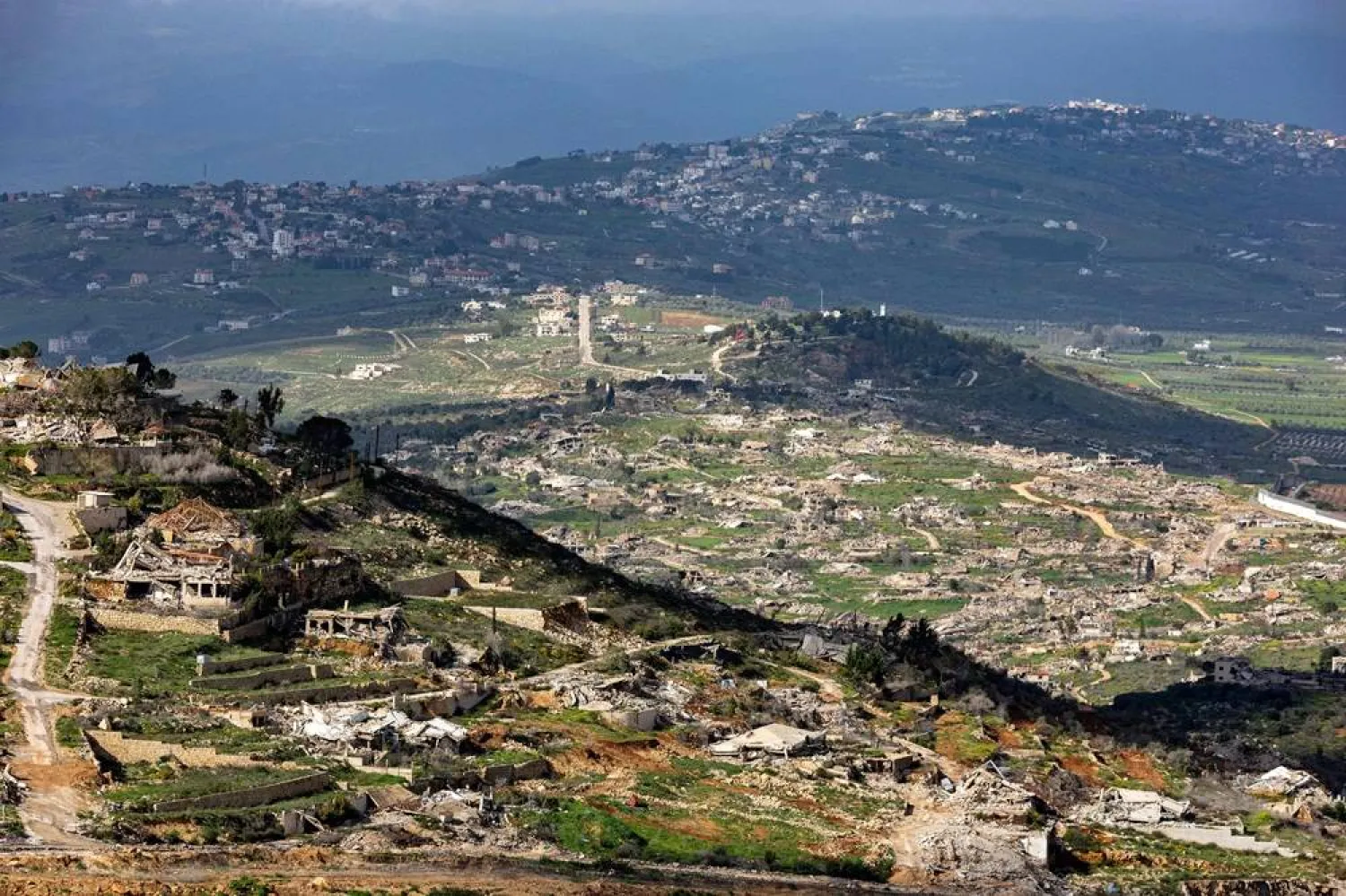
Destroyed houses and buildings in southern Lebanon are seen across the border from the Upper Galilee in northern Israel on March 20, 2026. (AFP)
TT

Israel Strikes Hezbollah’s Civilian as Well as Military Wings in an Attempt to Crush the Group

Destroyed houses and buildings in southern Lebanon are seen across the border from the Upper Galilee in northern Israel on March 20, 2026. (AFP)

An Israeli strike on a health center in southern Lebanon instantly killed 12 medical workers, seriously wounded one and left four missing under the rubble for hours.

The March 13 strike in the village of Burj Qalaouiyah, one of the single deadliest strikes in Lebanon since the latest Israel-Hezbollah war began on March 2, targeted a center run by Hezbollah’s health arm, the Islamic Health Society, which has so far lost 24 members over the past two weeks.

Since the latest war began, Israel’s military has not only been targeting the group’s military assets but also its civilian institutions in an apparent attempt to weaken the Iran-backed group further and try to push its supporters away from it.

Hezbollah is a political party as well as an armed group, and its health and social service institutions have helped strengthen its base of support over the years.

In addition to health centers, Israel has destroyed more than a dozen branches of Hezbollah’s financial arm, al-Qard al-Hasan. Other strikes heavily damaged Hezbollah’s Al-Manar TV headquarters and its Al-Nour radio stations.

The strikes also have targeted the group's Amana gas stations and discount shops known as Sajjad, where low-income people can buy highly subsidized products.

On Wednesday, an Israeli airstrike on an apartment in central Beirut killed Mohammed Sherri, the head of political programs at Hezbollah's Al-Manar TV, along with his wife.

Israel has accused Hezbollah of using health facilities for military purposes and has said al-Qard al-Hasan — officially a charitable organization that provides interest-free loans — finances the group's military activities. Lebanon's Health Ministry denies the Israeli claims about Hezbollah's health facilities being used for military purposes.

"This is a different war that will not end with a ceasefire," said Hilal Khashan, a political scientist at American University of Beirut. "This war will not end before Israel achieves its full objective - that is, the elimination of Hezbollah not only as a military movement, but also the ultimate objective is to erase Hezbollah from the Lebanese political picture."

Hezbollah is under internal and external pressure to disarm and knows this latest fight is crucial. Intense clashes along Lebanon's southern border between Hezbollah fighters and advancing Israeli troops have left dozens of Lebanese gunmen dead.

During a visit to the northern front Monday, Israel's army chief Gen. Eyal Zamir said that Hezbollah is now fighting "a war for its very existence and is paying a heavy price for entering this battle." He added that pressures exerted by Israel's military will only "increase more and more."

Hezbollah vows to keep fighting

"This is an existential battle. It is not a limited or simple battle," Hezbollah leader Sheikh Naim Qassem said in a televised speech over the weekend. Qassem vowed that his group would fight to the end and never surrender.

Israel says that Lebanon has failed to disarm the group in accordance with the Lebanese government's own plans, and that therefore Israel will carry out the mission itself.

Unlike previous conflicts with Israel, the current one comes as the Lebanese government has called Hezbollah’s military activities illegal and authorities have detained several members of the group for carrying weapons without a license.

Like previous wars, Hezbollah is being criticized by its opponents in Lebanon who blame the Iran-backed group for triggering this war by firing rockets into Israel. Hezbollah fired the rockets to avenge the killing of Iran's Supreme Leader Ali Khamenei, less than two days after the US and Israel began their attacks on Iran, triggering a war in the Middle East.

Israel retaliated with a campaign of airstrikes on parts of Lebanon that has so far left more than 1,000 people dead and over 1 million displaced from their homes in southern and eastern Lebanon, as well as in Beirut’s southern suburbs.

"Hezbollah took a suicidal initiative that will not change the equation," said legislator Sami Gemayel, who heads the nationalist Kataeb Party, adding that Tehran is using Lebanon "as a platform to defend Iran."

A previous 34-day war between Israel and Hezbollah in 2006 ended with a draw. A 14-month conflict that started in October 2023 — when Hezbollah fired rockets in support of Palestinians a day after the Oct. 7, 2023, Hamas-led attack on southern Israel — killed much of Hezbollah’s political and military command and left the group severely weakened but not destroyed.

Strikes followed by backlash

After airstrikes hit Hezbollah’s institutions even in central Beirut, residents protested and forced the group to close a branch of al-Qard al-Hasan in the heart of the capital. Bowing to the pressure, workers removed the financial institution's sign and dismantled ATMs, marking the end of its presence in central Beirut.

Amnesty International has said that the al-Qard al-Hasan branches are not legitimate military targets under international humanitarian law and that the strikes should be investigated as war crimes.

"The Israeli military has appeared to assume that labelling something as Hezbollah-affiliated, be that healthcare workers, homes in border villages, or financial institutions, makes it targetable. That’s wrong," said Heba Morayef, regional director for the Middle East and North Africa at Amnesty International.

Mahmoud Karaki of Hezbollah’s Islamic Health Society said that during the last war in 2024, his group lost 153 members in Israeli attacks. But he vowed that the group would continue its work as it has done in previous wars.

"By targeting us, they are targeting the safety network for the people and their steadfastness in areas under attack," Karaki said

The Israeli military’s Arabic spokesperson alleged that Hezbollah is using ambulances to transport weapons and fighters, a charge that the paramedic group strongly denies.

Hezbollah and Iranian officials have said that any halt in US-Israeli strikes on Iran should also include a stop to Israeli attacks in Lebanon.

Senior Hezbollah official Mahmoud Qamati told Lebanon’s Al-Jadeed TV on Monday that "Iran will not leave Lebanon nor the resistance, nor will it allow that Lebanon remains vulnerable," adding that "Lebanon will be part of this victory and will not be left alone."

When Iran’s Foreign Minister Abbas Araghchi was asked if Tehran could accept a ceasefire to stop strikes on Iran while they continue in Lebanon, he said: "I don't think so."

"We do not believe in a ceasefire; we believe in ending the war. And ending the war means exactly that — ending the war on all fronts," Araghchi told Al Jazeera English, adding that this includes Lebanon, Yemen, Iraq, Iran and "other countries of the region."



From Gaza to Lebanon, Doctor Races Against Time to Treat War-Wounded Children

British-Palestinian plastic and reconstructive surgeon Ghassan Abou-Sittah poses during a photo session in the Lebanese capital Beirut on March 19, 2026. (AFP)
TT

From Gaza to Lebanon, Doctor Races Against Time to Treat War-Wounded Children

British-Palestinian plastic and reconstructive surgeon Ghassan Abou-Sittah poses during a photo session in the Lebanese capital Beirut on March 19, 2026. (AFP)

During almost three weeks of war in Lebanon, British-Palestinian doctor Ghassan Abu-Sittah has had no respite, telling AFP he has been working "against the clock" to save children wounded in Israeli bombardment.

At the American University of Beirut Medical Center, one of the capital's main hospitals, his pediatric intensive care unit has been receiving critical cases from across the country and desperate parents praying for their children's survival.

This week, Israeli strikes hit densely populated central Beirut areas not far from the hospital, with three badly wounded children pulled from the rubble.

Among them was an 11-year-old girl who had "metal shrapnel in her abdomen, and partial amputation of the foot", said Abu-Sittah, a plastic surgeon specializing in conflict injuries.

"She's now in a stable condition," added the doctor, who lives near the hospital and rushes there for emergencies.

Israeli strikes have pummeled Lebanon since Hezbollah fired rockets into Israel on March 2 to avenge the killing of Iran's supreme leader Ali Khamenei in Israeli-US attacks.

Lebanese authorities say that 118 children have been killed and 370 others wounded.

Abu-Sittah said he had seen "partial limb amputations, brain injuries, shrapnel in the face, shrapnel in the eye, penetrating abdominal shrapnel, a lot of fractures, a lot of broken bones, a lot of soft tissue damage... and all of this in one child."

Such wounds mean "lots of surgeries", he added, dark rings under his eyes.

- War an 'endemic disease' -

He recalled three sisters who were brought to the hospital around a fortnight ago.

"Their injuries are so bad, I have to take them to the operating room every 48 hours... to get rid of more of the dead tissue and clean the wounds so that at some stage, they're ready for the reconstructive surgery," he said.

Born in Kuwait to a Palestinian refugee father from Gaza and a Lebanese mother, Abu-Sittah has dedicated his life to treating wounded civilians in the region.

War is the "endemic disease" of the Middle East, said Abu-Sittah.

But "you never get used to" children suffering, he said.

"A child should never become faceless, they never become numbers."

His first experience of conflict was as a medical student in 1991 after the withdrawal of Iraqi troops from Kuwait during the first Gulf War, and treating the wounded would soon become his mission.

He graduated in the United Kingdom and over the decades has worked repeatedly in Gaza and Lebanon, as well as in Iraq and Yemen.

After Palestinian group Hamas's October 7, 2023 attack on Israel sparked war in Gaza, Abu-Sittah spent more than a month in the Palestinian territory.

Lebanon this time is "a kind of small version of Gaza", Abu-Sittah said.

While the death toll in Lebanon is far lower, health facilities and workers in the country have paid a heavy price, with the health ministry saying 40 health workers have been killed and 119 wounded.

- Ongoing care -

Abu-Sittah said four hospitals in Beirut's southern suburbs had been forced to evacuate, "one of which has a big intensive care unit for children", amid persistent Israeli bombardment of the area.

He said some badly wounded children have died because they were not transferred in time from parts of the country where health facilities are less equipped than those in Beirut.

"The Israelis are targeting the ambulances, and so moving kids from one hospital in Nabatieh or in the Bekaa is very dangerous," he said, referring to a city in south Lebanon and to east Lebanon's Bekaa valley area.

"It can only happen during the day, and it takes a long time," he added.

The Israeli military has accused Hezbollah of using ambulances "for military purposes", an accusation Lebanon's health ministry has described as "a justification" for crimes "against humanity".

In 2024, the doctor created the Ghassan Abu-Sittah Children's Fund, which aims to provide medical care in Gaza and Lebanon and ongoing support to wounded children after they leave hospital.

Abu-Sittah said his youngest patient in Lebanon now was a four-year-old boy whose parents and three siblings were killed, and who will need major long-term physical and psychological support after suffering a head wound and an amputated foot.

"Who's going to look after them when they go home?" Abu-Sittah said.

Many wounded children "come from poor backgrounds who don't have the means to manage all of this", he added.

"It's not just the body that's destroyed, it's the family unit that's destroyed."


UN Expert Says Israel Using ‘Systematic’ Torture

UN Special Rapporteur for the Palestinian Territories occupied since 1967, Francesca Albanese gestures as she speaks during a public event hosted by the Olof Palme International Center in Belgrade on March 17, 2026. (AFP)
TT

UN Expert Says Israel Using ‘Systematic’ Torture

UN Special Rapporteur for the Palestinian Territories occupied since 1967, Francesca Albanese gestures as she speaks during a public event hosted by the Olof Palme International Center in Belgrade on March 17, 2026. (AFP)

A UN expert claimed Israel was systematically torturing Palestinians on a scale "that suggests collective vengeance and destructive intent", in a report released to media on Friday.

Francesca Albanese, the UN's special rapporteur on the rights situation in the Palestinian territories occupied since 1967, said that since Hamas's October 7, 2023 attack, which triggered the Gaza war, Palestinians in custody "have been subjected to exceptionally ruthless physical and psychological abuse".

AFP has sought a comment from Israel's mission in Geneva, which has previously accused Albanese of being motivated by an "obsessive, hate-driven agenda to delegitimize the state of Israel".

Albanese has faced harsh criticism, allegations of anti-Semitism and demands for her removal, from Israel and some of its allies, over her relentless criticism and long-standing accusations of "genocide".

Last month, France and Germany called for her to resign following her remarks to a forum in Doha. Albanese said they had done so based on "false accusations" and a "manipulation" of what she had actually said.

Though appointed by the UN Human Rights Council, special rapporteurs are independent experts and do not speak on behalf of the United Nations itself.

- 'Unprecedented scale' -

A statement accompanying her new report said that while Albanese "unequivocally condemns torture and other forms of ill-treatment committed by all actors, including Palestinian armed groups", this report "focuses on Israeli conduct".

Entitled "Torture and genocide", the report "examines Israel's systematic use of torture against Palestinians from the occupied Palestinian territory since October 7, 2023".

It claimed that "torture in detention has been used on an unprecedented scale as punitive collective vengeance".

"Brutal beatings, sexual violence, rape, lethal mistreatment, starvation, and the systematic deprivation of the most basic human conditions have inflicted profound and lasting scars on the bodies and minds of tens of thousands of Palestinians and their loved ones," the report said.

"Torture has become integral to the domination of and punishment inflicted on men, women and children, both through custodial abuse and through a relentless campaign of forced displacement, mass killings, deprivation and destruction of all means of life to inflict long-term collective pain and suffering," it said.

Israel is party to the Convention against Torture and Other Cruel, Inhuman or Degrading Treatment or Punishment.

Albanese said she had gathered written submissions, including over 300 testimonies.

- 'Widespread humiliation' -

Albanese said that since October 2023, arrests of Palestinians in the occupied territories had "escalated dramatically", with more than 18,500 people arrested, including at least 1,500 children.

The report said around 9,000 Palestinians were still in detention, while "more than 4,000 have been subjected to enforced disappearance".

Albanese said Israel's detention system "has descended into a regime of systemic and widespread humiliation, coercion, and terror".

She said Israel should "immediately cease all acts of torture and ill-treatment of the Palestinian people as part of its ongoing genocide" and urged all countries "to do everything in their power to stop the destruction of what remains of Palestine" as every delay "worsens irreversible harm and further entrenches a system of cruelty".

Albanese urged the prosecutor of the International Criminal Court to request arrest warrants for Israel's Defense Minister Israel Katz, National Security Minister Itamar Ben Gvir and Finance Minister Bezalel Smotrich.

She is due to present her report to the UN Human Rights Council on Monday.


Trump’s Peace Board Hands Hamas Disarmament Proposal, Sources Say

Displaced Palestinians attend Eid al-Fitr prayers amid the rubble of destroyed buildings in Khan Younis in the southern Gaza Strip, 20 March 2026. (EPA)
TT

Trump’s Peace Board Hands Hamas Disarmament Proposal, Sources Say

Displaced Palestinians attend Eid al-Fitr prayers amid the rubble of destroyed buildings in Khan Younis in the southern Gaza Strip, 20 March 2026. (EPA)

Donald Trump's Board of Peace has presented Hamas with a written proposal on how it could lay down its weapons, two sources said, a step the Palestinian movement has thus far refused to take as the US president pushes on with his plan for Gaza's future.

The proposal, first reported by NPR, was submitted to Hamas during meetings in Cairo over the past week, one of the sources said.

The talks were attended by Nickolay Mladenov and Aryeh Lightstone, the two sources familiar with the matter said.

Mladenov is the Trump-appointed Board of Peace envoy to Gaza. Lightstone is a US aide to Trump's special envoy Steve Witkoff.

Trump's Gaza plan, to which ‌Israel and ‌Hamas agreed in October, sees Israeli troops withdrawing from Gaza and reconstruction starting ‌as ⁠Hamas lays down ⁠its weapons.

Mladenov on Thursday said that serious efforts were underway to bring relief to war-torn Gaza, with a framework agreed by the mediators that could advance reconstruction in the enclave, much of which lies in ruins.

"It is now on the table. It requires one clear choice: full decommissioning by Hamas and every armed group, with no exceptions and no carve-outs. In this season of hope, may those responsible make the right choice for the Palestinian people," Mladenov said on X in a ⁠post for the Muslim holiday Eid al-Fitr.

Representatives of Hamas were not immediately ‌available for comment on Saturday, the second day of ‌the holiday. Talks on disarmament had been placed on hold at the start of the US-Israeli war on ‌Iran which began on February 28.

AMNESTY OFFER MAY BE ON THE TABLE

US officials have ‌said that Iran-backed Hamas could be offered amnesty in any deal under which they agree to lay down any heavy weaponry and light arms including rifles.

Sources close to Hamas say the group would likely refuse to give up their rifles for fear of attacks by rival militias in Gaza, some of which have ‌backing from Israel. Hamas and its rivals have staged deadly attacks on one another since the October ceasefire.

One of the sources said much ⁠would depend on ⁠what is acceptable to Israel, which demands the group’s complete disarmament.

Some of Hamas' prominent officials have outright rejected any disarmament over the past few months.

Israel has shown no sign of withdrawing its troops who are in control of around half of Gaza's territory, with Hamas keeping a firm grip on the other half of the enclave and its two million population, most of which has been rendered homeless by two years of devastating war.

The source said that amnesty and targeted investments in Gaza were being offered as incentives for Hamas, but said that it was unclear whether the Board of Peace would have funds to pay for it.