


What to Know About Diego Garcia After Iran Targets the Remote Island’s Key US Military Base

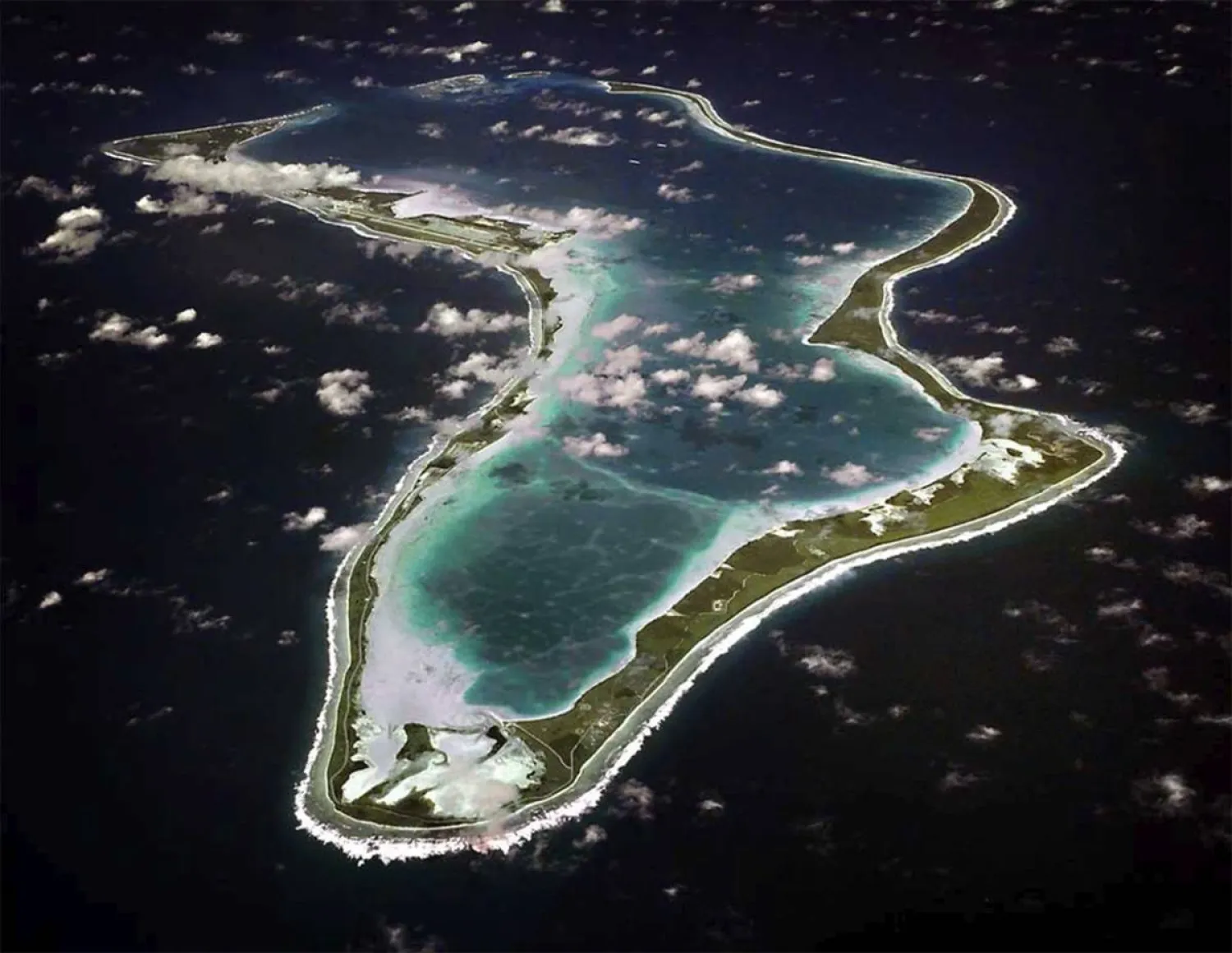
An aerial view of Diego Garcia Island where the joint military base between Britain and the United States is located. (AP)
TT

What to Know About Diego Garcia After Iran Targets the Remote Island’s Key US Military Base

An aerial view of Diego Garcia Island where the joint military base between Britain and the United States is located. (AP)

Iran has launched missiles at Diego Garcia, an Indian Ocean island that is home to a strategic UK-US military base.

Britain condemned “Iran’s reckless attacks” after the unsuccessful attempt to hit the base. It’s unclear how close the missiles came to the island, which is about 2,500 miles (4,000 kilometers) from Iran.

Here is what to know about the remote but strategic base.

Hub for US operations

The US has described the Diego Garcia base as “an all but indispensable platform” for security operations in the Middle East, South Asia and East Africa.

Home to about 2,500 mostly American personnel, it has supported US military operations from Vietnam to Iraq and Afghanistan. In 2008, the US acknowledged that it also had been used for clandestine rendition flights of terror suspects.

The US deployed several nuclear-capable B-2 Spirit bombers to Diego Garcia last year amid an intense airstrike campaign targeting Yemen’s Houthi militants.

Britain initially refused to let the base be used for US Israeli attacks on Iran, but after Iran lashed out at its neighbors, the UK said that American bombers could use Diego Garcia and another British base to attack Iran’s missile sites. On Friday, the UK government said that includes sites being used to attack ships in the Strait of Hormuz.

The United Kingdom says that British bases can only be used for “specific and limited defensive operations.”

But Iranian Foreign Minister Abbas Araghchi said on X that UK Prime Minister Keir Starmer “is putting British lives in danger by allowing UK bases to be used for aggression against Iran.”

Iran previously has put a self-imposed limit on its ballistic missile program, limiting their range to 1,240 miles (2,000 kilometers). Diego Garcia is well outside that range. However, US officials long have alleged Iran’s space program could allow it to build intercontinental ballistic missiles.

Justin Bronk, a senior research fellow at defense think tank the Royal United Services Institute, said that the attempt to his Diego Garcia may have involved improvised use of Iran's Simorgh space launch rocket, "which could offer greater range as a ballistic missile," though at the cost of reduced accuracy.

A contested island chain

Diego Garcia is part of the Chagos Archipelago, a chain of more than 60 islands in the middle of the Indian Ocean off the tip of India. The islands have been under British control since 1814, when they were ceded by France.

In the 1960s and 1970s, Britain evicted as many as 2,000 people from Diego Garcia, so the US military could build the base there.

In recent years, criticism has mounted over Britain’s control of the archipelago and the way it forcibly displaced the local population. The United Nations and the International Court of Justice have urged the United Kingdom to end its “colonial administration” of the islands and transfer sovereignty to Mauritius.

Trump criticism

After long negotiations, the UK government struck a deal last year with Mauritius to hand over sovereignty of the islands. Britain would then lease back the Diego Garcia base for at least 99 years.

The UK government says that will safeguard the future of the base, which is vulnerable to legal challenges. But the agreement has been criticized by many British opposition politicians, who say giving up the islands puts them at risk of interference by China and Russia.

Some of the displaced Chagos islanders and their descendants also have challenged the deal, saying they weren't consulted and it leaves them unclear on whether they will ever be allowed to return to their homeland.

The US administration initially welcomed the deal, but US President Donald Trump changed his mind in January, calling it “an act of GREAT STUPIDITY" on his social media platform Truth Social.

Starmer’s initial refusal to let the US attack Iran from Diego Garcia further angered Trump, who said earlier this month that “the UK has been very, very uncooperative with that stupid island that they have.”

Passage of the UK-Mauritius deal through Parliament has been put on hold until US support can be regained.


Rats, Fleas Plague Gaza’s Displaced as Temperatures Rise

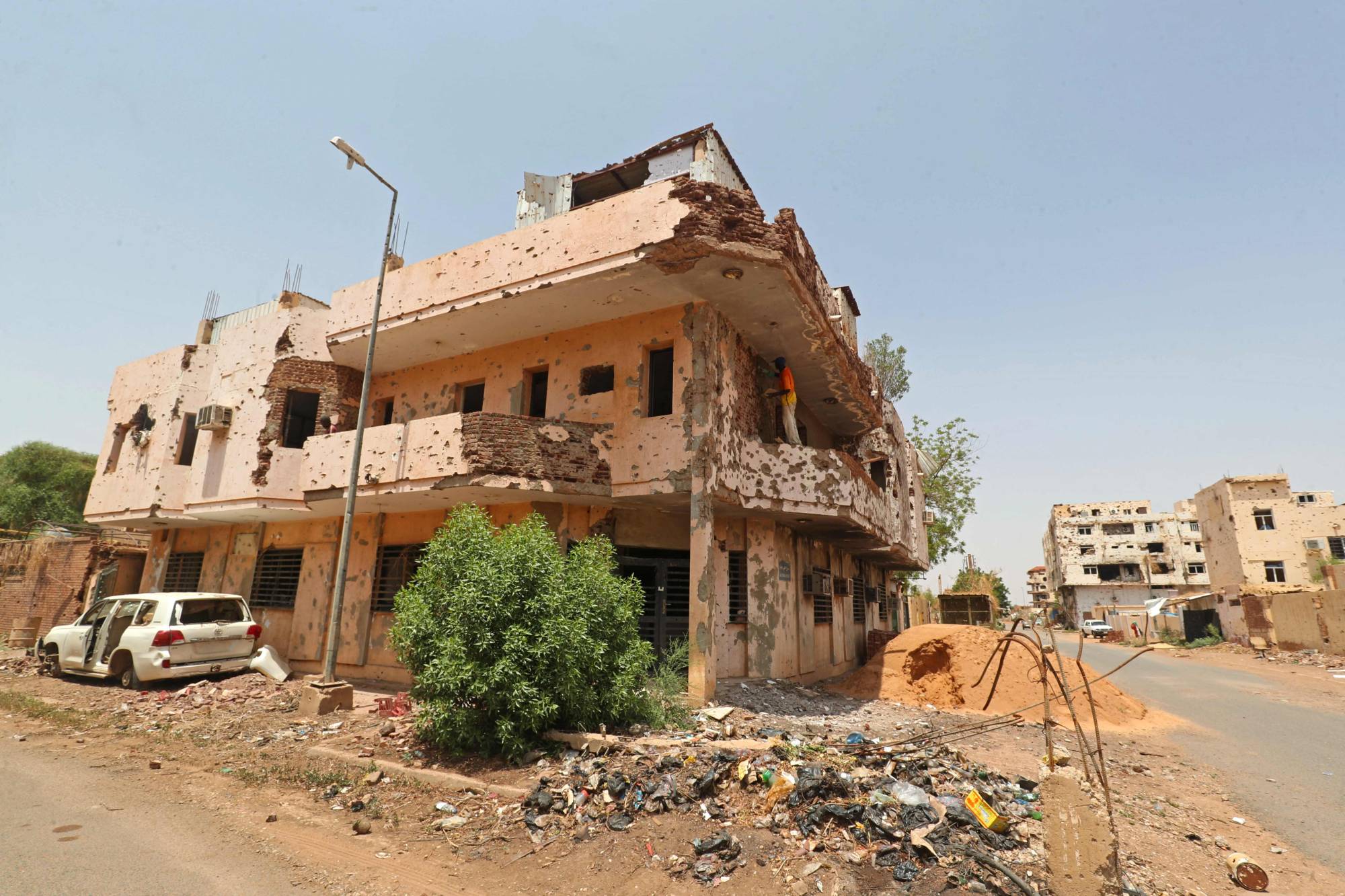
Garbage litters the ground next to makeshift shelters housing displaced Palestinians in Gaza City on April 20, 2026. (AFP)
TT

Rats, Fleas Plague Gaza’s Displaced as Temperatures Rise

Garbage litters the ground next to makeshift shelters housing displaced Palestinians in Gaza City on April 20, 2026. (AFP)

As springtime temperatures rise in Gaza, a surge in rats, fleas and other pests has compounded the misery of hundreds of thousands of displaced people still living in tents after more than two years of war.

With meager shelter and almost no sanitation, Palestinians told AFP the vermin are invading their makeshift homes, biting children and contaminating food, in what aid agencies warned was a growing public health threat.

"My children have been bitten. One of my sons was even bitten on the nose," said Muhammad al-Raqab, a displaced Palestinian man living in a tent near the southern city of Khan Younis.

"I am unable to sleep through the night because I must constantly watch over the children," the 32-year-old construction worker, originally from Bani Shueila, told AFP.

With shelters erected directly on soft sand by the Mediterranean Sea, rodents can easily burrow under tent walls and wreck havoc inside, where people have established makeshift pantries and kitchens.

"The rodents have eaten through my tent," Raqab said.

Nearly all of Gaza's population was displaced by Israeli evacuation orders and airstrikes during the war with Hamas that began after the group's attack on Israel in October 2023.

According to the UN, 1.7 million of Gaza's 2.2 million inhabitants still live in displacement camps, unable to return home or to areas that remain under Israeli military control despite a ceasefire that began in October 2025.

In these camps, "living conditions are characterized by vermin and parasite infestations", the UN's Office for the Coordination of Humanitarian Action (OCHA) said after field visits in March.

Hani al-Flait, head of pediatrics at Al-Aqsa Hospital in central Gaza, told AFP his team encounters skin infections such as scabies daily.

- 'Flooded with sewage' -

"The severity of these skin infections has been exacerbated by the fact that these children and their families are living in harsh conditions that lack basic public sanitation, as well as a complete absence of safe water," he told AFP.

Sabreen Abu Taybeh, whose son has been suffering from a rash, blamed the conditions in the camp.

"We are living in tents and schools flooded with sewage," she told AFP, showing the rash covering her son's upper body.

"I have taken him to doctors and hospitals, but they are not helping with anything. As you see, the rash remains."

"The summer season has brought us rodents and fleas," Ghalia Abu Selmi told AFP after discovering mice had gnawed through clothes she had prepared for her daughter's upcoming wedding.

"Fleas have caused skin allergies not only for children but for adults as well," she said, sorting through garments riddled with holes inside the tent she now calls home in Khan Younis.

The 53-year-old said her family has been displaced 20 times since October 2023 and has yet to return to their home in the town of Abasan al-Kabira near the Israeli border.

Despite the ceasefire, Israel continues to control all access points into Gaza, with tight inspections and frequent rejections of aid deliveries, according to NGOs and the UN.

This has caused shortages in everything from medicine and fuel, to clothing and food.

Airstrikes and firefights between Israel's military and what it says are Hamas fighters still occur near-daily.

According to the territory's health ministry, which operates under Hamas authority, at least 777 people have been killed by Israel's military since the start of the ceasefire.

The military says five of its soldiers have also been killed in Gaza over the same period.


Chornobyl First Responder Says Few Survive 40 Years on

Petro Hurin, 76, one of hundreds of thousands of "liquidators" brought to clean up the aftermath of the explosion that tore apart reactor Four of the Chornobyl nuclear plant in Ukraine on April 26, 1986, reflected in a mirror as he stands in his house in the village of Khutory, Cherkasy region, Ukraine April 7, 2026. (Reuters)
TT

Chornobyl First Responder Says Few Survive 40 Years on

Petro Hurin, 76, one of hundreds of thousands of "liquidators" brought to clean up the aftermath of the explosion that tore apart reactor Four of the Chornobyl nuclear plant in Ukraine on April 26, 1986, reflected in a mirror as he stands in his house in the village of Khutory, Cherkasy region, Ukraine April 7, 2026. (Reuters)

Petro Hurin says his health has never been the same since he was sent 40 years ago to clear the Chornobyl site in the wake of the world's worst nuclear accident.

He was among hundreds of thousands of "liquidators" brought in to clean up after the explosion at reactor four of the Chornobyl nuclear plant in Ukraine on April 26, 1986. The disaster sent clouds of radioactive material across much of Europe.

Thirty-one plant workers and firemen died in the immediate aftermath, mostly from acute radiation sickness. Thousands more have since succumbed to radiation-related illnesses, such as cancer, although the total death toll and long-term health effects remain a subject of intense debate.

At the time, Hurin worked for a business that supplied diggers and construction vehicles, which sent him to the Chornobyl exclusion zone in June 1986. Of the 40 people sent by his company, only five are alive today, he said.

"Not a single ‌Chornobyl person is ‌in good health," the 76-year-old said. "It's death by a thousand cuts."

Soviet authorities strove to ‌conceal ⁠the extent of ⁠the Chornobyl disaster, refusing to cancel the May 1 parade in Kyiv, around 100 km (60 miles) to the south. Ukraine's current government has highlighted the Soviet authorities' bungled handling of the accident and attempts to cover up the disaster.

Hurin said some colleagues produced medical certificates to excuse themselves from serving in Chornobyl, but he was willing to help.

"I realized that, however small my contribution might be, I was doing my bit to help tame this atomic beast," he said.

HEADACHES, CHEST PAIN, BLEEDING

Working 12-hour shifts, Hurin used an excavator to load dry concrete mixed with lead – shipped to the site by river barge – onto trucks ⁠for transport to the reactor, where it was mixed to build a massive sarcophagus ‌to contain the radiation.

"The dust was terrible," Hurin recalled. "You'd work for half ‌an hour in a respirator, and it would end up looking (brown) like an onion."

After four days, Hurin said he ‌began experiencing severe symptoms, such as headaches, chest pain, bleeding and a metallic taste in his throat. Doctors treated ‌him but after another shift, he could barely walk. He feared he had "a day or two" to live.

"I was brought to the hospital, and the doctors did a blood test first," Hurin said. "They pricked all my fingers and a pale liquid came out, but no blood."

Soviet doctors refused to diagnose radiation sickness, a finding he said was not permitted at the time. Instead, he was told he ‌had vegetative-vascular dystonia, a nervous disorder often linked to stress.

Before the disaster, Hurin had never taken sick leave, but afterwards he spent around seven months going from ⁠one hospital to another to ⁠receive treatment, including a blood transfusion.

He says he has been diagnosed with anemia - often linked to radiation sickness - angina, pancreatitis and a series of other conditions.

By the standards of his countrymen, Hurin has lived a long life. According to the World Health Organization, average life expectancy for men in Ukraine stood at 66 in 2021, having declined during COVID.

Now retired, Hurin lives with his wife Olha in central Ukraine's Cherkasy region. Although he suffers from health problems, he still plays the bayan – a type of accordion - and writes songs and poems.

He says he is fighting to access a special disability pension for "liquidators" of the nuclear disaster.

Another catastrophe - Russia's 2022 invasion of his homeland - has come to dominate his life. He and his wife Olha regularly visit a memorial in nearby Kholodnyi Yar dedicated to their grandson, Andrii Vorobkalo, a Ukrainian soldier, who was killed three years ago in the war, aged 26.

After his daughter had left to work in Europe, Hurin and his wife raised Andrii from the age of four. When Russia invaded Ukraine in 2022, Andrii quit his job in Greece.

"He left everything behind and came to defend Ukraine," Hurin told Reuters, standing near the memorial stone dedicated to his grandson. "We think of Andrii all the time."


Driven by the Pressures of War, Iran Gives Its Field Commanders More Power Over Factions in Iraq

Members of the Popular Mobilization Forces attend a funeral for colleagues who were killed in a US airstrike in Anbar, in Najaf, Iraq, Wednesday, April 1, 2026. (AP)
TT

Driven by the Pressures of War, Iran Gives Its Field Commanders More Power Over Factions in Iraq

Members of the Popular Mobilization Forces attend a funeral for colleagues who were killed in a US airstrike in Anbar, in Najaf, Iraq, Wednesday, April 1, 2026. (AP)

Iran has granted its commanders greater autonomy over armed factions in Iraq, allowing some groups to carry out operations without Tehran’s approval, a shift driven by the pressures of the war, three faction members and two other officials told The Associated Press.

Many Iran-backed factions are funded through the Iraqi state budget and embedded within the security apparatus, drawing criticism from the United States and other countries that have borne the brunt of their attacks and say Baghdad has failed to take a tougher stance.

Despite mounting pressure from the US, Baghdad has struggled to contain or deter the groups. The most hard-line factions now operate under Iranian advisers using a decentralized command structure, the five officials told AP, each on condition of anonymity to speak freely about sensitive matters.

“The various forces have been granted the authority to operate according to their own field assessments without referring back to a central command,” said one faction official, who didn't have permission to speak publicly.

The war in the Middle East has exposed the fragility of Iraq’s state institutions and their limited ability to restrain these groups. A parallel confrontation between Washington and the factions has deepened the crisis, with factions acting as an extension of Iran’s regional campaign and escalating attacks on US assets in Iraq before a tenuous ceasefire deal was reached in April.

Even if the ceasefire agreement holds, Washington is expected to intensify efforts against the groups militarily and politically, particularly as they gain latitude to operate more independently, officials and experts said. On Friday, the US imposed sanctions on seven commanders and senior members of four hard-line Iran-backed Iraqi armed groups.

“The US is still going to feel it has the freedom of action to hit Iraqi factions,” said Michael Knights, head of research for Horizon Engage, a geopolitical risk consulting firm, and an adjunct fellow at the Washington Institute for Near East Policy. “That may well play out into an effort to try and guide a less faction-dominated government formation.”

Decentralized control

Days into the war sparked by US and Israeli strikes on Iran on Feb. 28, an Iranian delegation arrived in Iraq’s Kurdish region and delivered a blunt message: If faction attacks escalated near US military bases, commercial interests and diplomatic missions, Iraqi Kurdish authorities should not come to Tehran with complaints, as there was little they could do about it.

“They said they’ve devolved authority to regional Iranian commanders,” a senior Iraqi Kurdish government official said on condition of anonymity, citing the subject's sensitivity.

In the past, Kurdish leaders in Iraq would call Iranian officials after attacks to ask why they had been targeted. “This time, they wanted to preempt that by saying, ‘We can’t help you with the groups in the south right now,’” the official said.

This shift reflects lessons drawn from the 12-day war in June, the official said. Faction officials corroborated the claim. During that war, operations were tightly centralized. In its aftermath, greater autonomy was granted in the field.

A spokesperson for Harakat Hezbollah al-Nujaba, among the Iran-backed armed groups that have attacked the US in Iraq, said there was “coordination” with Iran in launching attacks but didn't give details.

“Since we are allies of Iran, we have coordination with our brothers in Iran,” Mahdi al-Kaabi said.

In the recent war, key Iraqi faction leaders appeared to step back from the latest phase and didn't appear to be directly involved in operations, Knights said. US strikes largely killed mid-level commanders, according to faction officials.

“None of the first-line leaders have been killed,” said a second faction official, who wasn't authorized to brief reporters.

Rather than targeting top figures, the US also focused on Iranian Revolutionary Guard advisory cells, said Knights, who tracked the attacks. In one strike in Baghdad’s upscale Jadriya neighborhood, three Guard advisers were killed at a house used as their headquarters during a meeting, according to the second faction official.

Pressure on Iraq is intensifying

At the heart of government efforts to rein in armed groups lies a paradox: The factions the government says it cannot control are tied to political parties that brought it to power.

The Coordination Framework, an alliance of influential pro-Iran Shiite factions, helped install Mohammed Shia al-Sudani as prime minister in 2022. He now serves as caretaker premier amid a prolonged political deadlock.

Faction forces carrying out attacks on US targets aren't rogue actors; they're part of the state’s Popular Mobilization Forces, created after the fall of Mosul in 2014 to formalize volunteer units that were critical in defeating the ISIS group.

The PMF has evolved into a powerful force, with fighters receiving state salaries and access to government resources, including weapons and intelligence. The result, critics say, is a deep contradiction: Certain state-funded groups operate in line with Iranian priorities, even when doing so undermines Iraq’s national interests.

Al-Sudani’s office didn't respond to the AP’s requests for comment on the decentralized control of armed groups.

The US is focused on curbing the power of these groups in Iraq, the senior Iraqi Kurdish official and a Western diplomat said, which will put increasing pressure on the government, still functioning in caretaker status. The diplomat also spoke on condition of anonymity because they weren't permitted to brief reporters.

Last week, Iraq’s ambassador to the US was summoned to Washington to hear US condemnation of attacks by Iran-backed factions on American personnel and diplomatic missions, according to State Department deputy spokesperson Tommy Bigot.

“The Deputy Secretary affirmed that the United States will not tolerate any attacks targeting its interests and expects the Iraqi Government to take all necessary measures immediately to dismantle Iran-aligned armed groups,” Bigot said in a statement.

Factions resist steps from Iraq's government

Al-Sudani has taken limited steps to curb faction influence, including further institutionalizing the PMF and occasionally removing commanders who act outside state authority. The efforts have met significant resistance from armed groups.

Further institutionalizing them has deepened their entrenchment within the state. The US may seek to isolate the most hard-line factions — including Kataib Hezbollah, Harakat al-Nujaba, and Kataib Sayyid al-Shuhada — from others more embedded in Iraq’s political system. “The bad factions from the worse factions,” the senior Iraqi Kurdish official said.

Harakat al-Nujaba spokesperson al-Kaabi offered a dual framing of the group’s position, stressing both its alignment with Iran and its claim to Iraqi state legitimacy.

“To put it bluntly, we are allies of Iran,” he said. He described the group as part of Iran’s regional “axis” alongside Hezbollah in Lebanon and Houthis in Yemen.

At the same time, he insisted the group operates within Iraq’s political order, supporting the state and government when they serve national interests.

“It’s true we’re not affiliated with the government or the prime minister, but we respect the law and the constitution,” he said.
