



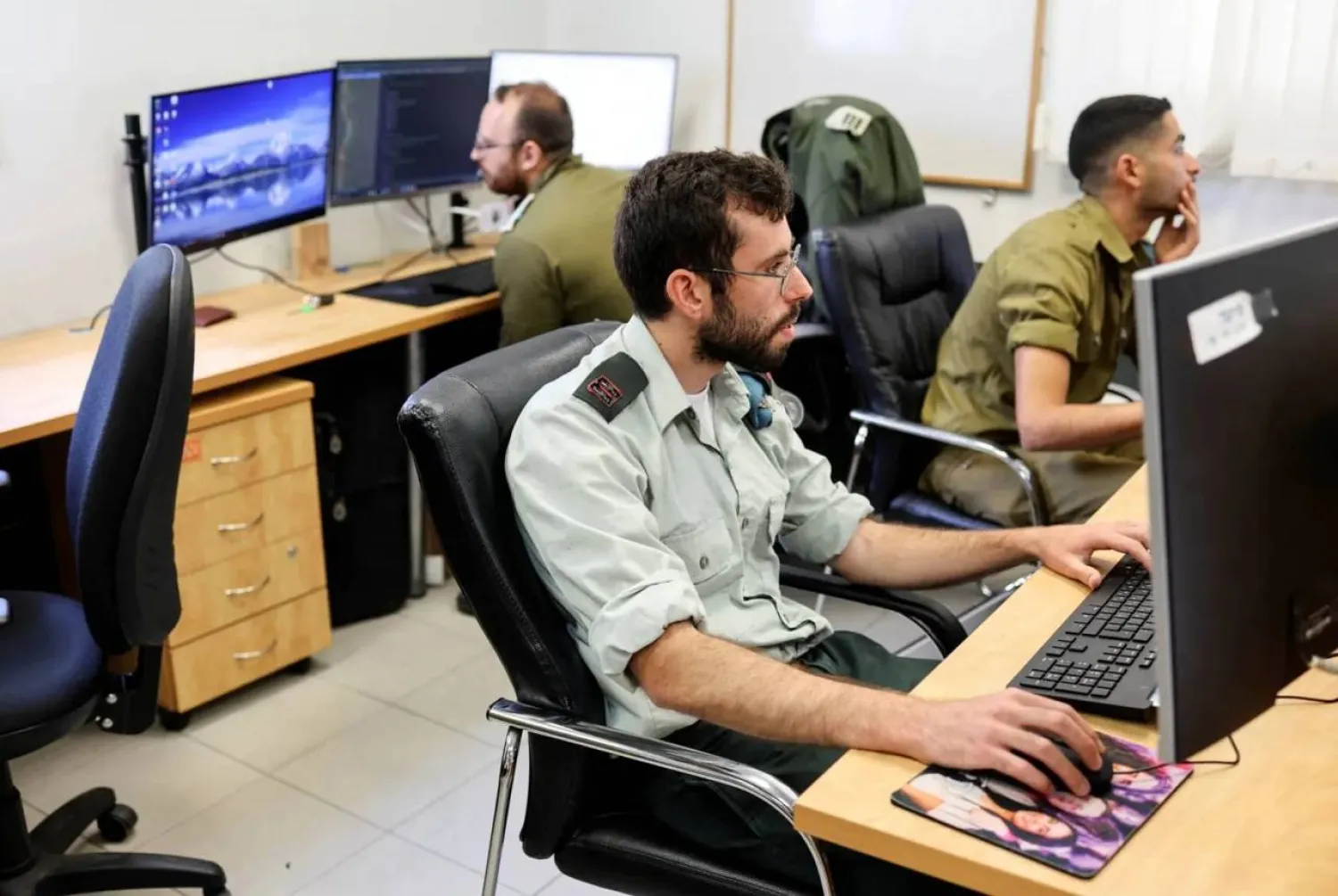

The Israeli Army has begun deploying “AI agents” to detect missile launchers, generate real-time aerial intelligence and sharpen strike speed and precision across multiple fronts, officials told Haaretz and the Yedioth Ahronoth newspaper on Tuesday.
“The pace, scope and precision of strikes — as well as their overall quality and volume — would not have been possible without human-machine integration and automated tools capable of synchronizing hundreds of actions simultaneously,” an Israeli official told Yedioth Ahronoth.
Such missions, he noted, would have been impossible for the Israeli army just a few years ago, or even months ago.
The senior military official said the army sees the technology as part of its future, with some such agents already in use in undisclosed systems.
According to Yedioth Ahronoth, Israel’s use of artificial intelligence in Operation Roaring Lion is unprecedented.
Integrated into command-and-control systems from the General Staff down, AI is helping the Air Force plan and coordinate strikes in Iran and Lebanon and assist with navigation
The newspaper said in recent weeks, AI has also helped generate real-time situational assessments across multiple theaters — a need underscored by lessons from the failures that led to the October 7 attacks.
One system, known as “Tashan,” is used by the Air Force to identify missile launchers in Iran, Lebanon and Yemen immediately after launches, allowing forces to quickly locate and destroy the source.
Meanwhile, another source told Haaretz on Tuesday that the Israeli military has for the first time confirmed an artificial intelligence infrastructure developed during the war in Gaza is now fully operational in current fighting in Iran and Lebanon.
The system, known internally as the Israeli army’s “Operational Data and AI Factory,” integrates sensor, video, text and audio data into a single real-time operational picture across the military.
A military official told Haaretz that the system is now in use throughout the army. It can process vast amounts of data, including inputs from sensors, as well as video, text and audio.
According to the official, the shift to this AI-based infrastructure creates a comprehensive operational picture of the military's forces, missions and threats – one that is accessible to all branches.
The system is designed to assist with attack planning, targeting and strikes. It also records and transcribes all wireless communications, and compiles real-time data on missile and drone launches and interceptions. This significantly improves both operational and defensive decision-making in a way that was previously unimaginable.
Haaretz has learned that the system is also involved in processing strike plans and targets – confirming for the first time that the infrastructure plays a role in offensive operations, not just defense.
In Lebanon, military sources say, similar capabilities are being used to analyze video feeds from cameras deployed across the sector, identifying people and objects and generating real-time alerts.
Another system, “Lohem” (Fighter), assists commanders – particularly in the Air Force – in planning and synchronizing strikes.
The Israeli army says several AI-based defensive systems are also operational. These include “Rom,” which detects drones and UAVs; “Spatial Control,” which alerts ground forces to rocket and anti-tank fire; and “Tashan,” which identifies launches and impact points and locates the source of fire.
AI has also been integrated into Israel's national alert system, enabling predictions of where interception debris may fall.
The newspaper said a central component of the system is “MapIt,” a platform that displays real-time, three-dimensional operational data to commanders. It has learned that over the past year, the military has developed an additional layer on top of “MapIt,” consolidating all data streams into a single operational map.


