

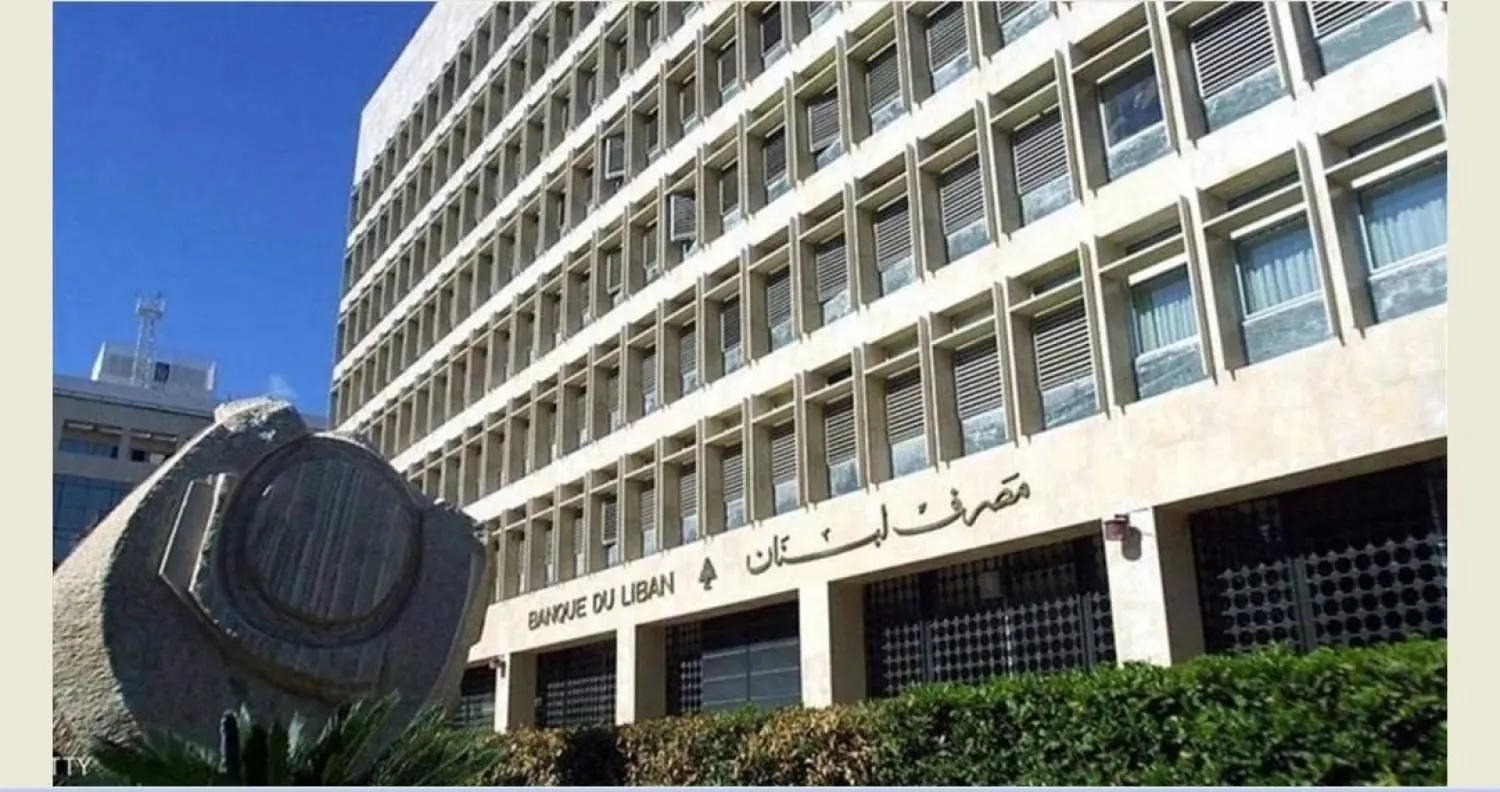

War Hits Lebanon Dollar Lifeline, Remittances Fall Sharply

Lebanon’s central bank (National News Agency)
TT

War Hits Lebanon Dollar Lifeline, Remittances Fall Sharply

Lebanon’s central bank (National News Agency)

A Lebanese mother described the sharp decline in one of her last sources of income, once a pillar of her financial stability, as remittances from her son abroad dwindled in the wake of the war.

“My son used to send me $600 a month. I lived on it, covered my medication and basic needs. After the war, the transfer does not exceed $200,” she told Asharq Al-Awsat.

Her account reflects a broader trend among Lebanese households, in which remittances from relatives abroad have dropped by 10% to 15% during the war. The conflict has left its mark on multiple countries, including Lebanon, driving inflation and creating obstacles to money transfers.

The financial situation was also discussed in a meeting between Lebanese President Joseph Aoun and central bank governor Karim Saeed, where current monetary and financial conditions, exchange rate stability, and precautionary measures to maintain liquidity were reviewed.

Rapid contraction and rising pressure

The issue has reached the government. Economy Minister Amer Bisat presented updated wartime estimates to the cabinet on Thursday, highlighting economic contraction and declining incomes driven by large-scale displacement, along with a notable rise in unemployment.

He cited sectoral and field studies showing deteriorating indicators, estimating the contraction at 7%-10%, coupled with slower inflows of funds into the country.

Bisat said the situation remains “relatively under control,” noting that the ministry continues to pursue cases of monopoly and fraud through dozens of reports, judicial referrals, and the seizure of non-compliant goods.

He warned that a prolonged war would heighten economic risks, describing inflation as a real challenge, while the balance of payments remains within acceptable limits.

Impact on daily life

The Lebanese mother told Asharq Al-Awsat: “I used to organize my life around the $600 my son sent me every month. I would pay for medication first, then cover household needs. Now I have to ration spending. I can no longer pay the electricity bill regularly.”

She added: “I buy smaller quantities of everything and postpone whatever I can. Sometimes I ask the pharmacy for medicine on credit. I never imagined I would reach this point.”

In the Bekaa Valley, Abu Mohammad described a similar experience: “My son used to send $400 a month, now it barely reaches $200.”

“I relied on that amount to cover rent and basic expenses. Now everything has changed. We live day to day on installments. We buy only the bare minimum and delay everything, rent, bills, even some essentials,” he said.

“Sometimes we sit together as a family to decide what we can pay this month and what to postpone. This did not exist before. Now it is part of our daily life.”

A shrinking economic backbone

Economist Walid Abou Suleiman said remittances have formed the “backbone of Lebanon’s economy since the 2019 crisis,” noting that the country relies heavily on them to secure foreign currency, as Lebanon imports about 85% of its consumer needs.

He told Asharq Al-Awsat that annual remittances are estimated at around $6 billion, including roughly $3 billion from Gulf countries, but have begun to decline, with at least a 5% drop recorded in the first month of the crisis.

“The impact of crises does not appear immediately; it builds gradually in the following months, meaning the decline is likely to worsen,” he said.

Hundreds of millions in losses

Abou Suleiman expects remittances to fall by 10% to 15%, equivalent to annual losses of between $450 million and $500 million, or about $40 million per month.

This decline is compounded by job losses among Lebanese expatriates in the Gulf, increasing domestic pressure as some return to Lebanon.

He added that the war has also affected other sources of foreign currency, particularly tourism. “Seasons that used to inject dollars into the market, such as Easter, have been absent this year,” he said, adding that rising global oil prices are worsening the crisis, as Lebanon is among the countries most affected by energy costs.

“The treasury is bearing additional burdens estimated at around 18% due to these increases,” he said.

Abou Suleiman warned that global inflation directly impacts Lebanon. “We do not only import goods, but we also import inflation with them, given the absence of local production and self-sufficiency,” he said, cautioning that the economic outlook will deteriorate further if the war continues.

Ongoing decline and uncertain outlook

Economist Professor Jassem Ajaka said remittances to Lebanon have recorded a notable decline, estimating a drop of around 5% last week, possibly rising to between 5% and 10% as conditions continue to evolve, with no precise figure due to constantly changing data.

He said the decline is logical, as Lebanese workers in the Gulf and Europe have also been affected by slowing economic conditions there.

“The crisis is no longer confined to one country or region; it is global, though its impact varies from place to place,” he said.

Ajaka stressed that remittances remain a key pillar, alongside tourism, which is largely driven by expatriates. “The tourism sector is almost entirely halted. The season can be considered lost, and even the upcoming summer season is not guaranteed. Recovery will not be quick, even if the war ends,” he said.

Tourism revenues were estimated at between $4 billion and $4.5 billion annually, making them a major source of foreign currency.

Exports are also expected to decline by around 10% due to damage to the agricultural sector in the south and Bekaa, as well as higher industrial production costs driven by rising oil prices.

Dollar inflows shrink, risks expand

Ajaka said remittances now represent the last line of resilience for many Lebanese families, but this pillar is weakening with the current decline.

He warned that the most serious consequence is a shortage of dollars in the market, raising questions about Lebanon’s ability to finance imports of fuel, food, and medicine.

A temporary solution could involve the central bank financing imports from its foreign currency reserves, he said, but this would amount to crisis management, with repercussions worsening the longer it continues.

He added that pressures are not limited to economic factors, but also include measures that restrict dollar inflows, further reducing liquidity in the market.



Hapag-Lloyd Says One Ship Has Crossed Strait of Hormuz

Hapag-Lloyd employees monitor the status of cargo ships in the Strait of Hormuz on a screen, in Hamburg, Germany, Wednesday, April 15, 2026. (AP Photo/Ebrahim Noroozi)
TT

Hapag-Lloyd Says One Ship Has Crossed Strait of Hormuz

Hapag-Lloyd employees monitor the status of cargo ships in the Strait of Hormuz on a screen, in Hamburg, Germany, Wednesday, April 15, 2026. (AP Photo/Ebrahim Noroozi)

Container shipping group Hapag-Lloyd said on Friday that one of its ships has crossed the Strait of Hormuz but did not have any information on the circumstances or timing.

Four out of initially six ships remain in the Gulf, after one ship's charter agreement expired, meaning it no longer belongs to the Hapag-Lloyd fleet, a spokesperson added.

The four ⁠Hapag ships remaining ⁠in the Gulf are staffed with 100 crew, who are well-supplied with food and water, Reuters quoted him as saying.

Scores of tankers and other vessels remain stuck in the Gulf as the United States is ⁠struggling to keep control of the Strait of Hormuz, one of the world's busiest shipping corridors.

The Iran war, launched by the US and Israel on February 28, has been paused since a ceasefire on April 8.

The US and Iran met in Pakistan in an attempt to end hostilities, but talks ended without agreement and ⁠a ⁠second round has yet to take place.

Tehran says it will not consider opening the strait until the US lifts its blockade of Iran's shipping, which Washington imposed during the ceasefire and Tehran calls a violation of that truce.

This week, Iran flaunted its grip over the strait with a video of commandos in a speedboat storming a huge cargo ship.


TotalEnergies to Invest in $1.2 Billion Power Project in Kazakhstan

FILE PHOTO: The logo of French oil and gas company TotalEnergies is seen at a petrol station in Paris, France, March 25, 2026. REUTERS/Abdul Saboor/File Photo
TT

TotalEnergies to Invest in $1.2 Billion Power Project in Kazakhstan

FILE PHOTO: The logo of French oil and gas company TotalEnergies is seen at a petrol station in Paris, France, March 25, 2026. REUTERS/Abdul Saboor/File Photo

French energy major TotalEnergies on Friday said it would invest in a Kazakhstan-based onshore wind and energy storage project, valued at $1.2 billion, and plans to sell the produced electricity to the country's government under a 25-year agreement signed in 2023.

The Mirny project, which is scheduled to reach full capacity in 2029, ⁠combines one gigawatt ⁠of wind capacity with 600 megawatt hours of battery energy storage, enough to supply about 1 million people in Kazakhstan, Reuters quoted the company as saying.

The launch of the project would ⁠contribute to Kazakhstan's target of increasing the share of renewables in electricity generation to 15% by 2030, Olivier Jouny, senior vice president for renewables at TotalEnergies, said in a statement.

Roughly 75% of the investment is financed externally through an agreement with an international consortium made of eight banks and entities, including the ⁠European ⁠Bank for Reconstruction and Development, Société Générale and China Construction Bank, TotalEnergies said.

TotalEnergies, jointly with partners Samruk Energy and KazMunayGas, controls a 60% stake in the project.

At the beginning of 2026, TotalEnergies had more than 34 GW of gross renewable power generation capacity, and it aims to achieve more than 100 terawatt hours of net electricity production by 2030.


Oil Rises on Concern Over Escalating Middle East Tensions

HUNTINGTON BEACH, CALIFORNIA - APRIL 23: A pumpjack stands idle in the Huntington Beach oil field on April 23, 2026 in Huntington Beach, California. Mario Tama/Getty Images/AFP
TT

Oil Rises on Concern Over Escalating Middle East Tensions

HUNTINGTON BEACH, CALIFORNIA - APRIL 23: A pumpjack stands idle in the Huntington Beach oil field on April 23, 2026 in Huntington Beach, California. Mario Tama/Getty Images/AFP

Oil rose on Friday on concerns of a renewed military escalation in the Middle East after Iran released footage of commandos boarding a cargo ship in the Strait of Hormuz, and a lack of progress in re-opening the key waterway.

Navigation through the strait, which before the war carried about a fifth of global oil output, remains effectively blocked. Iran's capture of two cargo ships highlighted Washington's difficulties in trying to control the passage.

Brent crude futures were up $1.93, ⁠or 1.8%, to $107 a ⁠barrel at 0805 GMT, while US West Texas Intermediate futures were up 76 cents, or 0.8%, at $96.61, Reuters reported.

For the week, Brent is up 18% and WTI 15%, the second-largest weekly gains since the war began.

Both contracts settled more than 3% higher on Thursday after reports that air defenses were engaging targets over Tehran and of a ⁠power struggle between Iran's hardliners and moderates.

"There is no de-escalation in sight," said Tamas Varga of oil broker PVM.

US President Donald Trump said Iran may have loaded up its weaponry "a little bit" during a two-week ceasefire, but added that the US military could eliminate it in a single day. On Wednesday, he said he would indefinitely extend the ceasefire to allow for further peace talks.

The ceasefire is increasingly looking like a preparatory phase for more war, Haitong Futures said in a report. If peace talks fail to make ⁠progress by ⁠the end of April and fighting resumes, oil prices could climb to new highs for the year, it added.

"There's set to be fresh financial pain ahead as key shipments from the region remain blocked," said Susannah Streeter, chief investment strategist at UK investment service Wealth Club. "That is set to keep costs elevated for a vast array of commodities."

As investors and governments around the world look for a lasting peace, Trump said he would not set a "timetable" for ending the conflict and that he wanted to make "a great deal."

"Don't rush me," he said when asked how long he was willing to wait for a long-term deal.