


Saudi Airports Serve as Safety Valve for Regional Air Traffic as ‘Hormuz Fallout’ Hits Global Aviation

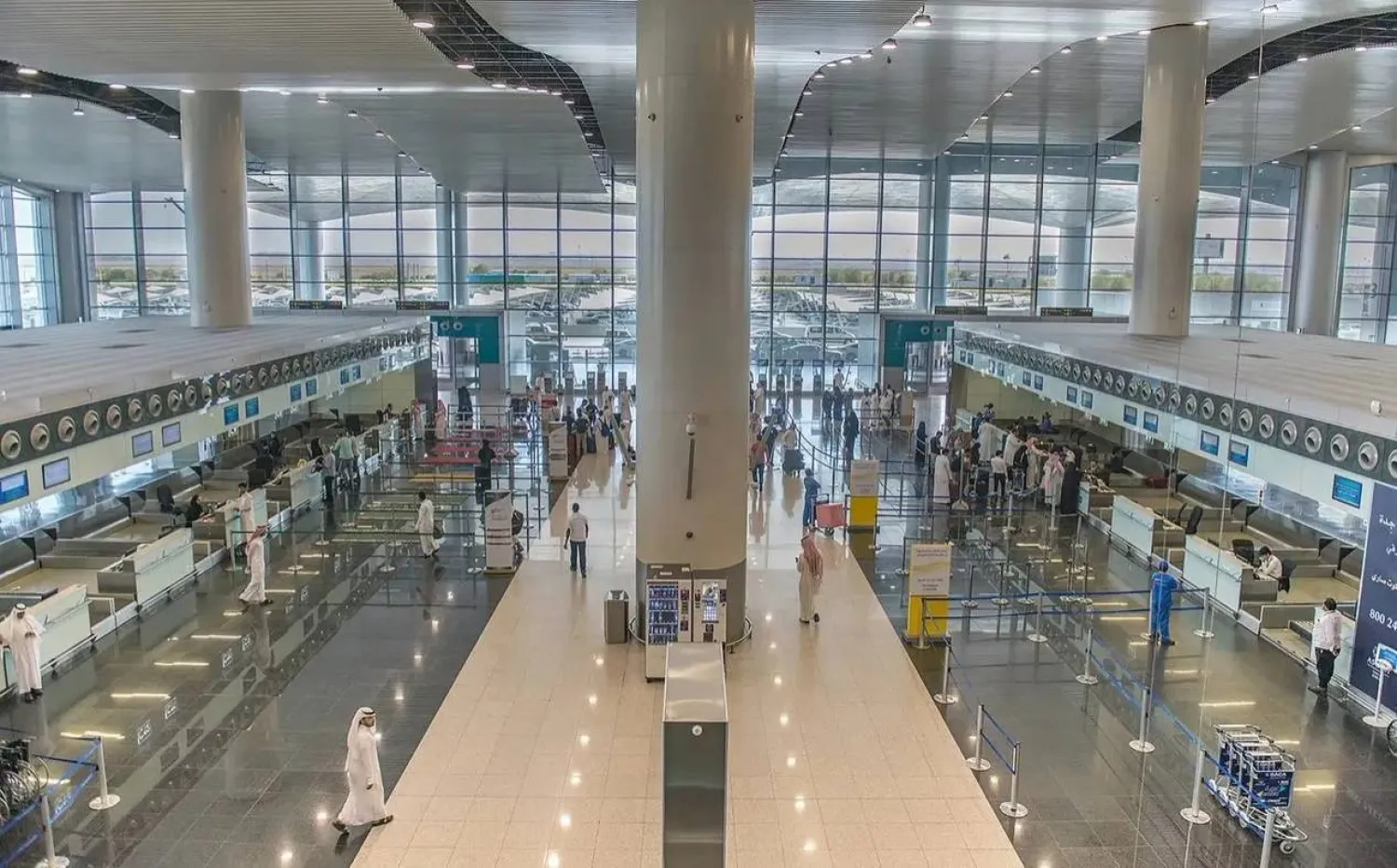
King Khalid International Airport in Riyadh (SPA)
TT

Saudi Airports Serve as Safety Valve for Regional Air Traffic as ‘Hormuz Fallout’ Hits Global Aviation

King Khalid International Airport in Riyadh (SPA)

Conflicts in the region are no longer confined to the geography of battlefields; their fallout has reached one of the world’s most vital and sensitive industries: aviation. Today, travelers and airlines alike face a harsh reality driven by record surges in jet fuel prices and a steep spike in insurance costs, pressures that have pushed ticket prices higher, threatening a severe economic squeeze that could derail global tourism plans and reshape travel patterns long taken for granted.

The surge in aviation costs cannot be separated from the turmoil in global energy markets. The link between crude oil and jet fuel prices peaked in early April 2026. As market confidence wavered amid US military threats, crude prices jumped to record levels due to the direct risk to supplies through the Strait of Hormuz, setting off an immediate spike in jet fuel prices. Given that jet fuel is among the most valuable refined products from a barrel of oil, these unprecedented crude levels pushed aviation fuel to nearly double its 2025 levels.

Compound pressures and a tourism slowdown

In remarks to Asharq Al-Awsat, aviation and airport management expert AlMotaz Al-Mirah said the current tensions, in an industry already operating on thin margins, are quickly reflected in both pricing and demand across the tourism sector.

“The rise in ticket prices today is not driven by a single factor,” he said, “but by a combination of pressures: higher fuel consumption, longer routes, elevated insurance costs, and reduced operational efficiency.”

The World Travel & Tourism Council confirmed that “the escalating conflict in Iran is already impacting travel and tourism across the Middle East by no less than $600 million per day in international visitor spending, as disruptions to air travel, traveler confidence, and regional connectivity weigh on demand.”

According to council data released in March, the Middle East plays a critical role in global travel, accounting for 5 percent of international arrivals and 14 percent of global transit traffic. Any disruption reverberates worldwide, affecting airports, airlines, hotels, car rental firms, and cruise lines.

The family travel bill

On leisure travel, Al-Mirah said fare increases have ranged from 15 percent to 70 percent across many routes- higher still on long-haul flights.

“A ticket that used to cost $500 now ranges between $800 and $1,000,” he noted, “meaning an increase of up to $2,000 for a family of four.” This is forcing many travelers to delay trips or opt for closer destinations, reshaping demand across regional markets.

He detailed the price surge since the crisis began in late February: jet fuel rose from around $85–90 per barrel to between $150 and $200. This has driven the cost per flight hour for long-haul aircraft from an average of $10,000 to more than $18,000 in some cases. A flight carrying 180 passengers could see total additional costs of about $15,000, forcing airlines to add roughly $80 per ticket just to break even.

Globally, Brazil’s Petrobras raised jet fuel prices by about 55 percent in early April, while the Philippines warned that some aircraft could be grounded due to fuel shortages, and Taiwanese carriers are preparing to increase international fuel surcharges by 157 percent.

Longer routes, heavier maintenance burdens

Al-Mirah explained that longer flight times to avoid unstable airspace carry steep financial costs, with each additional hour adding between $5,000 and $7,500. Route changes extending flight durations by one to two hours have increased fuel consumption by up to 30 percent. More time in the air also accelerates engine wear.

The strain goes beyond fuel. Increased flight hours speed up the deterioration of engines and components, bringing forward maintenance schedules and raising annual servicing costs- ultimately reducing fleet efficiency.

Airlines are also grappling with sharply higher war-risk insurance premiums. While such costs typically account for no more than 1 percent of total operating expenses, they have surged by between 50 percent and 500 percent in the current crisis, according to a March 2026 report by Lockton.

This buildup of fuel and insurance costs threatens to turn profitable routes into loss-making ones, potentially forcing cash-strapped or low-cost carriers to suspend some routes temporarily to preserve financial stability.
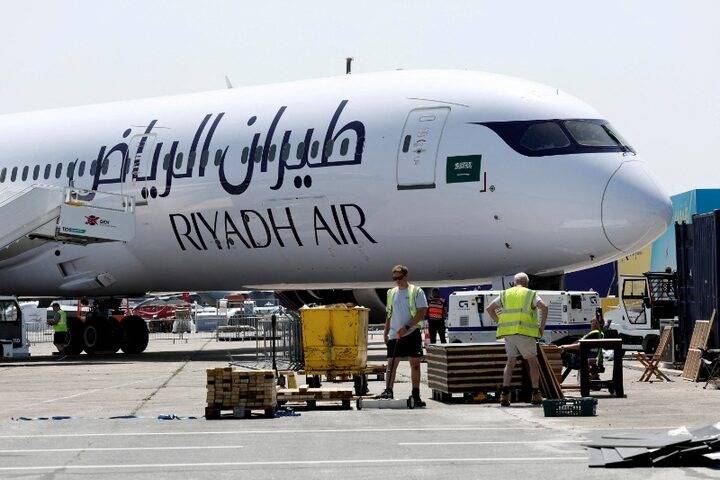
An aircraft from Riyadh Air at Le Bourget Airport (Reuters)

Saudi airports support regional air traffic

Amid these complexities, Saudi Arabia’s General Authority of Civil Aviation has deployed its capabilities to activate regional support protocols. Gulf airlines have shifted logistical operations to Saudi airports to keep regional air traffic safe and moving.

The authority announced that the Kingdom received more than 120 flights from neighboring countries’ carriers between February 28 and March 16, including Qatar Airways, Iraqi Airways, Kuwait Airways, Jazeera Airways, and Gulf Air.



OECD Lifts 2026 Global Growth Forecast to 2.9% Despite Mideast War

OECD Lifts 2026 Global Growth Forecast to 2.9% Despite Mideast War
TT

OECD Lifts 2026 Global Growth Forecast to 2.9% Despite Mideast War

OECD Lifts 2026 Global Growth Forecast to 2.9% Despite Mideast War

Economic growth has remained "resilient" in many countries despite the war in the Middle East, the OECD said Wednesday as it slightly raised its GDP forecasts for the year.

Global economic growth is now seen at 2.9 percent, a 0.1-point increase from estimates in June by the Paris-based group of 38 industrialized countries.

Even though energy prices have soared since the United States and Israel launched strikes against Iran last February, the OECD noted that "broader financial conditions remain supportive", as seen in rising equity markets and continued access to credit.

"Sizeable oil inventories, additional supply from outside the Gulf economies and discretionary government support measures all helped to cushion the impact on the global economy," the group said in its quarterly update.

It also cited the massive investments in artificial intelligence and the resulting boost to production and trade, which could result in "stronger growth than projected".

But global growth has slowed sharply from the 3.4 percent chalked up last year, and the group trimmed its 2027 growth forecast by 0.1 percentage point, to three percent.

Governments have started raising interest rates to contain inflation pressures stemming from high oil and gas prices, which have sent diesel and other fuel costs to highs not seen in years.

That has sent government bond yields to levels not seen since the global financial crisis of 2007-2008, pushing up borrowing costs even as countries worldwide grapple with high debt and deficits.

"Rising bond yields underline more than ever the need for enhanced efforts to contain and reallocate government spending, improve public-sector efficiency and strengthen revenues to ensure longer-term debt sustainability and maintain the ability of governments to react to significant shocks," the OECD said.

It also warned of prolonged inflation if the Mideast war continues, with price increases in the G20 group of developing and emerging economies seen at 4.1 percent overall this year.

"Other significant downside risks include potential weather-related supply shocks, including a very strong El Nino, that adversely impact agricultural production and add to rising food price pressures," AFP quoted it as saying.

For the United States, it expects GDP to expand 2.2 percent this year, up 0.2 points from its June forecast, while the eurozone could see growth of one percent, also up 0.2 points.

Japan's growth is now seen at 0.8 percent, up 0.2 points, while the forecast for the Chinese economy, the world's second largest, was held steady at 4.5 percent.

For the G20, the OECD sees growth of 3.1 percent.


IMF: Egypt Absorbs Economic Shocks of War

A man walks past a traditional sidewalk kiosk in Cairo on September 18, 2026 (AFP)
TT

IMF: Egypt Absorbs Economic Shocks of War

A man walks past a traditional sidewalk kiosk in Cairo on September 18, 2026 (AFP)

Egypt has weathered one of the region's largest recent economic shocks without a broader downturn, benefiting from improved international reserves, exchange rate flexibility, and a swift policy response.

However, the economy’s ability to remain resilient will continue to depend on addressing chronic weaknesses, including high public debt, large financing needs, the banking sector’s elevated exposure to the government, and the expanding role of the state in economic activity.

The findings were published in a country focus prepared by Amine Mati, IMF’s mission chief for Egypt, and Yevgeniya Korniyenko, a senior economist at the IMF’s Middle East and Central Asia Department.

Entitled ‘Resilience Under Pressure: Egypt's Economy Defied Expectations,’ the two economists found that policy reforms undertaken under the IMF-supported program had strengthened growth, put inflation on a downward path, and helped rebuild international reserves and improve banks’ foreign asset positions.

Also, the IMF’s latest assessments indicate that gross financing needs are expected to remain around 40% of GDP in the near term and decline only gradually to below 30% by 2030. More broadly, the state footprint in the economy remains excessively high.

Economy Absorbs Shocks

According to the IMF, Egypt entered the latest period of regional conflict in a stronger macroeconomic position than during previous episodes of external stress.

The Fund said policy reforms undertaken under its-supported program had strengthened growth, put inflation on a downward path, and helped rebuild international reserves and improve banks’ foreign asset positions.

Also, the Fund noted that financial markets reacted sharply.

“Nonresident holdings of local-currency government debt fell from $39.1 billion in February to $22.2 billion in early April, while the Egyptian pound depreciated by about 14–17%,” it wrote.

As pressures eased, portfolio inflows resumed, non-resident holdings returned to near pre-conflict levels, and the pound recovered much of its initial losses.

The IMF linked this performance to the fact that exchange rate flexibility absorbed external pressures, while energy price adjustments in the wake of higher international oil prices, spending restraint, and expanded targeted support helped preserve policy discipline.

Non-Stop Growth

In its country focus, the IMF found that the financial shock in Egypt did not spill over into a broader economic downturn.

“Growth remained strong, reaching 5.0% in the third quarter of FY2025/26, while tourism stayed resilient, remittances surged to record highs, and Suez Canal activity continued its gradual recovery following some temporary disruption amid the regional turmoil,” it wrote.

Also, fiscal pressures were contained through revenue mobilization and expenditure restraint.

As for inflation, it rose in response to the currency depreciation and energy price adjustments, but the increase proved less severe than expected, although the path back to the inflation target was pushed back by a year.

Crucially, the IMF said, international reserves remained comfortably above adequate levels despite initial capital outflows, reflecting exchange rate flexibility in absorbing external pressures—a key difference from past episodes.

Gross Financing Needs Still High

The latest shock demonstrated Egypt’s improved resilience, but significant vulnerabilities remain, the IMF found.

It said public debt and gross financing needs are still high, financing relies heavily on short maturities, and banks’ exposure to the government remains elevated.

The fund warned that these vulnerabilities—particularly amid heightened global uncertainty—leave Egypt exposed to shifts in global financing conditions and renewed external shocks, while reinforcing the sovereign-bank nexus and increasing the risk of fiscal dominance.

Large government financing needs can also crowd out private sector credit and investment, it said.

The report found that reducing public debt and high gross financing needs will require stronger debt management, with a shift toward longer-term, market-based financing, a broader investor base, and deeper domestic debt markets to reduce refinancing risks and strengthen debt sustainability.

Most importantly, it said, “more decisive implementation of the State Ownership Policy and divestment program, stronger governance of state-owned enterprises, and greater competition will be critical to reducing the state’s footprint and creating the conditions for stronger private sector led growth.”


Ban on US Diesel Exports Would Hurt, Not Help Fuel Markets, Analysts Say

Gas and diesel prices are displayed at a Mobil station, Tuesday, Sept. 22, 2026, in Los Angeles. (AP Photo/Richard Vogel)
TT

Ban on US Diesel Exports Would Hurt, Not Help Fuel Markets, Analysts Say

Gas and diesel prices are displayed at a Mobil station, Tuesday, Sept. 22, 2026, in Los Angeles. (AP Photo/Richard Vogel)

US President Donald Trump on Tuesday said he backed the idea of a diesel export ban as a way to lower prices that have hit record highs due to a global supply shortage. But analysts and market watchers warn that such a measure would do little to ease high energy prices, and could worsen supply and economic disruptions around the globe, Reuters said.

Trump's comments come as average US diesel prices have jumped to a record $6.5107 a gallon, according to AAA. Diesel is critical to the global economy because it powers transportation, farm equipment and the machinery used to make and move goods.

Shortages in the fuel can lead to price spikes that stoke inflation by raising the cost of moving everything from groceries and consumer goods to industrial materials — already a major pain point for Trump and Republicans headed into the November midterm elections.

WHY ‌ARE DIESEL PRICES HIGH?

Diesel ‌prices have surged amid supply disruptions from Ukrainian strikes on Russia's refineries and the US-Iran ‌war, which ⁠has disrupted or ⁠halted trade along major routes including the Strait of Hormuz. The US is a major exporter of diesel, and countries have increasingly turned to it amid disruptions abroad.

The US exported a record 1.6 million barrels per day of diesel in August, up from about 1 million bpd in February before the war began. Top buyers include Brazil, Chile, Mexico, Peru, Morocco, France and the United Kingdom, according to Kpler.

US on-road diesel inventories have fallen to 96.97 million barrels, nearly 13% under the seasonal average for the previous five years. The drop in inventories comes even as refiners in the US are running at about 97% of capacity.

HOW WOULD A BAN IMPACT THE MARKET?

Major trade groups, including ⁠the American Petroleum Institute, oppose a ban on diesel exports.

"Restricting US diesel exports would wreak ‌havoc on fuel markets at home and abroad, destabilize refinery operations and deepen a global ‌refining crisis already putting upward pressure on US prices. Gulf Coast refineries produce more diesel than the region consumes, while geography and infrastructure constraints prevent ‌that surplus from simply being redirected to every US market that needs it," the API said in a statement.

A ban ‌on diesel exports would push up prices of diesel globally, while pushing down prices in the United States and hurting US refining margins, analysts warned.

"Initially, a diesel ban would send global prices skyrocketing... A ban could raise world prices by as much as 100%, given the fuel’s low price elasticity of demand," said energy economist Philip Verleger.

Any ban would likely push refineries to cut the amount of crude they process. If US refineries cut ‌runs, it would also lower the amount of gasoline and other products produced and push up prices for those fuels, analysts and traders said.

"Banning exports of diesel would drive refiners ⁠to cut runs because the physical ⁠market they can access would be cut, and no market participant in any market sells product at a loss. While an export ban might have a very short-term impact that lowers price, it would not be long-lived...," said Kenneth Medlock III, a fellow in Energy and Resource Economics at the Baker Institute for Public Policy.

WHAT ARE THE POLITICAL AND GEOPOLITICAL IMPLICATIONS?

Some Republican Senate candidates in the most competitive races for the November 3 elections called for administration to implement the export ban to try to alleviate high costs for Americans.

“It is more of political soundings than actual reality,” said Jim Mitchell, director of oil trading analytics at consultancy Wood Mackenzie.

While a diesel export ban could, in theory, lower prices in the United States, it would not ease tightness in Europe, which is structurally short diesel and relies heavily on supplies from the US Gulf Coast.

"That would seem pretty damaging to some key US allies," Mitchell said.

"A ban on US diesel exports, even if temporary, would have the same long-term effect as President (Richard) Nixon’s soybean embargo: the world would no longer view the United States as a dependable source," Verleger said. In 1973 Nixon imposed a temporary soybean embargo that angered importers including Japan and, some analysts say, led to greater dependence on Brazil for the commodity.