


Argentine MPs Approve Bill to Allow Mining in Glaciers

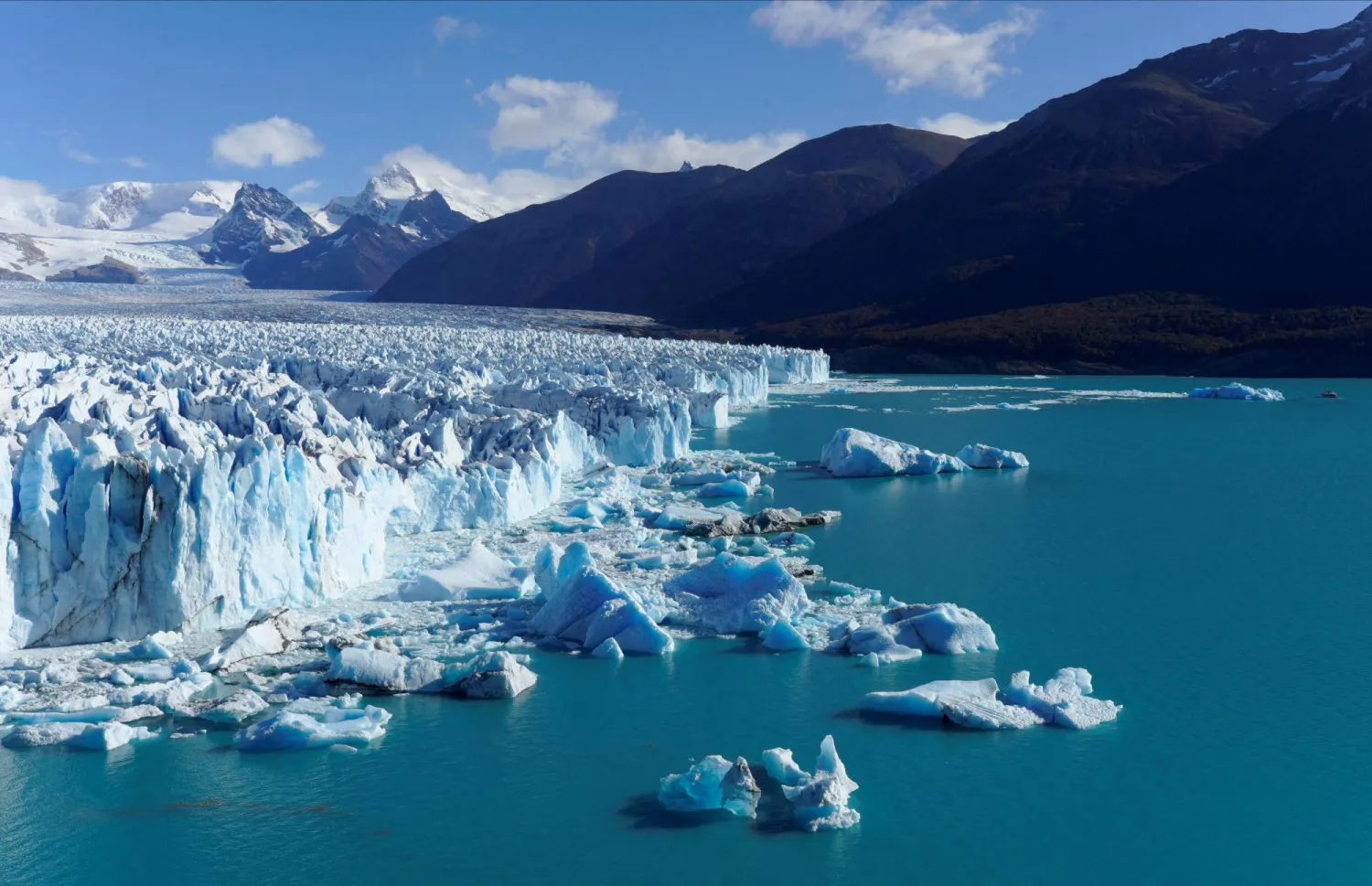
FILE PHOTO: A general view of the Perito Moreno glacier, near the city of El Calafate in the Patagonian province of Santa Cruz, Argentina April 21, 2025. REUTERS/Bernat Parera/File Photo
TT

Argentine MPs Approve Bill to Allow Mining in Glaciers

FILE PHOTO: A general view of the Perito Moreno glacier, near the city of El Calafate in the Patagonian province of Santa Cruz, Argentina April 21, 2025. REUTERS/Bernat Parera/File Photo

Argentine MPs approved a bill early Thursday promoted by President Javier Milei that authorizes mining in ecologically sensitive areas of glaciers and permafrost, and has outraged environmentalists.

The amendment to the so-called Glacier Law, which was already approved by the Senate in February, would make it easier to mine for metals such as copper, lithium and silver in frozen parts of the Andes mountains, said AFP.

The Chamber of Deputies, Argentina's lower house of Congress, approved the amendment with 137 votes in favor, 111 against and three abstentions after nearly 12 hours of debate.

Environmentalists say the reforms will weaken protections for crucial water sources.

Thousands of people took part in a demonstration on Wednesday afternoon outside parliament, marked by isolated skirmishes with police.

Some held aloft banners with slogans such as "Water is more precious than gold!" and "A glacier destroyed cannot be restored!"

Seven Greenpeace activists were arrested earlier in the day after scaling a statue outside parliament and unfurling a banner urging lawmakers "not to betray the Argentine people."

The passage of the amendment is a new coup for Milei, who pushed through looser labor laws in February despite repeated street protests.

Nicolas Mayoraz, an MP from Milei's ruling La Libertad Avanza party, assured lawmakers that combining "environmental protection and sustainable development is possible."

Environmental activist Flavia Broffoni rubbished the government's position.

"The science is clear...there is absolutely no possibility of creating what they (the government) call a 'sustainable mine' in a periglacial environment," she told AFP after addressing the protest outside parliament.

- Lithium race -

There are nearly 17,000 glaciers or rock glaciers -- a mix of rock and ice -- in Argentina, according to a 2018 inventory.

In the northwest of the country, where mining activity is concentrated, glacial reserves have shrunk by 17 percent in the last decade, mainly due to climate change, according to the Argentine Institute of Snow Science, Glaciology and Environmental Sciences.

Milei, a free-market radical who does not believe in man-made climate change, argues the bill is necessary to attract large-scale mining projects.

Argentina is a major producer of lithium, which is critical to the global tech and green energy sectors.

The Central Bank has estimated, based on industry forecasts, that the country could triple its mining exports by 2030.

"Environmentalists would rather see us starve than have anything touched," Milei has argued.

Supporters of the reform argue that it will clear up ambiguities in the current law, from 2010, on which periglacial areas -- areas on the edges of glaciers -- can be economically developed.

"We want legal certainty, we want clear definitions," Michael Meding, director of the Los Azules copper mining project in San Juan, told AFP.

Enrique Viale, president of the Argentine Association of Environmental Lawyers, told AFP that the reform threatened the water supply of "70 percent" of Argentines.

Under the current law, a scientific body designates protected glaciers and periglacial environments.

The reform would give individual provinces more powers to decide which areas need protection and which can be exploited for economic purposes.

It has been backed by the governors of northern Andean provinces with strong mining sectors, namely Mendoza, San Juan, Catamarca and Salta.




France, Germany Send Firefighters to Help Battle Dutch Blazes

A French firefighter douses burning vegetation during a bushfire in Budel, Netherlands May 1, 2026. (Reuters)
TT

France, Germany Send Firefighters to Help Battle Dutch Blazes

A French firefighter douses burning vegetation during a bushfire in Budel, Netherlands May 1, 2026. (Reuters)

France and Germany sent firefighting units to the Netherlands on Friday to help battle woodland blazes flaring in several areas.

Many of the fires, which sparked on Wednesday and Thursday, were raging in land used for military training, including an artillery range, in the south.

Stretched Dutch authorities requested help facing the emergency through the EU Civil Protection Mechanism, with France and Germany responding.

French Interior Minister Laurent Nunez said on X that Paris had dispatched 41 civil security personnel and 10 vehicles.

A total of 67 firefighters, 21 vehicles and three trailers were sent by the Bonn fire service in Germany.

A Dutch military spokesman, Major Mike Hofman, on Friday confirmed to AFP that army "training grounds were in use at the time the fires broke out".

He said an investigation was under way "examining whether there is a connection between the military operations and the origin of the fires".

The head of the Dutch armed forces said on Thursday that extra precautions were being taken on terrain used for drills because of a drought currently parching the country.

He added, however, that the military exercises being conducted would not be suspended.


Oscar Statuette for 'Mr. Nobody Against Putin' Goes Missing on Flight

FILE PHOTO: File Photo: Pavel Talankin arrives at the Vanity Fair Oscars party after the 98th Academy Awards, in Beverly Hills, California, US, March 16, 2026. REUTERS/Danny Moloshok/File Photo/File Photo
TT

Oscar Statuette for 'Mr. Nobody Against Putin' Goes Missing on Flight

FILE PHOTO: File Photo: Pavel Talankin arrives at the Vanity Fair Oscars party after the 98th Academy Awards, in Beverly Hills, California, US, March 16, 2026. REUTERS/Danny Moloshok/File Photo/File Photo

The Oscar statuette belonging to Pavel Talankin, the Russian director who won best documentary this year for "Mr. Nobody Against Putin," has gone missing after he was forced to check the award into hold luggage on a flight from New York to Germany, his co-director said.

Talankin was due to fly from John F. Kennedy International Airport to Frankfurt on German carrier Lufthansa. But Transportation Security Administration (TSA) agents told him that the 8.5 lb (3.8 kg) statuette posed a potential security threat, his co-director David Borenstein said on Thursday.

"At the airport, a ⁠TSA agent stopped ⁠him and said the Oscar could be used as a weapon," Borenstein said on Instagram.

"Pavel didn’t have a bag to check it in, so the TSA put the Oscar in a box and sent it to the bottom of the plane," he said, posting a series of pictures, ⁠including of the box.

"It never arrived in Frankfurt."

Responding to Borenstein's Instagram post, Lufthansa said it was taking the matter seriously.

"We deeply regret this situation," a company spokesperson later said in response to a Reuters request for comment.

"Our team is handling this matter with the utmost care and urgency and we are conducting a comprehensive internal search to ensure that the Oscar is found and returned as soon as possible.”

Speaking to the online magazine Deadline.com after arriving in Germany on Thursday, ⁠Talankin ⁠said it was "completely baffling how they consider an Oscar a weapon."

On previous flights on various airlines, he had flown with it "in the cabin, and there never was any kind of problem," he told the outlet.

Talankin and Borenstein's documentary used two years of footage that Talankin recorded at a school where he worked in Russia's Chelyabinsk region, to show how students were exposed to pro-war messaging.

The 35-year-old Talankin, who fled Russia in 2024, has defended the film as a record for posterity to show how "an entire generation became angry and aggressive."


Russia Successfully Test Launches New Soyuz-5 Rocket from Kazakhstan, Space Agency Says

The ⁠new rocket is ‌capable of ‌carrying payloads of up to ‌17 metric tons. (AP file)
TT

Russia Successfully Test Launches New Soyuz-5 Rocket from Kazakhstan, Space Agency Says

The ⁠new rocket is ‌capable of ‌carrying payloads of up to ‌17 metric tons. (AP file)

Russia has test launched its new Soyuz-5 rocket for the first time, the country's space agency said late on Thursday, saying it had lifted off from the Baikonur cosmodrome in Kazakhstan without any issues.

The Soyuz-5, which Roscosmos, ‌Russia's space ‌agency, describes as a ‌launch ⁠vehicle equipped with ⁠the world's most powerful liquid-fueled engine, lifted off successfully at 2100 Moscow time (1800 GMT) on April 30, it said in a statement.

The ⁠new rocket is ‌capable of ‌carrying payloads of up to ‌17 metric tons, will significantly ‌reduce launch costs, and is more effective than its predecessors at placing objects like satellites in near ‌earth orbit, the agency said.

Dmitry Bakanov, the head ⁠of ⁠Roskosmos, said the rocket - which he hailed as a "new step in space exploration" - would create new jobs in Russia and Kazakhstan.

Bakanov has previously told President Vladimir Putin that the Soyuz-5 is the first new launch vehicle that Russia has developed since 2014.