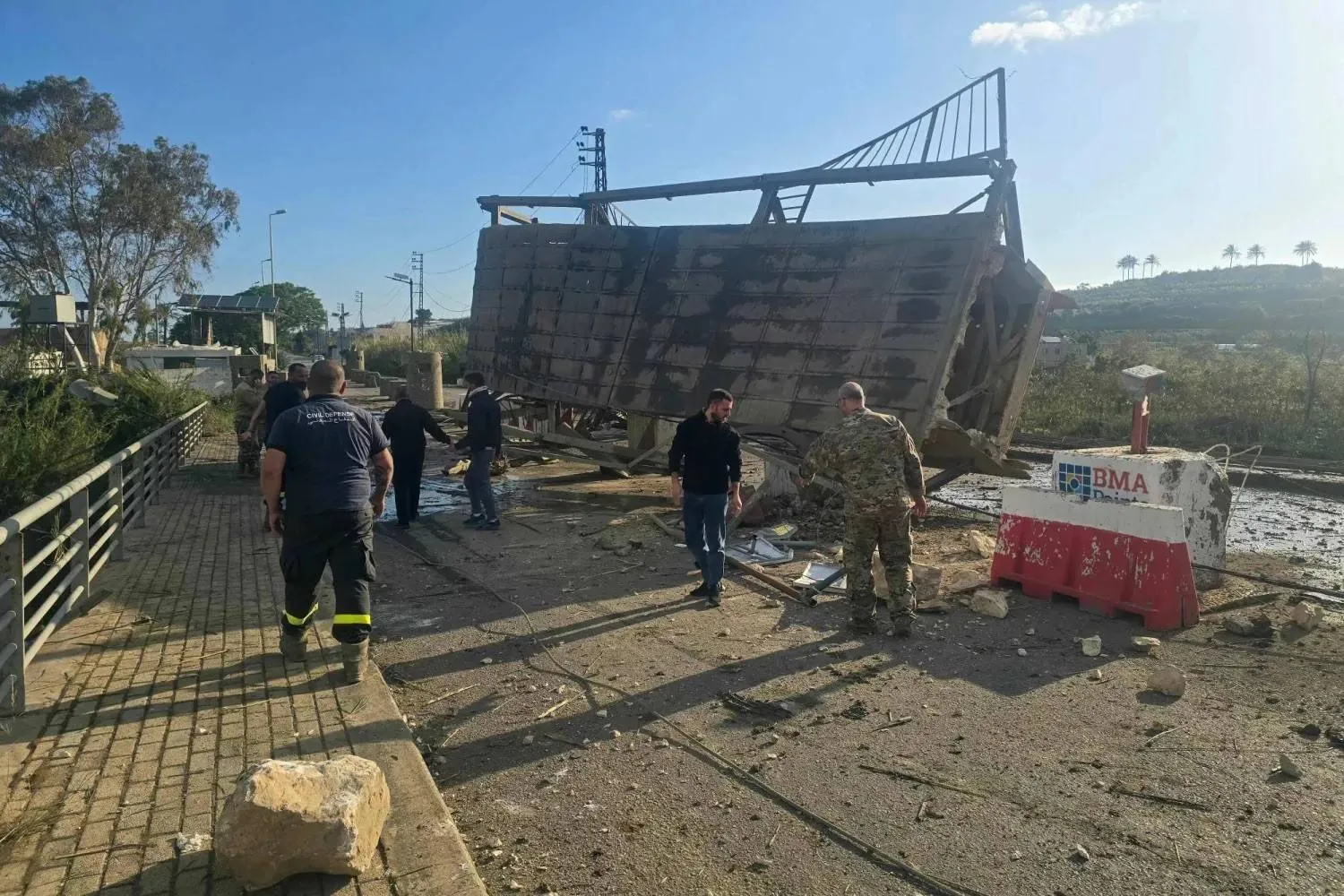

Israel is intensifying strikes on bridges over Lebanon’s Litani River, raising concerns it aims to isolate the entire area south of the river from the north, Lebanese officials and state media said.
The Israeli military struck the Qasmiyeh coastal bridge, the last functioning crossing linking areas south of the Litani with the north, damaging it and further restricting movement. A second strike later hit the same area, according to Lebanon’s National News Agency (NNA).
Civil defense teams worked to clear high-voltage cables severed in the attack, allowing limited traffic to resume on a single lane.
Over the past two weeks, Israel has targeted seven main bridges over the Litani, leaving Qasmiyeh as the final link before it was partially damaged in Wednesday night’s strike.
Lebanese authorities warn that continued attacks could effectively besiege around 50,000 civilians in the southern city of Tyre, its suburbs and nearby Palestinian refugee camps, as well as thousands of Lebanese troops and UN peacekeepers deployed in the area.
Several families south of the river have appealed for evacuation under international supervision, citing what they describe as a “complete siege” following the damage to the bridge.
Official sources told Asharq Al-Awsat that food stocks in the area would last no more than 15 days, warning of shortages of food and medicine if supply routes are not restored within two weeks.
The Lebanese Army said Thursday it had reopened the Qasmiyeh bridge with the help of civil defense and local groups, and deployed a unit nearby to secure it.
Authorities are studying contingency plans with the United Nations to supply the area if access routes are fully cut, in a bid to avert a humanitarian crisis.
“We are trying to address the repercussions by all means. We will not allow the area to be isolated from the rest of Lebanon,” the sources said, adding that practical proposals were under review.
The impact extends beyond civilians to military personnel. Around 7,700 Lebanese soldiers are deployed south of the Litani, alongside roughly 7,500 troops from the United Nations Interim Force in Lebanon (UNIFIL), according to sources familiar with the deployment.
Most UN peacekeepers are stationed south of the river, though troop numbers have declined in recent months due to financial constraints at the United Nations, the sources said.
They added that UNIFIL, a military peacekeeping force, is adapting its operations to evolving conditions, as it has done since fighting escalated on March 2.
UNIFIL troops are currently positioned in areas where clashes are taking place between Israeli forces and Hezbollah.