


Saudi Arabia Deploys Oil ‘Central Bank’ Capacity to Cushion Hormuz Shock


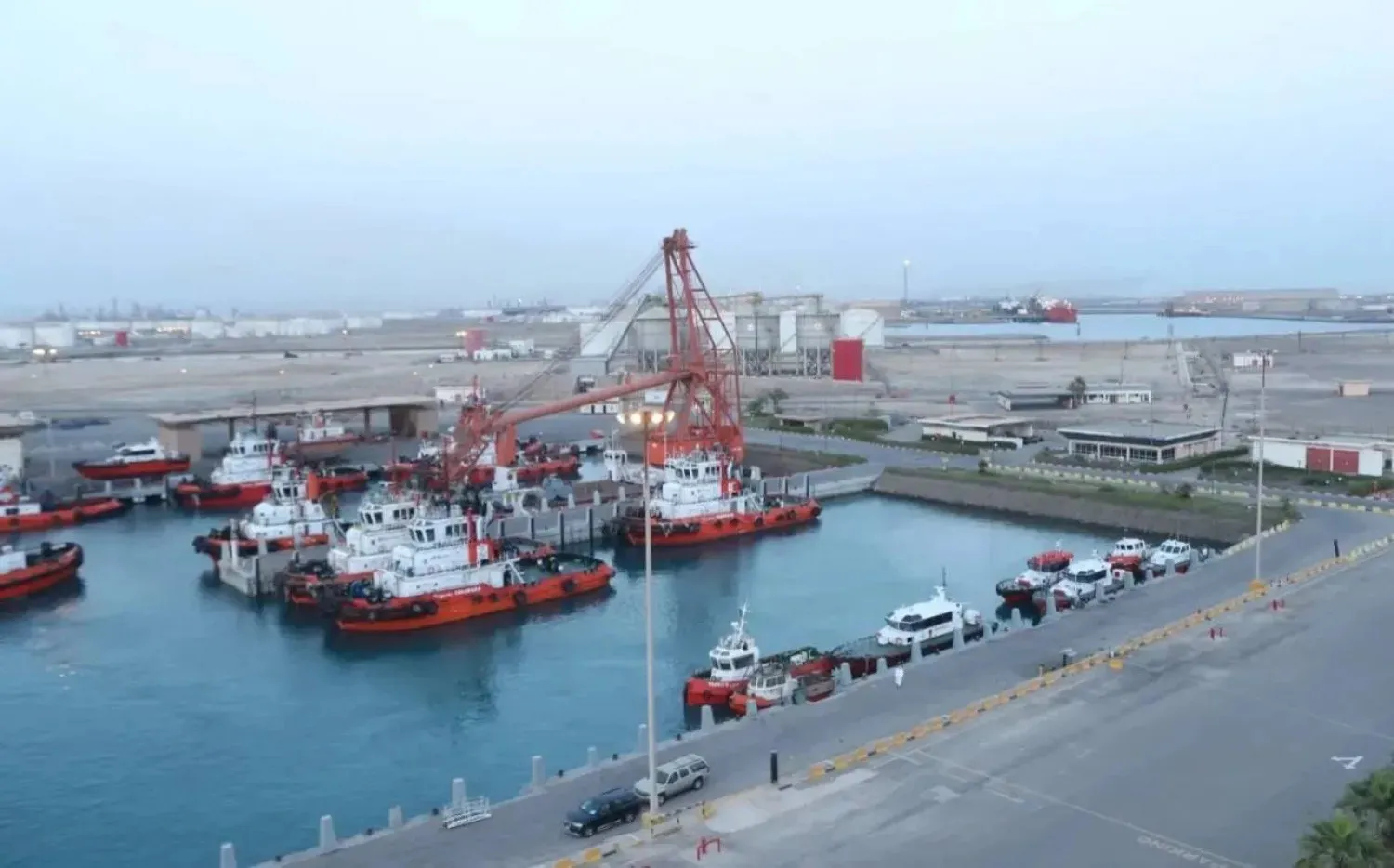
Yanbu Industrial Port (SPA)
TT

Saudi Arabia Deploys Oil ‘Central Bank’ Capacity to Cushion Hormuz Shock


Yanbu Industrial Port (SPA)

Saudi Arabia has emerged as a key stabilizing force in global energy markets during the crisis triggered by the US-Israeli-Iranian war that disrupted the Strait of Hormuz, helping contain what experts describe as an unprecedented supply shock.

While pessimistic forecasts had pointed to oil prices surging toward $200 per barrel, Saudi action helped cap prices at around $112, drawing on extensive infrastructure and flexible logistics that reinforced its reputation as the world’s “central bank of oil.”

Experts told Asharq Al-Awsat that the Kingdom’s strategic East-West pipeline, known as Petroline, proved decisive in mitigating the crisis.

Fadl bin Saad al-Buainain, a member of Saudi Arabia’s Shura Council and an economic adviser, said Riyadh has cemented its role as a global oil stabilizer through active management and policies aimed at balancing markets and ensuring supply continuity.

He stressed that this role was evident during the Hormuz crisis, as Saudi Arabia rerouted exports from the Gulf to the Red Sea via Petroline, pumping about 7 million barrels per day to the port of Yanbu, with part directed to domestic refineries and most exported abroad.

Alternative routes and market confidence

Al-Buainain said Saudi Aramco’s ability to rely on secure export alternatives enabled the Kingdom to navigate the crisis and reassure markets.

He noted that this reliability reflects long-term investments in production, transport and overseas storage, which act as a buffer against disruptions. Aramco also plays a central role in contingency planning to address geopolitical risks, he added.

The disruption of the Strait of Hormuz, through which roughly one-fifth of global oil supply passes, posed a major shock to the global economy and threatened maritime security. However, Saudi alternatives helped ease the impact, including the use of global reserves to offset supply shortfalls.

Al-Buainain said Saudi Arabia’s commitment to its customers, including its decision not to declare force majeure, was key to preventing prices from rising above $150.

He warned that the crisis could worsen if no solution is found to secure navigation in the strait, given its importance to critical sectors such as agriculture and petrochemicals.

Red Sea as strategic outlet

Abdulrahman Baashen, head of the Shurooq Center for Economic Studies, said Saudi Arabia successfully leveraged its “flexible geography” by activating alternative export routes managed by Saudi Aramco, boosting global market confidence despite regional tensions.

He added that the Red Sea provided a strategic alternative to Hormuz, allowing Aramco to maintain steady flows and meet its commitments under difficult conditions.

Baashen said continued Saudi exports via the Red Sea played a crucial role in limiting price increases. Although prices rose to $112 per barrel, the strategy helped avert a worst-case scenario of a surge to $200.

Rapid response and operational flexibility

Economist Ibrahim Alomar, head of Sharah for Researches and Economic Studies, said Saudi Arabia demonstrated exceptional reliability as a major energy producer.

He pointed to a sharp rise in flows through the East-West pipeline, from an average of 770,000 barrels per day in January and February to about 2.9 million barrels, and then to more than 5 million barrels per day within weeks.

“This reflects rare operational flexibility that only a country acting as the world’s oil central bank can provide,” he stated.

Saudi preparedness helped preserve about 85 percent of its exports, making the pipeline a key safeguard against severe supply shocks, Alomar added.

He warned that a 20 percent disruption in global supply through Hormuz could have pushed prices to between $230 and $300 per barrel, triggering a severe global economic shock.

International Energy Agency chief Fatih Birol has credited Saudi Arabia’s rapid response and the redirection of roughly two-thirds of its exports with preventing the situation from spiraling out of control.

Alomar described Saudi Arabia as the “engine of the Gulf economy,” citing its production capacity, infrastructure located away from conflict zones, and logistical support in supplying essential goods across the region via sea, air and land.



Turkish Inflation Jumps to 4.18% m/m in April, Exceeding Forecasts

Passers-by walk at Galata bridge on a rainy spring day in Istanbul, Türkiye, Saturday, May 2, 2026. (AP)
TT

Turkish Inflation Jumps to 4.18% m/m in April, Exceeding Forecasts

Passers-by walk at Galata bridge on a rainy spring day in Istanbul, Türkiye, Saturday, May 2, 2026. (AP)

Turkish consumer price inflation surged to 4.18% month-on-month in April, while the annual figure climbed to 32.37%, data from the Turkish Statistical Institute showed on Monday, with both measures exceeding economists' forecasts.

In a Reuters poll, monthly inflation was forecast to be 3.28%, with the annual rate seen at 31.25%, as the Iran war drives ‌a sharp ‌rise in fuel prices and ‌expectations ⁠of a slower-than-anticipated disinflation ⁠trend.

The biggest monthly price rises in April were shown by the clothing and footwear sector, with 8.94% inflation, and the housing sector at 7.99%, while key transport sector prices were up 4.29% and ⁠food and drinks sector prices ‌were up 3.7%.

In ‌March, consumer price inflation dipped to 1.94% month-on-month, ‌while the annual figure fell to ‌30.87%, both figures below forecasts.

The data also showed the domestic producer index rose 3.17% month-on-month in April for an annual increase of 28.59%.

The ‌central bank flagged rising inflation risks in its monetary policy committee ⁠statement ⁠last month, when it kept main interest rates steady, saying it was closely monitoring fallout from the Iran war and potential second-round effects.

In February, Türkiye's central bank raised its year-end inflation forecast range by two percentage points to 15–21%, while keeping its interim 16% target unchanged, despite market doubts over whether the disinflation trend seen through much of 2025 remains on track.


Seoul, Taipei Hit Records as Asian Stocks Track Wall St Tech Rally

Dealers watch computer monitors near the screens showing the Korea Composite Stock Price Index (KOSPI) and the foreign exchange rate between US dollar and South Korean won at a dealing room of Hana Bank in Seoul, South Korea, Monday, May 4, 2026. (AP)
TT

Seoul, Taipei Hit Records as Asian Stocks Track Wall St Tech Rally

Dealers watch computer monitors near the screens showing the Korea Composite Stock Price Index (KOSPI) and the foreign exchange rate between US dollar and South Korean won at a dealing room of Hana Bank in Seoul, South Korea, Monday, May 4, 2026. (AP)

Seoul and Taipei hit record highs Monday as tech firms led a rally across most Asian markets, tracking a healthy day on Wall Street fueled by more strong earnings.

Investors were also cheered by news that Iran had submitted fresh proposals to end its war with the United States and reopen the crucial Strait of Hormuz.

While the Middle East crisis continued to rumble along, with the waterway still effectively choked off, dealers turned their focus on the corporate world as they jumped back into the AI trade that has propelled several markets to record highs.

Forecast-beating reports from Apple, Google, Microsoft and Samsung have reawakened interest in the artificial intelligence sector after the market tumult caused by the US-Israel strikes on Iran at the end of February.

Companies in the S&P 500 are on track to report earnings growth of 27.1 percent, the highest rate in more than four years, according to Factset.

Investors have been playing a waiting game since a US-Iran ceasefire was agreed at the start of April, with just one round of talks taking place that came to nothing.

In the meantime, the United States maintains a blockade of Iranian ports and Tehran is keeping the strait -- through which a fifth of global oil and gas usually passes -- closed.

Optimism was given a boost Friday after an Iranian report that Tehran had delivered the text of a new proposal to mediator Pakistan the night before.

The offer was said by the Tasnim News Agency as calling for a complete end to the conflict within 30 days along with guarantees against renewed strikes.

It also reiterated previous demands that include the withdrawal of US forces from near Iran, the blockade to be lifted and sanctions removed.

Donald Trump said Sunday that "very positive discussions" were underway and that US forces will soon start escorting ships out of the Strait of Hormuz in a "humanitarian gesture" dubbed "Project Freedom".

In a post on Truth Social, the US president said many of the marooned ships "were running low on food", but offered few details on how the mission would work.

US Central Command said on X that its forces would begin supporting Project Freedom with guided-missile destroyers, over 100 land and sea-based aircraft, multi-domain unmanned platforms and 15,000 service members.

However, a senior Iranian official warned Monday that Tehran would consider any US attempt to interfere in the Strait of Hormuz a breach of the ongoing ceasefire.

Oil prices edged up Monday after dropping as much as three percent Friday.

"Whether this will lead to sustained weakness in oil remains to be seen," wrote Fawad Razaqzada at Forex.com.

"In my view, as long as the Strait of Hormuz situation remains unresolved, these types of headlines are likely to provide only temporary pressure on prices rather than drive a prolonged move lower."

Equities started the month on a broadly positive note, following all-time highs for the S&P 500 and Nasdaq in New York on Friday.

Seoul surged more than five percent and Taipei jumped more than four percent to hit fresh records.

South Korean chip giant SK hynix was the standout, piling on 12.5 percent, while rival Samsung was up more than five percent. Taiwanese counterpart TSMC was 6.6 percent up.

Hong Kong was lifted by a surge in Chinese tech firms including Alibaba, while Mumbai, Singapore, Manila, Wellington and Jakarta were also up.

Paris fell at the open and Frankfurt rose.

Tokyo, Shanghai and London were closed for holidays.

However, Chris Weston at Pepperstone said: "After a strong April for risk assets, we need to remain open-minded about what May will bring.

"This week should provide early signals, but with risk assets pricing in a lot of good news, and rightly so, the time for that to be validated may now be here."

On currency markets, the yen was holding its own against the dollar after a rally on Thursday was said to have come on the back of Japanese intervention.

Officials were said to have spent at least $32 billion in the foreign exchange market, according to multiple reports, in its first such move to prop up the yen since 2024.


Barclays Becomes Latest Brokerage to Bet on No Fed Rate Cuts in 2026

A person walks past a Barclays bank branch in central London, Britain, 28 April 2026. EPA/TOLGA AKMEN
TT

Barclays Becomes Latest Brokerage to Bet on No Fed Rate Cuts in 2026

A person walks past a Barclays bank branch in central London, Britain, 28 April 2026. EPA/TOLGA AKMEN

Barclays on Monday joined a growing list of brokerages to bet on no policy easing from the US Federal Reserve this year, citing prolonged high energy prices linked to the Iran war that are likely to keep inflation elevated.

The British brokerage had previously forecast a 25-basis-point rate cut in September 2026. It also retained its forecast of a quarter point reduction in March 2027.

Global brokerages have steadily pulled back ⁠from early-year expectations ⁠of two US interest rate cuts in 2026, with forecasts sharply split between some easing and no cuts at all this year, due to war-related inflation risks that are making policymakers cautious.

Last week, the Federal Reserve left interest rates ⁠unchanged in its most divided decision since 1992, on deepening concerns about higher energy prices percolating through the economy.

US inflation remains well above the Fed's 2% target, as the ongoing Middle East conflict disrupts global oil supplies.

"We expect the higher and more prolonged oil price trajectory to boost both headline and core PCE inflation measures, and to weigh somewhat on growth," analysts at Barclays ⁠said in ⁠a note, according to Reuters.

"Conversely, if the unemployment rate were to rise suddenly...we would expect the FOMC to cut more rapidly and aggressively."

The brokerage also said higher energy prices will hurt consumer spending, but this will be partly offset by stronger business investment, driven by energy exploration and AI-related spending.

Traders are now pricing in a roughly 78.7% probability of no change in interest rates by year-end, according to the CME Fedwatch tool.