Israeli Fire Kills Six in Gaza, Including Two Children, Medics Say

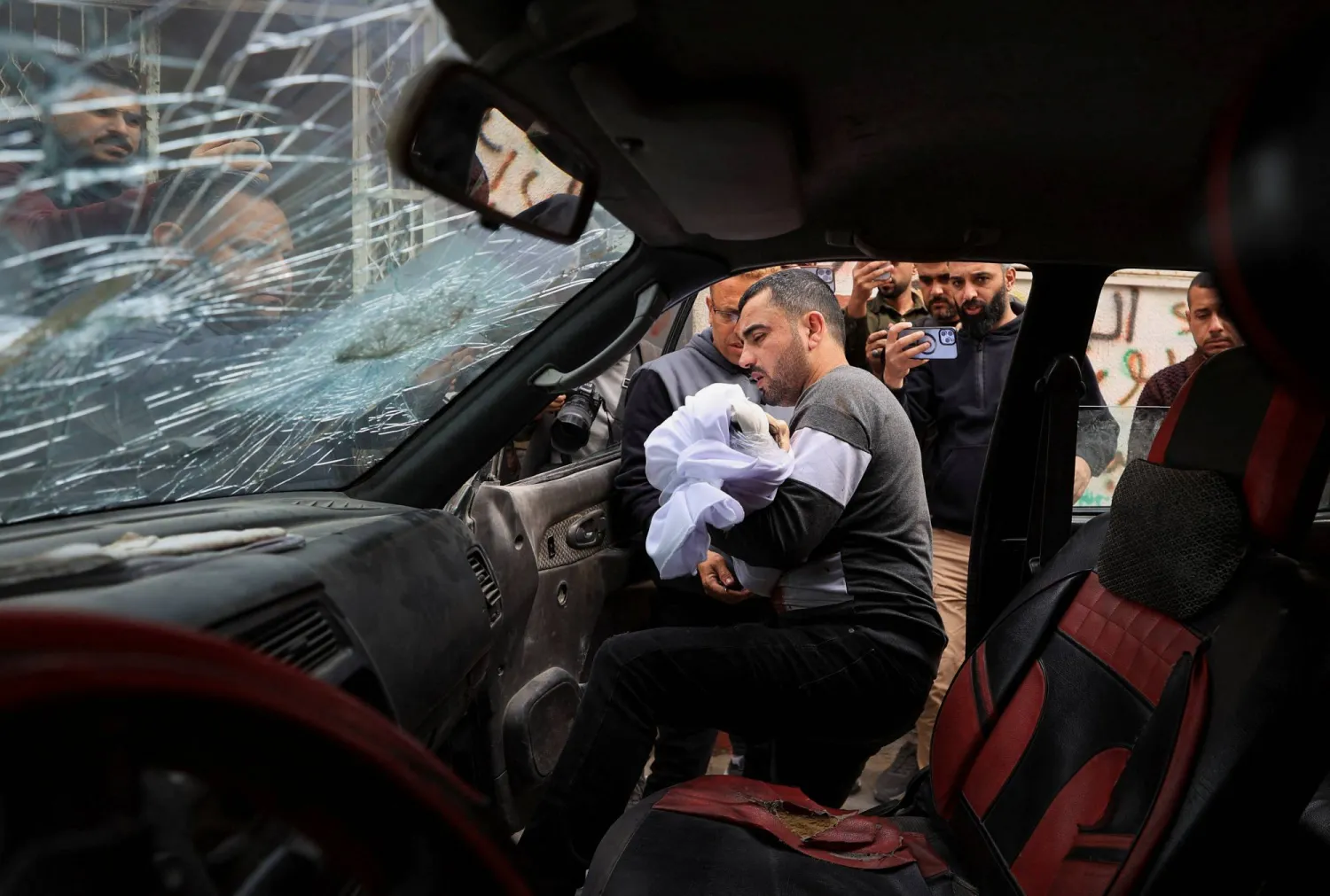
A father holds the body of his three‑year‑old child, Yahya Al‑Malahi, who was killed in an Israeli strike, according to medics, during his funeral in Gaza City, April 14, 2026. (Reuters)
TT

Israeli Fire Kills Six in Gaza, Including Two Children, Medics Say

A father holds the body of his three‑year‑old child, Yahya Al‑Malahi, who was killed in an Israeli strike, according to medics, during his funeral in Gaza City, April 14, 2026. (Reuters)

Israeli fire killed at least six Palestinians, including two children, in separate incidents across the Gaza Strip on Tuesday, local health officials said, in the latest violence to undermine a US-brokered ceasefire agreement.

Four people, including a young child, were killed in a strike that targeted a police vehicle in Gaza City, the Hamas-run Interior Ministry said. A police officer was among the dead, ‌while nine bystanders ‌were wounded, some critically, it said.

In ‌the ⁠north of the ⁠enclave, near Jabalia, Israeli fire killed three-year-old Yahya Al-Malahi, health authorities and his family said.

Israel's military did not immediately provide comment on either incident.

In northern Gaza, Israel's military said it killed a man who had approached the armistice line with ⁠Hamas, describing him as an armed militant.

Health ‌authorities confirmed a ‌man had been killed in the area, without providing details.

The ‌ceasefire that began last October halted two ‌years of full-blown war but left Israeli troops in control of a depopulated zone that makes up well over half of Gaza, with Hamas in power in ‌the remaining, narrow coastal strip.

Israel has escalated its attacks on Hamas-led police ⁠and security ⁠forces since October, killing dozens, the group's officials in Gaza have told Reuters, accusing Israel of trying to cause chaos and anarchy.

Israel says it aims to thwart attacks by Hamas and other armed factions.

More than 750 Palestinians have been killed since the ceasefire deal took effect, while fighters have killed four Israeli soldiers. Israel and Hamas have traded blame for ceasefire violations.

Palestinians also say Israeli forces have been expanding the zone they occupy. Israel denies this.


Sudan War ‘Nightmare Must End’, UN Chief Tells Aid Meeting

United Nations Secretary-General Antonio Guterres speaks during a press conference, following an escalation between Hezbollah and Israel amid the US-Israeli conflict with Iran, in Beirut, Lebanon, March 14, 2026. (Reuters)
TT

Sudan War ‘Nightmare Must End’, UN Chief Tells Aid Meeting

United Nations Secretary-General Antonio Guterres speaks during a press conference, following an escalation between Hezbollah and Israel amid the US-Israeli conflict with Iran, in Beirut, Lebanon, March 14, 2026. (Reuters)

UN Secretary-General Antonio Guterres on Wednesday said the third anniversary of Sudan's war marked a "tragic milestone" and called for an end to the "nightmare".

"Today marks three years since the war in Sudan began," Guterres told a meeting of international donors in Berlin via a video message.

"It is a tragic milestone in a conflict that has shattered a country of immense promise -- and created the world's largest humanitarian crisis."

Guterres noted that "credible allegations of the gravest international crimes" were continually emerging from the conflict.

"Women and girls have been terrorized and systematic sexual violence has prevailed. Families and communities have been devastated," he said.

"The consequences are not confined to Sudan. They are destabilizing the wider region... This nightmare must end."

Guterres called for humanitarian workers to be allowed to carry out their work safely and without obstruction, and for humanitarian operations to be fully funded.

"Partners must step up. But let's be clear: funding alone cannot substitute for peace," he said, calling for "an immediate cessation of hostilities".

"External interference and the flow of arms that fuel this war must finally end."


Israeli Settlers Block Palestinian Kids’ Path to School with Tear Gas and Barbed Wire

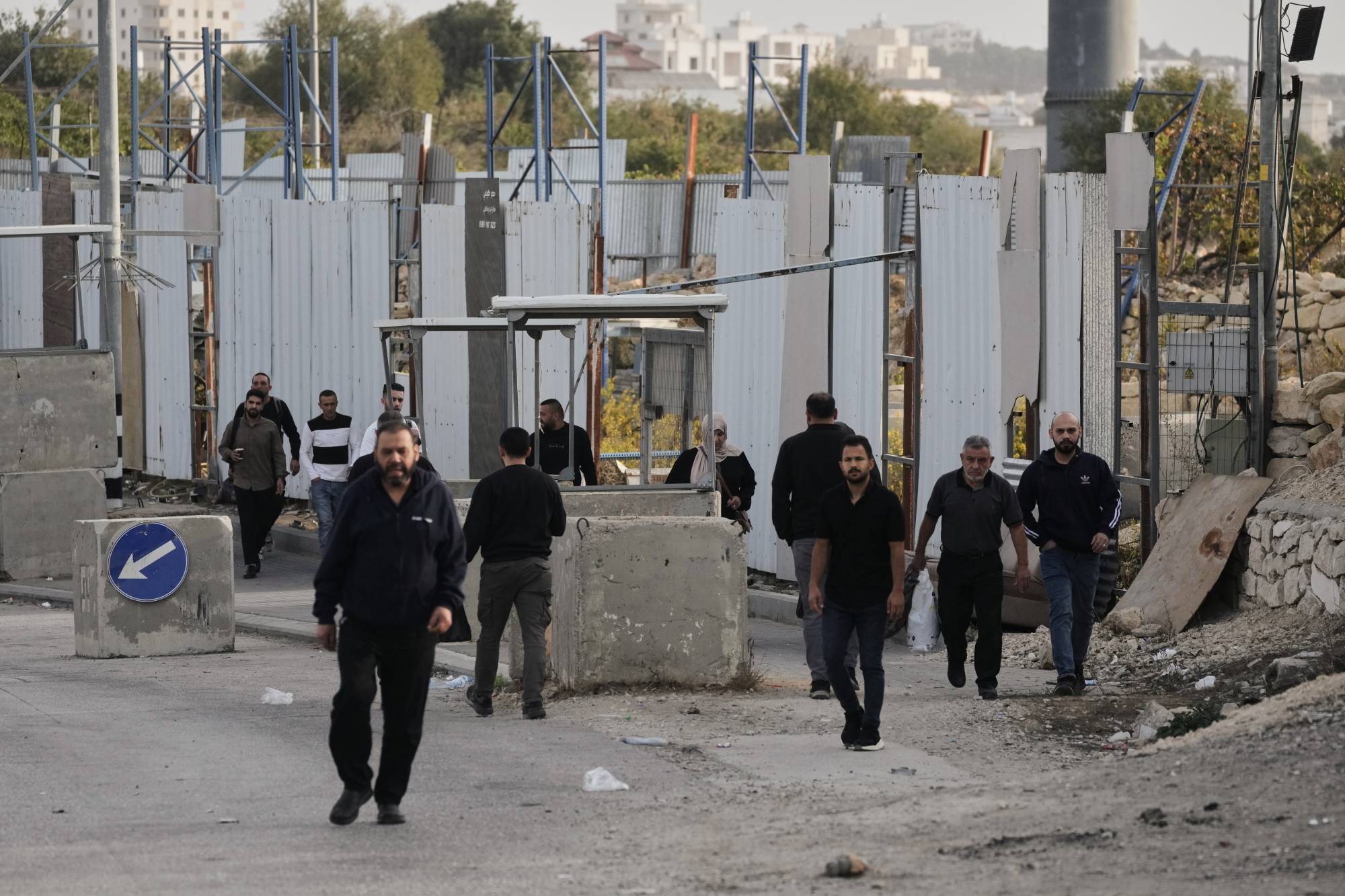
 Palestinian students walk to school using an alternative route that is nearly twice as long because a fence separates their village from the nearby Israeli settlement of Carmel, near the West Bank village of Umm al-Khair, Tuesday, April 14, 2026. (AP)
Palestinian students walk to school using an alternative route that is nearly twice as long because a fence separates their village from the nearby Israeli settlement of Carmel, near the West Bank village of Umm al-Khair, Tuesday, April 14, 2026. (AP)
TT

Israeli Settlers Block Palestinian Kids’ Path to School with Tear Gas and Barbed Wire

 Palestinian students walk to school using an alternative route that is nearly twice as long because a fence separates their village from the nearby Israeli settlement of Carmel, near the West Bank village of Umm al-Khair, Tuesday, April 14, 2026. (AP)
Palestinian students walk to school using an alternative route that is nearly twice as long because a fence separates their village from the nearby Israeli settlement of Carmel, near the West Bank village of Umm al-Khair, Tuesday, April 14, 2026. (AP)

Hajar and Rashid Hathaleen have always walked to school from their neighborhood on the outskirts of Umm al-Khair. But when classes resumed this week for the first time since the Iran war began, coiled barbed wire blocked the Palestinian siblings' path to the village center.

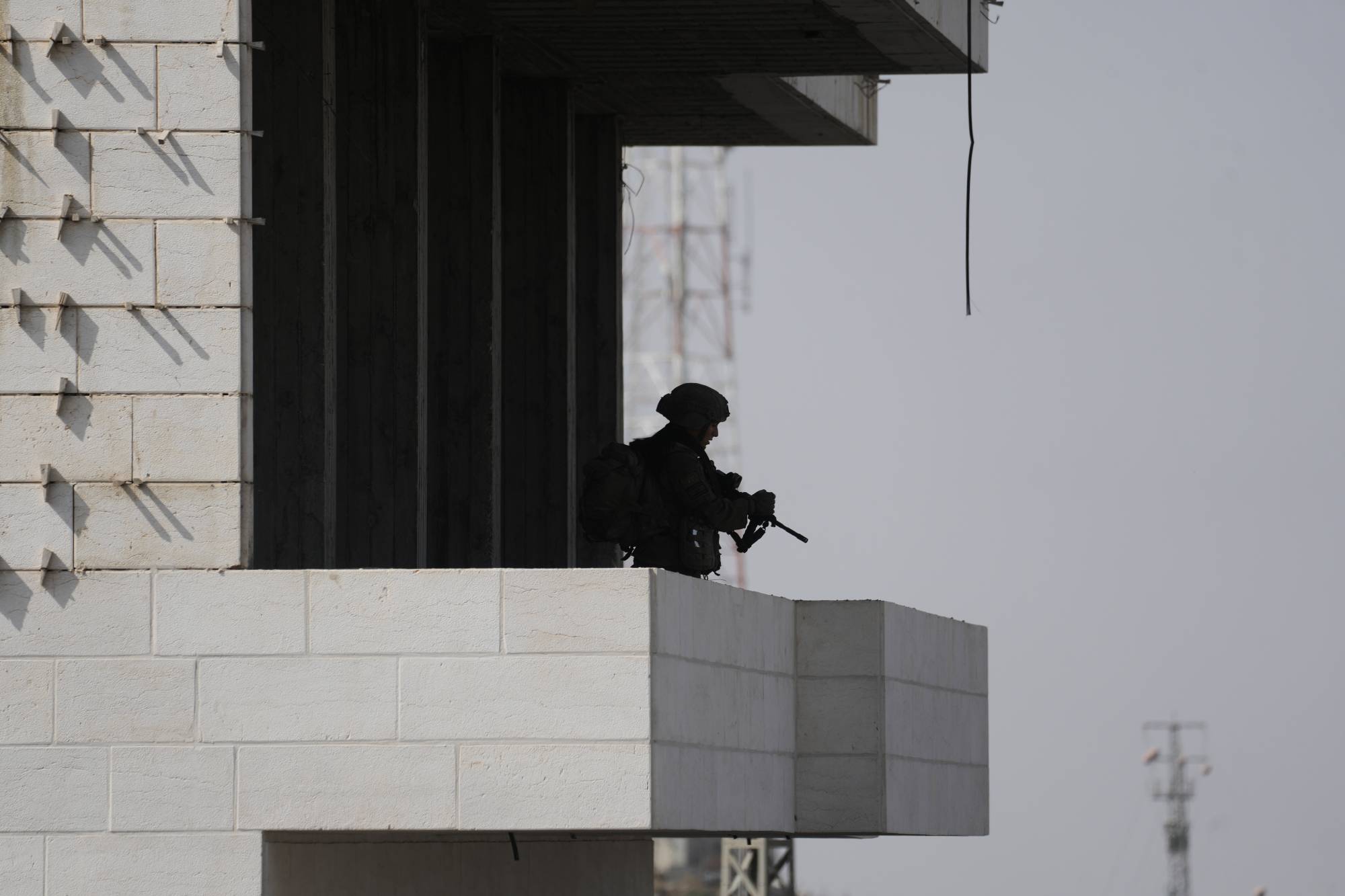
Israeli settlers had installed it overnight, according to video that Palestinian residents provided to The Associated Press. Palestinians say the improvised fence is just the latest attempt by settlers to expand control in part of the occupied West Bank where state-backed demolitions, arson and vandalism regularly occur and settler violence, at times lethal, is rarely prosecuted.

The villagers' plight was covered in the 2024 Oscar-winning documentary “No Other Land," but the publicity has done little to stem the bloodshed or curb land grabs. They say Israel has used the cover of the Iran war to tighten its grip over the territory, as settler attacks surge and the military imposes additional wartime restrictions on movement, citing security.

Khalil Hathaleen, head of the village council and a member of the extended family that makes up much of Umm al-Khair’s population, said settlers were exploiting the war to seize land, cut down olive groves and raid nearby villages at night. “It was a good chance for settlers to do what they want, with no rules,” he said.

Like in Israel, Palestinian kids stayed home before last week's ceasefire, with the threat of falling missile debris leading schools to close.

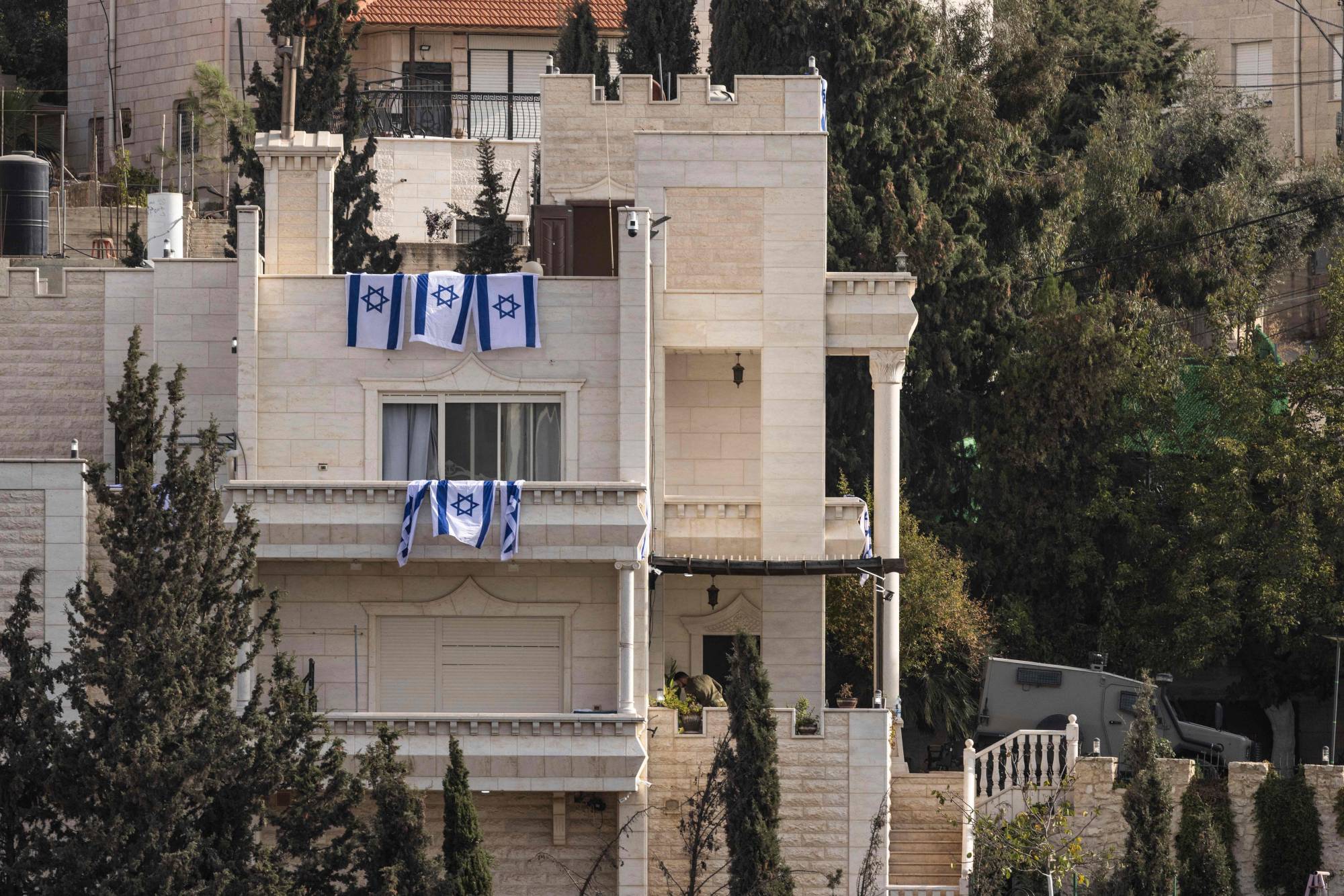
Hajar, her brother Rashid and their classmates sat waiting Monday and Tuesday near Israeli flags, the barbed wire and newly felled trees as their parents and village leaders demanded they be allowed to pass. On Monday, the children were met by plumes of tear gas and sound grenades hurled by armed men in an unmarked white truck, including some uniformed soldiers, according to the video.

Israel’s military said troops used “riot dispersal means” outside Carmel, the settlement next to Umm al-Khair. It acknowledged that children were present but said the measures — which it didn't detail — were directed at adults in the area, not the children. The Har Hevron Regional Council, the settlements' local government in the area, did not respond to questions about the fence.

Bedouins and other villagers have been using the 3-kilometer (1.8-mile) path from the neighborhood of Khirbet Umm al-Khair to the village center for decades. “We are determined to keep it,” Khalil Hathaleen said.

The fence is just another way that Palestinian movement is being restricted as Israeli settlements multiply in the occupied West Bank. Palestinians say it follows a well-worn pattern in which settlers erect fences or claim farmland that Palestinians say is theirs, and then move to enforce this new reality with the backing of Israel’s military.

Hathaleen said Israeli forces sometimes restrain the settlers, but more often than not they defer to them.

“We are refused a solution,” he said.

The international community overwhelmingly considers the settlements illegal. Israel, meanwhile, views the territory as disputed and says its final status is subject to negotiations. The outposts are built without the permission of Israeli authorities, who sometimes dismantle them, but other times turn a blind eye or even legalize them retroactively.

Hathaleen said the military's civil administration unit told Umm Al-Khair to divert students to another path. But parents said the alternate route is roughly twice as long and more dangerous, requiring them to pass near Carmel.

“We have deep concerns as parents and as residents that the (Israeli) occupation and soldiers will attack students,” said Al-Mutasim Hathaleen, another parent.

On Tuesday, some students got to school on buses that took the alternate route. But classrooms sat half-empty and the playground was deserted. There was no school on Wednesday due to Palestinian Authority cuts to teacher salaries in the area. But on Thursday, kids will try again to get to school on their regular route, Khalil Hathaleen said.

Testing the settlers' resolve could be risky.

Israeli officials and military leaders have recently sounded the alarm over intensifying violence and lawlessness by extremist settlers in the occupied West Bank, where arsons and deadly attacks have continued unabated. At least 35 Palestinians have been killed by Israeli soldiers and settlers across the territory in 2026. Settlers have killed eight Palestinians — an equal number to all of 2025.

The Israeli rights group B’Tselem, following the killing of a 23-year-old Palestinian man by a settler, said that what it called “daily unbridled violence” amounted to Israeli government policy, noting that many of those involved are army reservists.

“These militias are fully backed by the state of Israel and enjoy complete impunity for killing, assaulting and looting Palestinian residents,” it said.


Israel Army Chief Orders ‘Hezbollah Kill Zone’ South of Lebanon’s Litani River

Israeli soldiers next to artillery vehicles near the Israel-Lebanon border, in northern Israel, April 15, 2026. (Reuters)
TT

Israel Army Chief Orders ‘Hezbollah Kill Zone’ South of Lebanon’s Litani River

Israeli soldiers next to artillery vehicles near the Israel-Lebanon border, in northern Israel, April 15, 2026. (Reuters)

Israel's military chief of staff on Wednesday said he had ordered areas south of Lebanon's Litani River to be turned into a Hezbollah "kill zone" as troops pressed a major offensive there.

"I have ordered that all of the area of south Lebanon up to the Litani (River) line be turned into a Hezbollah terrorist kill zone," chief of staff Lieutenant General Eyal Zamir said on a visit to troops operating in the area.

"We are advancing and striking Hezbollah and they are retreating," Zamir added.

He said troops had killed "more than 1,700" fighters since the operation began on March 2, describing Hezbollah as "weakened and isolated in Lebanon".