
For the first time in two months, the Gaza Strip has seen a sharp increase in trucks carrying aid and commercial goods, alongside a rise in travelers crossing through the Rafah land crossing in both directions.
A total of 323 trucks entered Gaza on Monday, including 220 commercial shipments for the private sector and 103 aid trucks from international organizations.
Of these, 234 trucks came through the Kerem Shalom crossing in the far south, and 89 through the Zikim crossing in northern Gaza, which reopened on Sunday after 44 days.
Workers in Gaza’s civil and charitable sectors expect the Kissufim crossing, between northern Khan Younis and southern Deir al-Balah, to open on Sunday to further increase the flow of trucks.
A source in Gaza’s economy ministry said most of the incoming shipments were commercial goods, including food supplies carried on more than 270 trucks, along with shelter materials, relief items, consumer goods, household supplies, fuel, and telecommunications equipment.
“For the first time in about two months, this number of trucks has been allowed in,” the source told Asharq Al-Awsat, adding that fewer trucks had entered since the ceasefire took effect on October 10.
The ceasefire deal stipulates the entry of 600 trucks per day, but Hamas and UN bodies have accused Israel of allowing only limited numbers.
The source said most trucks entering since the ceasefire have carried commercial goods, while aid shipments from Arab, Islamic, and international donors, including UN agencies, have been more limited.
Gaza officials have been told that more trucks and goods could be allowed in to help ease prices.
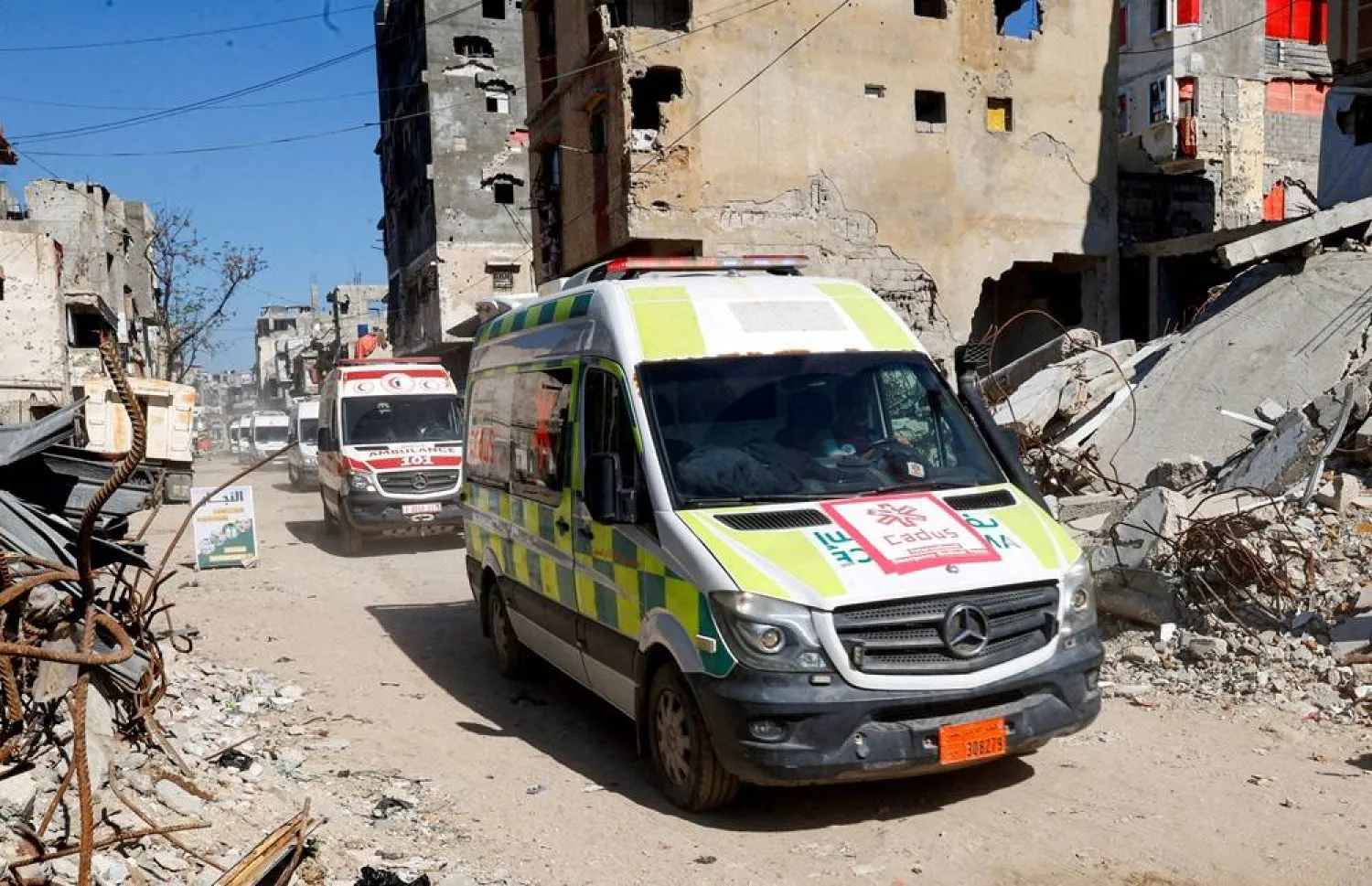
Israel on Tuesday allowed 126 Palestinians, including 41 patients and 85 companions, to travel after coordination by the World Health Organization. About 18 foreign passport holders also left through the crossing in coordination with their countries.
Israel partially reopened the Rafah crossing under the ceasefire at the start of February, shut it again when the war with Iran began later that month, and reopened it on March 19.
Since the ceasefire, the number of people allowed to pass through Rafah has remained limited, occasionally reaching 100, with expectations that it could rise to 150 a day.
A Palestinian source in Gaza said the recent easing in truck entries and movement through Rafah followed an agreement reached by Gaza’s representative at the Board of Peace, Nickolay Mladenov, with Israel to push compliance with the ceasefire terms.
For now, only patients are allowed to travel through Rafah, but other categories, including students and stranded civilians, could be permitted within about two weeks.
Palestinian factions, led by Hamas, have called on Mladenov and mediators to press Israel to fully implement the first phase of the ceasefire before moving to the second. Contacts and meetings on the issue are ongoing in Cairo.