


Turkish Parliament Passes Bill to Restrict Social Media Access for Under-15s

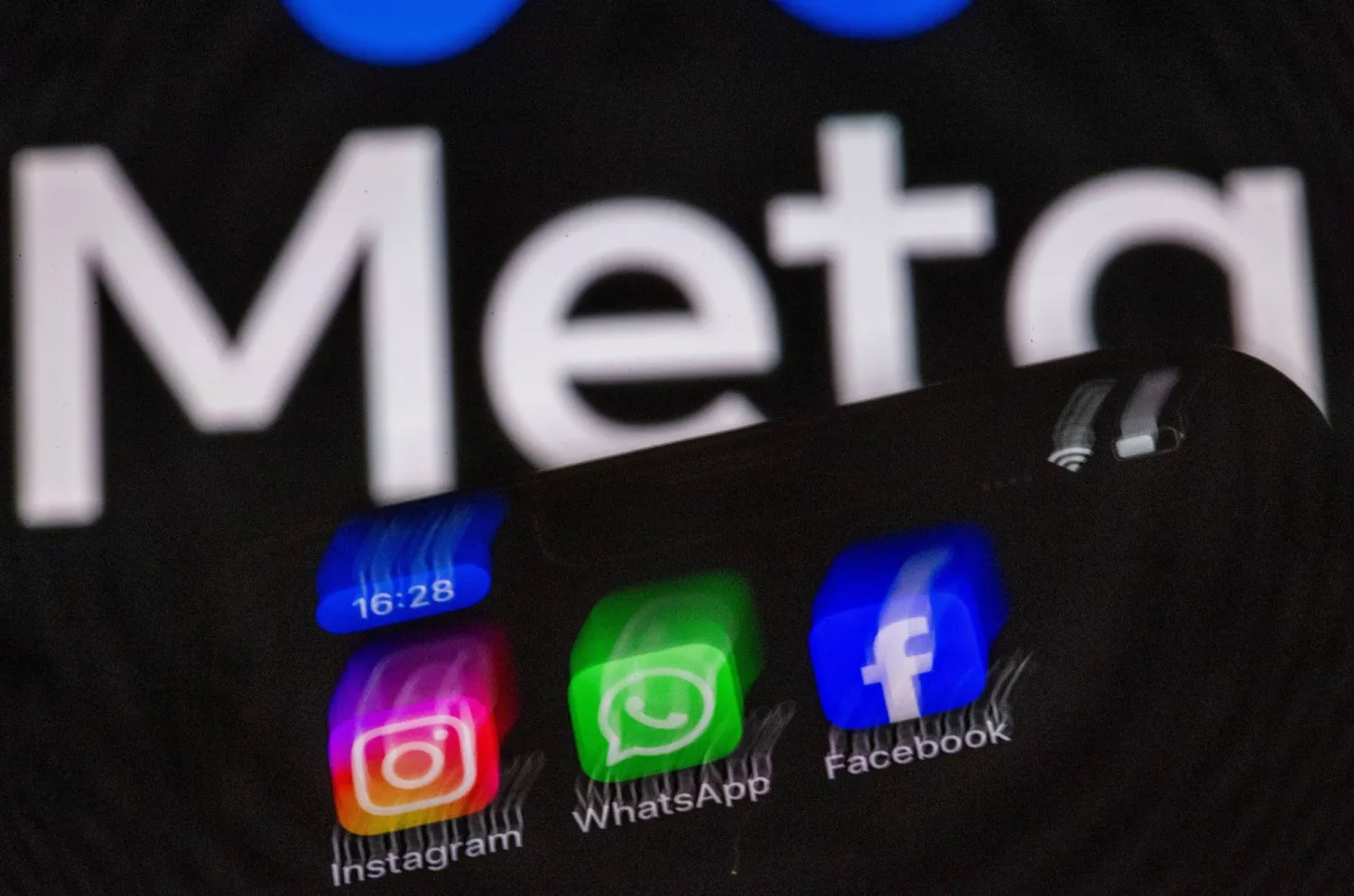
FILED - 16 May 2024, Mecklenburg-Western Pomerania, Schwerin: The Instagram, Facebook, and WhatsApp apps can be seen on a smartphone display in front of the logo of the internet company Meta. Photo: Jens Büttner/dpa
TT

Turkish Parliament Passes Bill to Restrict Social Media Access for Under-15s

FILED - 16 May 2024, Mecklenburg-Western Pomerania, Schwerin: The Instagram, Facebook, and WhatsApp apps can be seen on a smartphone display in front of the logo of the internet company Meta. Photo: Jens Büttner/dpa

Turkish lawmakers passed a bill late Wednesday that includes restricting access to social media platforms for children under 15, state media reported.

The legislation is the latest in a global trend to protect young people from dangerous online activity.

Its passage comes a week after a 14-year-old boy killed nine students and a teacher at a middle school in Kahramanmaras, southern Türkiye, in a gun attack. Police are investigating the online activity of the perpetrator, who also died, in a bid to uncover his motivation for the attack.

The bill will force social media platforms to install age verification systems, provide parental control tools and require companies to rapidly respond to content deemed harmful, the state-run Anadolu news agency said, according to The Associated Press.

Turkish President Recep Tayyip Erdogan must now accept the bill within 15 days for it to pass into law. He spoke in the wake of the Kahramanmaras killings of the need to mitigate the online risks to children’s safety and privacy.

“We are living in a period where some digital sharing applications are corrupting our children's minds and social media platforms have, to put it bluntly, become cesspools,” he said in a televised address Monday.

The main opposition party - the Republican People’s Party, or CHP - has criticized the proposal, saying children should be protected “not with bans but with rights-based policies.”

Under the law, digital platforms - such as YouTube, TikTok, Facebook, Instagram and others - would have to block children under 15 from opening accounts and introduce parental controls that would manage children’s access.

Online game companies will also be required to appoint a representative in Türkiye to ensure they abide by the new regulations. Potential penalties include internet bandwidth reductions and fines imposed by Türkiye’s communications watchdog.

Restrictions on social media access for children under 16 first began in December in Australia, where social media companies revoked access to about 4.7 million accounts identified as belonging to children.

Last month, Indonesia began implementing a new government regulation banning children younger than 16 from access to digital platforms that could expose them to pornography, cyberbullying, online scams and addiction.

Some other countries — including Spain, France and the United Kingdom — are also taking or considering measures to restrict children’s access to social media amid growing concern that they are being harmed by exposure to unregulated social media content.




Red Sea Destination Announces Opening of Global Resort on Shura Island

The resort offers a comprehensive wellness retreat experience through 180 upscale rooms, suites, and villas - SPA
TT

Red Sea Destination Announces Opening of Global Resort on Shura Island

The resort offers a comprehensive wellness retreat experience through 180 upscale rooms, suites, and villas - SPA

Red Sea Global announced that Miraval The Red Sea will begin welcoming guests starting May 15. The launch marks the first international expansion of the luxury “Miraval” brand outside the United States, reinforcing the status of the Red Sea destination as a leading global tourism hub, especially after occupancy rates across the destination reached 82% during the final days of Ramadan, SPA reported.

The resort offers a comprehensive wellness retreat experience through 180 upscale rooms, suites, and villas.

CEO of Red Sea Global John Pagano stated that attracting a prestigious brand such as “Miraval” reflects the strong global confidence in the Kingdom’s tourism offerings.

He noted that the momentum witnessed by the destination has been clearly reflected in strong occupancy rates and early bookings for the Eid season.

Resort guests will enjoy a variety of activities and culinary experiences inspired by locally sourced ingredients.


Czech Police Seek Thief who Stole Saint's Skull


Police officers patrol the Czech-Slovak green border near Stary Hrozenkov, Czech Republic, September 29, 2022. REUTERS/Radovan Stoklasa
TT

Czech Police Seek Thief who Stole Saint's Skull


Police officers patrol the Czech-Slovak green border near Stary Hrozenkov, Czech Republic, September 29, 2022. REUTERS/Radovan Stoklasa

An unidentified thief stole the skull of Czech saint Zdislava of Lemberk from a glass shrine in a northern Czech church, causing "incalculable" historic damage, police said late on Tuesday.

St Zdislava of Lemberk (estimated 1220-1252), a noblewoman known for her merciful and charitable deeds, was canonized by Pope John Paul II in 1995.

The theft in the basilica of St Lawrence and St Zdislava in the northern town of Jablonne v Podjestedi was committed after 1600 GMT, said police spokeswoman Dagmar Sochorova.

"An unknown culprit broke a shrine in which the skull was stored and ran away from the site," AFP quoted her as saying.

Police published "low quality footage" depicting the culprit clad "probably" in black and wearing "probably" white shoes, and asked the public for help.

"The value of the stolen skull is currently being investigated. However, its historic value is obviously incalculable," Sochorova added.

Prague Archbishop Stanislav Pribyl, who also heads the Litomerice diocese in charge of the Jablonne church, said the news was "devastating".

Placed on an altar in a side chapel, the skull "was the subject of adoration for pilgrims travelling to Jablonne where Zdislava lived and worked more than 750 years ago," he said.

"I can't believe that someone commits a daylight robbery to steal from a church a relic whose value is above all historic," added Pribyl, who was named Prague archbishop in February.


Saudi Arabia: KAUST Study Reveals How Plants Protect Photosynthesis During Extreme Heat

The research team identified a protective mechanism within chloroplasts. SPA
TT

Saudi Arabia: KAUST Study Reveals How Plants Protect Photosynthesis During Extreme Heat

The research team identified a protective mechanism within chloroplasts. SPA

King Abdullah University of Science and Technology (KAUST) has completed a research study identifying how plants protect photosynthesis under high temperatures, an outcome that could support the development of more resilient crops in desert climates.

The research team identified a protective mechanism within chloroplasts, lead researcher Professor Monika Chodasiewicz said, noting that it helps preserve and restore the plant’s ability to convert sunlight into chemical energy.

The findings are particularly significant, as heat is one of the main threats to plant productivity, and protecting photosynthesis is essential for sustaining plant growth and crop yields, Chodasiewicz added.

She explained that the chlorophyll protein forms protective granules, revealing their previously unclear functional significance. The findings provide new insights that could be applied for future crop breeding and biotechnology, Chodasiewicz said.

The results also contribute to the emerging field of phase-separated biomolecular condensates in plant biology, while supporting broader priorities related to sustainable agriculture, climate adaptation, and food security.
