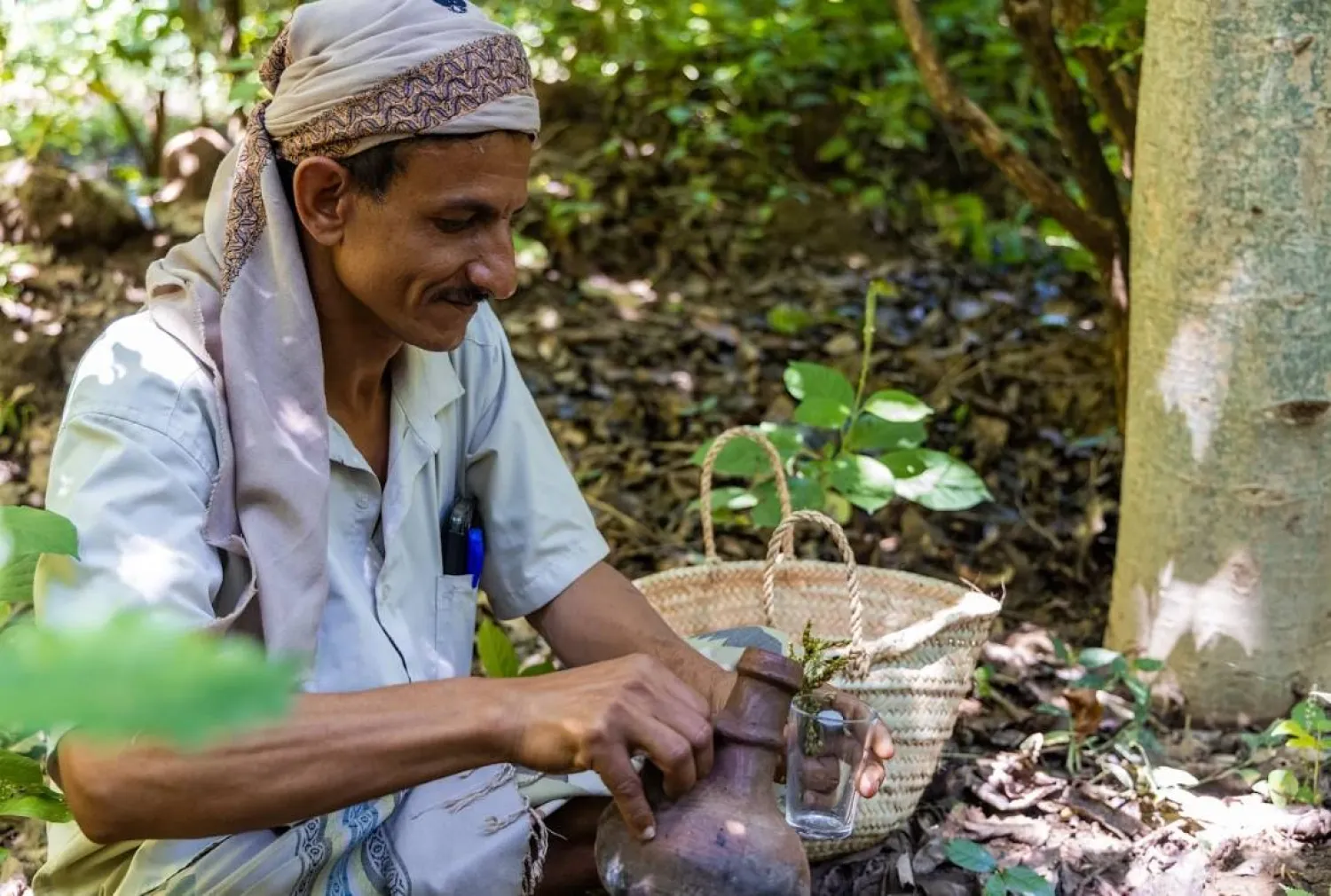

A UN-backed food security project in Yemen has become a model for creating jobs, helping farmers confront food insecurity, and developing coffee farming as a heritage and strategic crop.
The project, implemented by the United Nations Development Program in the Taiz governorate, southwest Yemen, and funded by the World Bank, has created direct job opportunities for more than 43,000 people, including 4,000 women.
It has also provided 200,000 cubic meters of water in newly built reservoirs and improved 8,351 hectares of land.
The Food Security Response and Resilience Project has enabled 17,000 farmers to regain the ability to use their land efficiently. It has also supported farmers in coffee-producing areas, especially in Taiz, by building water infrastructure that reduces the impact of declining rainfall.
According to a UNDP report, the project focuses on building rainwater-harvesting reservoirs that can be used during droughts to ensure continued irrigation. In the Sabir Al-Mawadim district, two reservoirs were built, each with a capacity of 400 cubic meters.
Project data showed that farmers who gained access to these resources recorded a notable improvement in production during the latest season compared with those who continued to rely on irregular rainfall.
The project is based on an estimated funding of $64 million and covers 47 districts across several Yemeni governorates, particularly areas among the most agriculturally fragile. Its work is scheduled to continue until next December.
The UNDP is focusing on developing agricultural infrastructure and strengthening rural communities’ ability to cope with climate change, in cooperation with the Social Fund for Development and the Public Works Project.
Yemeni agricultural engineer Saeed al-Sharjabi told Asharq Al-Awsat that coffee farming in Yemen needs a package of infrastructure measures, including linking production areas to a network of main, secondary, and agricultural roads to reduce transport costs.
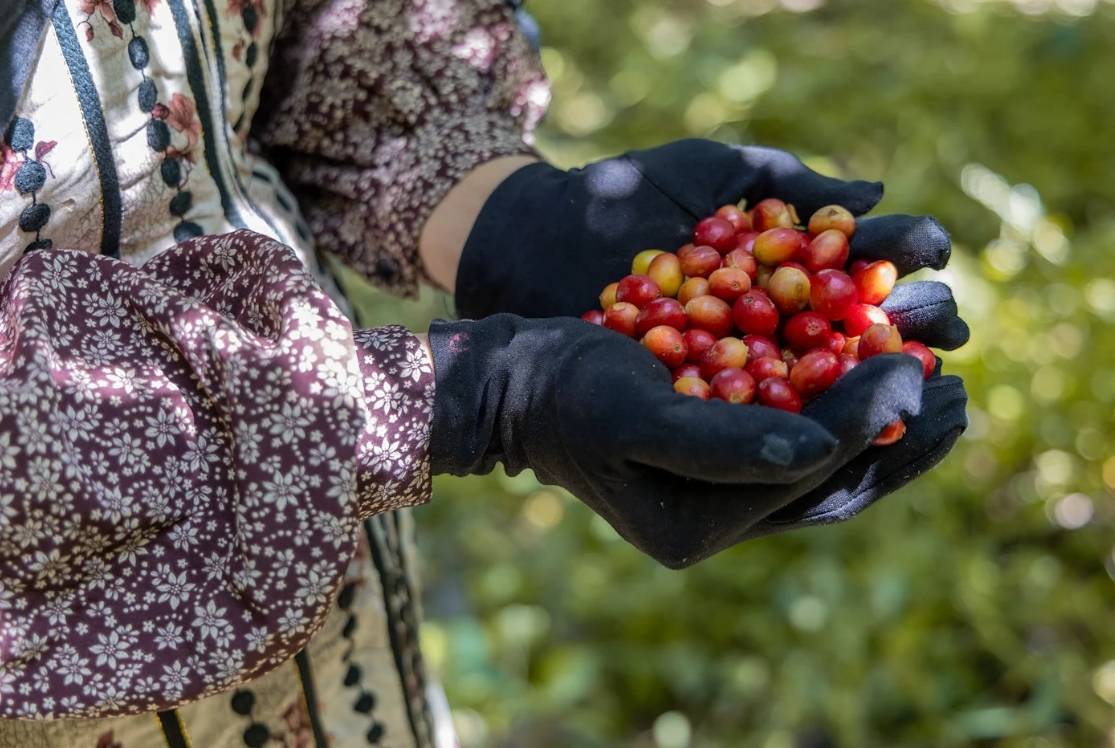
He said such roads could also support eco-tourism or agritourism.
Sharjabi called for building dams, barriers and water reservoirs, connecting them to suitable irrigation networks that help rationalize water consumption, establishing nurseries to produce coffee seedlings, setting technical standards for them, and encouraging investment in coffee-related fields such as production, marketing and the manufacture of environmentally friendly production supplies.
Project activities included rehabilitating more than 201 kilometers of agricultural roads, helping farmers reach their land and markets more easily. They also included building and improving water reservoirs with a total capacity of more than 200,000 cubic meters to reduce reliance on seasonal rainfall and support more stable irrigation.
According to UNDP data, the project provided more than 1.3 million workdays, including about 130,000 for women, while more than 22,000 farmers improved their access to water.
Samir al-Maqtari, an agricultural engineer and government employee, said many agricultural lands in rural Taiz have been abandoned due to water shortages or internal migration in search of services.
He warned that this threatens to leave the land exposed to deterioration and collapse because of sudden heavy rains after years of drought and desertification.
Speaking to Asharq Al-Awsat, Maqtari urged the government, the UN and international authorities to expand projects that support food security and to seize the opportunity created by thousands of farmers abandoning qat by supporting its replacement with coffee trees, especially since the environmental and climatic conditions needed for both crops are largely similar.
Initial results show that better water management is a decisive factor in protecting coffee farming, which has traditionally depended on fluctuating rainfall. These interventions also help reduce crop losses, stabilize farmers’ incomes and strengthen rural communities’ resilience.