


Oil Prices Rise as Fragile US-Iran Talks Sustain Supply Worries

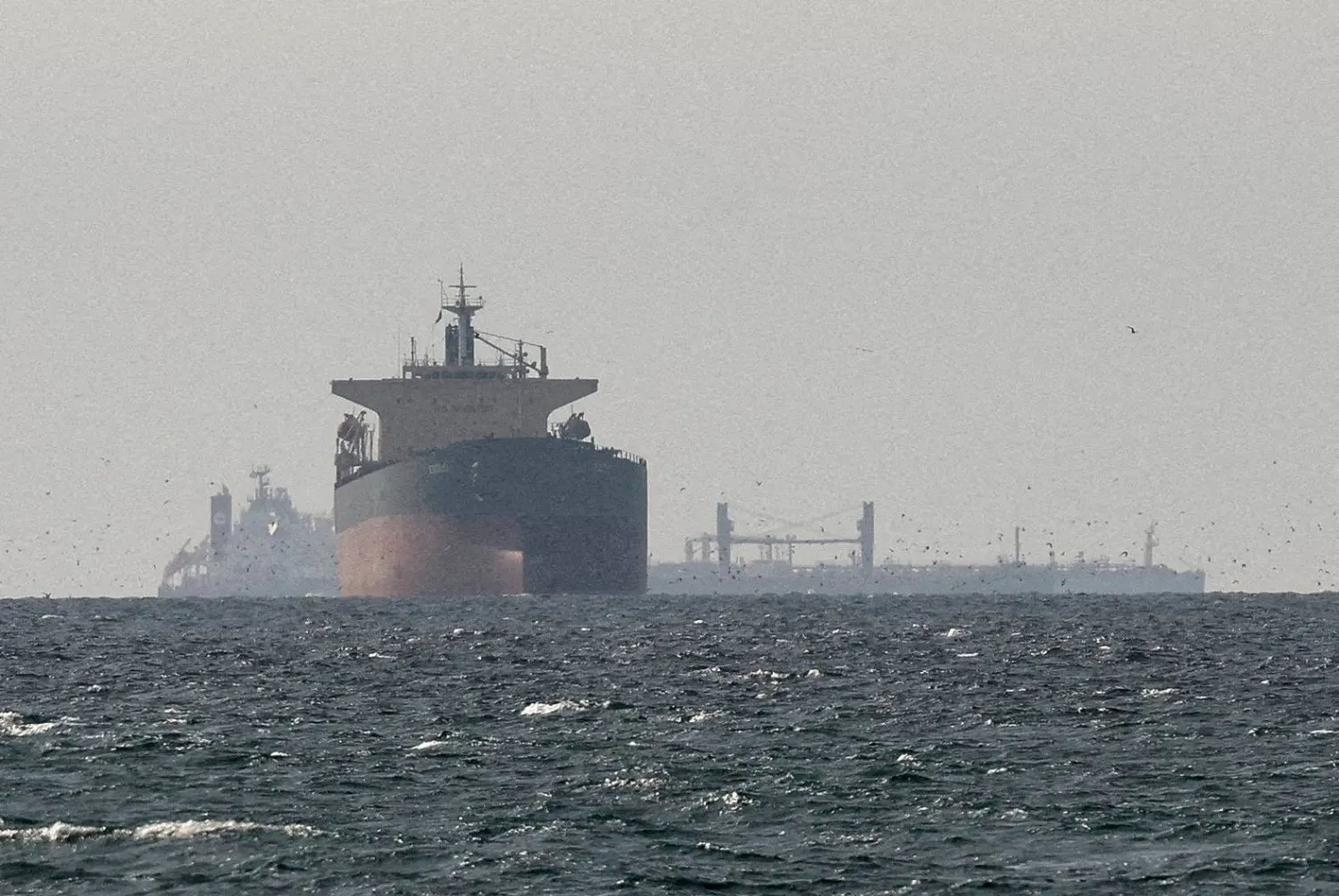
FILE PHOTO: Cargo ships in the Gulf, near the Strait of Hormuz, as seen from northern Ras al-Khaimah, near the border with Oman’s Musandam governance, amid the US-Israeli conflict with Iran, in United Arab Emirates, March 11, 2026./File Photo
TT

Oil Prices Rise as Fragile US-Iran Talks Sustain Supply Worries

FILE PHOTO: Cargo ships in the Gulf, near the Strait of Hormuz, as seen from northern Ras al-Khaimah, near the border with Oman’s Musandam governance, amid the US-Israeli conflict with Iran, in United Arab Emirates, March 11, 2026./File Photo

Oil prices rose nearly 1% on Tuesday as talks to end the US-Israeli war on Iran appeared fragile, with Tehran's response to a Washington proposal highlighting stark differences that have kept supply concerns alive.

Brent crude futures were up 86 cents, or 0.8%, at $105.07 per barrel, while US West Texas Intermediate gained 99 cents, or 1%, to $99.06 at 0411 GMT. Both benchmarks increased nearly 2.8% on Monday.

US President Donald Trump ‌on Monday said ‌the ceasefire with Iran was "on life support," pointing to ‌disagreements ⁠over several demands, such ⁠as the cessation of hostilities on all fronts, the removal of a US naval blockade, the resumption of Iranian oil sales and compensation for war damage, Reuters said.

Tehran also emphasized its sovereignty over the Strait of Hormuz, through which about a fifth of global oil and liquefied natural gas flows.

"Optimism regarding an imminent (peace) deal seems to be fading again and if we don’t see a ⁠deal by the end of May, then upside risks for ‌oil prices are definitely on the ‌table," said DBS Bank energy sector team lead Suvro Sarkar.

Disruptions linked to the near-closure ‌of the strait have prompted producers to curtail exports, with a Reuters ‌survey on Monday showing OPEC oil output in April falling to its lowest level in more than two decades.

"A genuine breakthrough toward a peace deal could trigger a sharp $8-$12 correction, while any escalation or renewed blockade threats would quickly push Brent ‌back toward $115+," said Tim Waterer, chief market analyst at KCM Trade.

Saudi Aramco CEO Amin Nasser on Monday warned ⁠that disruptions to oil ⁠exports through the strait could delay a return to market stability until 2027, with the loss of about 100 million barrels of oil per week.

Elsewhere on the supply front, US crude stocks were forecast by analysts in a Reuters poll to be down by around 1.7 million barrels in the previous week.

The draw comes against "a backdrop of continued strong net waterborne export flows for crude and products, across the next several weeks," said Walt Chancellor, an energy strategist at Macquarie Group.

Meanwhile, market participants were also keeping a close eye on Trump's planned meeting with Chinese President Xi Jinping on Wednesday, after Washington imposed sanctions on three individuals and nine companies for facilitating Iranian oil shipments to China.

Saudi Minister of Energy Signs Energy Cooperation MoUs with Kuwait, Qatar and Egypt

Saudi Minister of Energy and Minister of Industry and Mineral Resources Prince Abdulaziz bin Salman bin Abdulaziz and Kuwait’s Minister of Electricity, Water and Renewable Energy Dr. Subaih Abdulaziz Abdulmohsen Al-Mukhizim. (SPA)
TT

Saudi Minister of Energy Signs Energy Cooperation MoUs with Kuwait, Qatar and Egypt

Saudi Minister of Energy and Minister of Industry and Mineral Resources Prince Abdulaziz bin Salman bin Abdulaziz and Kuwait’s Minister of Electricity, Water and Renewable Energy Dr. Subaih Abdulaziz Abdulmohsen Al-Mukhizim. (SPA)

Saudi Minister of Energy and Minister of Industry and Mineral Resources Prince Abdulaziz bin Salman bin Abdulaziz signed on Sunday three memoranda of understanding with ministers from Kuwait, Qatar and Egypt, expanding cooperation across a broad range of energy fields.

Prince Abdulaziz signed an MoU on electricity and renewable energy cooperation with Kuwait’s Minister of Electricity, Water and Renewable Energy Dr. Subaih Abdulaziz Abdulmohsen Al-Mukhizim.

The MoU establishes a framework for cooperation between Saudi Arabia and Kuwait in electricity, renewable energy, power grid interconnection and electricity exports, as well as energy efficiency, energy storage and smart grids. It also covers related areas including digital transformation, innovation, cybersecurity and artificial intelligence.

The two countries will also work to develop strategic partnerships between their institutions, localize energy-related materials, products and services, and strengthen cooperation between companies operating in these fields.

The MoU further provides for cooperation on technologies and solutions related to climate change mitigation, including Circular Carbon Economy technologies and solutions.

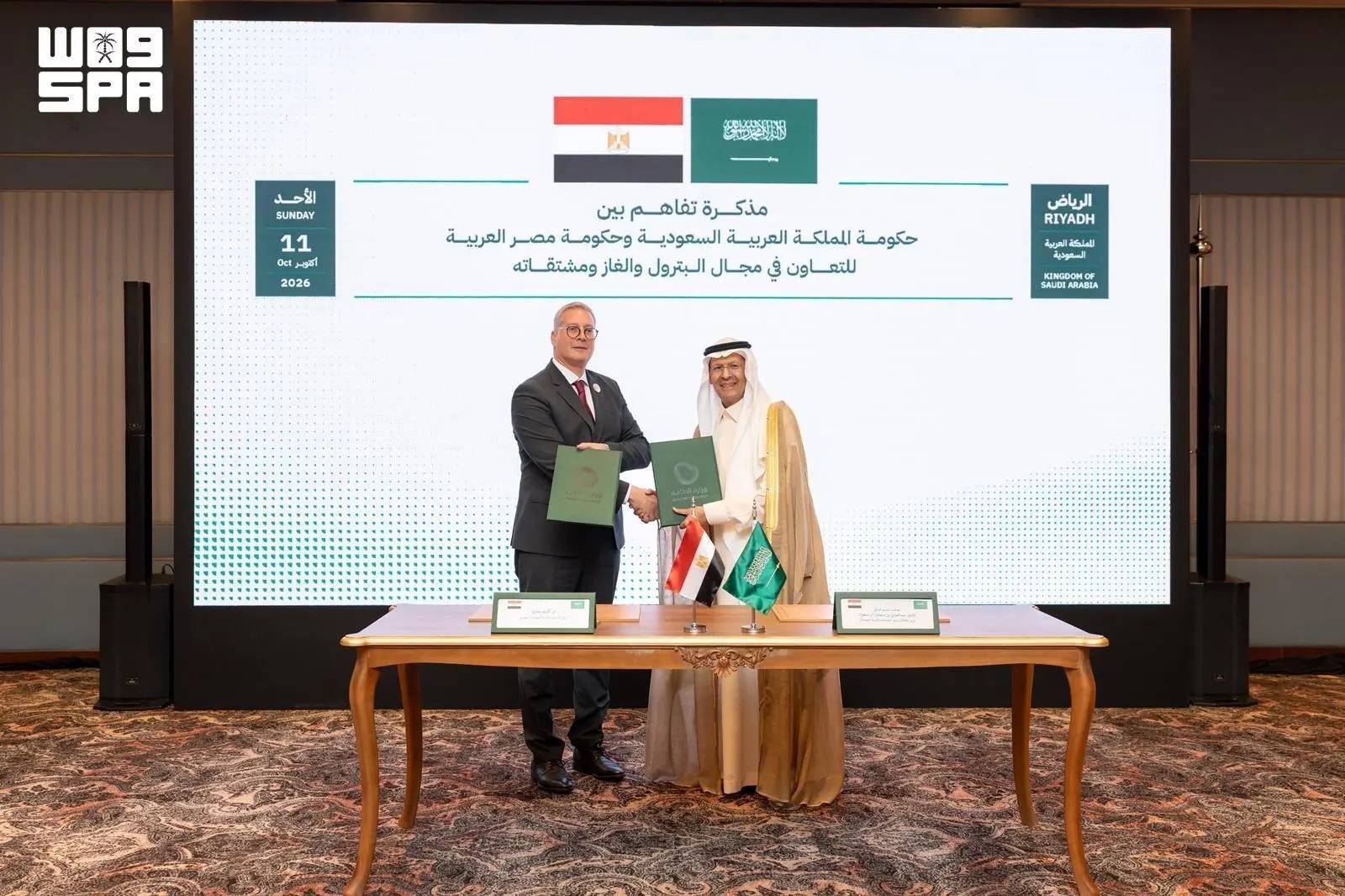
Saudi Minister of Energy and Minister of Industry and Mineral Resources Prince Abdulaziz bin Salman bin Abdulaziz and Egypt’s Minister of Petroleum and Mineral Resources Eng. Karim Badawi. (SPA)

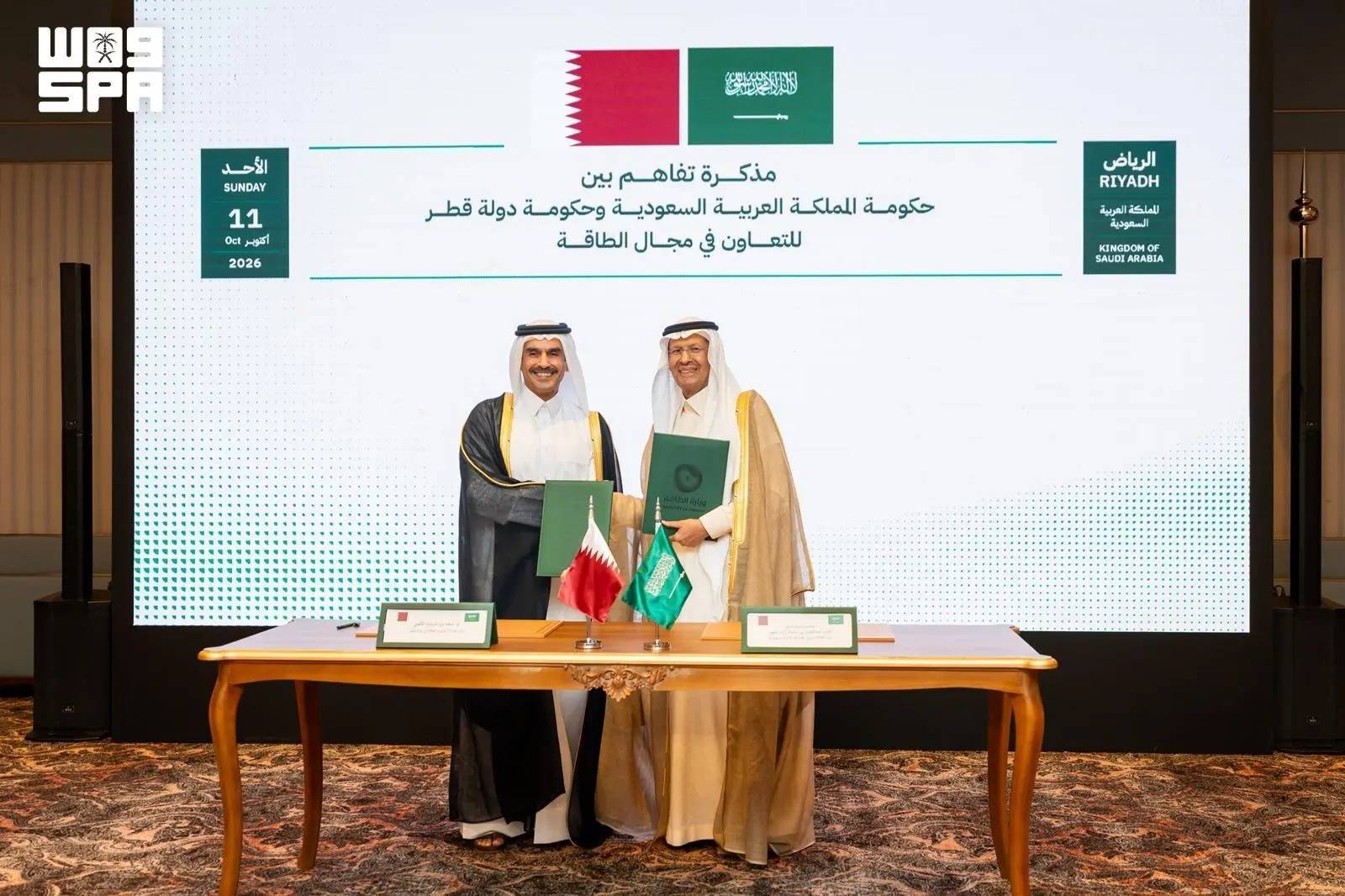
Prince Abdulaziz signed an MoU on energy cooperation with Qatar’s Minister of State for Energy Affairs Eng. Saad bin Sherida Al-Kaabi.

The MoU establishes a framework for cooperation between Saudi Arabia and Qatar across oil and petroleum products, gas and its derivatives, refining, petrochemicals, electricity, clean hydrogen and its derivatives, renewable energy, energy efficiency and energy storage.

It provides for the two countries to explore opportunities for joint projects involving pipelines for the transportation and export of oil and gas; the development and use of sustainable petrochemical materials in construction and other sectors; and cooperation on infrastructure to support access to energy.

The MoU covers cooperation in international negotiations, forums and organizations addressing energy transitions and climate change, including the United Nations Framework Convention on Climate Change, the Paris Agreement and the Intergovernmental Negotiating Committee tasked with developing an international legally binding instrument on plastic pollution, among others.

Prince Abdulaziz also signed an MoU with Egypt’s Minister of Petroleum and Mineral Resources Eng. Karim Badawi on cooperation in oil, gas and their derivatives.

Saudi Minister of Energy and Minister of Industry and Mineral Resources Prince Abdulaziz bin Salman bin Abdulaziz and Qatar’s Minister of State for Energy Affairs Eng. Saad bin Sherida Al-Kaabi. (SPA)

The MoU establishes a framework for Saudi-Egyptian cooperation in crude oil, petroleum products and natural gas, including their trade, handling, transportation, storage and distribution, as well as the development of related infrastructure and logistics.

The cooperation will strengthen energy market integration and supply chain resilience and reliability, enhance energy security, and help meet demand across domestic, regional and international markets. Activities will be carried out in accordance with the laws and regulations of both countries and on commercial terms that advance their mutual interests.

The agreement also covers the exchange of Saudi expertise in fuel station and service center qualification, operation and maintenance, as well as the Kingdom’s experience in opening the liquefied petroleum gas sector to competition. It expands cooperation in petrochemicals and investment in ongoing and planned projects.


Abdulaziz bin Salman: Riyadh is the Capital of Energy Security

Saudi Energy Minister Prince Abdulaziz bin Salman speaks at the opening of the ministerial meeting of the International Energy Forum (IEF) in Riyadh (Turki Al-Agili)
TT

Abdulaziz bin Salman: Riyadh is the Capital of Energy Security

Saudi Energy Minister Prince Abdulaziz bin Salman speaks at the opening of the ministerial meeting of the International Energy Forum (IEF) in Riyadh (Turki Al-Agili)

Saudi Energy Minister Prince Abdulaziz bin Salman stressed on Sunday that Riyadh represents the capital of energy security, noting that this status reflects the Kingdom's efforts, as well as those of the men and women working in the energy sector, to ensure reliable energy supplies and fulfill Saudi Arabia’s commitments to the world.

Achieving energy security requires cooperation among all countries, he said.

Speaking at the opening of the ministerial meeting of the International Energy Forum (IEF) in Riyadh, at the start of Riyadh Energy Week, the minister expressed hope that the gathering would help direct attention toward the most important issues that energy stakeholders should focus on.

He noted that the current period makes dialogue on energy security more important than ever and that in-person meetings enable participants to exchange assessments directly, discuss concerns, and build the understanding necessary for practical cooperation among nations.

He emphasized that Saudi Arabia will continue implementing its plans, meeting its domestic needs, and honoring its commitments to the world regardless of circumstances, stressing the Kingdom’s resilience and ability to continue advancing toward its objectives.

Prince Abdulaziz said that Saudi Arabia’s commitment to energy security is one of its defining characteristics and expressed hope that the event would help more participants understand the depth of that commitment.

“I am proud to say that this country, and the city of Riyadh, is the capital of energy security,” he said, attributing this standing to the efforts of the women and men working in the energy sector and to the work they undertake to ensure the continuity of supplies and the fulfillment of the Kingdom’s obligations.

He pointed to the significant amount of work Saudi Arabia has accomplished over the past eight months, stressing that the Kingdom continues to reassure its partners that it will meet its commitments to the world and will not fail to do so.

Abdulaziz bin Salman also noted that Saudi Arabia has demonstrated its ability to support the reliability of energy supplies under challenging circumstances through investment, preparedness, and decisive action.

He cited the East-West Pipeline as a clear example, explaining that it connects production centers in the Eastern Province with export facilities in Yanbu on the Red Sea, providing an alternative route for oil to reach international markets.

He further spoke about ongoing work on additional pipeline routes, expressing hope that the Kingdom’s commitments in this area would become clearer soon, ensuring the continuation of its efforts and strengthening its role in global energy markets.


International Energy Forum: Security of Supply Requires Ensuring Energy Access for Consumers

International Energy Forum (IEF) Secretary General Jassim Alshirawi speaks with Asharq Al-Awsat on the sidelines of the 17th Ministerial Meeting of the International Energy Forum (IEF) in Riyadh. Asharq Al-Awsat
TT

International Energy Forum: Security of Supply Requires Ensuring Energy Access for Consumers

International Energy Forum (IEF) Secretary General Jassim Alshirawi speaks with Asharq Al-Awsat on the sidelines of the 17th Ministerial Meeting of the International Energy Forum (IEF) in Riyadh. Asharq Al-Awsat

International Energy Forum (IEF) Secretary General Jassim Alshirawi stressed on Sunday that supply security remains a top priority amid growing global energy demand, driven by population growth, industrial expansion, and the increasing needs of data centers and artificial intelligence applications.

He emphasized that the challenge goes beyond producing energy and includes ensuring that it is delivered reliably to consumers.

In remarks to Asharq Al-Awsat on the sidelines of the 17th Ministerial Meeting of the International Energy Forum in Riyadh, Alshirawi praised Saudi Arabia for hosting Riyadh Energy Week, which opened with the forum's ministerial meeting.

He noted that these gatherings provide an opportunity to strengthen dialogue between energy-producing and energy-consuming nations and to explore ways of safeguarding energy security amid the ongoing transformations in the energy sector.

He explained that the forum comprises around 70 countries representing the majority of the world's energy producers and consumers. It also includes an industry advisory board that enables companies to participate in the dialogue between governments, helping to bridge perspectives among stakeholders and address challenges related to energy availability.

Alshirawi added that population growth, industrial needs, and the new demand generated by the expanding use of artificial intelligence are increasing the importance of ensuring adequate energy supplies and the infrastructure needed to transport them to consumers.

He stressed that energy security is not only about a country's ability to produce energy, but also about ensuring that supplies reach their destinations in order to meet the needs of economies and industries.
