Oil Prices Dip after Iran Says Dozens of Vessels are Crossing Hormuz

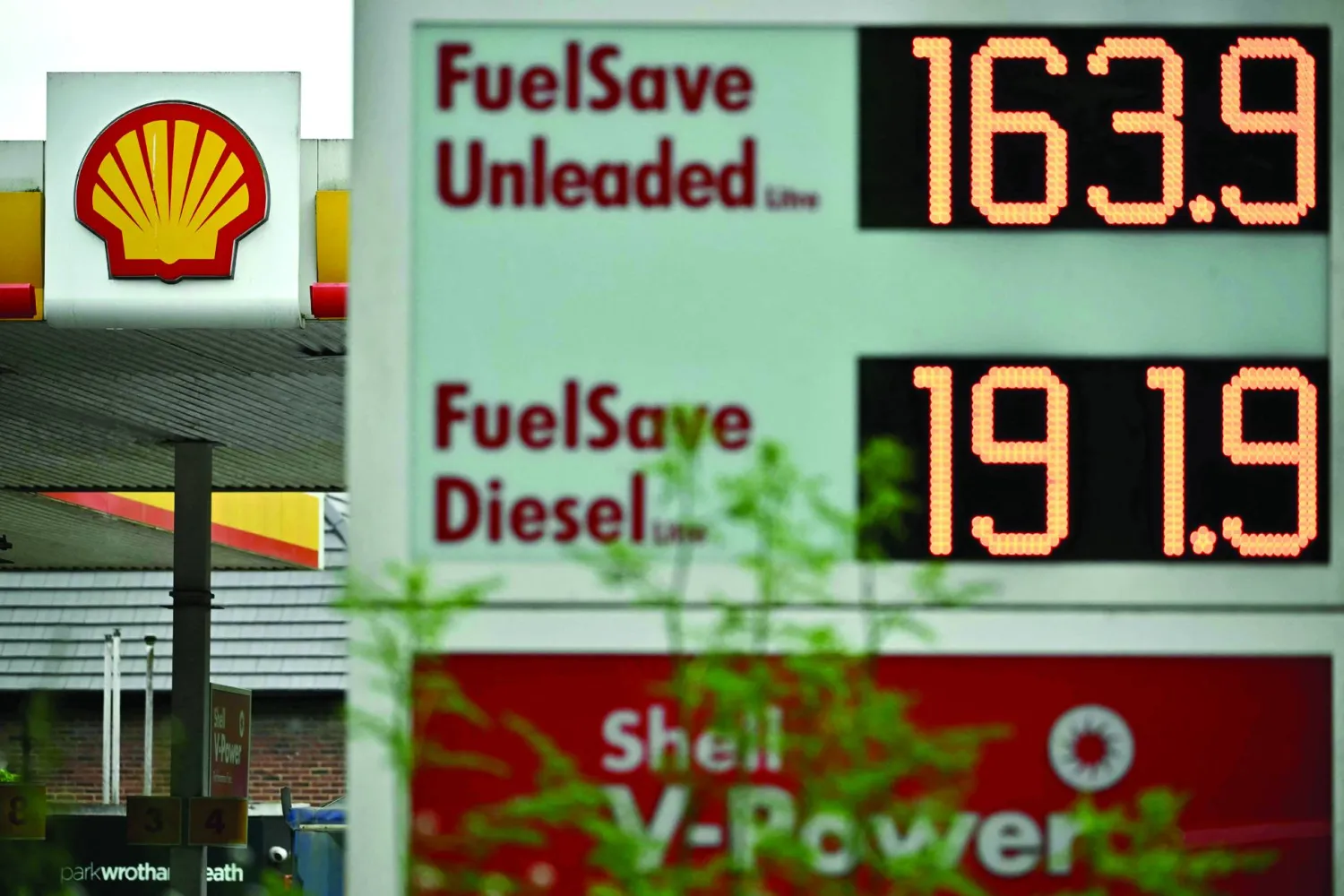
(FILES) The price per litre of unleaded petrol and diesel is pictured in front a Shell petrol station in Wrotham Heath, south east England on May 7, 2026. British energy giant Shell announced on May 7, 2026 a 19-percent increase in net profits for the first quarter as the Middle East war sent oil and gas prices soaring in volatile trading. (Photo by Ben STANSALL / AFP)
TT

Oil Prices Dip after Iran Says Dozens of Vessels are Crossing Hormuz

(FILES) The price per litre of unleaded petrol and diesel is pictured in front a Shell petrol station in Wrotham Heath, south east England on May 7, 2026. British energy giant Shell announced on May 7, 2026 a 19-percent increase in net profits for the first quarter as the Middle East war sent oil and gas prices soaring in volatile trading. (Photo by Ben STANSALL / AFP)

Oil prices dipped on Thursday after Iran's state media said about 30 vessels had crossed the Strait of Hormuz in recent hours while the semi-official Fars news agency cited a source saying Iran had begun allowing transit for some Chinese vessels.

Meanwhile, the White House, speaking of US President Donald Trump's meeting with Chinese President Xi Jinping, said both leaders agreed the Strait of Hormuz must be open for the free flow of energy. Xi said the "rejuvenation of China" and "Make America Great Again" can go hand in hand.

Easing from an earlier high of $107.13 a barrel, Brent crude oil futures were down 60 cents, or 0.6%, to $105.03 a barrel at 1422 GMT. US West Texas Intermediate futures dropped 52 cents, or 0.5%, to $100.50.

Both contracts fell on Wednesday as investors worried about possible US interest rate hikes as higher fuel prices spur inflationary pressures. Brent crude futures lost more than $2 a barrel, while WTI futures dropped more than $1.

Xi expressed interest in purchasing more US oil to reduce China's dependence on the Strait of Hormuz, according to the White House. China, never a big buyer of US crude, has not imported any since May 2025 due to a 20% import tariff imposed during the trade war.

The Strait of Hormuz, a key energy gateway, has been largely shut since the Iran war broke out at the end of February.

Iran appears to have tightened its control over the strait, cutting deals with Iraq and Pakistan to ship oil and liquefied natural gas from the region.

Before the Fars report, a Chinese supertanker carrying 2 million barrels of Iraqi crude sailed through the strait on Wednesday after being stranded in the Gulf for more than two months.

A Panama-flagged crude oil tanker managed by Japanese refining group Eneos has also passed through the strait, ship-tracking data from LSEG showed on Thursday, the second instance of a Japan-linked oil ship making it through.

Global oil supply will fall short of total demand this year as inventories are drained at an unprecedented pace, the International Energy Agency said on Wednesday.

In the United States, crude inventories fell by 4.3 million barrels to 452.9 million barrels for the week ended May 8 on rising exports, the EIA said, although distillates stockpiles rose, in opposition to expectations of a draw.


Saudi Real Estate Developers Move to Capitalize on New Foreign Ownership Rules

A general view of buildings and homes in the Saudi capital, Riyadh (File photo: Reuters)
TT

Saudi Real Estate Developers Move to Capitalize on New Foreign Ownership Rules

A general view of buildings and homes in the Saudi capital, Riyadh (File photo: Reuters)

Saudi Arabia's real estate market has entered a new phase of testing the practical impact of the executive regulations governing property ownership by non-Saudis, as listed developers move swiftly beyond welcoming the decision and the initial positive market reaction to translating it into strategic growth plans.

While the sector index has extended its early gains on expectations that the new rules will broaden international demand, the competitive advantage is beginning to shift toward companies with high-quality assets that are ready to be marketed and sold.

The real estate index on the Saudi stock market posted a sharp gain following the announcement, rising from 2,924 points to 3,044 points. The increase was driven by investor expectations that allowing non-Saudis to own property under specific regulations would expand demand for Saudi real estate assets, particularly in cities and projects with strong investment and religious appeal.

Real estate stocks led the market's gainers in the session following the announcement. Shares of Umm Al Qura for Development and Construction (Masar) hit the daily 10 percent limit, while Knowledge Economic City rose about 9.3 percent. Jabal Omar Development, Retal, Emaar The Economic City, and Makkah Construction and Development also posted strong gains.

Financial and economic adviser Dr. Hussein Al Attas told Asharq Al-Awsat that allowing non-Saudis to own property represents an important structural shift for Saudi Arabia's real estate market, but said the impact will not be uniform across all developers. Instead, the market will increasingly differentiate between companies with attractive assets and projects in locations targeted by international investors and those without them.

Master plan of the Masar Makkah destination (Masar)

He added that asset quality, location, financial strength, the size of developable land holdings, and the ability to attract international investors will be among the key factors determining how much companies benefit from the decision in the coming period.

Al Attas expects the sector to perform positively over the medium to long term. However, he said the real impact of the decision will ultimately be measured by companies' ability to turn this opening into actual sales, partnerships, and cash flows, rather than by the initial rise in share prices following the announcement.

In the first concrete move by a listed company since the regulations were approved, Jabal Omar Development on Sunday outlined its strategy for capitalizing on the decision after its project in Makkah was included within the geographic areas where non-Saudis are permitted to own property.

The company said the decision would broaden its base of potential investors and property owners among Muslims around the world, supporting demand for its real estate assets. It also announced plans to offer 400 existing hotel residential units for sale this year as the first phase of the program, with the proceeds earmarked to reduce debt and lower financing costs.

The company also plans to redesign the seventh and final phase of the project by increasing the number of hotel residential units available for sale while making greater use of off-plan sales programs to reduce financing requirements and strengthen reliance on internally generated liquidity.

Al Attas said the market's response to the regulations has unfolded in two stages. The first was a broad wave of optimism that lifted most real estate companies. The second has begun as investors seek to identify the companies best positioned to convert the decision into tangible growth in sales, cash flow, and profitability.

The decision to allow non-Saudis to own property forms part of a broader package of measures introduced by the Kingdom in recent months to restore balance to the real estate market and strengthen its investment appeal.

These measures include allowing the sale, purchase, and development of land in new areas north of Riyadh, increasing fees on undeveloped land, imposing fees on vacant properties, and freezing annual rent increases in Riyadh for five years.

The decision also coincides with signs of improving real estate and construction activity across the Kingdom. The construction sector returned to growth in May, supported by stronger residential building activity and renewed growth in new orders.

Although the full impact of the regulations will take time to emerge, recent moves by real estate developers indicate that the market has already begun shifting from expectations to execution as companies seek to attract a new segment of investors and buyers from outside the Kingdom.


China Imposes New Export Controls, Deepening Japan Row

FILE PHOTO: A China yuan banknote featuring late Chinese chairman Mao Zedong and a computer keyboard are seen reflected on an image of Chinese flag in this illustration picture taken November 1, 2019.  REUTERS/Florence Lo/Illustration/File Photo
FILE PHOTO: A China yuan banknote featuring late Chinese chairman Mao Zedong and a computer keyboard are seen reflected on an image of Chinese flag in this illustration picture taken November 1, 2019. REUTERS/Florence Lo/Illustration/File Photo
TT

China Imposes New Export Controls, Deepening Japan Row

FILE PHOTO: A China yuan banknote featuring late Chinese chairman Mao Zedong and a computer keyboard are seen reflected on an image of Chinese flag in this illustration picture taken November 1, 2019.  REUTERS/Florence Lo/Illustration/File Photo
FILE PHOTO: A China yuan banknote featuring late Chinese chairman Mao Zedong and a computer keyboard are seen reflected on an image of Chinese flag in this illustration picture taken November 1, 2019. REUTERS/Florence Lo/Illustration/File Photo

China put 20 more Japanese organizations on a blacklist Monday over the export of items with both military and civilian possible uses, adding fuel to a months-long row with Tokyo.

The new additions, including major companies, "have participated in enhancing Japan's military capabilities", the Chinese commerce ministry said in a statement.

Japan's government spokesman Minoru Kihara called the measures "unacceptable and deeply regrettable" and said Tokyo had "lodged a strong protest and demanded that the measures be withdrawn."

The countries' have been at row since Japanese Prime Minister Sanae Takaichi suggested in November that Tokyo may react militarily to an attack on Taiwan, the self-ruled island Beijing has vowed to seize control by force if necessary.

China responded furiously, including by advising its citizens -- previously the biggest cohort of foreign tourists -- to avoid Japan.

Chinese authorities ramped up pressure in February by imposing export restrictions on dozens of Japanese firms it said were involved in building up Tokyo's military.

The 20 additions to the export blacklist named Monday include specialized subsidiaries and technology firms involved in supplying components and engineering support for Japan's defense sector.

Among them are the National Institute for Defense Studies and Mitsubishi Electric Defense and Space Technologies Corporation, the statement said.

China's commerce ministry said the controls require exporters to submit risk assessments and guarantees that dual-use items will not enhance Japanese military strength prior to making shipments.

Those named on the watchlist can apply to be removed by cooperating with "verification" procedures according to Chinese law, the ministry said.

China is the world's largest producer and refiner of rare earths, which are crucial for various high-tech products including electric vehicles, smartphones, missile guidance systems and lasers.

Japan has "strayed further down the wrong path, intensifying its push for a 'new form of militarism'", an unnamed commerce ministry spokesperson said in a statement on the latest measures.

- China-Russia patrols -

Since Takaichi took office in October, Japan has quickened its pivot towards a more proactive defense policy, further shaking off -- with US encouragement -- a pacifist outlook, which has been in place since the end of World War II.

Tokyo has loosened rules on exports of lethal weaponry and deepened military cooperation with other countries in the region at odds with China including the Philippines.

Japan and the United States, as well as many other countries, are seeking to curb dependence on China in rare earths, as Beijing increasingly uses its dominance for geopolitical leverage.

Japan on Monday also joined South Korea in criticizing joint flights by Chinese and Russian bombers and fighters over the weekend in the region.

Fellow US allies South Korea and Japan both scrambled fighter jets in response to the patrols by the convoy of around 15 aircraft on Saturday.

"This marks the 10th instance of such long-range activities by Chinese and Russian bombers in the vicinity of Japan since December last year," Japanese government spokesman Kihara said Monday.

Beijing's defense ministry said that the Chinese and Russian air forces conducted a "strategic air patrol" over the Sea of Japan, the East China Sea and the western Pacific Ocean, "demonstrating their determination and capability to jointly uphold regional peace and stability".

Tokyo last week also rejected Beijing's accusations that the Japanese military "harassed" a Chinese aircraft carrier strike group during 40 days of exercises in the Pacific.


EU, China Trade Tensions Loom over Minister Visit

Chinese Commerce Minister Wang Wentao will meet his EU counterpart Maros Sefcovic in Brussels. Pedro PARDO, Annabelle GORDON / AFP/File
TT

EU, China Trade Tensions Loom over Minister Visit

Chinese Commerce Minister Wang Wentao will meet his EU counterpart Maros Sefcovic in Brussels. Pedro PARDO, Annabelle GORDON / AFP/File

Europe and China will gauge whether trade frictions can be resolved through talks Monday when top EU trade official Maros Sefcovic hosts his Chinese counterpart Wang Wentao in Brussels for day-long discussions.

The European Union has turned its attention to China as Brussels frets over increasing trade imbalances between the 27-nation bloc and the Asian powerhouse.

The issue is existential for the EU, AFP reported.

Brussels fears it will lose certain industries entirely if it does not act against a glut of cheap goods made in China threatening manufacturers in Europe.

Wang's visit comes less than two weeks after EU leaders tasked the European Commission with tackling the issue through talks with Beijing -- while simultaneously preparing beefed-up defense measures to protect key sectors.

Sefcovic will tell Wang the current imbalances are unsustainable for the EU before hosting the Chinese minister for a special dinner on Monday evening.

The EU's trade deficit in goods hit around 360 billion euros ($410 billion) in 2025, meaning the bloc imported way more from China than it exported there.

In turn, Wang will likely seek to understand how serious the EU is in threatening to deploy its trade defense armory against Beijing.

But the EU still hopes to avoid a trade war with its second-largest trading partner for goods alone, according to the European Commission -- with China making clear it will retaliate against actions it views as unfair.

Following Trump's playbook?

Europe insists on the need for a level-playing field, pointing out that Chinese firms have an unfair advantage because of massive state subsidies.

The numbers support Brussels' argument. Between 2005 and 2024, Chinese companies received around three to eight times more government support than businesses in the Organization for Economic Co-operation and Development, according to the OECD, which called it "a conservative estimate".

The EU has an arsenal of trade defense tools it can use to address the issue.

These include imposing higher tariffs if investigations prove companies are selling goods at unfairly low prices or if there is state support that gives an unjust advantage to the manufacturers.

Brussels could also slap restrictions known as safeguard measures -- including quotas -- if there is a sudden surge in imports.

New measures are likely also on the way.

The European Commission, which leads EU trade policy, is working on an instrument that would force businesses to diversify their suppliers in critical sectors like chips and rare earths.

And French President Emmanuel Macron in May proposed a European "Section 301" -- the trade tool US President Donald Trump has employed to set higher tariffs for certain sectors after investigations.

'Not enemies'

The EU has taken several measures to confront soaring imports from China including doubling its duties on foreign steel, slapping higher levies on small parcels from abroad and hefty tariffs on Chinese-made electric vehicles.

Despite growing acceptance of the need to get tougher however, Brussels has shown zero appetite for a painful trade war with Beijing.

Beijing warns it is ready to respond to any measures it believes target China.

They are not empty threats for the EU since China previously slapped duties on European cognac and conducted anti-dumping probes into pork and dairy products.

The warning weighs on EU capitals.

Germany has until recently been more cautious since it is more exposed to China's economy but the biggest supporter of a more pragmatic approach has been Spain as it seeks Beijing's investment.

Although he echoed China's retaliation warning last week, Beijing's envoy to the EU Cai Run also urged dialogue as he told a Brussels audience that the bloc and Beijing were "partners, not rivals, and certainly not enemies".

The relationship is significant for China too: the EU is its second-largest trading partner.

After dinner with Sefcovic, Wang will head to London.