
Britain's Pound, Stocks and Bonds Fall on Political Uncertainty, Global Inflation Angst

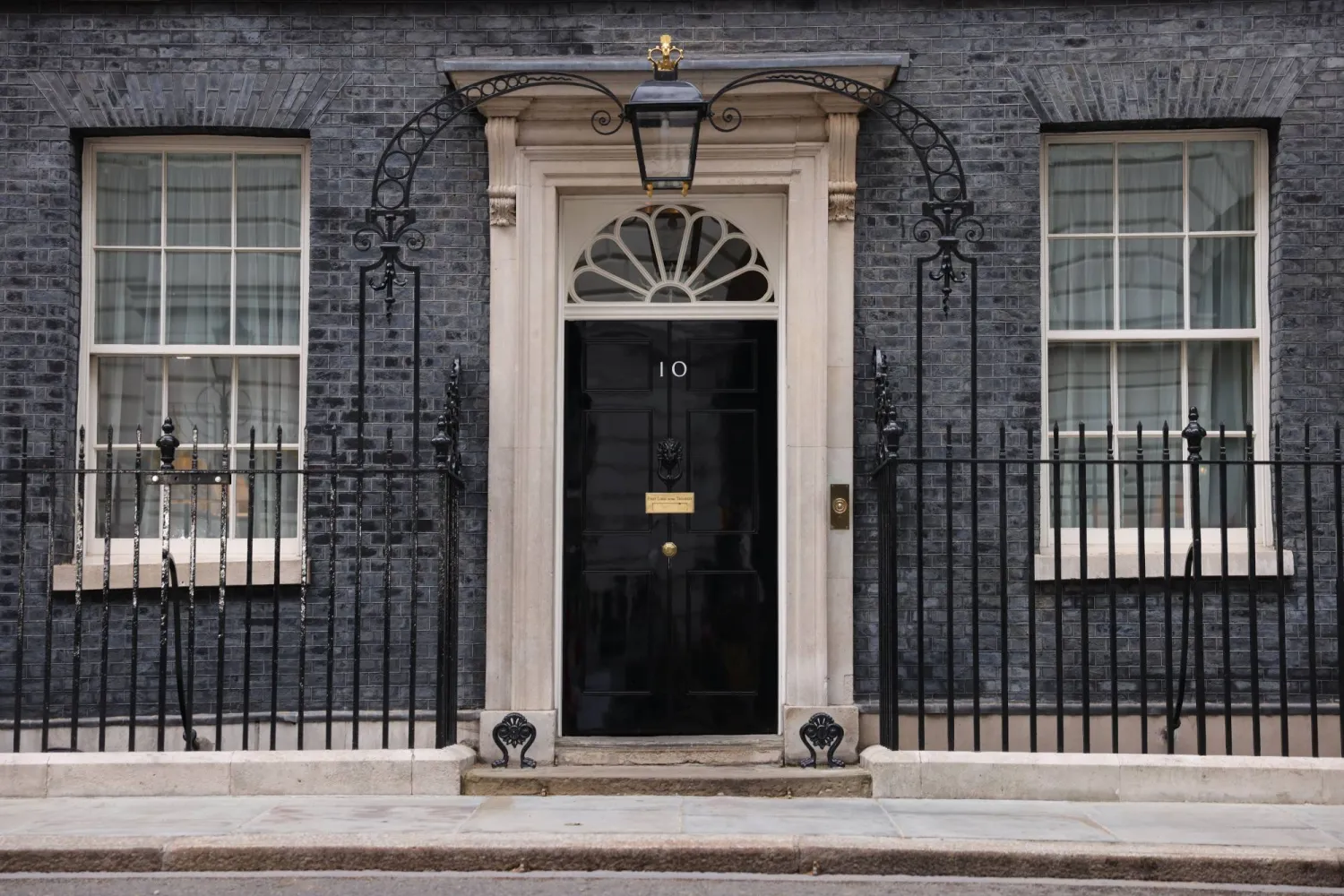
A view of 10 Downing Street in London, Britain, 14 May 2026. EPA/NEIL HALL
TT

Britain's Pound, Stocks and Bonds Fall on Political Uncertainty, Global Inflation Angst

A view of 10 Downing Street in London, Britain, 14 May 2026. EPA/NEIL HALL

British government bonds, stocks and sterling fell on Friday, as domestic political uncertainty clashed with global worries about an inflationary shock, leaving UK assets in the mire.

Sterling fell to a five-week low and is down almost 2% against the dollar this week, set for its biggest weekly drop since November 2024.

British Prime Minister Keir Starmer was in a battle to hold on to power after his health minister Wes Streeting resigned from government, while others positioned themselves to challenge his leadership, following disastrous local election results last week.

Markets are concerned that a ⁠new leader may ⁠be willing to loosen fiscal policy more, with British government borrowing costs up sharply again and UK bank stocks selling off on Friday.

Greater Manchester Mayor Andy Burnham has been offered a path for a possible leadership challenge after another Labour lawmaker said he would resign his parliamentary seat. If Burnham were to win the seat, he could then challenge for ⁠the party leadership.

"Market's fear is that Burnham would be more left leaning, and we could see further increase in deficits," Reuters quoted Jefferies economist Mohit Kumar as saying.

"Our base case is one of a managed exit for Starmer and Burnham likely becoming the next PM," he added.

The domestic political drama has coincided with another rise in energy prices on Friday and growing evidence that the economic damage from the Iran war is hurting.

US inflation data this week has shown consumers and factories are starting to see big increases in price pressures as a result of the war, which has ⁠pushed up the ⁠price of crude by over 50%.

The pound has tended to suffer against the dollar when tensions between Washington and Tehran flare or oil prices rise, given Britain's dependence on energy imports and the economy's sensitivity to higher fuel costs.

It was last down 0.3% on the day at $1.3364 after earlier touching $1.3335, its lowest level in over five weeks.

British bond yields jumped across the curve. The 10-year yield was last up almost 12 basis points (bps) at around 5.11%. Bond yields move inversely with prices.

Stocks also fell. The blue-chip FTSE 100 was last down 0.6%, while the more domestic-oriented FTSE 250 index of midcap stocks was down 1.1%.

UK banks were also down sharply, with Barclays and Lloyds down over 2% each.


Syria Says Sending Imported Petrol to Iraq

A drone view shows facilities at the Banias oil refinery, in Banias, Syria, April 8, 2026. (Reuters)
TT

Syria Says Sending Imported Petrol to Iraq

A drone view shows facilities at the Banias oil refinery, in Banias, Syria, April 8, 2026. (Reuters)

Syria said on Sunday that it had begun delivering imported petrol to Iraq this week, months after Baghdad began exporting its oil via Syria when the Middle East war disrupted the Strait of Hormuz.

"The Syrian Petroleum Company has begun transporting petrol imported for Iraq through the Banias oil terminal" on Syria's Mediterranean coast, state news agency SANA reported.

The move is part of "a renewable three-month agreement to secure energy supplies amid disruptions to maritime traffic through the Strait of Hormuz", it added.

The report cited Syrian Petroleum Company official Ahmed Qubbaji as saying that operations began on Thursday with a first batch of 57 tankers, with work underway to increase the number of trucks crossing the Al-Tanf land border to Iraq to 200 per day.

The Qatari firm UCC was responsible for purchasing the petrol "from various global sources", with Syria then transporting it for a fee, Qubbaji said according to the report.

The operations support "Syria's role as a corridor for importing, exporting and transporting materials and energy between regional countries", he said.

The closure of Hormuz has hit Iraqi oil exports hard, and in April Baghdad said it had begun shipping crude through Syria by truck to circumvent the strait, though the amounts are far below what used to travel by sea.

Qubbaji said that up to 1,200 Iraqi oil tankers transited Syria daily.

Syria's new authorities, who ousted longtime ruler Bashar al-Assad in December 2024, have been seeking to reboot the country's economy and rebuild its infrastructure after more than a decade of war.

Syria and Iraq are also finalizing negotiations on a contract to restore a key oil pipeline between the countries, Syrian officials have said.


US Treasury Chief Claims Successes in Isolating Iran

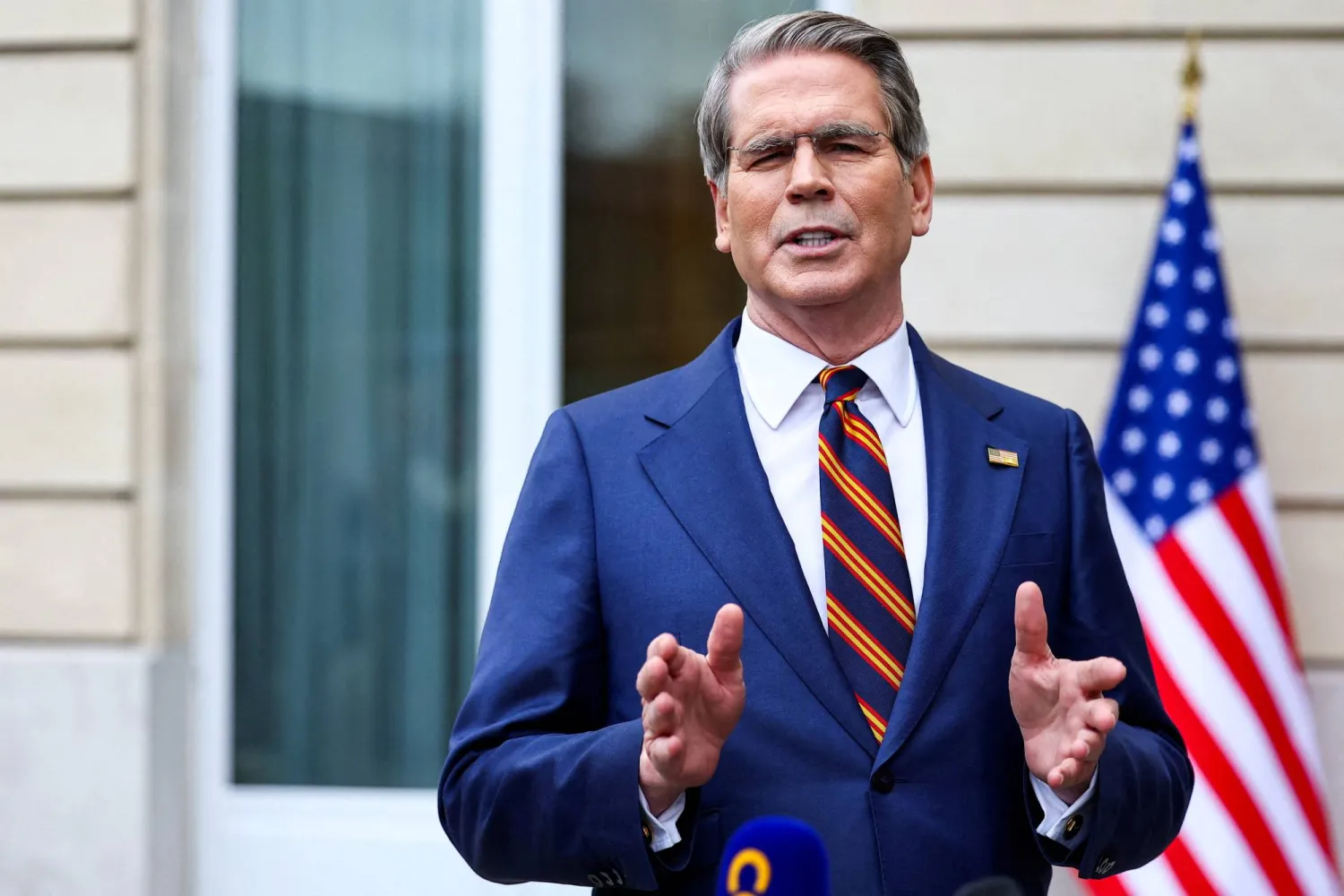
FILE PHOTO: US Treasury Secretary Scott Bessent speaks to the media after two days of meetings with a Chinese delegation, in Paris, France March 16, 2026. REUTERS/Abdul Saboor/File Photo
TT

US Treasury Chief Claims Successes in Isolating Iran

FILE PHOTO: US Treasury Secretary Scott Bessent speaks to the media after two days of meetings with a Chinese delegation, in Paris, France March 16, 2026. REUTERS/Abdul Saboor/File Photo

US Treasury Secretary Scott Bessent said on Saturday that he had sent envoys around the world to pressure countries to economically isolate Iran, hailing new restrictions targeting the country's airlines and banks.

"At my direction, teams were dispatched across the globe to engage with countries and demand action against the Iranian regime," he said on X. "These efforts are delivering results."

Bessent noted that Türkiye and Oman have halted incoming flights from private carrier Mahan Air, while the United Arab Emirates has stopped all flights by Iranian airlines.

Dubai, the UAE's commercial hub, is a major destination for Iran's carriers, with multiple daily flights, a large Iranian community and close business links.

Iran's ISNA news agency, citing officials, reported that five countries had revoked the Iranian republic's flight permits: Azerbaijan, Georgia, Iraq, Oman and the UAE.

But it said flights were still operating to China -- which is refusing to yield to US pressure -- and Russia via the two main airlines, national carrier Iran Air and Mahan.

Mahan had announced that it would no longer serve Türkiye at the request of the Turkish authorities, but flights continue several times a day in both directions, via Iran Air or smaller Iranian carriers, according to the Tehran and Istanbul airport websites.

ISNA said Afghanistan, Armenia, Belarus, Malaysia, Pakistan and Tajikistan were still also being served.

Bessent had said on Monday that all Iranian airlines "will be shut down around the world".

He also highlighted new banking restrictions.

On Wednesday, the UAE central bank blocked transactions to and from Iran by branches of Iran's Bank Melli, accusing it of violating laws on money laundering, terrorism and arms proliferation.

Last week, Türkiye revoked the license of Iran's Bank Mellat, a semi-private financial entity that has been subject to Western sanctions for years.

A Wall Street Journal article shared by Bessent said Jonathan Burke, the Treasury's assistant secretary for terrorist financing, traveled across the Middle East and Europe over two weeks to push the plan to impose what Bessent called "economic D-Day" on Tehran.

The US Treasury has held discussions with more than 50 countries, the Journal reported.


China, US Agree to $30 Billion Tariff Cut, AI Dialogue

WASHINGTON, DC - SEPTEMBER 25: US President Donald Trump (R) and President of China Xi Jinping (L) speak as they depart following a tour of the National Archives Museum on September 25, 2026 in Washington, DC. Win McNamee/Getty Images/AFP
TT

China, US Agree to $30 Billion Tariff Cut, AI Dialogue

WASHINGTON, DC - SEPTEMBER 25: US President Donald Trump (R) and President of China Xi Jinping (L) speak as they depart following a tour of the National Archives Museum on September 25, 2026 in Washington, DC. Win McNamee/Getty Images/AFP

China and the US have agreed to a $30 billion reciprocal tariff-reduction arrangement and to launch dialogue on AI, under an eight-point consensus reached during Chinese President Xi Jinping's visit to the US, China's Ministry of Foreign Affairs said.

The two sides recognized the work of their economic teams and endorsed steps including the establishment of a trade council, the tariff-reduction arrangement and an extension of outcomes from earlier talks in Kuala Lumpur, the ministry said.

The United ⁠States and China ⁠had earlier agreed to extend by two months a trade truce that was due to expire on November 10, allowing more time to work on a potentially bigger trade deal, US Treasury Secretary Scott Bessent said on Wednesday.

The leaders of ⁠the world's two largest economies ended a three-day summit that showcased personal diplomacy rather than big public breakthroughs. Xi has since landed in Beijing, Chinese state media Xinhua reported on Saturday.

On artificial intelligence, the two sides agreed to establish a dialogue to discuss the technology's risks and benefits, with the next round of discussion set for November, and to set up a communication channel for AI-related incidents, according to the ⁠ministry.

They ⁠also agreed to support each other in hosting the Asia-Pacific Economic Cooperation leaders' meeting and the Group of Twenty summit, with both leaders signaling their intention to attend the gatherings hosted by the other, Reuters reported.

On foreign policy, the leaders agreed that Iran should fulfil its commitment not to develop nuclear weapons, and that no country or entity should impose transit tolls on international waterways, the ministry said. They also recalled that China and the United States fought as allies in World War Two.