


Is Anger at Iran Beginning to Spread Among Lebanon’s Shiites?

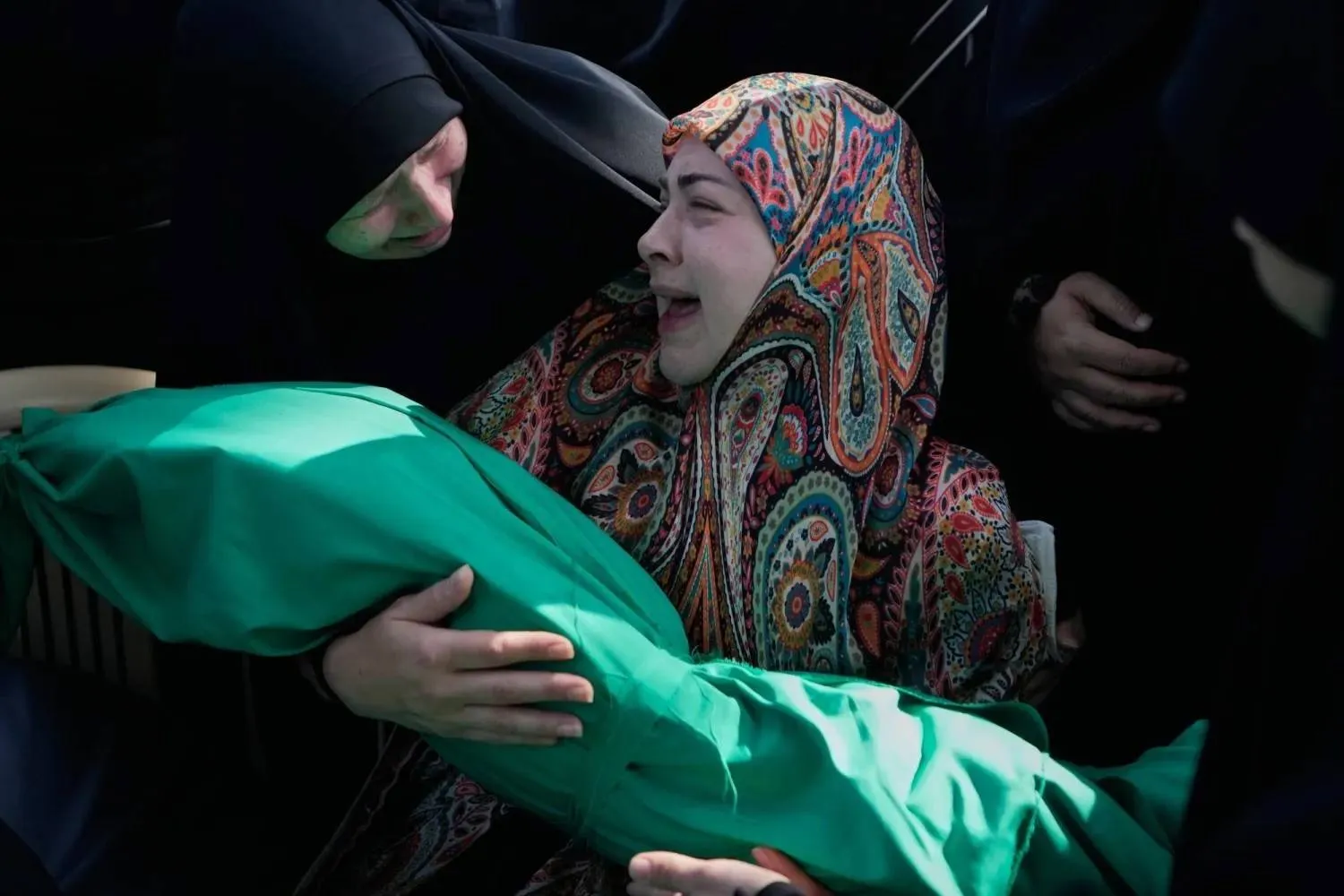
A woman carries the body of six-month-old Mariam Fahs during her funeral after she was killed in an Israeli strike on the town of Saksakiyeh (AP) 
TT

Is Anger at Iran Beginning to Spread Among Lebanon’s Shiites?

A woman carries the body of six-month-old Mariam Fahs during her funeral after she was killed in an Israeli strike on the town of Saksakiyeh (AP) 

Growing frustration is emerging within Lebanon’s Shiite community, extending beyond the traditional political discourse of Hezbollah and the Amal Movement to target Iran directly, as many residents feel the war launched in support of Tehran ended in the destruction of their villages, the displacement of their families and the loss of their loved ones.

The discontent has become increasingly visible on social media, particularly among supporters of the Amal Movement led by Parliament Speaker Nabih Berri, as well as among Hezbollah supporters, with ideological and political slogans no longer able to contain the scale of anger and despair.

The growing resentment comes despite continued statements by Hezbollah officials thanking Iran and emphasizing its role in supporting the “resistance,” while also relying on Tehran to pressure for a ceasefire.

But a large segment of the Shiite community now sees a contradiction between that rhetoric and daily reality, as tens of thousands of displaced people endure harsh humanitarian conditions with no clear prospect of return or reconstruction.

Ideological rhetoric meets southern anger

In that context, remarks by Hezbollah-affiliated cleric Sheikh Assad Qasir sparked widespread debate after he said that “preserving the Islamic Republic in Iran is a religious duty that takes precedence over preserving individuals because it constitutes a guarantee for preserving Islam itself.”

Qasir based his remarks on ideas attributed to Iran’s late supreme leader Khomeini and on the concept of sacrifice embodied in the battle of Karbala. But the rhetoric prompted angry reactions from many residents who increasingly view the war through the lens of their human and material losses.

Zeinab, a displaced woman from southern Lebanon, said: “The war was launched under the slogan of supporting Iran, but today we feel we were left alone. Even Hezbollah and Amal MPs do not ask about the people living in displacement centers.”

She added: “I feel dying under the roof of our home would be easier than the life of displacement we are living today. We can no longer endure this psychological and economic suffering, and nobody feels what we are going through.”

‘The south matters more than all conflicts’

Mona, a mother of two renting a home in Mount Lebanon, said the experience of recent months had changed the convictions of many within the pro-resistance environment.

“The war started under major slogans, but the result was the destruction of our villages, the loss of our young men and the displacement of our families. Today people feel anguish for the south more than anything else,” she remarked.

She added bitterly: “Many have reached the conclusion that the south and its people matter more than all regional conflicts. People in the south are now saying: let Iran and the whole world burn, as long as the south survives.”

Collapse of the ‘single axis’ slogan

Umm Mohammed also expressed deep disappointment with the idea of the “single axis.”

“For years they told us we were one axis and that we had to support every battle fought by this axis. But when war came upon us, we felt we were alone,” she said.

She continued: “Tehran said it would not enter negotiations before a ceasefire in Lebanon, then later said the ceasefire agreement was reached through negotiations with America, while Israeli bombardment and occupation continue expanding every day.”

The state option

Like many Lebanese, Leila called for supporting the Lebanese state in pursuing direct negotiations with Israel to end the war.

“Iran works for its own interests, and that is its right, but why don’t we also think about the interests of our people and our country?” she asked. “We are tired of waiting and of tying the fate of the south to the calculations of other countries.”

She stressed that many people now demand that the Lebanese state alone manage negotiations and the war file because the current situation means “more destruction and losses without any clear horizon.”

Anger over declining Iranian support

Political analyst Ali al-Amin spoke of “a clear shift” within the Shiite community in its perception of Iran and growing feelings of anger and disappointment among Hezbollah supporters over developments in southern Lebanon.

Al-Amin told Asharq Al-Awsat that Iranian influence was not based solely on sectarian or political ties, but also on the network of support and services provided by Hezbollah with Iranian backing, which for years represented a source of security for many families.

He said that feeling had weakened amid scenes of destroyed southern villages, displaced residents and mounting casualties, while many people no longer saw Iranian support commensurate with the scale of the losses.

According to Al-Amin, a large part of Hezbollah’s support base is now questioning why Iran has not responded directly or exerted real military pressure on Israel despite repeated talk of the “unity of fronts” and Iran’s missile capabilities.

“This reality has generated a feeling among some that Iran uses Hezbollah and the Shiite community within its regional calculations without being prepared to pay a real price to protect Lebanon or curb the ongoing war and destruction,” he remarked.

He added that the disappointment had opened the door to unprecedented criticism within the Shiite community of Iran’s role and policies, which some believe serve the interests of the Iranian regime more than those of Lebanese in the south.

“Iran said the ceasefire in Lebanon came as a result of an agreement with America in Islamabad,” Al-Amin said. “So if Israel violated the ceasefire, Iran should also abandon the ceasefire and pressure Israel at least to stop its attacks and expansion and reduce the displacement of residents from dozens of southern villages.”



UN Expert Condemns ‘Torture’ of Palestinian Prisoners in Israel

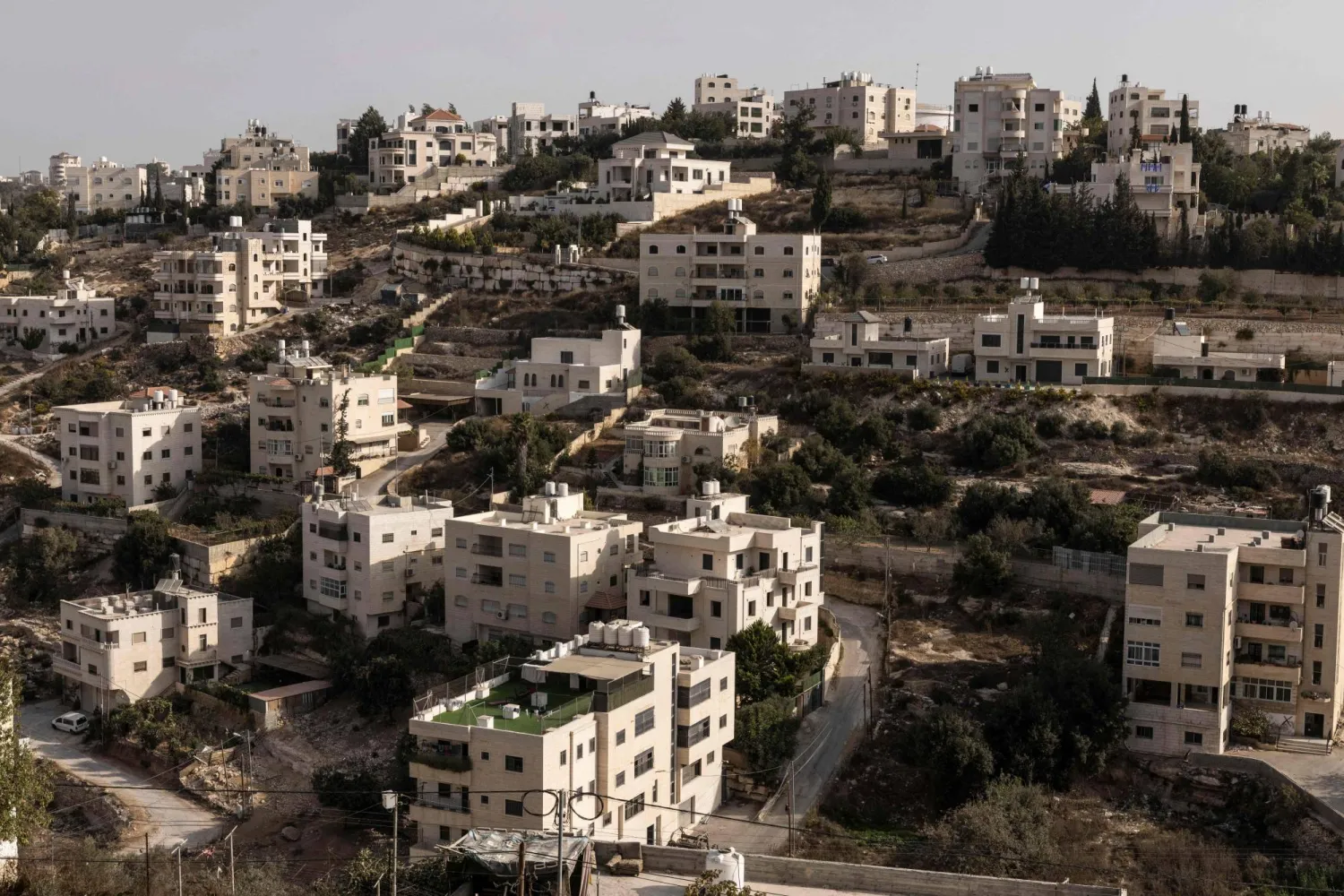
 Israeli soldiers stand guard during a weekly settlers' tour in Hebron, in the Israeli-occupied West Bank, May 16, 2026. (Reuters)
Israeli soldiers stand guard during a weekly settlers' tour in Hebron, in the Israeli-occupied West Bank, May 16, 2026. (Reuters)
TT

UN Expert Condemns ‘Torture’ of Palestinian Prisoners in Israel

 Israeli soldiers stand guard during a weekly settlers' tour in Hebron, in the Israeli-occupied West Bank, May 16, 2026. (Reuters)
Israeli soldiers stand guard during a weekly settlers' tour in Hebron, in the Israeli-occupied West Bank, May 16, 2026. (Reuters)

A United Nations expert on Tuesday raised alarm over the alleged "torture" of Palestinian prisoners and "potentially unlawful deaths" in Israeli prisons since October 2023.

The comments come as Israel faces growing scrutiny over detention conditions following the October 7, 2023 attack by Hamas inside Israel that sparked the Gaza war.

"Emergency measures introduced after 7 October 2023 exposed Palestinian detainees to torture, potentially unlawful deaths, incommunicado detention, and degrading conditions," said Alice Jill Edwards, the UN special rapporteur on torture.

Quoted in a UN statement seen by AFP, she argued the "number and cruelty of allegations" point to a "gross disregard by Israel of its duty to treat all detainees humanely".

Edwards said she had gathered information on 52 cases involving various forms of torture or ill-treatment, as well as 33 cases of sexual torture and other forms of sexual abuse.

Reported abuses include "severe beatings, stress positions, excessive restraints, electrocution, sleep deprivation, malnutrition and starvation" among many others.

She also expressed concern over reports of at least 94 deaths in custody since October 2023 that had not been investigated.

Autopsies in several cases revealed multiple rib fractures, skin hemorrhages and injuries to internal organs, including abdominal tears, she said.

"Behind every allegation is a human being who was wholly dependent on those exercising power over them," Edwards said, calling for "full, independent and transparent" investigations and accountability.

In a communication to Israeli authorities, she noted that none of the 1,680 complainants filed against Israeli intelligence services had led to indictments.

She urged Israel to review and revise its detention laws, policies and practices.

More than 9,000 Palestinians are currently held in Israeli jails, including 2,200 serving sentences.


Board of Peace Will Ask the UN Security Council to Press Hamas to Disarm

A Palestinian boy stands next to plastic containers on a trolley, as he and others collect portable drinking water for their displaced family living in shelters after homes were destroyed in Israeli bombardment, in the Bureij refugee camp, in the central Gaza Strip on May 18, 2026. (AFP)
TT

Board of Peace Will Ask the UN Security Council to Press Hamas to Disarm

A Palestinian boy stands next to plastic containers on a trolley, as he and others collect portable drinking water for their displaced family living in shelters after homes were destroyed in Israeli bombardment, in the Bureij refugee camp, in the central Gaza Strip on May 18, 2026. (AFP)

The body overseeing the US-brokered ceasefire in Gaza will ask the United Nations Security Council to press the Hamas group to disarm, according to a report seen by The Associated Press on Tuesday.

The report by the Board of Peace, an international body set up by US President Donald Trump and tasked with overseeing the fragile ceasefire between Hamas and Israel, is expected to be discussed by the Security Council on Thursday when it meets on the situation in the Middle East.

“At this stage, the principal obstacle to full implementation (of the ceasefire) remains Hamas’ refusal to accept verified decommissioning, relinquish coercive control, and permit a genuine civilian transition in Gaza,” the report said.

Hamas in a statement rejected the report and said it contains “fallacies.”

A diplomat familiar with the report confirmed its authenticity, speaking on condition of anonymity because it has not been made public.

Trump’s 20-point ceasefire plan calls on Hamas to surrender its weapons and destroy its vast network of tunnels. It also envisions Israeli forces withdrawing from Gaza, the arrival of a new technocratic Palestinian government, deployment of an international security force and the rebuilding of the battered Palestinian enclave after more than two years of war.

Board of Peace head has said the ceasefire has stalled

Last week, the head of the Board of Peace, former UN Mideast envoy Nickolay Mladenov, acknowledged that the truce had stalled since taking effect in October, saying the deadlock over disarming Hamas had paralyzed progress.

“Reconstruction cannot commence where weapons have not been laid down,” the board’s report to the Security Council says. “The critical variable — the single factor that unlocks every other element of the plan — is the conclusion of an agreement on the Roadmap for the full implementation of the plan that includes full decommissioning by Hamas and all armed groups in Gaza.”

The Palestinian group, which led the Oct. 7, 2023, attack on Israel that sparked the war in Gaza, has accused Israel of failing to meet its obligations under the first phase of the ceasefire and has sought to link any demilitarization to Israeli troop pullbacks. Israel’s military has expanded its control of Gaza since the truce took effect and now controls some 60% of the territory.

The new report calls on the Security Council to “reiterate publicly, clearly and consistently that the decommissioning of weapons in Gaza is not merely a requirement (of the UN’s resolution to end the war) but critical for reconstruction to begin, for a timebound Israeli forces withdrawal, and for a credible pathway to Palestinian self-determination and statehood to be pursued.”

The Security Council endorsed the Board of Peace in a resolution in November.

Hamas says the report tries to derail the ceasefire

Hamas said the report “contains a number of fallacies that absolve the occupying government of its responsibilities for the daily violations of the ceasefire agreement in Gaza.”

The group said the report ignored Israel’s “failure to uphold the majority of its commitments” in the ceasefire deal, including the continued restrictions on crossings into the Palestinian territory and preventing the entry of material and equipment needed to repair basic infrastructure and shelter for the largely displaced population.

“The report’s adoption of the occupation’s conditions regarding disarmament is a dubious attempt to muddy the waters and derail the ceasefire agreement,” Hamas said in a statement.

It called on the Security Council and Mladenov to compel Israel to fulfill its commitments under the ceasefire' deal's first phase, "foremost among them the cessation of the daily aggression against our Palestinian people in Gaza.”

The ceasefire has seen numerous violations The report noted near-daily ceasefire violations, “some of which are serious, and their human consequences — civilians killed, families living in fear, and continued impediments to humanitarian access — cannot be minimized.”

Israel’s military still carries out airstrikes in Gaza despite the ceasefire and has pushed deeper into the territory, where it now controls more than it was granted under the ceasefire agreement. Living conditions are dire, with most of the territory’s 2 million people living in tent camps lacking basic services.

Mladenov last week said his office is addressing violations by both sides on a daily basis. But he repeatedly cited the disarmament issue as a central sticking point, saying Hamas’ obligation to give up its arsenal is “not negotiable" and that progress on all other issues was being held up.


Israel Military Issues Fresh Evacuation Warnings for South Lebanon

Smoke rises from the site of an Israeli airstrike that targeted the southern Lebanese village of Burj el-Shmali on on May 19, 2026. (AFP)
TT

Israel Military Issues Fresh Evacuation Warnings for South Lebanon

Smoke rises from the site of an Israeli airstrike that targeted the southern Lebanese village of Burj el-Shmali on on May 19, 2026. (AFP)

The Israeli military on Tuesday warned residents of 12 towns and villages in southern Lebanon to immediately evacuate ahead of expected attacks against Hezbollah, the latest despite a ceasefire.

"Hezbollah's continued violations of the ceasefire compel the army to operate against it. The army does not intend to harm you. For your safety, we urge you to distance yourself from the area and immediately move at least 1,000 meters away," the military's Arabic-language spokesman Avichay Adraee posted on X.

Lebanon's state-run National News Agency reported a new series of Israeli strikes targeting several locations in southern Lebanon on Tuesday.

Meanwhile, Hezbollah said in a statement that it had targeted a gathering of soldiers and vehicles in northern Israel with "a swarm of attack drones."

The Iran-backed group also claimed responsibility for new attacks against Israeli forces operating inside Lebanese territory.

The Israeli military said that following sirens in several areas of northern Israel, a drone "that crossed from Lebanon to Israeli territory was intercepted".

Since the start of the ceasefire on April 17, Israel has continued to launch strikes, carry out demolitions and issue evacuation orders in south Lebanon, saying it is targeting the group.

Hezbollah has also continued operations against Israeli forces in southern Lebanon and northern Israel.

On Monday, the Lebanese health ministry said the death toll from Israeli strikes since the start of the war on March 2 had reached 3,020.

The Israeli military says it has lost 20 soldiers and one civilian contractor in southern Lebanon since the war began.
