Sudan's RSF Denies Reports of Abu Lulu's Release

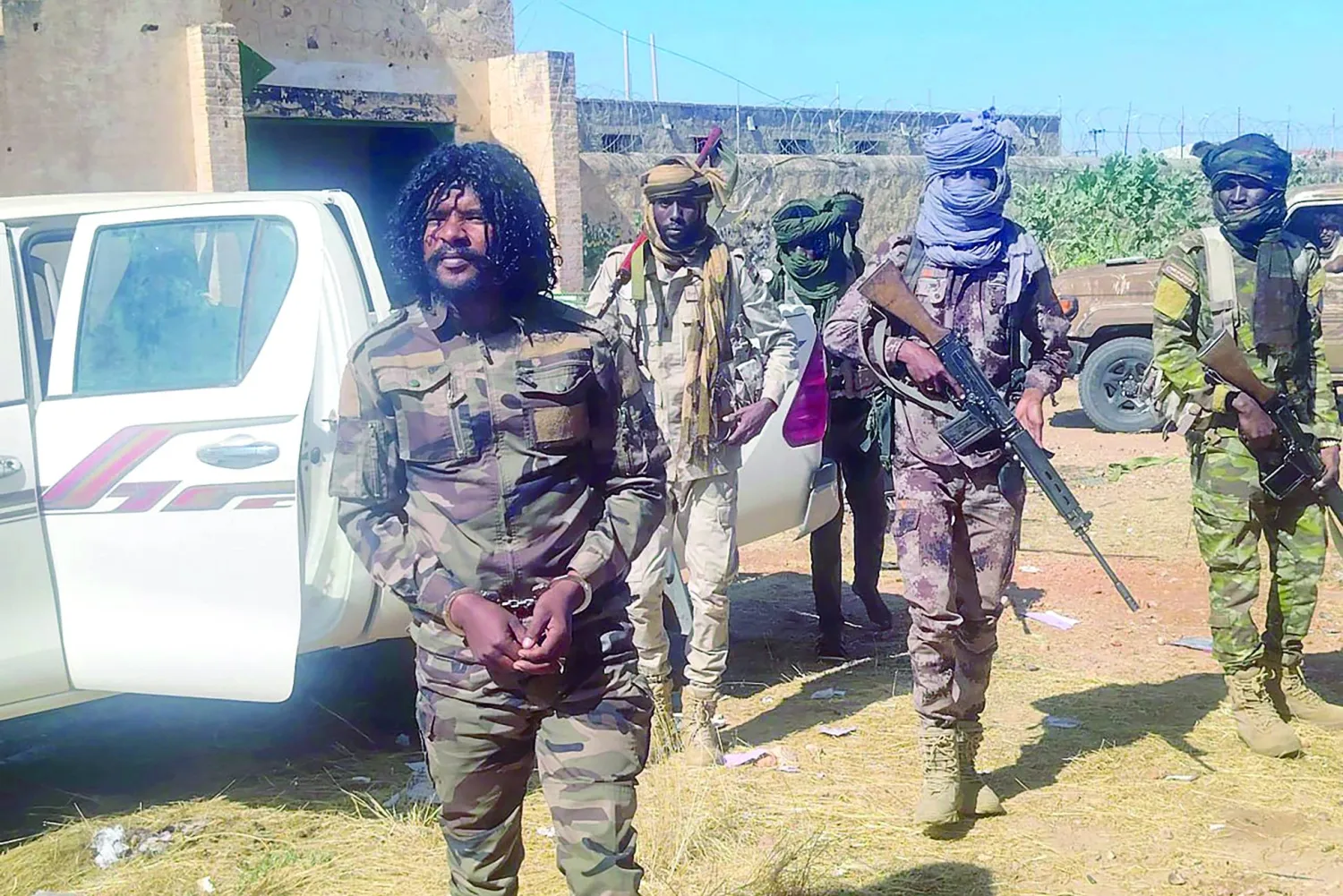
This handout picture released by the Sudanese Rapid Support Forces (RSF) on October 30, 2025, shows RSF members reportedly detaining a fighter known as Abu Lulu (L) in al-Fashir in war-torn Sudan's western Darfur region. (RSF / AFP)
TT

Sudan's RSF Denies Reports of Abu Lulu's Release

This handout picture released by the Sudanese Rapid Support Forces (RSF) on October 30, 2025, shows RSF members reportedly detaining a fighter known as Abu Lulu (L) in al-Fashir in war-torn Sudan's western Darfur region. (RSF / AFP)

Sudan’s paramilitary Rapid Support Forces (RSF) denied on Tuesday reports about the release of RSF Brigadier General al-Fateh Abdullah Idris, known as Abu Lulu, who was arrested late last year following global outrage over videos of him executing unarmed people in al-Fashir.

In a statement, the RSF “categorically” denied the reports, slamming them as “baseless” and being part of a “campaigns of incitement.”

Two sources – a Sudanese intelligence official and a commander with the RSF – said they personally saw Abu Lulu on the battlefield in Kordofan in March, said a Reuters report on Monday.

The RSF stressed that Abu Lulu and a number of individuals, accused of violations against civilians in al-Fashir, have been detained since their arrest in October.

“They remain in prison and have never left,” it added.

RSF officers had pleaded for Abu Lulu to be returned to the field to boost the morale of forces engulfed in heavy fighting there, a Chadian military officer told Reuters.

Reuters spoke with 13 sources who said they knew of Abu Lulu’s release. They include three RSF commanders, an RSF officer, a relative of Abu Lulu, a Chadian military officer close to RSF command and seven other sources with contacts in RSF leadership or access to intelligence on RSF field operations.

The RSF-led coalition government, in response to questions from Reuters, issued a statement on Monday denying the group had released Abu Lulu.

A special court will try him and others accused of violations during the al-Fashir offensive, according to the statement from Ahmed Tugud Lisan, spokesman for the RSF-led Tasis government.

The RSF imprisoned Abu Lulu in late October 2025, a few days after its bloody takeover of al-Fashir, a large city in North Darfur.

Multiple videos had surfaced of him executing unarmed people during the offensive. His actions earned him the nickname “the butcher of al-Fashir,” a moniker noted by the UN Security Council when sanctioning him on February 24 for human rights abuses.

The three-year civil war between the Sudanese army and the RSF is a brutal power struggle to control the country and its financial resources. It has created what aid groups say is the world's largest humanitarian ‌crisis.


Authorities Deny Existence of a Second Israeli Base in Iraq

An Iraqi shepherd leads a flock of sheep at sunset in the town of Mishkhab, south of Najaf, Iraq. (AFP)
TT

Authorities Deny Existence of a Second Israeli Base in Iraq

An Iraqi shepherd leads a flock of sheep at sunset in the town of Mishkhab, south of Najaf, Iraq. (AFP)

Iraqi authorities on Tuesday denied reports of a second Israeli military base in western Iraq, while acknowledging that an Israeli force had been stationed between the provinces of Najaf and Karbala for 48 hours in early March.

The controversy erupted after The Wall Street Journal reported earlier this month that Israel had established a makeshift secret military site in the desert between Najaf and Karbala to support its war against Iran that erupted on February 28.

The report fueled criticism over Baghdad’s ability to safeguard national sovereignty and prevent foreign military incursions.

The New York Times had previously reported that Israel had spent more than a year preparing clandestine sites in the Anbar province in western Iraq for aerial support operations, refueling, and medical treatment during the war with Iran.

At a press conference Tuesday, Iraqi Interior Ministry media director Miqdad Miri rejected claims that any foreign military camp exists in Iraq.

“The ministry denies the existence of any camp belonging to another country in Iraq,” he said. “What occurred was an airborne deployment lasting 48 hours during the war against Iran” in early March.

He added that the Joint Operations Command had resolved the issue and possessed “photos and documents confirming that the deserts of Najaf and Anbar are free of any military bases.”

Miri further stated that Iraq had strengthened security along its border with Syria by completing a 380-kilometer concrete wall and carrying out 12 anti-smuggling operations in coordination with Syria, Kuwait, and Saudi Arabia.

The media reports about the Israeli bases have embarrassed Iraqi authorities, leading to conflicting official statements that alternated between denying and acknowledging the sites before ultimately conceding that Israeli forces had briefly operated on Iraqi territory.

Officials continue to minimize the significance of the incident by stressing the short duration of the deployment.

Sources familiar with the matter had previously told Asharq Al-Awsat that “a foreign force remained stationed inside Iraqi territory for nearly a full week before it was discovered by chance.”

Iraqi security agencies are facing mounting public criticism for failing to prevent foreign military activity on Iraqi soil. Authorities have also been criticized for failing to stop attacks carried out by Iran-backed armed factions inside Iraq and against Gulf states.


Hezbollah Rejects Lebanon-Israel Talks While Backing Negotiations Between Iran and the US

Displaced people return to Beirut’s southern suburbs carrying the party’s flag and a picture of its Secretary-General (AP)
TT

Hezbollah Rejects Lebanon-Israel Talks While Backing Negotiations Between Iran and the US

Displaced people return to Beirut’s southern suburbs carrying the party’s flag and a picture of its Secretary-General (AP)

Hezbollah’s position on negotiations tied to the war in Lebanon has exposed a growing contradiction - the group fiercely opposes direct talks between the Lebanese state and Israel, yet supports Iranian-American negotiations that Tehran says include Lebanon.

The discrepancy has fueled political debate over whether Hezbollah truly rejects negotiations in principle or simply opposes talks led by the Lebanese state that could threaten its weapons and influence inside Lebanon.

The issue resurfaced Tuesday after Iranian Deputy Foreign Minister for Legal and International Affairs Kazem Gharibabadi said Tehran’s proposal includes “ending the war on all fronts, including Lebanon.”

His remarks revived questions about Lebanon’s role in any broader regional settlement and Hezbollah’s selective approach to diplomacy.

Different Standards for Beirut and Tehran

Hezbollah has repeatedly condemned direct Lebanese-Israeli negotiations as a dangerous path leading to concessions. At the same time, it has portrayed Iranian-American talks as a possible route to ending the war.

Hezbollah Secretary-General Sheikh Naim Qassem previously described a potential Iran-US agreement that includes Lebanon as “perhaps the strongest card” for stopping Israeli attacks, while thanking Iran for its support of Lebanon.

Hezbollah MP Hassan Fadlallah similarly praised what he called the “Islamabad track,” saying Iran had suspended negotiations “for Lebanon’s sake,” even as he denounced direct Lebanese negotiations with Israel as “a dead-end.”

Another Hezbollah lawmaker, Hussein al-Hajj Hassan, argued that direct talks conducted by Lebanese authorities had placed the government “in a deadlock that will produce only concessions without results.”

The discrepancy has raised a main question in Lebanon: Is Hezbollah opposed to negotiations themselves, or only to talks carried out by the Lebanese state?

A ministerial source close to the Lebanese presidency described Hezbollah’s position as “clearly contradictory,” arguing that “what is permitted for Iran appears forbidden for Lebanon,” despite the fact that Beirut is negotiating exclusively over Lebanese sovereignty and Israeli occupation.

Speaking to Asharq Al-Awsat, the source said Lebanon’s negotiations concern practical issues imposed by Israeli occupation, including withdrawal from Lebanese territory and restoring state authority. The source stressed that President Joseph Aoun and the government have maintained one principle from the outset: “No one but the state negotiates on behalf of Lebanon.”

Responding to arguments that Iran negotiates with the United States rather than directly with Israel, the source said Lebanon’s situation is fundamentally different because Israeli forces occupy Lebanese land. “Any country facing occupation negotiates to secure withdrawal and end that occupation,” the source underlined.

Hezbollah’s Deeper Concern

Imad Salamey, head of the Department of Political and International Studies at the Lebanese American University, said Hezbollah fears that any direct negotiations led by the Lebanese state, particularly with Arab and international backing, would gradually shift control of the conflict with Israel away from the party and back to state institutions.

He noted that such a process would likely involve tighter border controls, security arrangements, and ultimately limiting arms to the state while placing decisions on war and peace exclusively in official hands.

“That would effectively end Hezbollah’s independent military status and reduce Iranian influence inside Lebanon,” Salamey remarked.

By contrast, Hezbollah accepts Iranian-American negotiations because Tehran approaches them as part of a broader regional framework linking Lebanon, Gaza, Iraq, and Yemen to wider security and US interests.

According to Salamey, Hezbollah believes Iranian-led negotiations are more likely to preserve its role within Lebanon and the region, whereas direct Lebanese negotiations could place the group against a growing domestic and international consensus favoring a stronger Lebanese state with a monopoly on arms.


Iraq’s ‘Heist of the Century’ Returns to Spotlight with $5 Billion Figure

Former Iraqi Prime Minister Mohammed Shia al-Sudani announces the recovery of funds linked to the “Heist of the Century” scandal. (AFP)
TT

Iraq’s ‘Heist of the Century’ Returns to Spotlight with $5 Billion Figure

Former Iraqi Prime Minister Mohammed Shia al-Sudani announces the recovery of funds linked to the “Heist of the Century” scandal. (AFP)

Iraq’s massive tax embezzlement scandal - widely known as the “Heist of the Century” - has resurfaced with a dramatically higher estimated value of 8 trillion Iraqi dinars (about $5 billion), nearly double the amount originally announced when the scandal first erupted in October 2022.

The new figure was disclosed Tuesday by Talib al-Baidhani, a member of parliament’s Integrity Committee, who also revealed that about 30 additional individuals are now suspected of involvement in the case.

The latest development comes just days after parliament approved a new government led by Prime Minister Ali al-Zaidi, a businessman with no political background who has pledged to strengthen the economy and fight corruption - promises repeated by successive Iraqi governments since 2003.

The scandal dates back roughly four years and centers on the theft of tax deposit funds through five shell companies allegedly working with officials from the General Commission for Taxes and Rafidain Bank, as well as senior state officials, lawmakers, contractors, and brokers.

Speaking to Iraq’s state newspaper, al-Baidhani said parliament’s Integrity Committee is determined to recover Iraqi stolen funds and continue pursuing the case in coordination with the Federal Integrity Commission.

The scandal first became public on October 18, 2022, when former Prime Minister Mustafa al-Kadhimi confirmed an investigation into the theft of tax trust funds and accused some parties of exploiting the case to shield corrupt figures.

Two months later, former Prime Minister Mohammed Shia al-Sudani announced the recovery of more than 300 billion dinars, an amount critics described as negligible compared with the scale of the theft. Sudani promised the rest would be recovered, but his government later failed to do so.

Al-Baidhani, who belongs to the Asaib Ahl al-Haq movement, said some funds have already been recovered, while large sums remain outside Iraq and require coordinated efforts between parliament and al-Zaidi’s government to retrieve them.
He described the recovery effort as “the real beginning” of holding all those involved accountable for stolen public funds and suspicious deals.

Al-Baidhani added that the scandal was initially estimated at around 2.5 trillion dinars, but subsequent investigations by the Federal Integrity Commission uncovered much larger embezzlement operations, pushing the total to nearly 8 trillion dinars. He did not explain when or how those investigations were conducted.

In late October 2022, Iraqi authorities arrested the case’s main suspect, Nour Zuhair, chairman of one of the companies implicated in the scheme. He was later released on bail after Sudani announced the recovery of 5 percent of the stolen funds in exchange for Zuhair’s pledge to return the remaining money within days.

Shortly after his release, however, Zuhair fled Iraq and has remained missing ever since.

For years, Iraqi courts have continued issuing prison sentences against individuals linked to the tax theft, but without recovering the missing funds or apprehending the key suspects. The failure has fueled public criticism and accusations that the case is being used for political blackmail while influential political actors implicated “behind the scenes” remain protected.

Separately, al-Baidhani urged Iraq’s Foreign Ministry to recover properties tied to Saddam Hussein’s former regime through coordination with countries that have treaties with Iraq.

After Saddam Hussein’s fall in 2003, several Western governments froze Iraqi assets linked to the former regime and Hussein’s family under UN Security Council Resolution 1483, including bank accounts, real estate, and investments in countries such as France and Switzerland.