



Dell to Asharq Al-Awsat: AI in Saudi Arabia Enters Production, Not Experimentation Phase

Mohammed Amin, Senior Vice President for Central Eastern Europe, Middle East, Türkiye and Africa at Dell Technologies
TT

Dell to Asharq Al-Awsat: AI in Saudi Arabia Enters Production, Not Experimentation Phase

Mohammed Amin, Senior Vice President for Central Eastern Europe, Middle East, Türkiye and Africa at Dell Technologies

Saudi Arabia became a focal point of discussion in the “Dell Technologies World 2026” in Las Vegas this week about the next phase of artificial intelligence.

The question is no longer just about the size of investment in infrastructure or national capacity building, but about the difference the Kingdom can make in a global market transitioning from AI experimentation to its operational deployment within institutions.

In exclusive remarks to Asharq Al-Awsat, Michael Dell, Chairman and CEO of Dell Technologies, stated that what the company sees in Saudi Arabia is a “deep commitment to modernizing the Kingdom,” highlighting its significant energy resources and Dell's collaboration with Humain and other companies in the Kingdom, in addition to a regional facility through which the company works to “aggregate these capabilities and build infrastructure for customers in the region.”

He added that every country today is going through a phase of re-understanding what the transition towards AI means, and how citizens and industries can be empowered to drive the economy forward. In the same session, Dell described Saudi Vision 2030 as “highly ambitious,” and the ambition for AI under this vision as “impressive.”

The Operation Test

From this point, the real discussion about Saudi Arabia and artificial intelligence begins. The narrative is no longer solely about the volume of investments, the speed of data center construction, or the number of announced national projects.

The challenge of the next test relates to how this national capability can be transformed into operational value within government entities, banks, hospitals, energy and telecommunications companies, and smart cities. It's about how institutions move from AI experiments to systems that operate daily, on real data, within secure environments, and at a predictable cost.

Mohammed Amin, Senior Vice President for Central Eastern Europe, Middle East, Türkiye and Africa at Dell Technologies, places this transformation in a clear context.

In remarks to Asharq Al-Awsat on the sidelines of the conference, he states that the biggest barrier for institutions in Saudi Arabia and the Gulf as they transition from AI experimentation to production is not a single isolated factor, but an interconnected system encompassing infrastructure, governance, skills, cyber resilience, cost, and operating models.

However, he considers “data readiness” to be the primary obstacle. He adds: “Without a reliable and AI-ready data foundation, even the most advanced infrastructure is insufficient, and pilot projects falter before reaching production.”
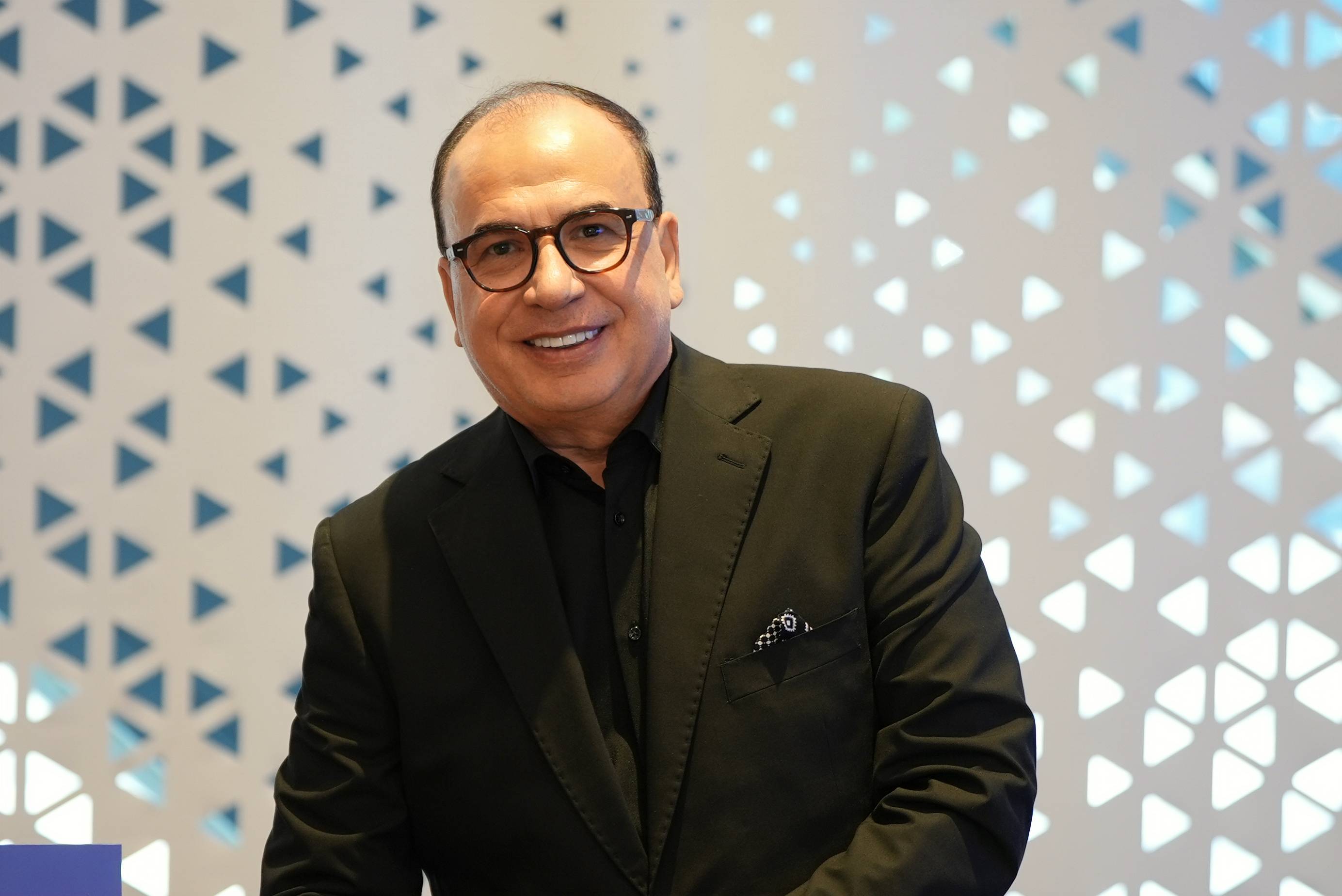
Mohammed Amin, Senior Vice President for Central Eastern Europe, Middle East, Türkiye and Africa at Dell Technologies

Data Before the Model

This point appears fundamental to Dell's assessment of the Saudi phase, as the company indicates that 96 percent of Saudi institutions now view AI as a key part of their business strategy, according to its research on the state of innovation and AI.

However, this indicator, despite its importance, does not mean that the path to production has become easy. Many institutions still operate through outdated and fragmented systems, distributed data, inconsistent governance, and limited access to reliable real-time data.

According to Amin, the fastest-advancing institutions are those that treat AI “not as a standalone tool, but as a transformation of the entire operating model.”

Here lies the difference between ambition and operational infrastructure. An institution that wants to use AI for customer service, risk management, predictive maintenance, or patient data analysis not only needs a robust model but also requires its data to be discoverable, governed, reliable, and usable by AI systems in a timely manner.

Amin defines AI-ready data as data that is “discoverable, governed, reliable, and usable by AI systems in real-time.” This definition transforms the discussion from a narrow technical question to an institutional one: Does the institution know where its data is, who can use it, and can it be trusted when fed into a model or intelligent agent?

Data from Sensitive Sectors

In the Saudi banking sector, this could mean linking customer, transaction, and risk data across different environments while maintaining compliance and governance. In hospitals, it involves securely organizing clinical and imaging data so that AI can support diagnosis or improve operations without compromising patient privacy. For government entities, it means unifying citizen and operational data while preserving sovereignty and security controls. As for energy companies, it might involve combining operational, sensor, and geographic data to support predictive maintenance and improve performance.

Dell states that updates to its Dell AI Data Platform specifically target this point, by indexing billions of files and linking them into governed data pipelines. The platform includes capabilities such as GPU-accelerated SQL analytics, achieving up to six times faster performance, and vector indexing up to 12 times faster.

These details might seem technical, but they actually determine the speed at which an institution transitions from a limited experiment to a widely operational AI service. The slower data is accessed or the less organized it is, the more the data pipelines themselves become an operational bottleneck. Amin notes that these capabilities help reduce response time, improve accuracy, and expand AI services with higher efficiency.

Local Operating Economics

As AI transitions to more sensitive and continuous workloads, another question emerges: when does private or institution-controlled infrastructure become more suitable than the public cloud? Amin does not present this as a stark choice between cloud and private infrastructure; he believes the public cloud remains important for experimentation, flexibility, and quick access to AI services. However, he adds that there comes a stage where controlled infrastructure becomes “strategically better,” especially when workloads involve sensitive national or financial data, or when response time requirements are critical.

This aligns with what Dell presented at the conference regarding Deskside Agentic AI, a solution aimed at running some AI agents locally on high-performance workstations, rather than relying entirely on cloud programming interfaces.

The company states that this solution can, in some cases, reach a break-even point with the cost of cloud programming interfaces within three months, and reduce spending by up to 87 percent within two years. Amin interprets these figures from a broader perspective, stating that technology managers in Saudi Arabia must evaluate the economics of AI “over its full lifecycle, not just by focusing on initial infrastructure costs.” The cloud might appear attractive at the outset, but it can become more expensive when running continuous generative or agentic workloads at the scale of a large enterprise.

Processor Efficiency

For Saudi Arabia, this issue is also linked to sectors with regulatory and sensitive natures. Amin acknowledges that the most realistic use cases today are those that deliver clear productive and operational value while maintaining manageable governance.

He points out that private assistants within institutions and workflow in regulated sectors represent a compelling starting point in the Kingdom, due to the strong focus on data security and sovereignty. He also believes that programming assistants are rapidly gaining momentum because they offer direct benefits to development teams.

The transition to production requires not only data and architecture but also infrastructure capable of handling high workload density. In heavy AI environments, processing units are insufficient if data does not move quickly between computing, storage, and applications.

Amin notes that the network design in PowerRack includes a switching capacity exceeding 800 terabits per second per rack, explaining that the practical meaning of this capacity is to eliminate data traffic bottlenecks between GPUs, storage, and applications. The longer GPUs wait for data, the lower the efficiency of infrastructure investment. Conversely, when data moves with low latency, training and inference operations become faster and more effective.

Cooling as a Strategic Factor

This discussion cannot be separated from cooling and power, as AI increases rack density and power requirements within data centers, making cooling a strategic, not just operational, factor.

Amin notes that the ability of Dell PowerCool C7000 to support facility water temperatures up to 40 degrees Celsius means that data centers can operate with higher efficiency in hot climates, reducing reliance on energy-intensive cooling.

In Saudi Arabia, where the government and private sector are investing in sovereign AI infrastructure, he believes that cooling “is no longer merely an operational issue,” but has become linked to scalability, energy efficiency, and long-term viability.

Data and Model Security

Cyber resilience is part of AI readiness; an intelligent system is not reliable if its data is corruptible, its models are exploitable, or its infrastructure is not recoverable. Amin points out that an AI system “is only as reliable as the data and models it operates on,” and a cyberattack that corrupts data or harms a model can have significant consequences.

Therefore, he believes that the maturity of cyber resilience will directly impact the extent to which institutions trust expanding their adoption of AI. Here, Dell offers tools like Cyber Detect, which it claims can detect data corruption resulting from ransomware attacks and accurately identify the last known clean version.

Openness and Sovereignty

With Dell's expanded partnerships with Google, Hugging Face, OpenAI, Palantir, ServiceNow, and SpaceXAI, the company emphasizes that institutions do not want to tie their AI strategy to a single model, cloud platform, or infrastructure package.

This openness, in Amin's view, gives institutions a “choice” and reduces vendor lock-in risks, allowing them to develop their capabilities as technology evolves. This is crucial in a fast-moving market like Saudi Arabia, where integration and interoperability can become strategic advantages in themselves.

When Mohamed Amin was asked about the Saudi sectors that would first require AI-ready infrastructure, he placed government, energy, telecommunications, finance, and smart cities at the forefront, due to the volume of their data, their national importance, and the operational value that AI can unlock.

These sectors are also most closely linked to sovereignty, compliance, and security requirements. Therefore, building a secure and scalable AI infrastructure appears not merely a technical upgrade, but part of institutions' ability to transform the Vision's ambitions into measurable daily operations.

Between Michael Dell's response regarding Saudi Arabia and Mohamed Amin's vision for the region, the picture of the next phase becomes clear. The Kingdom is not entering the AI race merely from the perspective of consumption or experimentation, but from the perspective of building institutional capability.

However, true capability will not be measured solely by the number of data centers or the volume of investment, but by institutions' ability to prepare their data, choose where to run their workloads, manage costs, protect their models and data, and scale their use without losing control or governance.



Microsoft Arabia Chief Outlines Saudi Arabia's AI Priorities for Next Phase

Ayman Al-Ghamdi, President of Microsoft Arabia (Company)
TT

Microsoft Arabia Chief Outlines Saudi Arabia's AI Priorities for Next Phase

Ayman Al-Ghamdi, President of Microsoft Arabia (Company)

After years of building infrastructure and regulatory frameworks, Saudi Arabia's challenge is shifting toward how to effectively integrate artificial intelligence into the core operations of institutions. This is the gap Ayman Al-Ghamdi, the new president of Microsoft Arabia, has placed at the top of his priorities as he takes over the company's business in the Kingdom.

In his first media interview since taking office last July, Al-Ghamdi identified three priorities for the next phase: building a trusted cloud foundation, moving AI from experimentation to practical deployment, and expanding local capabilities.

This comes alongside the launch of the Azure region in Saudi Arabia's Eastern Province, the expansion of skills programs, and the development of scalable local solutions that can grow regionally and globally.

The implementation gap within institutions

Al-Ghamdi says Saudi Arabia has completed much of the foundational work required to move toward an economy that relies more heavily on data and AI, pointing to progress in infrastructure, data governance, responsible AI, and capacity building.

In this context, he cites what he described as the progress made by the Saudi Data and Artificial Intelligence Authority, noting that the regulatory ecosystem includes 32 regulatory instruments related to data and 13 related to AI. However, he believes the next phase will depend more heavily on what happens within institutions themselves.

He tells Asharq Al-Awsat: "Many institutions are still treating AI as something to experiment with, rather than integrating it into core operations."

In his view, closing this gap requires linking AI directly to business and service performance and customer experience, while providing the appropriate data, governance, talent, and operating models capable of turning adoption into measurable impact.

This approach forms the central focus of Al-Ghamdi's priorities for his first year. He believes the goal is to make the impact of AI "real, not just a headline," so that it is reflected in how institutions operate, the services they provide, and the results they achieve.

Three priorities for the first year

Al-Ghamdi's first priority is what he calls a "trusted cloud foundation," particularly as the Azure region in the Kingdom's Eastern Province prepares to become available for customer workloads. He links this step to institutions' ability to modernize critical systems securely and responsibly, rather than simply adding more computing capacity inside the Kingdom.

The second priority is moving AI projects from experimentation to practical value. He says the measure of success will not be the number of use cases companies announce, but the extent of improvement achieved in productivity, services, operations, and customer experience.

He points to the O3ai platform, an intelligent system for smart factories developed by Obeikan Group, as an example of what this transition from experimentation to practical use could look like, according to his response.

The third priority is building Saudi capabilities, based on Microsoft's commitment to help 3 million people in Saudi Arabia acquire AI skills by 2030. He says the objective is for the transformation to be built and sustained locally, because "technology alone does not create transformation, people do."

The cloud region... more than local hosting

Al-Ghamdi does not present the launch of the Saudi cloud region simply as a matter of capacity or data residency. Instead, he links it to the ability of companies and government entities to modernize critical workloads and prepare to expand their use of AI.

He notes that expansion at the national level requires an integrated set of elements, including cloud readiness, data infrastructure, security, governance, skills, and a strong partner network. From this perspective, he believes the broader impact of the new region could emerge through a greater share of digital value creation shifting into the Kingdom.

He says this could mean more local solutions, deeper technical capabilities, greater innovation among partners, and, over the longer term, the production of intellectual property capable of serving the Saudi market and other markets in the region.

A more competitive market

Al-Ghamdi views the growing range of choices available to Saudi customers among local and global cloud service providers as a positive development, considering it a reflection of a "strong and rapidly maturing" market. As cloud capacity expands and access to advanced AI models becomes easier, he does not believe competition will remain focused solely on who owns the infrastructure or the model.

He notes that "differentiation will shift from access to impact," explaining that the question will not simply be who has the model, but who can help institutions use it safely and responsibly in ways that genuinely change how they work.

He links this to an effort to bring cloud, data, cybersecurity, productivity tools, business applications, developer tools, and model options together on a single platform, making AI part of daily workflows, decisions, operations, and customer experiences.

He also emphasizes control over the data, context, and institutional knowledge that distinguish each organization. Al-Ghamdi sums up the elements of competition on which Microsoft is betting in three concepts: "trust, choice, and control," alongside the ability to turn AI into measurable impact at scale.

Uneven returns from AI

Despite the acceleration of investment in generative AI, Al-Ghamdi acknowledges the risk that institutions may move toward these technologies faster than they can address problems with data, processes, and governance.

He says generative AI can accelerate what an organization is already doing, but it "cannot compensate for weak data foundations, fragmented processes, or the absence of clear governance." He believes institutions achieving stronger results are those that treat AI as part of business transformation rather than as a standalone technology project.

He cites the experience of Ma'aden, saying its teams save more than 2,200 hours per month using Microsoft 365 Copilot, Copilot Studio, and Azure OpenAI Service. In his view, the speed of adoption should not be considered separately from the quality of the foundations supporting it. He says security and governance must advance at the same pace, so the question is not whether an institution is moving too quickly, but whether its organizational, data, and security infrastructure is moving with it.

From consuming technology to producing it

Al-Ghamdi believes the next phase in Saudi Arabia is not only about using global platforms, but also about increasing the country's ability to build technologies from within the Kingdom that can expand beyond it.

He says Microsoft's role in this area is to provide cloud infrastructure, AI and cybersecurity tools, data platforms, and support from its partner ecosystem to Saudi companies, startups, and developers. He also stresses that the local cloud region can help build and host solutions inside the Kingdom while meeting data residency and regulatory requirements.

He adds that the long-term opportunity is for more Saudi institutions to move "from consuming technology to producing it," including by developing intellectual property, platforms, and AI solutions capable of competing regionally and globally.

Digital sovereignty... and local capability

Asked about digital sovereignty and the distinction between data residency, operational control, and technological independence, Al-Ghamdi focused in his response on increasing local capacity to build and host solutions inside the Kingdom.

He noted that the presence of local cloud infrastructure enables innovators to develop and host solutions within Saudi Arabia while taking data residency and regulatory requirements into account, linking this to the shift from using technology to producing it.

Al-Ghamdi did not directly distinguish between data residency, operational control, and technological independence. Instead, he linked the issue to the ability of Saudi companies, startups, and developers to retain a greater share of technological value, knowledge, and intellectual property within the Kingdom.

A role beyond infrastructure

Al-Ghamdi traces Microsoft's role in Saudi Arabia to more than 25 years of work with the government, institutions, companies, developers, partners, and educational organizations, including cooperation with the Ministry of Communications and Information Technology in cloud, skills, and responsible AI.

He says the current phase raises the level of responsibility from simply providing technology to turning it into national outcomes, such as improving services and productivity, strengthening secure digital environments, and creating broader opportunities for Saudi talent.

Al-Ghamdi takes up his position after more than 15 years of experience at Microsoft. Before that, he led the company's public sector business in Saudi Arabia, covering government entities, national institutions, education, and healthcare, in addition to participating in initiatives related to government cloud regulation and the National Analytics Platform. His career has also included roles at Oracle and Google.

The three-year test

In response to a question about the criteria by which his tenure could be assessed after three years, Al-Ghamdi did not tie success to business volume or the number of products sold. Instead, he framed it more broadly around turning AI ambitions into tangible results.

"After three years, I will measure success through one question: Did we help Saudi Arabia turn its AI ambition into progress that people can see?" he says.

He defines this in terms of the expansion of trusted cloud infrastructure across institutions and critical sectors, the transition of AI from experimentation to measurable improvements in productivity, services, and customer experience, as well as an increase in the number of Saudi talents, partners, and developers capable of creating digital value from within the Kingdom.

Within this framework, the phase described by Al-Ghamdi centers on testing whether technology investments can move from adoption to execution, and from the use of models and platforms to measurable outcomes in productivity, services, skills, and intellectual property within the Saudi economy.


Xiaomi Sees Smartphone Cost Pressures Easing, Looks to EVs for Growth

Xiaomi is increasingly relying on electric vehicles and artificial intelligence as it seeks growth drivers beyond its increasingly saturated core business of smartphones. - File Photo
TT

Xiaomi Sees Smartphone Cost Pressures Easing, Looks to EVs for Growth

Xiaomi is increasingly relying on electric vehicles and artificial intelligence as it seeks growth drivers beyond its increasingly saturated core business of smartphones. - File Photo

China's Xiaomi Corp said the worst period of pressure on its smartphone business had passed as the pace of memory price increases looked set to slow in the second half, while it sees its fast-growing electric vehicle business delivering a larger share of revenue.

Xiaomi on Tuesday posted a 42.6% fall in second-quarter adjusted net profit to 6.2 billion yuan ($919.5 million), missing analysts' estimates, as historically high memory and other component costs squeezed margins for the maker of smartphones and electric vehicles.

Analysts had on average expected 6.6 billion yuan, according to LSEG data.

Revenue fell 6.1% from a year earlier to 108.9 billion yuan, also missing the 112.2 billion consensus forecast.

"Significant increases in key component costs, including memory, along with intensified industry competition, continued to create headwinds for our business," Xiaomi said in its earnings statement.

MEMORY COSTS REMAIN HIGH

In a post-earnings call, Xiaomi President William Lu said memory costs remained at historically high levels in the second quarter, as higher component costs weighed on margins in Xiaomi's smartphone and tablet businesses.

Xiaomi's smartphone revenue fell 7.5% year-on-year to 42.1 billion yuan, while its smartphone gross margin declined to 8.5% from 11.5% a year earlier.

Xiaomi, ranked as the world's No. 3 smartphone maker, shipped 31.2 million smartphone units in the quarter, down 26% from a year ago, for a second consecutive quarter of decline, research firm Omdia said.

With more than half its shipments priced below $200, Xiaomi was the most exposed among the top five smartphone vendors to memory cost inflation, Omdia added.

Yet Xiaomi said the pace of memory-price increases had started to slow and should continue to slow in the second half.

Lu said the most difficult period for the smartphone business had passed, adding that Xiaomi had adjusted its product mix and launch schedule.

EV BUSINESS PLAYS A BIGGER ROLE

Xiaomi is increasingly relying on electric vehicles and artificial intelligence as it seeks growth drivers beyond its increasingly saturated core business of smartphones.

Its EV, AI and other new initiatives segments accounted for about 23% of total revenue, up from 18.3% a year earlier.

EV revenue alone rose 15.9% to 23.9 billion yuan.

The domestic car market has been in steady decline since late 2025, while other Chinese carmakers are aggressively expanding exports. Xiaomi plans to enter European markets in 2027.

The loss from operations related to its EV, AI and other new initiatives was 2.6 billion yuan, reflecting the company's continued investments in those areas.

Xiaomi delivered 104,199 vehicles in the second quarter, up 28.2% from a year earlier.

In July, Xiaomi unveiled its SkyNomad SUV series, expanding beyond battery-powered sedans and crossovers into a category popularised by models from Chinese peers.


Beyond Marathons and Backflips, China’s Robots Face a Commercial Test

 Children look at a remote-controlled robot by Unitree Robotics while visiting the Unitree Robotics Embodied Intelligence Experience Center in the Jing' an district in Shanghai on August 17, 2026. (AFP)
Children look at a remote-controlled robot by Unitree Robotics while visiting the Unitree Robotics Embodied Intelligence Experience Center in the Jing' an district in Shanghai on August 17, 2026. (AFP)
TT

Beyond Marathons and Backflips, China’s Robots Face a Commercial Test

 Children look at a remote-controlled robot by Unitree Robotics while visiting the Unitree Robotics Embodied Intelligence Experience Center in the Jing' an district in Shanghai on August 17, 2026. (AFP)
Children look at a remote-controlled robot by Unitree Robotics while visiting the Unitree Robotics Embodied Intelligence Experience Center in the Jing' an district in Shanghai on August 17, 2026. (AFP)

China's humanoid robot makers have spent the past two years dazzling investors with machines that can breakdance, throw punches and even set marathon records. This week in Beijing, they face a tougher test in proving their inventions can work reliably to generate economic value.

More than 300 companies are expected at the World Robot Conference from Wednesday through Sunday, showcasing over 2,000 exhibits and launching more than 150 products, according to Beijing authorities.

The conference coincides with the Shanghai stock market debut of Unitree, one of the world's largest humanoid robot makers by sales volume, after an initial public offering that was more than 8,000 times oversubscribed by retail investors.

Unitree founder Wang Xingxing will address the conference's main forum on Thursday on the next decade of the humanoid industry, according to the Beijing municipal government.

The event comes as investor enthusiasm around Chinese humanoids reaches new ‌heights, but the conversation ‌is shifting from viral demonstrations to commercial reality. Investors and customers are increasingly judging robots ‌not ⁠by how spectacularly they ⁠move, but by how productively they work, how much human supervision they require and whether they can earn a return on their cost.

Although robots in China are starting to replace human workers in niche applications such as hotel food deliveries and on some assembly lines, large-scale adoption across industries beyond limited pilot projects has yet to occur.

FROM DEMOS TO DEPLOYMENT

Some in the industry argue that reckoning is overdue. Lumos Robotics, a Mitsubishi Electric-backed startup exhibiting at WRC, has focused its MOS robot on industrial inspection and material handling rather than household or entertainment applications.

CEO Yu Chao told Reuters the companies most at risk in China's crowded embodied-AI sector were those developing ⁠robot bodies, models or data in isolation without proving their technology in actual applications.

For Yu, the ‌eventual shakeout will come down to a simple question: can a robot ‌create value for a customer? Companies that cannot, he said, "will be washed out."

Georg Stieler, a robotics analyst who advises industrial companies in China, ‌estimates that 50% to 70% of humanoid robots produced this year could end up in "data factories", where they are used ‌to collect training data rather than perform productive work for paying customers.

Guotai Securities, a Chinese brokerage, estimates an industrial humanoid would need to cost about 160,000 yuan, including maintenance, to pay for itself within two years compared with a worker earning 80,000 yuan annually.

In reality, such robots typically cost 300,000 to 500,000 yuan, according to Berlin-based think tank MERICS.

ROBOT GAMES TEST WORK ABILITY

Some of the industry's claims will face ‌a more public test from Saturday.

The World Humanoid Robot Games, running from August 22 to 26 at Beijing's National Speed Skating Oval, will combine headline-grabbing races, football and fighting with ⁠a growing number of competitions designed ⁠around actual work.

Official plans include factory, hotel and household scenarios, with organizers requiring robots in some events to perform longer, continuous tasks in complex environments.

The competition schedule reviewed by Reuters includes packing and warehousing, industrial assembly and material feeding, retail and office services, electric-vehicle charging and dexterous tasks such as connecting cables and using tools.

Unlike a sprint or dance routine, such tasks test whether robots can identify unfamiliar objects, manipulate them repeatedly, recover from mistakes and complete jobs without engineers stepping in.

A GLOBAL PROBLEM

The challenge of turning impressive demonstrations into economically viable products is not confined to China.

In the United States, Jerry Wang, CEO of AIxCrypto Holdings, recently launched RoboShare, a marketplace designed to let businesses rent robots by the task rather than buy them outright.

Wang said one of the biggest bottlenecks today is not the robots themselves but the surrounding ecosystem. Skilled operators remain scarce, while transportation, deployment and maintenance costs can make robotic labor uneconomic.

Geopolitics is adding another layer of uncertainty. The US Federal Communications Commission in July restricted new equipment authorizations for foreign-made advanced robotic devices, affecting companies including Unitree, though previously authorized models can still be sold.

Technology research firm IDC estimates China accounts for 82% of global humanoid shipments. Under its worst-case scenario for the US restrictions, US humanoid sales would be 58% below its prior baseline forecast by 2030.