


How Israel Has Emptied Southern Lebanon Far Beyond the Front Lines

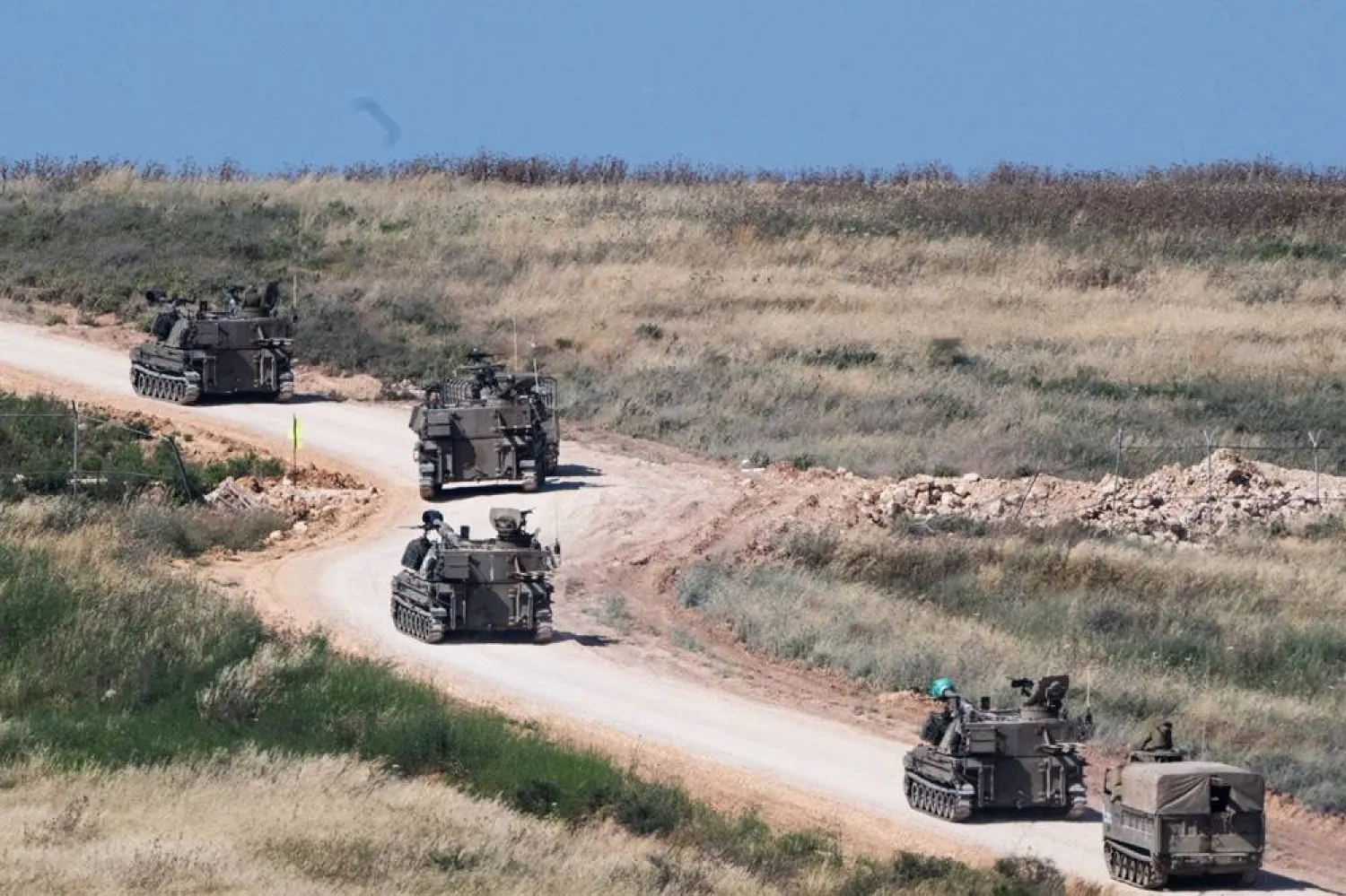
An Israeli military artillery unit drives into Lebanon after crossing the Israeli‑Lebanese border, as seen from northern Israel, May 27, 2026. (Reuters)
TT

How Israel Has Emptied Southern Lebanon Far Beyond the Front Lines

An Israeli military artillery unit drives into Lebanon after crossing the Israeli‑Lebanese border, as seen from northern Israel, May 27, 2026. (Reuters)

The ceasefire agreed in Lebanon last month has brought little ‌respite for civilians, who are being driven from a steadily expanding swathe of the country by a relentless Israeli campaign of evacuations and air strikes.

The US-brokered truce announced on April 16, after about six weeks of fighting, has failed to halt the violence between Israel and Hezbollah. Both are carrying out near-daily attacks while accusing the other of violating the pact.

That's left hundreds of thousands of civilians in southern Lebanon displaced from their homes. Shortly after the ceasefire declaration, Israel published a map marking out a buffer zone covering nearly 600 square km (230 sq miles) that it had occupied with ground forces, and listing 57 towns and villages where it had warned residents to evacuate.

Since then, though, the Israel military has carried out hundreds of air strikes on a far wider area outside that occupied zone and issued evacuation orders covering more than 100 additional Lebanese towns and villages, according to a Reuters review of Israeli statements.

Together with the occupied zone, these orders span about 2,000 sq km of Lebanon – about a fifth of the entire country – much of which has been rendered effectively off-limits to residents, according to the review and interviews with local officials, aid workers and displaced people. The reporting provides one of the most detailed pictures yet of the growing displacement crisis engulfing this small country on the eastern Mediterranean.

The fighting is part of a wider conflagration across the Middle East sparked by the Hamas-led attacks on Israel of October 7, 2023. Israel aims to drive back its sworn enemies – Iran and its proxy forces, including Hezbollah and Hamas – with a stated strategy to create "buffer zones" along its borders with Gaza, Syria and now Lebanon to safeguard its citizens.
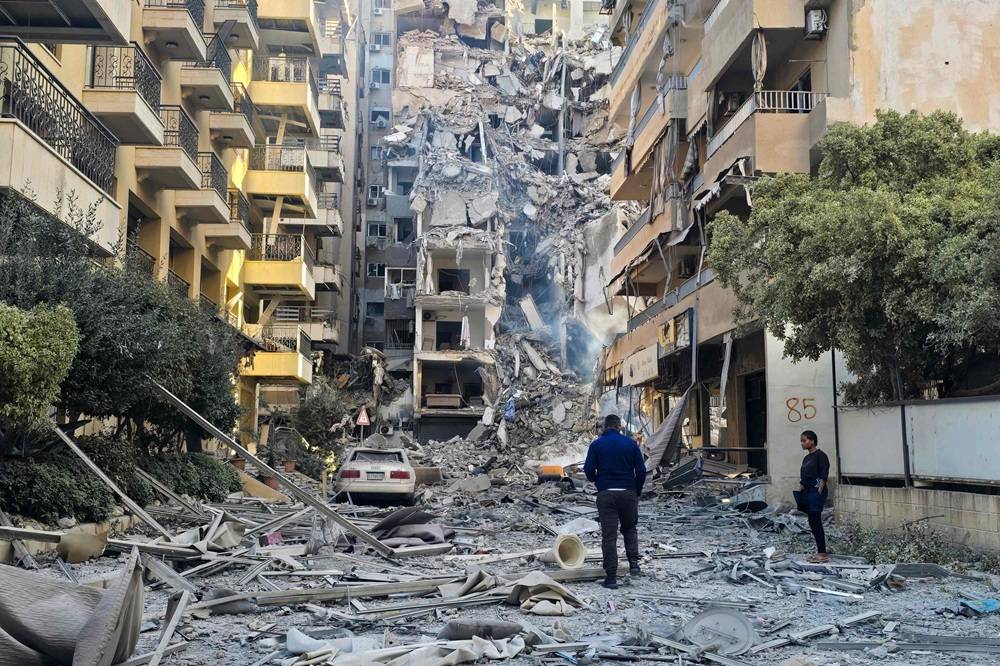
People look at the damages at the site of an Israeli strike in Tyre, southern Lebanon, on May 28, 2026. (AFP)

The growing evacuation area, along with confusion about ongoing attacks and the eventual extent of the Israeli buffer zone, has made many residents fear they may never return to their homes.

"There is no way we are coming back now," said Iyad Watfi, a mukhtar – elected official – in ‌Bazouriye, who said the town once ‌home to 13,000 people had been hit by multiple air strikes and evacuation orders since the truce. "Last week, we had 20 buildings destroyed in the town ‌in one ⁠night."

Only a tiny ⁠portion of the population remained, with most others sheltering in tents to the north, he said, adding that few felt safe to return in the foreseeable future.

The latest Lebanese conflict erupted on March 2 when Hezbollah fired rockets at northern Israel in solidarity with Iran, which was under Israeli and US attack. Israel responded with a ground invasion of Lebanon, leading to fighting that has so far killed more than 3,000 people and displaced hundreds of thousands, according to the Lebanese government.

The Israeli army told Reuters its air campaign in Lebanon since the ceasefire was not aimed at displacing civilians but rather designed to eliminate threats from Hezbollah, which it accused of embedding forces and weaponry in civilian areas. It characterized the evacuation notices as "recommendations" issued before air strikes, allowing citizens to leave if they choose.

Southern Lebanon "remains an active combat zone where Israeli troops continue to engage with terrorist elements on a daily basis," it added.

Hezbollah's media office didn't respond to a request for comment. The group has itself carried out regular attacks, including kamikaze drone strikes, since the ceasefire. It has said that, despite the truce, it has the right to resist continued Israeli aggression and denies placing military assets in civilian areas.
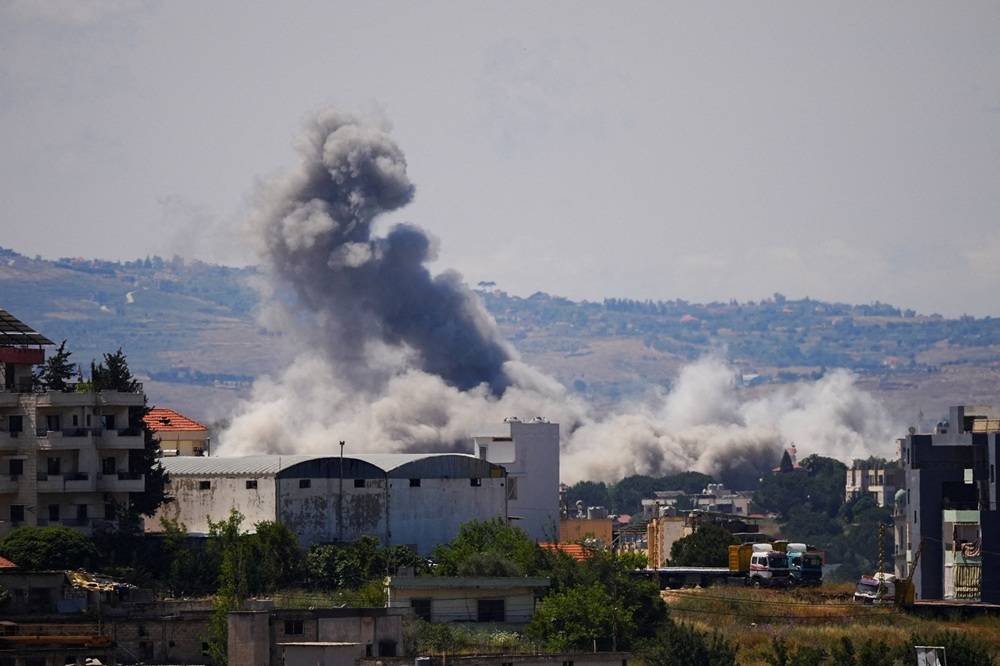
Smoke billows from southern Lebanon following Israeli strikes, as seen from Nabatieh, Lebanon May 28, 2026. (Reuters)

Reuters ⁠reached mukhtars from 20 of the towns and villages subject to Israeli evacuation orders since the ceasefire, communities with pre-conflict populations ranging from hundreds to thousands of ‌people. Most estimated the percentage of residents remaining in single digits, saying most had fled northwards or to the coastal cities of Tyre and Sidon.

"People's nerves ‌are shattered. They can't take it anymore, so they left," said Ali Nazzal, a mukhtar in Srifa who said the village was virtually deserted. "The ceasefire is a lie."

The situation looks increasingly bleak for civilians in Lebanon. Israeli Prime Minister Benjamin Netanyahu ‌pledged on Monday that Israel would escalate its strikes, prompting residents to flee southern suburbs of Beirut, further to the north.

Israel has since issued a new slew of evacuation orders, encompassing more than a dozen new towns ‌and villages and declaring a large section of the south a "combat zone".

The ongoing conflict could have implications for the broader US-Israeli war on Iran, with Tehran demanding a halt to Israeli attacks in Lebanon as a condition in peace talks.

ISRAEL STRIKES OVER 1,000 TARGETS SINCE TRUCE

On March 31, Netanyahu said his country's area of occupation in Lebanon would stretch to the Litani River, about 30 km north of the border with Israel. He described it as "a vast buffer zone" to thwart anti-tank fire and the threat of invasion.

By the April 16 ceasefire, Israeli forces had only occupied about half of that area. However, the subsequent barrage of air strikes and evacuation orders has driven people from areas even well beyond the river.

Only about half the towns and ‌villages subject to evacuation orders since the ceasefire are south of the Litani, with the rest to the north of the river, some more than 20 km from the waterway, the review of Israeli statements found.

On May 12, the Israeli military said it had struck more than 1,100 targets since the ceasefire, including ⁠weapons warehouses, launchers and sites where Hezbollah was operating. Reuters identified the ⁠location of more than 300 of those strikes during the first month of the ceasefire by reviewing reports published by Lebanon's state news agency.

An analysis of nighttime lights data captured by the satellite-based VIIRS sensor, which was carried out for Reuters by Professor Hadi Jaafar at the American University of Beirut, showed a significant reduction in light emissions across south Lebanon since the conflict began. The light levels have remained depressed in some areas during the ceasefire, strongly suggesting that many displaced residents have not returned, Jaafar said.
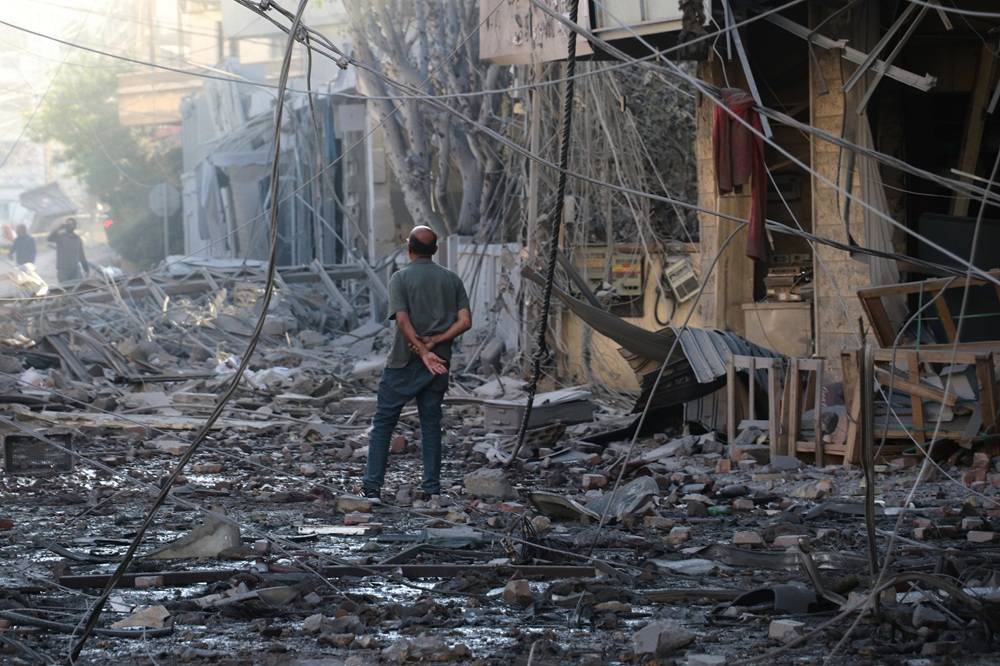
A man checks the site of destroyed buildings that were hit in Israeli airstrikes in the southern port city of Tyre, Lebanon, Thursday, May 28, 2026. (AP)

'WE WANT TO RETURN, EVEN TO SLEEP ON GROUND'

Israeli forces have used explosives and bulldozers in demolitions that effectively erase many villages in the 600 sq km zone its ground forces occupied before the ceasefire after the defense minister vowed on March 31 to destroy "all homes" near the border.

In areas outside Israeli occupation, many residents tried to return during the ceasefire but were driven out again, often within days, by renewed evacuation orders and air strikes, according to local officials, displaced people and aid workers.

Hawraa Yousef Ghadbouni, 39, said she fled from the southern town of Qlaileh to the coastal city of Sidon after the latest conflict began on March 2, sleeping in a car with her husband and three children.

After the ceasefire, they returned and found their home partially standing, with two rooms still intact, amid ruined houses and shops. Within a day, shelling and air strikes forced them to flee again, this time to the coastal city of Tyre, about 10 km to the north. When Tyre, too, was bombed, they returned to Sidon, taking refuge in a school turned shelter.

"We want to return, even if we have to sleep on the ground," Ghadbouni said. "What matters is going back. Life here is not sustainable."

In the town of Bedias, about a half-hour drive north of Qlaileh, Wael al-Amin, a 48-year-old medic, was sitting outside his brother's home on May 10, drinking coffee and watching his children play despite the steady buzz of a drone overhead.

"I thought, 'Let them play'," he said from a hospital in Tyre. "These are children. Who would target them?"

Moments later, a blast tore through his brother's house, sending a cloud of debris into the air. Amin stumbled through the smoke until he found his eight-year-old son, wounded amid the rubble.

"He told me, 'I'm here'," he said.

Amin pulled the boy to safety before discovering that his brother had been killed in the strike.




RSF Drones Attack Sudan Capital for Second Day

People clear debris from a mosque that residents said was damaged in a drone strike in Khartoum, Sudan, Wednesday, Aug. 12, 2026. (AP)
TT

RSF Drones Attack Sudan Capital for Second Day

People clear debris from a mosque that residents said was damaged in a drone strike in Khartoum, Sudan, Wednesday, Aug. 12, 2026. (AP)

Paramilitary drones on Thursday attacked the Sudanese capital Khartoum for the second day in a row, an AFP correspondent and witnesses reported.

Since April 2023, Sudan has been ravaged by war between the Sudanese military, led by its chief Abdel Fattah al-Burhan, and the paramilitary Rapid Support Forces (RSF), commanded by Burhan's former deputy Mohamed Hamdan Daglo.

The latest attack comes a day after the RSF launched far-reaching coordinated drone strikes targeting five army-controlled cities hundreds of kilometers apart.

On Thursday, an AFP correspondent in the capital reported the firing of anti-aircraft missiles from Omdurman, Khartoum's twin city, followed by the sound of an explosion.

"Military air defenses engaged with the militia's drones and downed them," an army source told AFP.

Witnesses in central Khartoum and Khartoum North across the Nile river also reported seeing drones in the sky and hearing explosions.

Across the country, aid workers estimate more than 200,000 people have been killed in what the UN calls a "war of atrocities". The conflict has also caused the world's largest hunger and displacement crises.

Burhan and Daglo, allies until they fell out in a bitter power struggle, have spent most of the war in a relative stalemate, unwilling to hold negotiations while vying for a decisive battlefield advantage.

The RSF last year consolidated its hold on the vast western region of Darfur and has since pushed to seize territory in the southern Kordofan region and along the southeastern Ethiopian border.

The army holds Sudan's center, north and east, and last month clinched a victory in Kordofan by pushing the RSF off a key highway leading to the capital.

Daglo in the aftermath said he would "unleash" his fighters -- already accused of war crimes including genocide -- and his forces have since repeatedly threatened a large-scale retaliatory attack.


US Ambassador to Israel Denounces Settler Siege on Palestinians as ‘Terror’

 Israeli soldiers stand guard next to settlers in front of Palestinian homes that they have blockaded in the village of Qusra, south of Nablus, in the occupied West Bank, Wednesday, Aug. 12, 2026. (AP)
Israeli soldiers stand guard next to settlers in front of Palestinian homes that they have blockaded in the village of Qusra, south of Nablus, in the occupied West Bank, Wednesday, Aug. 12, 2026. (AP)
TT

US Ambassador to Israel Denounces Settler Siege on Palestinians as ‘Terror’

 Israeli soldiers stand guard next to settlers in front of Palestinian homes that they have blockaded in the village of Qusra, south of Nablus, in the occupied West Bank, Wednesday, Aug. 12, 2026. (AP)
Israeli soldiers stand guard next to settlers in front of Palestinian homes that they have blockaded in the village of Qusra, south of Nablus, in the occupied West Bank, Wednesday, Aug. 12, 2026. (AP)

The US ambassador to Israel, a staunch supporter of West Bank settlements, on Thursday denounced as "terror" a siege by settlers against Palestinians that drew an unsuccessful intervention by the army.

Settlers near Nablus since Sunday have blockaded Palestinian homes, including one owned by a US citizen, with residents saying they have been cut off from food and other supplies.

"Actions by those who carried out this horrific act of terror meant to intimidate and harass this family are disgusting," Mike Huckabee, the US ambassador in Jerusalem, wrote on X in response to criticism of the US response.

"No excuse for such thuggish behavior," he wrote.

Huckabee said Israel had intervened at the request of the United States, its crucial ally.

The remarks are especially striking from Huckabee, an evangelical Christian pastor who in the past has embraced Jewish settlement in the West Bank, which Israel has occupied since 1967, and rejected the idea of a Palestinian state.

The Israeli military on Wednesday sent in forces who took away a tent, but witnesses said settlers defiantly remained at the site with blankets.

The army announced later Wednesday that it would send a new battalion to try to impose order.

Violence against Palestinians by Israeli settlers in the West Bank has increased dramatically since the October 7, 2023, attack on Israel by Hamas from the Gaza Strip.

More than 500,000 Israelis live in settlements in the West Bank, which are illegal under international law, among some three million Palestinians in the territory.


Crisis Looms in Southern Iraq over Water, Electricity Shortages

People protest in Dhi Qar over frequent power outages. (Social media)
TT

Crisis Looms in Southern Iraq over Water, Electricity Shortages

People protest in Dhi Qar over frequent power outages. (Social media)

The worsening electricity crisis in Iraq continues to burden most of the population, amid rising temperatures that have surpassed 50 degrees Celsius in some southern governorates.

There are fears that the crisis could lead to local conflicts between some governorates, given that some receive up to 20 hours of power, while others receive only about 10 at best.

In Dhi Qar, a number of residents threatened to cut off water from the Al-Bidaa canal and prevent it from reaching the Basra Governorate in the far south if they do not receive more hours of electricity. A video showed dozens of citizens holding signs that read: "Water for electricity."

The canal is a main channel for drinking water to Basra, flowing from the Tigris River through Dhi Qar. Cutting it off may lead to a humanitarian and service crisis for millions of Basra residents, who already suffer from water salinity and irregular supply to their homes.

An official source in Dhi Qar dismissed the citizens' ability to cut off the water supply. The source told Asharq Al-Awsat that the protests reflect anger over deteriorating electricity services in the governorate, but it will not reach the stage of cutting off water or bartering it for electricity.

The source said the problem relates to the Al-Fuhoud and Al-Chibayish areas bordering Basra.

Al-Chibayish receives enough electricity from Basra, unlike the Al-Fuhoud, which receives around two hours for every four-hour cut from Dhi Qar, making the residents’ anger justified, added the source.

The official source said the crisis is not limited to Dhi Qar, but affects most of Iraq, especially the south.

Citizens in six governorates, including Baghdad, demonstrated a few days ago to protest the shortage of electricity.

In Wasit, which borders Dhi Qar, hundreds took to the streets over the past two days in protest against the power cuts.

The demonstrations led to clashes with police and anti-riot forces, who were forced to use water cannons and tear gas to disperse the protesters, prompting criticism from MPs who demanded a probe into the unrest.

Energy officials and experts warned that the crisis will likely continue for years due to the stark disparity between demand and production capacity. The country's needs are estimated at around 60,000 megawatts, while current production does not exceed 25,000 megawatts.