
The Euphrates River flood has forced Syria’s government into a swift push toward the eastern provinces, not only to contain rising water levels, but also to narrow the gap between residents there and the central administration in Damascus.
Some citizens accuse the government of looking only at the region’s wealth and oil, while its people endure the devastation left by war and decades of neglect.
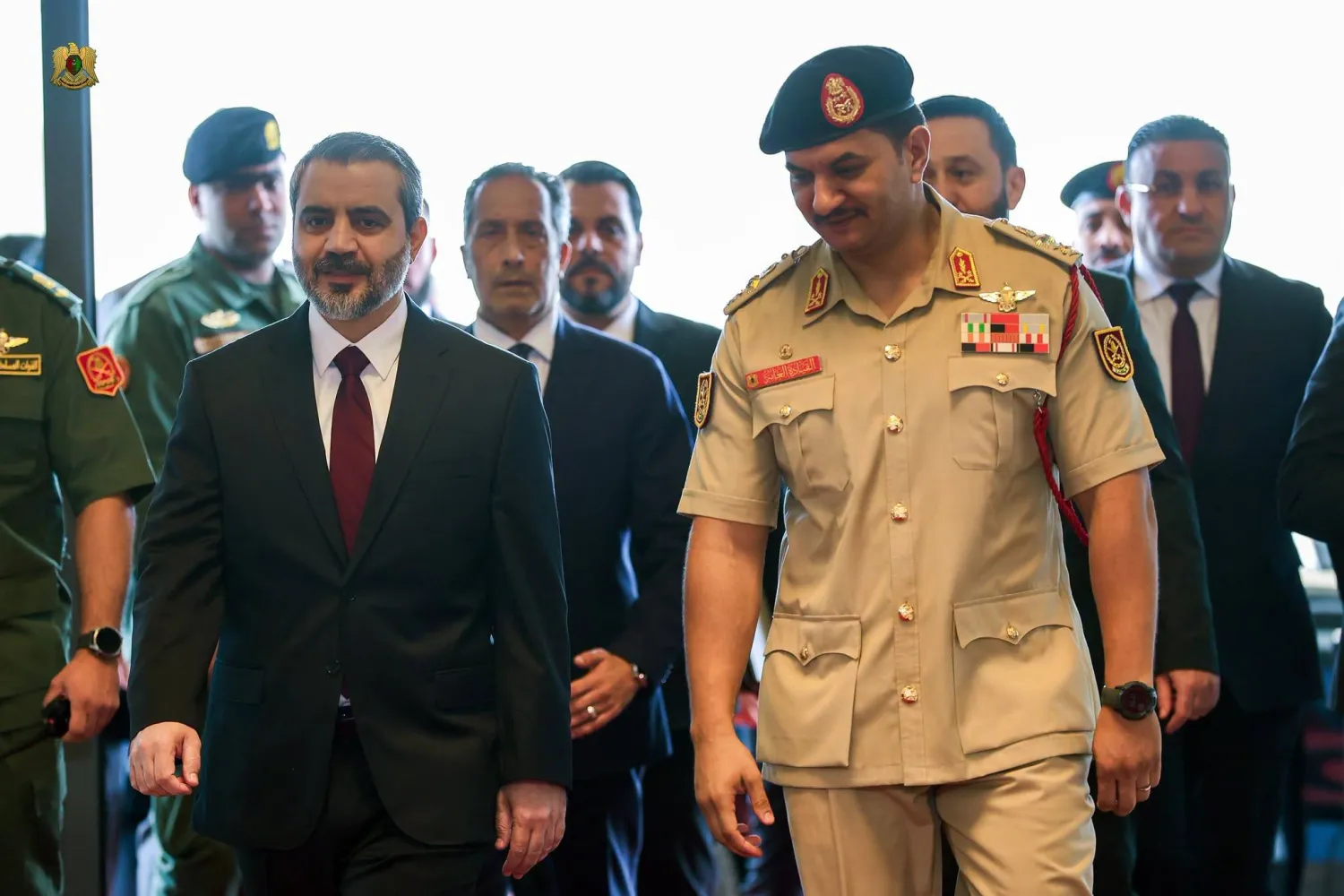
President Ahmed al-Sharaa answered that charge by saying the people of Deir Ezzor and the eastern regions are Syria’s “treasure.” Meeting Deir Ezzor notables on Friday during a visit to assess the flood damage, he said: “You are people of generosity and noble tribes and clans.”
Sources who attended the meeting told Asharq Al-Awsat that Sharaa’s appearance in Deir Ezzor was meant to reassure residents by presenting him as one of their own. They said the Syrian president removed his formal jacket as he greeted citizens who had gathered to welcome him, a gesture they said reflected his ease among the locals.
But beyond the symbolism, the sources said, the more important signal was the number of ministers who accompanied him, underscoring the government’s intent to address the region’s needs and ease tensions.
The sources said ministers met Deir Ezzor notables before Sharaa held a separate meeting with them, attended by the ministers of energy, local administration, health, agriculture, transport, emergencies and communications.
Also present were Maher al-Sharaa, the president’s brother and former secretary-general of the presidency, and Qutaiba Qadish, director of the Department of International Cooperation at the Ministry of Foreign Affairs and Expatriates.
The discussions went beyond services and flood response. Participants raised issues they see as central to the buildup of anger, foremost among them the fate of detainees once held in prisons run by the Syrian Democratic Forces, or SDF, and later transferred to Iraq. Some attendees demanded that their fate be revealed, that they be returned to Syria and that they stand trial there.
The meeting also addressed the situation of Free Syrian Army fighters and other former opposition members who had served as auxiliaries to the new government forces after the overthrow of Bashar al-Assad’s regime at the end of 2024. They complain they are now being sidelined despite having taken part in difficult security confrontations against the former regime.
US Central Command, or CENTCOM, announced in February 2026 that more than 5,700 detainees accused of belonging to ISIS had been transferred from SDF detention centers to Iraq.
The transfer was described as a preventive security measure to stop terrorists from escaping SDF camps after Syrian forces advanced and extended control over eastern and northeastern Syria late last year.
Separately, Deir Ezzor notables called for a review of administrative appointments in the province, especially appointments they said lacked experience.
They also demanded clear lines of authority, an end to interference in local administration powers and greater transparency, including informing citizens of the reasons behind decisions affecting their areas.
Sharaa said the “current state inherited more than 60 years of problems that involved deliberate harm to the Syrian reality” at the legal, economic and service levels. He criticized excessive reliance on emergency measures, saying “emergency solutions drain the state and push it toward reactive strategies.”
He said problems should be “broken down and solved according to priorities” on sound foundations.
Despite the positive aspect of the visit, some warned against falling again into the “trap of frustration” after the government’s promises.
Journalist Yasser al-Issa, who is from Deir Ezzor, said the visit’s focus on the immediate start of work on al-Siyasiya bridge, the crossing linking Hasakah and Deir Ezzor provinces, was overstated, given that other issues may be more urgent.
“If we want to talk about bridges, the Mayadin bridge, which has been out of service for about 10 years, is more important than the al-Siyasiya bridge economically, commercially and in terms of services. Yet attention was given to the first at the expense of the second,” Issa told Asharq Al-Awsat.
“The visit was positive overall, but we must wait for results on the ground,” he said. “The problem is not only the damaged bridges, despite their importance.
There are more important issues, including more than 62 water stations knocked out of service by the flood. That will soon deprive more than 50% of the province’s population of water unless the problem is addressed, in addition to other major infrastructure problems.”
Issa said most residents displaced from Deir Ezzor city during the war have not returned, despite the city's return to government control.
He cited the destruction of nearly 70% of the city’s neighborhoods, the lack of basic services needed to repair homes and the deterioration of infrastructure.
Hopes had been high for a rapid return after the fall of the former regime, he said, but such a return requires enormous resources that may exceed what the current government can provide.
Syria’s Energy Ministry said on Saturday that the General Establishment of the Euphrates Dam had closed gate No. 4 at the Tabqa Dam in rural Raqqa province as water inflows from Turkey continued to decline.
The gate had been releasing about 300 cubic meters of water per second before it was shut, reducing the flow through the Euphrates Dam to about 1,400 cubic meters per second.
The ministry said the step was part of a plan to gradually and safely restore Euphrates River levels in Raqqa and Deir Ezzor provinces to normal levels.
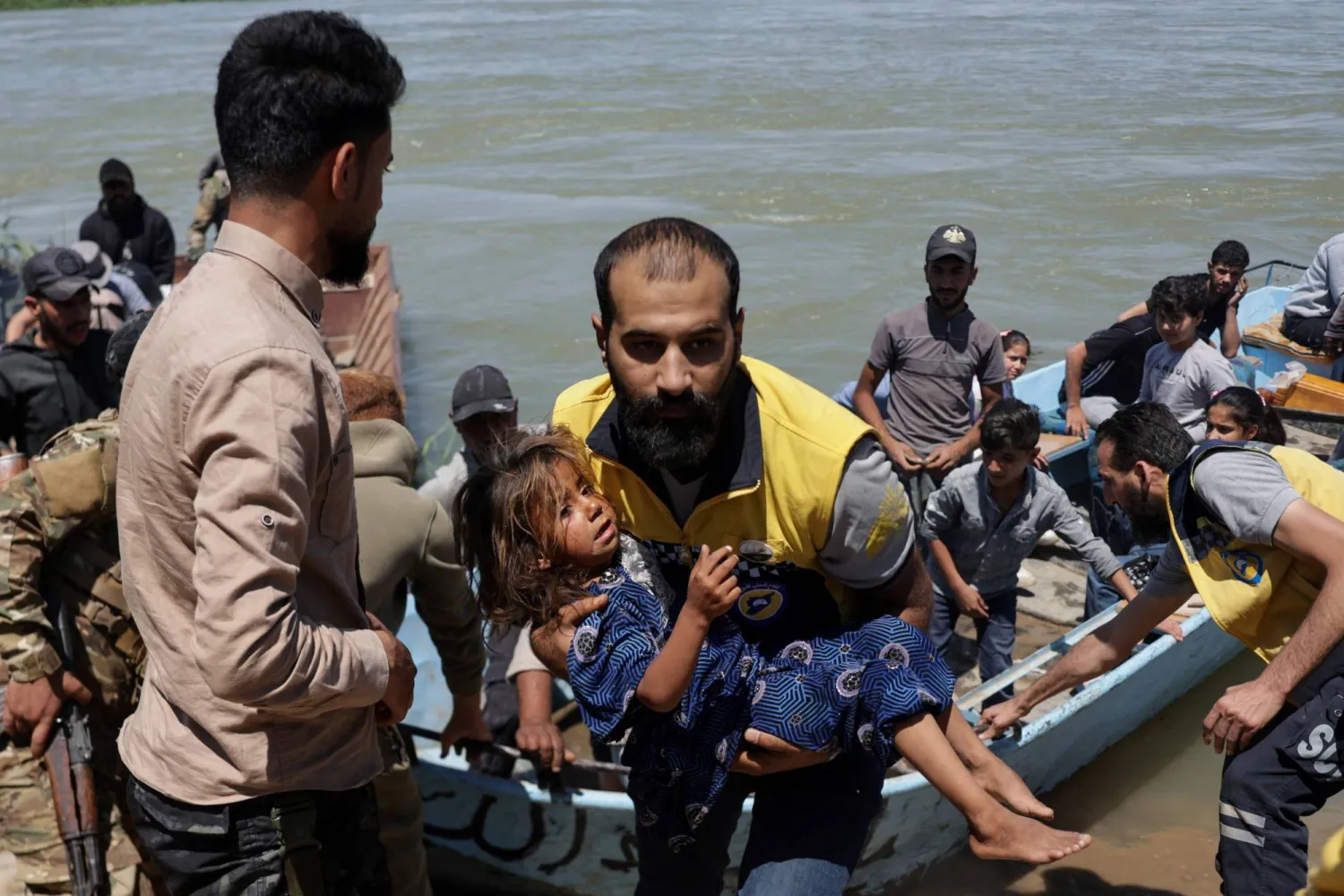
The Euphrates flooding, unprecedented in decades, has caused heavy damage. Four children have died, many drowning incidents have been reported and more than 2,500 families face the risk of forced displacement, especially in Huweijat Qati and Huweijat Sakr.
The flood also destroyed crops across about 5,000 dunams of farmland along the riverbanks and swept away four dirt bridges linking Deir Ezzor to its surroundings.