
Enayati to Asharq Al-Awsat: 30,000 Hajj Pilgrims Begin to Return Home from Saudi Arabiahttps://english.aawsat.com/gulf/5279535-enayati-asharq-al-awsat-30000-hajj-pilgrims-begin-return-home-saudi-arabia
Enayati to Asharq Al-Awsat: 30,000 Hajj Pilgrims Begin to Return Home from Saudi Arabia
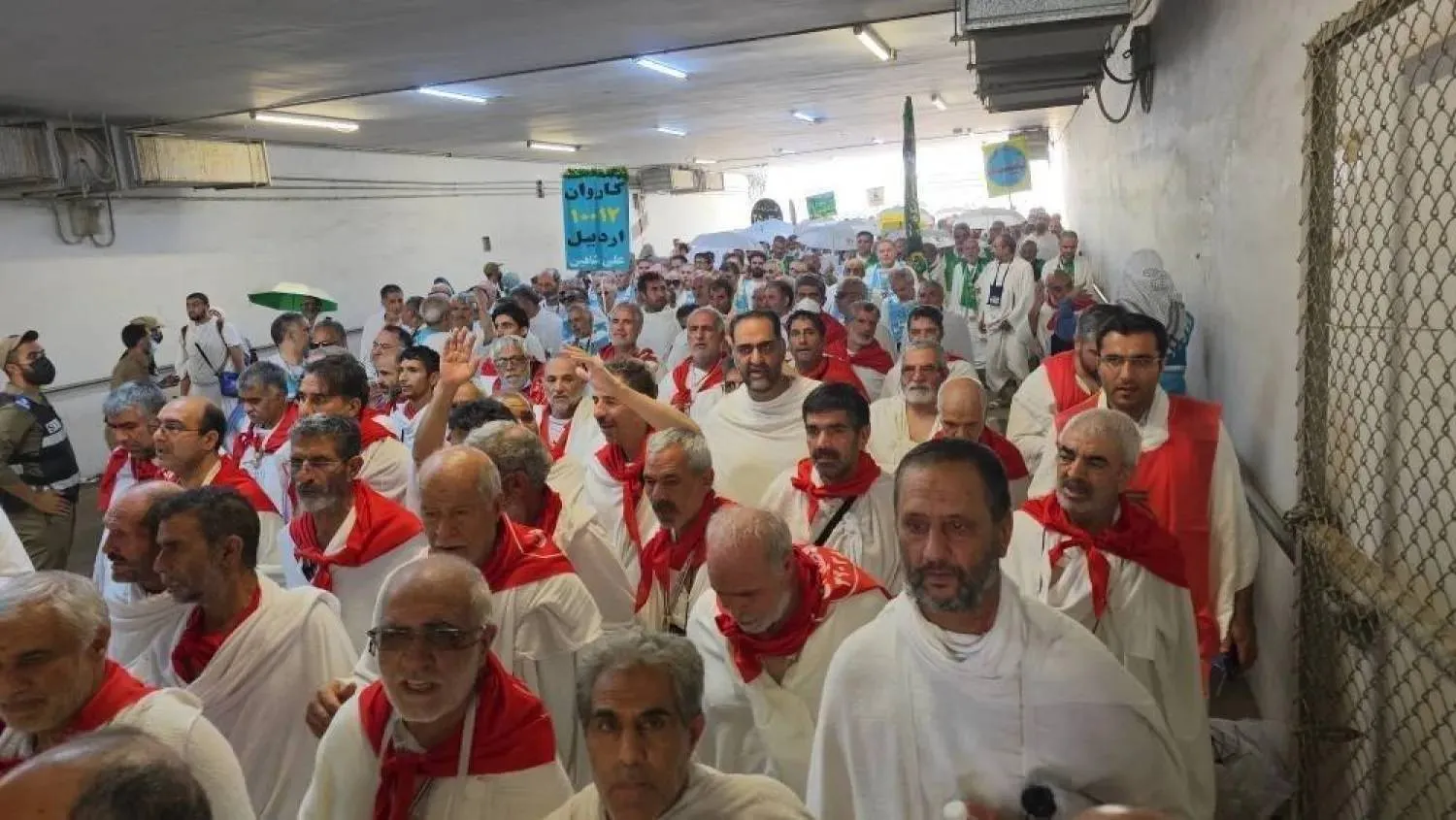
Iranian pilgrims during this year’s Hajj. (Iranian Embassy in Saudi Arabia)
Iranian Hajj pilgrims began returning home from Saudi Arabia after completing their holy journey.
Iranian Ambassador to Saudi Arabia Alireza Enayati told Asharq Al-Awsat that some 30,000 Iranians performed the Hajj this year.
They were accorded a warm welcome and enjoyed generous hospitality like all over pilgrims, he added.
Saudi authorities announced that 1,707,301 pilgrims performed Hajj this year, including 1,546,655 from 165 countries, while the rest were comprised of Saudi citizens and residents of the Kingdom.
Enayati said the Iranian pilgrims began returning home of Monday and the departures are expected to continue until the end of the month.
He stressed that they enjoyed a smooth Hajj, like all other pilgrims.
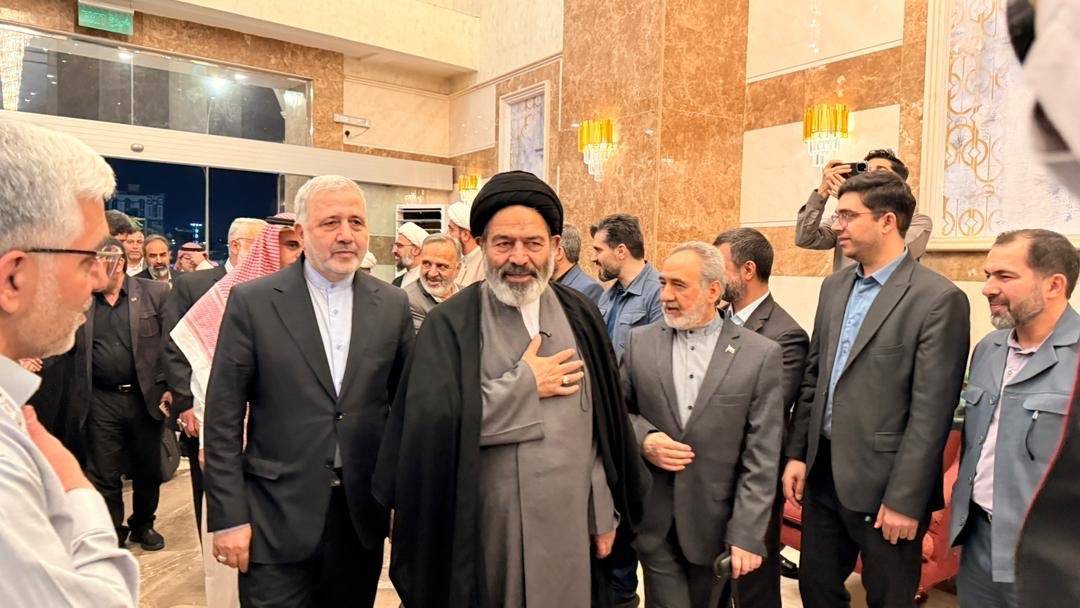
Ambassador Enayati welcomes the head of the Iranian Hajj mission in Madinah. (Iranian Embassy in Saudi Arabia)
“They are now returning home safely,” he remarked, saying they had arrived by air to the Kingdom and they will head back to Iran the same way.
There is no need to transport them by land, as flights are operational and their departures will take place according to plans, he explained.
Enayati hailed the major means and developed services provided by Saudi Arabia at the holy sites, Makkah and Madinah, saying they allow the pilgrims to perform the rituals with ease and calm.
He underlined the level of coordination and cooperation between Iran’s Hajj and Pilgrimage Organization and the Saudi Ministry of Hajj and Umrah that ensured that the Iranian pilgrims had a smooth journey.
The ambassador expressed his gratitude to all Iranian and Saudi officials who exerted great efforts in service of the Hajj pilgrims and who made their journey smooth and secure and their welcome warm and hospitable.
Kuwait Says Iran Attacked Power and Water Desalination Plant, Causing Damagehttps://english.aawsat.com/gulf/5297035-kuwait-says-iran-attacked-power-and-water-desalination-plant-causing-damage
Kuwait Says Iran Attacked Power and Water Desalination Plant, Causing Damage
Vehicles drive along a highway on the outskirts of Kuwait City on July 8, 2026. (Photo by AFP)
Kuwait said Friday that Iran attacked a power and water desalination plant, causing widespread damage to the station.
Kuwait’s Electricity Water and Renewable Energy Ministry announced the attack, saying it sparked a fire and “damage to a large number of electricity generation units.”
Kuwait said it extinguished the blaze and was working to assess the damage and get the station working again.
Qatar Says Child Injured as Missile Attack Interceptedhttps://english.aawsat.com/gulf/5297010-qatar-says-child-injured-missile-attack-intercepted
A visitor to the Museum of Islamic Art takes pictures of the skyline of highrise buildings in Doha on July 9, 2026. (AFP)
TT
TT
Qatar Says Child Injured as Missile Attack Intercepted
A visitor to the Museum of Islamic Art takes pictures of the skyline of highrise buildings in Doha on July 9, 2026. (AFP)
Qatar announced Friday that its army had intercepted a missile attack, with falling debris injuring a child.
"The Ministry of Defense... announces that the armed forces have intercepted a missile attack that targeted the State of Qatar," the ministry wrote on X.
A child was injured by falling debris after the interception, the interior ministry later reported.
Iran has targeted several Gulf countries since hostilities with the United States resumed on July 7, claiming to be aiming at American military installations.
Qatar, a mediator in talks with the United States alongside Pakistan and host to the largest American base in the Middle East, was targeted on Sunday for the first time since the April truce.
Iranian Attacks on Gulf Intensify, Kuwait Bears Brunthttps://english.aawsat.com/gulf/5296848-iranian-attacks-gulf-intensify-kuwait-bears-brunt
Iranian Attacks on Gulf Intensify, Kuwait Bears Brunt
Smoke rises near Kuwait International Airport after a drone strike targeted a fuel depot. (File photo/AFP)
Iranian attacks on Gulf states have intensified sharply in recent days, with Kuwait bearing the brunt as fighting between the United States and Iran resumed and tensions rose in the Strait of Hormuz.
From the renewed escalation last Wednesday through early Thursday, Kuwaiti forces detected about 77 hostile drones and 18 missiles in the country’s airspace, according to an Asharq Al-Awsat tally.
The missiles included eight ballistic missiles and 10 cruise missiles. Kuwaiti forces intercepted or otherwise dealt with the threats.
The latest attacks stood out for causing casualties and damage.
Kuwait said several Iranian strikes targeted vital facilities and scattered debris across multiple locations, causing material damage and injuring six people, including four members of the Kuwaiti armed forces.
Three land border posts in northern Kuwait were also attacked, causing further damage and one injury.
Kuwaiti Defense Minister Sheikh Abdullah Al-Sabah checks on the health condition of those injured as a result of the Iranian aggression. KUNA
Kuwait’s consulate general in the southern Iraqi city of Basra was targeted again on Monday.
Kuwait condemned the attack and acknowledged the Iraqi government’s efforts to confront such incidents. It also called for “immediate and decisive” action to hold those responsible accountable and prevent a recurrence.
The continued attacks drew broad condemnation and expressions of solidarity from Gulf states.
Calls to strike back at launch sites
Academic and political researcher Ayed al-Manaa said Gulf Cooperation Council states should prepare for further Iranian retaliation following US attacks.
Speaking to Asharq Al-Awsat, al-Manaa urged Gulf states to respond to the sources of fire rather than remain on the defensive.
He said the escalation showed that Tehran had gone too far, particularly during the 40-day war.
Iran, he added, could retaliate against nearby US forces or Israel instead of targeting Gulf states.
Al-Manaa said Iran’s conduct reflected a lack of respect for Gulf sovereignty and a disregard for fraternal ties, neighborly relations and shared religious bonds.
Gulf states are peaceful countries that maintain normal relations, trade and neighborly ties with Iran, he said.
Tehran had treated that position with disdain, he added, making it necessary for Gulf states to raise their level of readiness and prepare to confront and respond to further attacks.
Fragile truce, vague memorandum
Political analyst Khaled al-Habbas said the renewed fighting between Washington and Tehran, and the failure of the ceasefire to hold, showed that the memorandum of understanding reached in mid-June was broad and highly ambiguous.
He said the uncertainty was most evident in provisions dealing with the Strait of Hormuz, Iran’s nuclear program, sanctions on Tehran and its frozen assets.
Al-Habbas said other factors were also driving the crisis.
These included “the deep hostility and mistrust between the two sides, the aggressive nature of the Iranian regime and the sharp divisions between hardline leaders within the Revolutionary Guards and other officials who support negotiations with the United States.”
Doubts over Iran’s commitment to a deal
“The continuation of Iranian aggression against some Gulf states, alongside attacks on shipping in the Strait of Hormuz, indicates that the Iranian side is not serious about reaching a final agreement,” al-Habbas said.
He said the negotiations also faced major obstacles, while the ceasefire remained fragile.
Tension and instability would therefore continue to define the regional landscape for now, he added.
Al-Habbas did not rule out further exchanges of military action in the region, although he said both sides appeared keen to avoid a return to full-scale war.
“The danger remains, however, and all possibilities are still open. This is why Gulf states are following these developments with concern,” he said.
He praised Gulf states for successfully confronting Iranian attacks while continuing to support diplomatic efforts to prevent a return to war and the risks it would pose to the region.
Al-Habbas called for greater regional and international diplomatic pressure on Iran to isolate it politically and expose what he described as its aggression.
He said Iran should be held responsible for the damage caused by “this blatant aggression,” while Gulf states retained the right to defend themselves at a time and place of their choosing.
لم تشترك بعد
انشئ حساباً خاصاً بك لتحصل على أخبار مخصصة لك ولتتمتع بخاصية حفظ المقالات وتتلقى نشراتنا البريدية المتنوعة